

Hidden fees are common across furniture rental, and they can push a monthly bill well past the advertised rate once delivery, damage cover and cleaning charges land on the invoice. The fix is straightforward: before you sign anything, insist on a line-by-line written quote covering delivery and assembly, damage waivers or insurance, and end-of-lease cleaning, plus a written definition of what counts as acceptable wear and tear.
TL;DR:
- Delivery and collection fees can vary significantly based on building access, floor level, and scheduling, often adding unexpected costs to the initial quote.
- Damage waivers may be billed monthly and are not always actual insurance; asking if your own renters’ insurance suffices can eliminate this recurring charge.
- Get a detailed, line-item quote covering rental, delivery, assembly, cleaning, and deposits to avoid hidden costs hidden in bundled prices or fine print.
- Confirm delivery windows, building permits, and access details beforehand to prevent last-minute surcharges caused by operational complexities.
- Align rental dates tightly with your move-in or event schedule, as even small timing mismatches can lead to costly idle period fees or storage charges.
Table of Contents
- What are the most common hidden fees in furniture rental?
- Which venue, timing and logistics factors drive unexpected costs?
- How do I get a transparent, itemised quote?
- Practical strategies to avoid or reduce hidden fees
- How Expats Partner prevents hidden fees
- Get a transparent quote from Expats Partner
- FAQ
What are the most common hidden fees in furniture rental?
Most disputes trace back to the same handful of charges, buried in fine print or left off the headline quote entirely. Some providers add membership or arrangement fees on top of the advertised rate, alongside mandatory damage protection that was never mentioned during the sales call. Knowing what to look for turns a vague contract into something you can actually negotiate.
- Delivery and collection fees. These often shift depending on your address, floor level and whether there’s a lift. A walk-up fourth floor can cost noticeably more to service than a ground-floor unit with loading bay access, and some vendors fold this into the first month’s payment without breaking it out.
- Assembly, installation and labour charges. Flat-pack wardrobes and standard sofas usually come free with delivery; specialist items like modular sectionals, wall-mounted units or bulky appliances often carry a separate labour line.
- Damage waivers, insurance and security deposits. A waiver sometimes runs as a monthly percentage of the rent rather than a one-off charge, and it isn’t always true insurance. It can simply be a way for the vendor to retain risk while changing how you’re billed, so ask what it actually covers before assuming it protects you.
- Cleaning, restoration and return-condition charges. Professional-cleaning clauses can apply even to lightly used fabric items, and “restoration” charges sometimes appear for marks that most people would call normal wear.
- Logistics surcharges, last-minute change fees and minimum rental period penalties. Swapping an item after delivery, or ending a lease before the minimum term, both tend to trigger charges that rarely appear on the initial quote.
- Holding or idle fees. If your rental period starts before you can actually move in, you may be billed for weeks of storage you never used.
Which venue, timing and logistics factors drive unexpected costs?
Operational complexity is usually the real driver behind a fee, not the furniture itself. Buildings with limited lift access, strict loading bay hours or permit requirements for large vehicles all add cost, because the vendor has to plan around constraints that a straightforward ground-floor delivery never faces.
- Building access and stair carries. Multiple flights with no lift, or a management office that requires advance booking of the service lift, both push up labour time and price.
- Tight setup windows. A delivery slot squeezed into two hours before an event starts, or an office fit-out that has to happen overnight, often triggers overtime premiums.
- Timing mismatches. When a tenancy starts a week after the rental period does, or an event venue is only accessible the morning of, you can end up paying for idle days you never used.
- Distance and multi-drop routing. Deliveries split across several addresses in one run, or scheduled outside standard working hours, generally cost more than a single, standard-hours drop.
How do I get a transparent, itemised quote?
A proper quote separates every cost into its own line, so nothing is buried inside a bundled “package price.” Before you sign, work through this checklist and don’t be shy about asking each question directly.
- Request a line-item breakdown covering rental, delivery, labour, cleaning, insurance and deposit as separate figures, not a single total.
- Ask whether the damage waiver is optional, and get concrete examples of what counts as billable damage versus normal use.
- Confirm delivery windows, floor-access charges and who is responsible for building permits where they’re required.
- Clarify the minimum rental period, how prorating works if you need extra days, and the exact cancellation or early-collection penalties.
- Demand a written return-condition standard and an itemised invoice at the point of collection, not a verbal assurance beforehand.
Pro Tip: Ask specifically whether the vendor will accept your own renters’ insurance in place of their damage waiver. Some providers allow this, and it can remove a recurring monthly charge entirely.
Getting these answers in writing before delivery day protects you from a vendor reinterpreting “reasonable wear” after the fact, which is where most deposit disputes actually start.
Practical strategies to avoid or reduce hidden fees
A little planning removes most of the risk before it becomes a bill. The goal is to eliminate the gaps, both in timing and in documentation, that let ambiguous fees slip through.
- Align rental dates with your actual move-in or event schedule rather than booking a wider window “to be safe,” which is exactly how idle fees creep in.
- Bundle items into a package where the vendor prices it as one unit; per-item delivery charges add up fast on a piecemeal order.
- Negotiate a cap on labour hours and get the overtime rate in writing before delivery day, especially for complex assembly jobs.
- Photograph every item on arrival and get a signed condition checklist. This single habit removes most ambiguity around end-of-lease disputes.
- Book early and offer flexible delivery windows. Vendors who can slot your job into standard working hours have far less reason to charge a rush premium.
Pro Tip: Keep timestamped photos in a dated folder for each address you rent to. If a dispute comes up months later, having proof of condition on delivery day settles it far faster than a phone call.
If you’re relocating internationally, it’s worth mapping your total cost of living before you commit to a rental term. Resources like take-home pay comparisons by country help you see how furniture rental fits into a realistic monthly budget, alongside a broader first-time guide to renting abroad covering documents and scheduling.
How Expats Partner prevents hidden fees
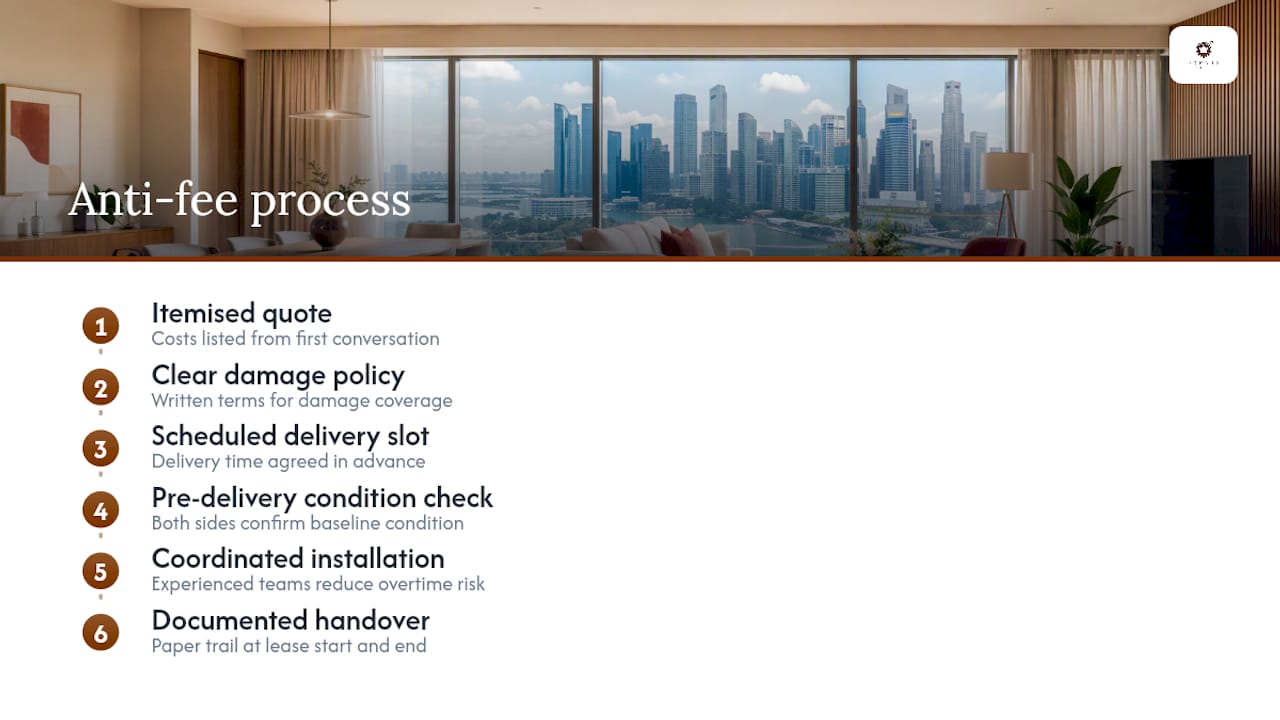
Transparency in a rental agreement is one of the clearest signals of a reliable provider. Vague pricing on security deposits, assembly fees or damage coverage is a warning sign worth acting on, which is why A reliable furniture rental provider builds its process around itemised quotes from the first conversation.
This includes clear wording on damage policy, scheduled delivery slots agreed in advance, and a pre-delivery condition check so both sides start from the same baseline. Coordinated delivery windows and experienced installation teams help reduce the chance of an overtime surcharge showing up after the fact, and a documented handover at both ends of the lease provides a paper trail if a dispute ever arises. Readers wanting to see how home furniture rental packages are structured can review the standard inclusions before requesting a quote.
Get a transparent quote from Expats Partner
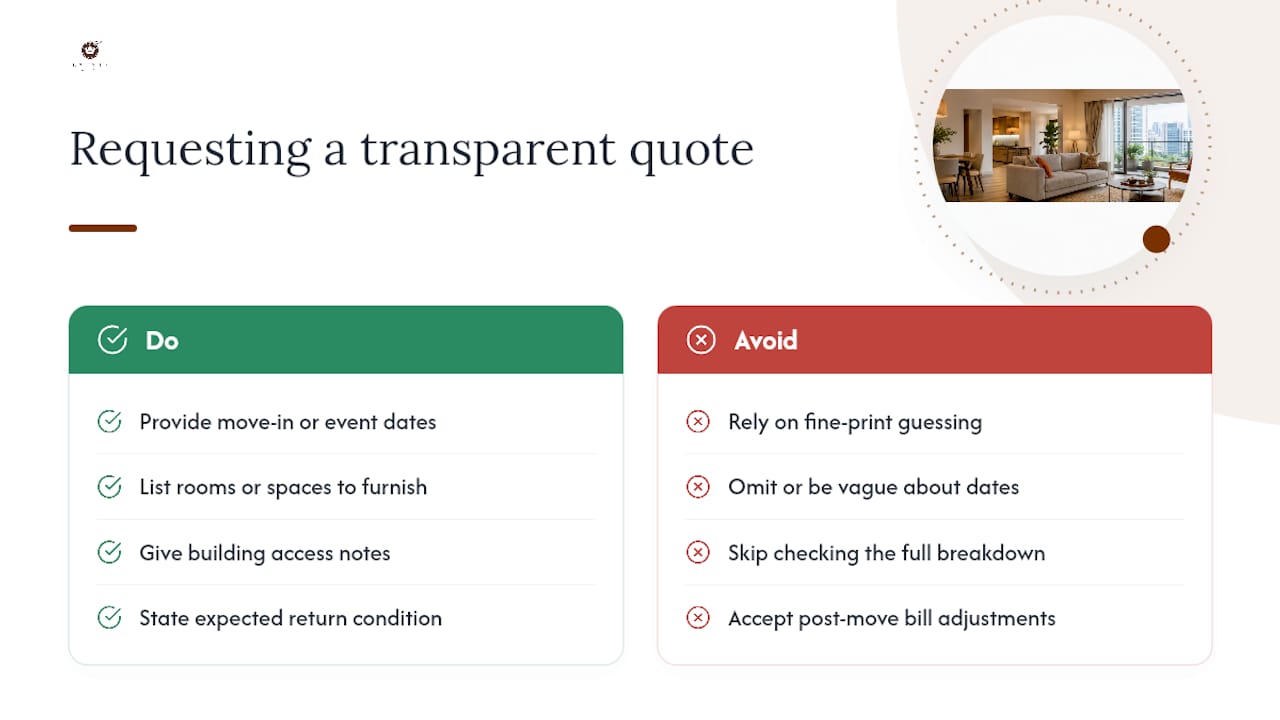
If you’d rather skip the fine-print guessing game, look for furniture rental quotes that are itemised, dated and specific to your address as recommended in this article. Have your move-in or event dates ready, a rough list of the rooms or spaces you need furnished, any building access notes (lift availability, loading bay hours, permit requirements), and the condition you expect items to be returned in.
That level of detail lets Expats Partner price delivery, assembly and collection accurately from the outset, rather than adjusting the bill after the fact. Bespoke packages and coordinated delivery scheduling aim to reduce the exact surprises described in this article, whether furnishing a single serviced apartment or coordinating a corporate relocation across several units. Explore home furniture rental for full-home packages, or check Singapore short term furniture rental if your dates are flexible and you want to avoid paying for idle weeks. Request your itemised quote today and see the full breakdown before you commit to anything.
FAQ
Are hidden fees common in furniture rental?
Yes. Fees for delivery, damage waivers, cleaning and minimum-term penalties are frequently left off the headline quote and only appear once the contract is signed or the invoice arrives.
What is a damage waiver and is it mandatory?
A damage waiver covers certain repair costs and is often billed as a monthly percentage of rent, but it’s sometimes a risk-retention tool rather than genuine insurance. Ask whether it’s optional and whether your own renters’ insurance can substitute for it.
How do I avoid delivery and collection surcharges?
Confirm floor access, lift availability and any permit requirements before booking, and ask for delivery and collection charges as a separate line item rather than a bundled figure.
What counts as acceptable wear and tear?
There’s no universal standard, which is why you should get a written definition from the provider before you sign. Providers like Expats Partner use documented condition checks at delivery and collection specifically to avoid this ambiguity.
How can I avoid paying for idle rental periods?
Align your rental start and end dates precisely with your move-in, tenancy or event schedule, since even a few days of mismatch can trigger a holding fee for storage you never used.