
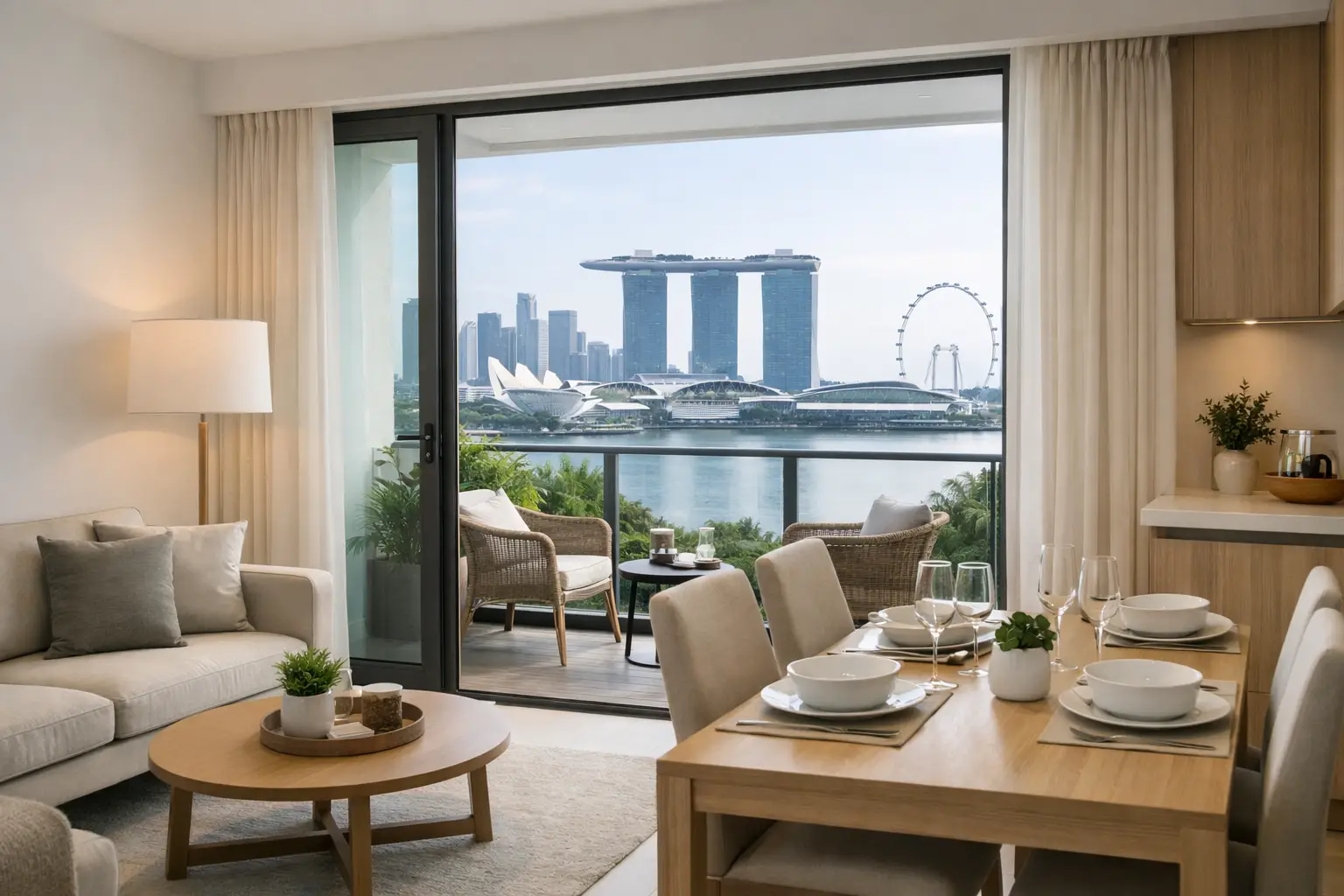
A buyer pauses on a listing for only a moment before deciding whether to enquire. If the living room is dark, the bedrooms feel smaller than they are, or a vacant unit has no clear purpose, the property may be overlooked before a viewing is even arranged. This property presentation guide explains how sellers, landlords and agents can prepare a Singapore home to photograph well, feel welcoming and make its layout easier to understand.
Good presentation is not about making every home look like a showroom. It is about removing distractions and giving prospective buyers or tenants enough visual information to picture daily life there. For a compact condominium, that may mean showing how a dining area and living space can work together. For a landed property, it may mean bringing warmth and scale to larger rooms that would otherwise feel sparse.
Why property presentation affects buyer interest
Most property searches begin online. Listing photographs set expectations before an agent has the chance to explain the location, renovation potential or layout. A well-prepared home gives those photographs a clearer story: where people relax, eat, work and sleep.
During a viewing, presentation also reduces the amount of imagination required. An empty master bedroom can appear smaller than it is. A room filled with oversized furniture can appear impractical. Thoughtful furniture placement gives buyers reference points for proportion, circulation and storage without obscuring the property itself.
For sellers, this can support a more confident viewing experience and help the home stand out against similar listings. For landlords, a furnished and orderly unit can make the rental proposition easier to understand, especially for expatriate tenants who need move-in-ready accommodation. Presentation alone cannot resolve an unrealistic price or a difficult location, but it can ensure the property is judged on its actual strengths rather than avoidable visual issues.
Property presentation guide: begin with the property’s story
Before moving furniture or booking photography, decide who is most likely to view the home and what they need to see. A one-bedroom city-fringe flat may appeal to a single professional or couple. A family-sized condominium may need to show a usable dining space, comfortable bedrooms and a practical work area. The aim is not to guess every buyer’s taste. It is to make the intended use of each room immediately clear.
Walk through the property as if seeing it for the first time. Notice the view from the entrance, the direction of natural light, any awkward corners and the points where the floor plan is most easily misunderstood. Then identify the rooms that will carry the listing: usually the living area, dining area, main bedroom, kitchen and balcony. In a larger home, an additional family room, study or outdoor area may be equally important.
A home with dated finishes can still present well. Avoid trying to conceal every imperfection with accessories. Instead, use clean lines, neutral colours and a restrained furnishing scheme to create a sense of order around the existing features. This approach tends to photograph better and keeps the attention on space, light and potential.
Choose furniture for scale, not just style
Furniture needs to fit the room. A large sectional sofa may be comfortable, but in a narrow living area it can block circulation and make the space feel constrained. A smaller sofa with an armchair, slim coffee table and correctly sized rug can show a more natural flow.
The same principle applies to bedrooms. A king-sized bed may be appropriate in a generous master bedroom, while a queen bed could better demonstrate the usable floor area in a smaller unit. Bedsides, lamps and a modest amount of artwork help a room feel complete, but they should not compete with the architecture.
For vacant properties, furniture rental is often more practical than buying items specifically for a sale or tenancy period. It allows the scheme to be planned around the property, delivered and installed to a deadline, then collected once the campaign or lease arrangement changes. The right level of furnishing depends on the property and the target market. A premium home may benefit from a fuller scheme, while a modest investment unit may only need the key pieces that define each room.
Give every room a clear purpose
Rooms with no obvious function cause hesitation. A spare bedroom may be read as wasted space unless it is styled as a guest room, study or nursery. A long corner beside the living room might become a compact work zone rather than an unexplained gap.
Be realistic about how the space can be used. If a study nook only fits a small desk, show a small desk. If a balcony is narrow, use light outdoor seating rather than trying to force in a full dining set. Honest presentation builds trust and helps viewers assess whether the home suits their life.
Prepare for photos before preparing for viewings
Photography should not be an afterthought. The camera notices visual noise that people may ignore in person: loose cables, crowded shelves, mismatched hangers, cleaning products, pet bowls and laundry. These details can make a well-sized home feel less cared for.
Start with a thorough clean, including windows, mirrors, kitchen surfaces, bathrooms and balcony flooring. Repair what is simple to repair, such as blown light bulbs, peeling stickers, loose handles and damaged blinds. Open curtains and switch on suitable lights, even in daytime, to avoid dark corners.
Then edit personal belongings firmly. Family photographs, collections, bulky exercise equipment and overflowing toiletries make it harder for visitors to imagine the property as their own. This does not mean stripping a lived-in home of all character. A few cushions, plants, books and simple table settings can add warmth. The difference is intention: each visible item should either clarify the room’s purpose or support a calm, cared-for impression.
In Singapore, window treatments deserve particular attention. Bright daylight is an advantage, but direct sun can create harsh photographs and make a room uncomfortable during viewings. Sheers or blinds can soften the light while still showing the outlook. If the property has a strong view, frame it rather than covering it with heavy curtains.
Make the viewing easy to move through
A polished listing brings people to the door. The viewing confirms whether the home feels right. Plan the route from entrance to living space, bedrooms, kitchen and outdoor areas. Remove anything that narrows walkways or forces visitors to step around personal storage.
The entrance matters more than its size suggests. It should be bright, tidy and free of parcels, shoes and drying racks. A simple console, mirror or plant can be useful where space allows, but the priority is an easy arrival.
Temperature, scent and sound also influence the experience. Keep the property comfortably cool, particularly for afternoon viewings, and avoid strong fragrances that may feel artificial or trigger sensitivities. Open the home briefly before a viewing if possible, then close windows where external noise or heat is distracting. Small practical checks – working lights, clear access cards, clean bins and switched-off televisions – show care without drawing attention to themselves.
Avoid styling that feels too personal or too sparse
There is a balance between a home with character and one that feels occupied by someone else. Very personal décor can distract buyers, while a completely bare setting can feel cold and make it difficult to judge scale. Neutral does not have to mean bland. Layering natural textures, restrained artwork and a small amount of greenery can make a room feel considered without imposing a particular lifestyle.
Over-styling is equally unhelpful. Too many cushions, decorative objects or artificial arrangements can make viewers wonder what is being hidden. Let the property do most of the work. Styling should support the space, not become the main attraction.
Set a practical timeline and budget
Presentation works best when it is planned before the listing goes live. Allow time for cleaning, minor repairs, furniture selection, delivery, installation and photography. If a property is vacant or a seller has already moved out, this may be straightforward. If it is owner-occupied, the plan may need to work around daily routines, children, pets and ongoing storage needs.
Agree on the goal before spending. Is the priority a sale campaign over several weeks, a refreshed listing that has received little interest, or a furnished rental ready for immediate marketing? This determines how much furniture, styling and preparation are sensible. Not every home requires a full staging package. Sometimes decluttering, better lighting and selective furniture adjustments will make the most meaningful difference.
For agents managing several deadlines, a hands-on staging partner can reduce coordination. Expats Partner can plan a suitable furnishing scheme, arrange delivery and installation, and collect the items once they are no longer needed. That leaves the agent more time to focus on pricing, enquiries and viewings while the property is prepared for market.
The best presentation is one that feels credible. When a home is clean, well-proportioned and easy to walk through, buyers spend less time trying to interpret the space and more time considering whether they can live there. That is the point at which a viewing becomes a more useful conversation.