

Renting furniture in Singapore follows a simple sequence: choose a package or individual pieces, sign the rental contract, schedule delivery, document your move in with dated photos, and request pickup once you’re ready to leave. The single most useful thing to do right now is request quotes for your move date and measure your doorways, lifts and stairwells before you commit to anything.
TL;DR:
- Most furniture rental providers in Singapore require early quote requests, especially during peak months, to secure flexible delivery and installation slots.
- Renting a full-home package is ideal for expats arriving with no furniture, while individual pieces suit residents filling specific gaps or with existing furniture.
- Costs typically range from a few hundred dollars per month depending on package size, quality, and extras, with clear inquiries needed about deposits, damage coverage, and additional fees.
- Accurate measurements of doorways, lifts, and stairwells in advance prevent delivery delays or failed access attempts, and booking building access well ahead is recommended.
- A detailed move-in inventory signed by both parties helps avoid disputes, while carefully reviewing lease, deposit, damage, and pickup clauses ensures clarity before signing the contract.
Table of Contents
- How to rent furniture: what the process actually looks like
- Should you rent a full package or individual pieces?
- What does furniture rental cost, and what fees should you check?
- How do you prepare your flat for furniture delivery?
- What should your move-in inventory checklist include?
- What contract clauses should you read closely before signing?
- What’s the ideal timeline for booking furniture rental?
- Why Expats Partner is a practical option in Singapore
- How to get started with Expats Partner
- Sources and further reading
- FAQ
How to rent furniture: what the process actually looks like
Most furniture rental services in Singapore follow a workflow that hasn’t changed much in years, because it works.
- Request quotes based on your unit size, move‑in date and whether you need a short‑term or long‑term lease.
- Confirm the package or individual pieces and sign the rental agreement, including deposit terms.
- Pay the first month and deposit, then lock in a delivery slot.
- Schedule delivery, factoring in building access windows and any lift booking rules.
- Document move‑in with an itemised inventory and dated photos before you start using anything.
- Request pickup with adequate notice when your lease ends or you’re moving on.
Lead times vary. A clear stepwise process that starts with an early quote request tends to give you more flexibility on delivery dates, especially during peak relocation months when providers are booked out weeks ahead.
Should you rent a full package or individual pieces?
The right scope depends less on taste and more on how long you’re staying and how much you’re bringing with you.
- Full‑home packages suit expats arriving with little to no furniture, since they bundle bedroom, living and dining pieces at one all‑in price and arrive as a cohesive look rather than a mismatched pile.
- Individual piece rentals suit residents who already own some furniture and just need to fill gaps, such as a dining table or an extra wardrobe.
- Studio or one‑bedroom starter packages typically cover a bed, sofa, coffee table, wardrobe and basic dining setup.
- Two‑bedroom packages usually extend to a second bedroom set plus additional storage and living room pieces.
- Renting rather than buying avoids the upfront cost of furnishing an entire flat, plus the hassle of selling or disposing of it when your posting ends, which matters most for anyone on a fixed‑term assignment.
If you’re weighing whether renting is worth it at all, the calculation usually comes down to how long you’ll stay and what moving furniture back home would cost you. For most postings under two years, renting wins on both counts. You can browse short‑term furniture rental options built specifically around this kind of stay.
What does furniture rental cost, and what fees should you check?
Monthly rental cost depends on furniture quality, rental duration, package size and any extras like appliances or styling add‑ons. Bedroom and living room packages generally amount to a few hundred dollars a month, but exact costs vary widely by provider and package inclusions.
Before signing, ask about:
- The deposit amount and what triggers a deduction.
- Whether damage waivers are included or sold separately.
- The pickup notice period, often around 15 calendar days.
- Whether delivery and assembly are bundled into the monthly fee or billed separately.
- Late pickup or extension fees if your move‑out date shifts.
Pro Tip: Ask for a full breakdown before you compare quotes side by side. Two “similar” packages can differ by hundreds of dollars once delivery, assembly and damage cover are added back in.
Providers commonly allow flexibility for lease extensions or swapping pieces mid‑term, but this is conditional on stock availability and notice periods, so get it confirmed in writing rather than assumed from a sales conversation.
How do you prepare your flat for furniture delivery?
Singapore homes, particularly HDB flats and older condos, often have tighter doorways, service lifts and stairwells than delivery teams expect. Measuring these before booking prevents a wasted trip and, in some cases, a rescheduling fee.
- Measure your main door width, lift interior dimensions and any stairwell turns furniture must pass through.
- Confirm whether your building requires a service lift booking or has restricted delivery hours.
- Provide clear parking or loading bay information when you book.
- Expect setup to include assembly and packaging removal, but confirm this isn’t a separate line item.
- Notify your condo guardhouse or building management in advance, since visitor and delivery access at many Singapore properties runs through a guard clearance process.
Pro Tip: Call your condo’s management office a few days ahead, not the morning of delivery. Guardhouse clearance and service lift bookings often need 24 to 48 hours’ notice, and missing that window is the most common reason deliveries get pushed back.
What should your move-in inventory checklist include?
An itemised inventory, taken the day furniture arrives, is your main protection against disputes when the lease ends. It should record quantity, condition grade and dated photos for every item, and both you and the provider should sign off on it.
| Room | Items to record | Condition detail |
|---|---|---|
| Bedroom | Bed frame, mattress, wardrobe, bedside tables | Scratches, stains, fabric wear, dated photo of each |
| Living room | Sofa, coffee table, TV console, dining set | Cushion condition, surface marks, chair stability |
| Kitchen/utility | Appliances, small portable items (utensils, linens) | Function check, completeness of sets |
| General | Remote controls, keys, accessories | Present and accounted for, serial numbers if listed |
Small, portable items like remotes, linens and utensils are the ones landlords most often lose track of value on, so don’t skip them because they seem minor. This record becomes the reference point at pickup and the basis for any damage claim either side raises.
What contract clauses should you read closely before signing?
Read the rental agreement for five things specifically, because these are where disputes tend to originate.
- Rental period and renewal terms, including whether the lease auto‑extends or requires active renewal.
- Pickup notice policy, commonly around 15 calendar days, and what happens if you miss it.
- Deposit and refund process, including the timeframe for return after pickup.
- Damage coverage, meaning what counts as normal wear versus chargeable damage.
- Cleaning fees, and whether they’re automatic or condition‑dependent.
Ask the provider directly how damage disputes are resolved and whether your signed inventory is the deciding document. Keep a copy of the contract, the inventory and every delivery or pickup confirmation email. If a disagreement arises months later, that paper trail is what settles it.
What’s the ideal timeline for booking furniture rental?
Working backwards from your move‑in date keeps every stage on schedule.
- 6 to 8 weeks out: Request quotes from providers, including your unit size and preferred move‑in window.
- 4 to 6 weeks out: confirm your package, sign the contract and pay the deposit.
- 2 to 3 weeks out: book your delivery slot and confirm building access requirements with management.
- Delivery day: complete your itemised inventory with photos before use.
- End of lease: submit your pickup request at least 15 calendar days ahead.
If delivery gets delayed by building access issues or stock shortages, ask your provider for an interim solution or a revised slot rather than waiting it out silently. A short call usually resolves it faster than an email chain.
Why Expats Partner is a practical option in Singapore
Everything covered above, quoting, contracts, delivery logistics, inventory and pickup, is typical day‑to‑day work handled by furniture rental providers for expats, landlords, agents and corporate housing teams in Singapore. Short‑term and long‑term rentals, full‑home packages, and coordinated delivery, setup and collection are commonly included in furniture rental services, so the checklist in this guide generally reflects how a quote request gets processed.
Before reaching out, have your move‑in date, unit size, and rough doorway and lift measurements ready. It speeds up quoting considerably and means the first proposal you get back is closer to a final one, rather than a rough estimate that needs three rounds of revision.
How to get started with Expats Partner
Once you know your move‑in date and roughly what your flat needs, the next step is straightforward: submit a request through the short‑term furniture rental page with your unit size, preferred delivery window and any doorway or lift measurements you’ve already taken.
Include as much detail as you can. A move date, unit type (studio, one‑bedroom, two‑bedroom), and whether you need a full package or specific pieces all shape the quote you get back. If you’re relocating for work rather than furnishing a personal lease, the relocation furniture packages page covers packages built around corporate timelines.
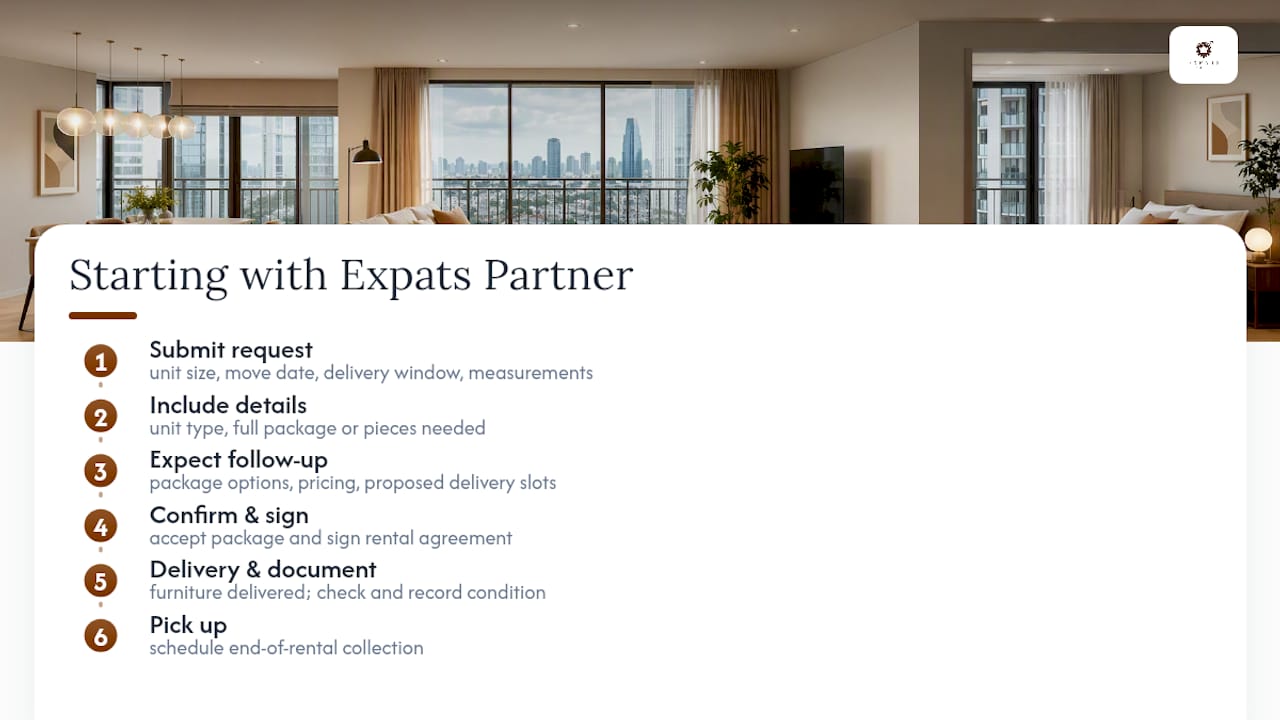
After submitting a request, expect a follow‑up with package options and pricing based on your unit and duration, along with proposed delivery slots. From there, it’s the same sequence covered throughout this guide: confirm, sign, deliver, document, and eventually, pick up. For a broader look at what’s available across the market, the home furniture rental archive is worth a browse before you commit to a specific package.
Sources and further reading
- Singapore Furniture Rental: Rent, Lease Options for Expats
- Relocation Furniture Packages for Singapore Moves
- Expert Buyer’s Agent for Relocation
FAQ
How much does it cost to rent a room’s worth of furniture in Singapore?
Costs depend on furniture quality, rental duration and package size, with bedroom and living room packages commonly totalling several hundred dollars a month including delivery and setup. Request a quote for your specific unit, since providers price packages differently.
Can I rent out my HDB without an agent?
That question relates to letting out a property rather than renting furniture, and HDB rules on subletting without an agent depend on your flat type and eligibility, so check directly with HDB for your specific case. Furniture rental itself, by contrast, doesn’t require an agent at all.
Who will collect furniture for free in Singapore?
Some furniture rental providers include free collection as part of the standard contract once your pickup notice, typically around 15 calendar days, has been submitted. Always confirm collection terms in writing before signing, since practices vary between providers.
What should I look for when choosing a furniture rental provider?
Look for clear pricing breakdowns, defined pickup notice periods, a documented inventory process, and coordinated delivery and setup. Some providers offer short‑term and long‑term rentals, full‑home packages and full delivery logistics under one contract, which can simplify comparison against providers who split these into separate charges.