
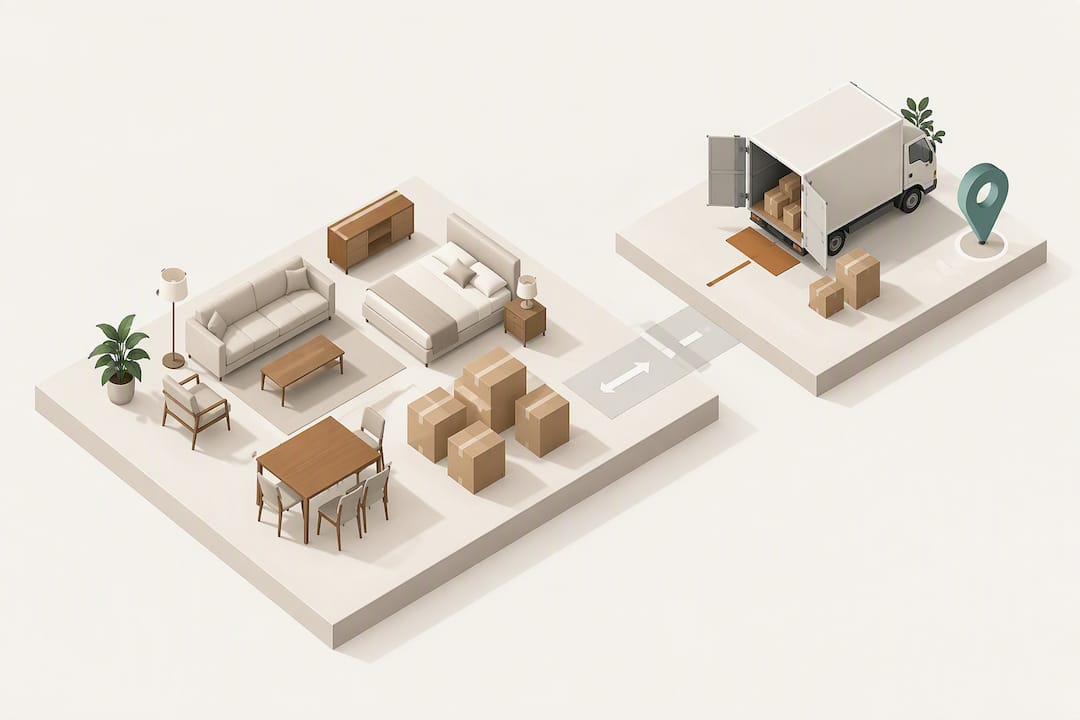
Returning rented furniture in Singapore starts with confirming your move-in inventory and booking a collection slot with your provider well before your lease ends. Most charges stem from missing documentation rather than genuine damage, so the single most useful habit is comparing the current condition of each item against your signed handover record. Pair that with timestamped photos, receipts and a clear collection booking, and the whole process becomes straightforward.
TL;DR:
- Book collection as soon as your lease end is confirmed, and arrange a joint inspection about two weeks before move out to resolve issues early.
- Inspectors may charge for stains, negligence, missing parts, or nonfunctioning appliances, but fair wear and tear is generally excluded from deductions.
- Preserve your signed inventory, timestamped photos, videos, and written messages, then request an itemized invoice before disputing any charge with supporting evidence.
- If negotiation fails, CASE can mediate, and the Small Claims Tribunal handles monetary claims up to S$20,000, or S$30,000 with both parties’ agreement.
Table of Contents
- Room-by-room preparation checklist before the provider arrives
- Practical steps to book and manage collection with your provider
- What inspectors check for and the charges you might encounter
- Documenting the handover and your escalation options
- A return checklist for landlords and serviced-apartment operators
- The furniture return timeline from notice to final collection
- Handling extensions or early termination of your rental agreement
- Staying in touch with our return coordination team
- How we help you return furniture with fewer surprises
- FAQ
- Sources
Room-by-room preparation checklist before the provider arrives
A smooth return begins long before collection day. Your signed move-in inventory is your reference point, so dig it out first; if you cannot find a copy, ask your provider for one, since this document underpins every conversation about condition and deductions.
Walking through each room with that inventory in hand lets you spot discrepancies early, while you still have time to address them.
- Compare every item against the move-in inventory and note any changes in condition.
- Take timestamped wide shots and close-up photos, plus short videos, of each room and item.
- Record serial numbers, model numbers and counts for appliances, remotes and keys.
- Remove personal belongings and pack fragile items securely.
- Book professional cleaning where needed and keep the receipt.
- Make small, reasonable fixes yourself, such as tightening loose screws or replacing a blown light bulb.
Pro Tip: Photograph items against a plain background with the date visible on your phone’s screen; it makes timestamps harder to dispute later.
Our furniture cleaning policy guidance sets out the cleaning standards most providers expect and flags the charges that catch tenants off guard.
Practical steps to book and manage collection with your provider
Once your preparation is underway, turn to logistics. Collection day runs more smoothly when both sides know exactly what to expect.
- Book your collection slot early and confirm the date, time and expected inspection duration in writing.
- Share an accurate item list along with access details such as lift booking, parking and security clearance.
- Decide who will attend the inspection and ask to see the identification of any staff arriving at your door.
- Request the provider’s inspection checklist and charge policy before collection day, not during it.
Corporate relocation teams managing several units benefit from building this into a standard checklist rather than handling each return individually.
What inspectors check for and the charges you might encounter
Inspectors generally focus on a handful of consistent areas: stains and surface damage, structural issues such as loose joints or broken frames, missing parts or accessories, whether appliances still function correctly, and whether all original components are present.
Fair wear and tear is generally excluded from charges. Damage caused by negligence, spills left untreated or unauthorised modifications is a different matter, and these are the items most likely to attract a fee.
- Professional cleaning fees for stains or odours beyond normal use.
- Repair labour and replacement parts for fixable damage.
- Full replacement costs when an item is beyond economical repair.
Singapore case law confirms that the party claiming reinstatement costs carries the burden of proving the tenant’s breach, and tenants are generally liable only for damage beyond fair wear and tear. That principle matters at the inspection stage: if a provider cannot demonstrate the damage goes beyond normal use, a charge is harder to justify.
Always ask for an itemised invoice rather than a single lump sum. Itemised bills and receipts are the evidence you will need if you decide to contest any part of the charge.
Documenting the handover and your escalation options
Build your evidence file as you go rather than scrambling for it later. A clear chronology makes any dispute far easier to resolve.
- Start with your signed move-in inventory as the baseline document.
- Add timestamped photos and videos taken immediately before collection.
- Keep every written communication with your provider, including emails and messages about scheduling or condition.
- File the collection invoice and any receipts for repairs, cleaning or replacements.
- If a charge seems unreasonable, request an itemised breakdown and raise it directly with evidence attached.
- If direct negotiation stalls, contact the Consumers Association of Singapore (CASE) for mediation.
- If the dispute remains unresolved, prepare a claim for the Small Claims Tribunal, which handles monetary claims up to S$20,000, or S$30,000 where both parties agree.
Keep originals and backed-up copies of everything. An organised, itemised file tends to move through mediation or tribunal review faster than a scattered one.
A return checklist for landlords and serviced-apartment operators
Property professionals handling several units at once reduce disputes by standardising the process rather than improvising each time.
- Keep a signed, photographed inventory for every unit at move-in and attach it to the tenancy file.
- Set out clear handover standards for tenants, including examples of acceptable versus chargeable wear.
- Centralise scheduling and inspection reporting so damage assessments and invoices move quickly.
- Require itemised bills before passing on any deduction, and issue tenants a clear, dated invoice.
Pro Tip: Store each unit’s inventory and photos in a single, clearly named folder; it saves considerable time when several returns happen in the same week.
Developers and larger operators planning reinstatement works alongside furniture returns may also find it useful to review reinstatement works guidance for lease-end premises, which covers the broader logistics of preparing a space for handover.
The furniture return timeline from notice to final collection
The return process typically follows a predictable sequence once notice is given. As soon as a lease end date is confirmed, it is worth notifying your furniture provider, since most collection slots need lead time, particularly during peak relocation months.
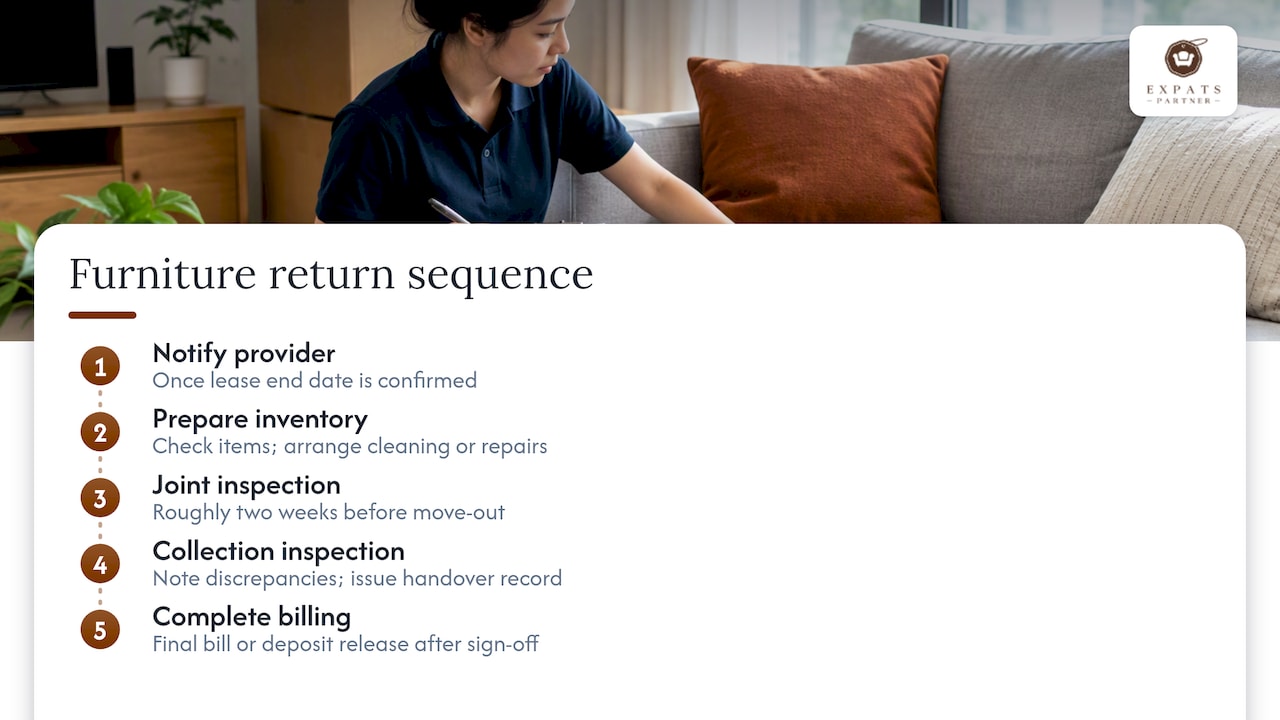
In the weeks that follow, use the time to work through your room-by-room inventory check, arrange any cleaning or minor repairs, and confirm your collection booking. A joint inspection roughly two weeks before the move-out date gives both sides time to flag issues and resolve smaller ones before the final handover, rather than discovering them on the day.
On collection day itself, the provider inspects each item against the inventory, notes any discrepancies and issues a handover record. Where charges apply, you should receive an itemised invoice at this point or shortly after, not weeks later. Any deposit release or final billing then follows once the inspection is signed off.
Building in this lead time, rather than leaving everything to the final week, is what separates a calm return from a rushed one.
Handling extensions or early termination of your rental agreement
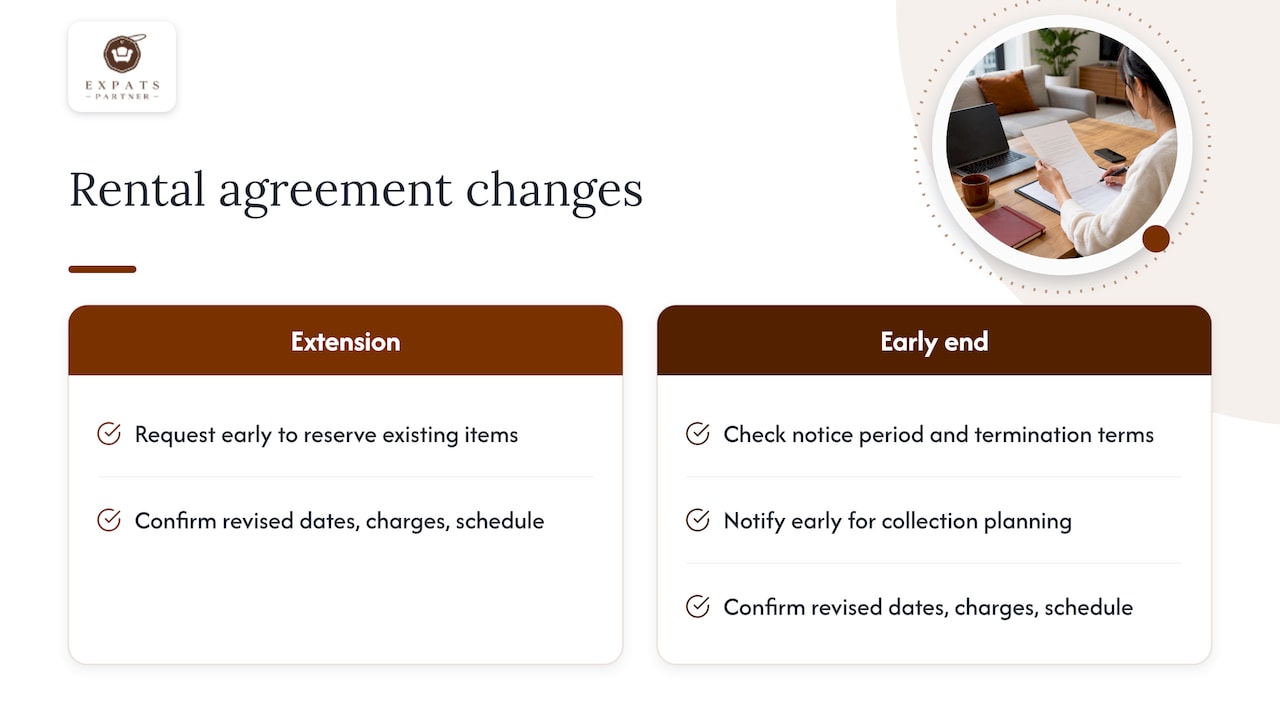
Plans change, and furniture rental agreements need to flex with them. If you need more time in your current home, raising the request with your provider as early as possible gives them the best chance of keeping your existing items reserved rather than reallocating them to another client.
Early termination works differently. Review your rental agreement for any notice period or early termination terms before raising the request, since these vary by package and rental duration. Providers generally need advance notice to schedule collection and to plan where the furniture goes next, so the earlier you communicate a change, the smoother the transition.
In both cases, put the request in writing and ask for written confirmation of the revised dates, any adjusted charges and the updated collection schedule. This avoids confusion later about which terms apply, particularly for corporate relocation teams managing agreements across multiple staff moves.
Staying in touch with our return coordination team
Clear communication is what keeps a furniture return on schedule. When you are ready to arrange collection, reach out to us as early as possible so we can confirm a slot that works around your lease end date and building access requirements.
Share your unit details, access instructions and a summary of the items being returned when you first get in touch. This lets us prepare the right team and equipment for your collection, rather than discovering access restrictions on the day.
If anything changes, such as your move-out date shifting or an item needing extra attention, let us know as soon as you are aware of it. Early updates give us the flexibility to adjust scheduling without last-minute pressure on either side.
We aim to keep every stage, from booking through to the final handover record, as clear and well-documented as the preparation steps above, so there are no surprises when the inspection is complete.
How we help you return furniture with fewer surprises
We coordinate delivery and collection as part of every rental agreement, which means your return is scheduled with the same provider who understands your original inventory, rather than a third party starting from scratch. Our in-market stock and package options are sized for Singapore homes and serviced accommodation, so swapping, downsizing or extending a package tends to be more straightforward than managing separate purchases and disposal.
- A pre-collection consultation lets us review your inventory together and confirm expectations before the team arrives.
- Our package options, including Comfy, Family and Vital+ apartment packages, cover full-home furnishing with coordinated collection built in.
- For tenants planning a shorter stay, our move-in ready furniture rental options are designed with end-of-lease return already in mind.
If your lease end date is approaching, get in touch to book your collection slot and walk through your inventory with us before the inspection day arrives.
FAQ
What is the first step in returning rented furniture in Singapore?
Start by locating your signed move-in inventory and comparing it against the current condition of each item. This document is your baseline for any inspection, and most disputes arise when it is missing rather than when genuine damage has occurred.
How do I avoid charges for fair wear and tear?
Fair wear and tear is generally excluded from deductions, while damage from negligence or unauthorised changes can be charged. Keeping timestamped photos from move-in and move-out helps show which category any mark or damage falls into.
What should I do if I disagree with a return charge?
Request an itemised invoice and raise your concerns directly with your provider, supported by your photos and inventory. If that does not resolve things, CASE offers mediation, and unresolved disputes can go to the Small Claims Tribunal for claims up to S$20,000, or S$30,000 if both parties agree.
How early should I book my furniture collection?
Book your collection slot as soon as your lease end date is confirmed, since providers need lead time to schedule inspection and transport. A joint inspection around two weeks before move-out gives both sides time to address any issues before the final handover.
Does Expats Partner handle the collection and inspection directly?
Yes, we coordinate delivery and collection as part of our rental packages, including a pre-collection consultation to review your inventory beforehand. This keeps the inspection consistent with the same provider who furnished your home originally.
Sources
- Consumer Protection | Competition and Consumer Commission of Singapore
- Inventory list for rented apartment Singapore: what to record at move-in handover | PropKaki
- Handover of premises, what should you do? | Lions Chambers
- Consumer redress resources | CASE