
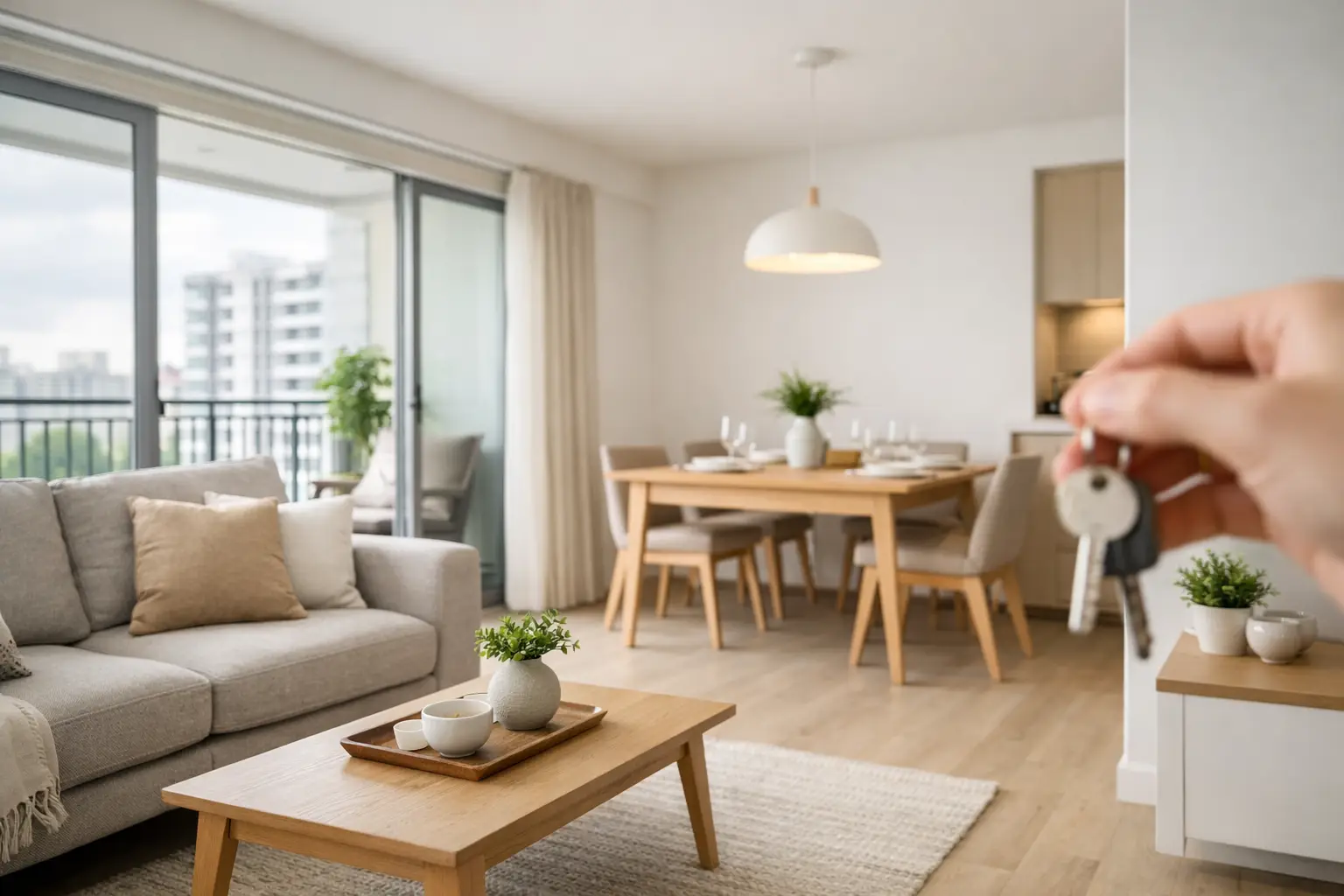
A resale flat can have a sensible layout, a good location and plenty of potential, yet still struggle to make an impression online. HDB resale home staging helps buyers see the home clearly before they step through the door. It gives rooms a purpose, shows how furniture can fit and creates listing photos that feel brighter, calmer and easier to understand.
For agents and sellers, this is not about making a flat look like a showroom. It is about removing doubt. When buyers can picture where they would eat, work, rest and store everyday essentials, they can focus on whether the property suits their lives rather than trying to interpret an empty or crowded space.
Why HDB resale homes benefit from staging
Many resale flats have practical, liveable proportions, but their presentation can vary widely. A vacant unit may feel smaller than it is because there is no scale. An owner-occupied home may be full of useful belongings that make rooms feel busy in photographs. Older finishes, unusual room shapes or a darker corridor can also draw attention away from the flat’s strongest features.
Staging gives buyers useful visual cues. A compact dining table can show that a dining area is genuinely usable. A sofa, rug and coffee table can establish the width of a living room. In a bedroom, a properly sized bed and bedside tables help viewers judge circulation space far better than bare walls do.
This matters particularly at the first stage of a search. Buyers often make quick decisions from portal photographs. If the listing looks cluttered, unfinished or difficult to read, they may move on without arranging a viewing. Good presentation will not change the location, floor level or lease details, but it can ensure that the property is judged fairly on its actual potential.
HDB resale home staging begins with the listing photos
Before choosing furniture, consider how the home will be photographed. The camera needs clear sight lines, natural light and enough negative space around key pieces. A room that feels pleasant in person can still appear cramped when every surface is filled or when oversized furniture blocks the windows.
Start by identifying the views that help sell the flat: the living and dining area, the primary bedroom, the kitchen if it is well maintained, and any feature such as an unobstructed outlook, balcony, study nook or renovated bathroom. These spaces should look intentional, clean and well lit.
A neutral base generally works well for resale properties. Light-toned upholstery, timber finishes, textured cushions and restrained artwork add warmth without imposing a very specific taste. The aim is to help a broad range of buyers imagine their own belongings in the home. Strong colours and highly personal decorative themes can work in the right property, but they should not become the main story in every photograph.
Lighting deserves attention too. Open curtains and blinds where privacy allows, replace failed bulbs and avoid mixing overly warm and cool lighting within the same room. A bright home does not need to be stark. It simply needs to feel cared for and easy to view.
Give every room a clear job
One of the most valuable parts of staging is helping buyers understand the layout immediately. This is especially useful in flats where a former owner has adapted rooms for storage, hobbies or extended family needs.
The living room
The living room should show comfortable seating without swallowing the floor area. A compact sofa, occasional chair, coffee table and rug are often enough. Position furniture to keep the route from the entrance to the windows or balcony open. If the room has an awkward corner, a floor lamp, plant or slim console can make it feel purposeful without adding visual weight.
Avoid pushing every item against the walls by default. In some layouts, floating the sofa slightly forward creates a more natural sitting zone and makes the space look considered. It depends on the room’s width and walking paths, so the arrangement should always be planned on site.
The dining area
Buyers want to know whether everyday meals, homework and occasional guests can fit comfortably. A four-seat table is often suitable for a typical HDB dining zone, while a round table can soften a tighter layout and improve movement around it. Set the table simply. A runner, small vase or a few place settings are enough to suggest use without creating clutter.
If the dining area has been used as a storage space, clearing it can be one of the most effective changes before marketing. Buyers may otherwise assume that the flat lacks storage, even when the issue is simply that the current household has accumulated more than it needs.
Bedrooms and flexible rooms
A primary bedroom should feel restful and practical. A made bed, bedside tables and soft lighting can make even a modest room feel more balanced. Choose a bed size that leaves visible space around it. A king-sized bed may appeal to some buyers, but in a tighter room it can unintentionally suggest that the layout is restrictive.
Secondary bedrooms need a clear identity. Present one as a child’s room, guest room or study depending on the likely buyer profile and the flat’s location. For example, a desk and shelving can make sense near business parks or transport links used by working professionals. A simple single bed with a study desk may speak more clearly to young families. Where demand is mixed, a flexible guest-and-study setup is often the safest choice.
Edit before you add furniture
Staging works best when it is paired with a thoughtful edit. Sellers do not need to strip a home of personality, but personal photographs, bulky storage units, excess kitchen appliances and crowded open shelving can distract buyers from the space itself.
Focus on visible surfaces and circulation areas first. Clear entranceways, dining tables, kitchen counters and bedside tables. Store loose cables, pet accessories and laundry during the marketing period. Repair small faults that show up in close photographs, such as chipped paint, loose handles or stained sealant.
The goal is not perfection. A resale home should still feel real and liveable. However, a tidy, well-arranged flat gives buyers confidence that it has been looked after and makes the viewing experience less demanding for the agent.
Renting furniture can keep preparation practical
Buying furniture solely to sell a property is rarely the most efficient route, particularly for vacant homes or short marketing campaigns. Furniture rental allows agents and sellers to select pieces suited to the flat, use them for the required period and have them collected afterwards. It also avoids the problem of storing or disposing of furniture once the sale is complete.
A proper staging service should cover more than furniture delivery. Space planning, styling, installation and collection matter because they remove the coordination work from an already busy sale process. For a seller managing a move and an agent managing enquiries, having one team prepare the property can make the timeline more manageable.
Well-maintained pre-owned furniture can be a sensible choice for staging, both for budget control and to reduce unnecessary waste. New pieces may be appropriate where a particular look or specification is needed, but the right outcome is usually a balanced, comfortable home rather than an expensive display.
Plan around the marketing timetable
Staging is most useful when it is scheduled before professional photography, video and the first wave of viewings. Allow time to declutter, complete minor repairs and clean the flat before installation. Once the home is staged, arrange photography promptly while the presentation is fresh and maintain the same standard during viewings.
For occupied properties, it may not be necessary to stage every room. A partial approach can work well when the seller already has suitable core furniture but needs help with the living area, dining zone or key bedrooms. Vacant units usually benefit from a more complete setup because buyers otherwise have little sense of scale.
The decision should reflect the property’s condition, target buyer, asking strategy and likely time on market. A well-renovated flat in a sought-after location may need only careful decluttering and styling. A vacant, dated or slow-moving listing may need more support to create stronger photographs and a more reassuring viewing experience.
A well-presented resale flat gives buyers fewer things to question and more reasons to stay in the room a little longer. With thoughtful furniture, clear space planning and reliable coordination, Expats Partner can help make that preparation feel straightforward rather than overwhelming.