
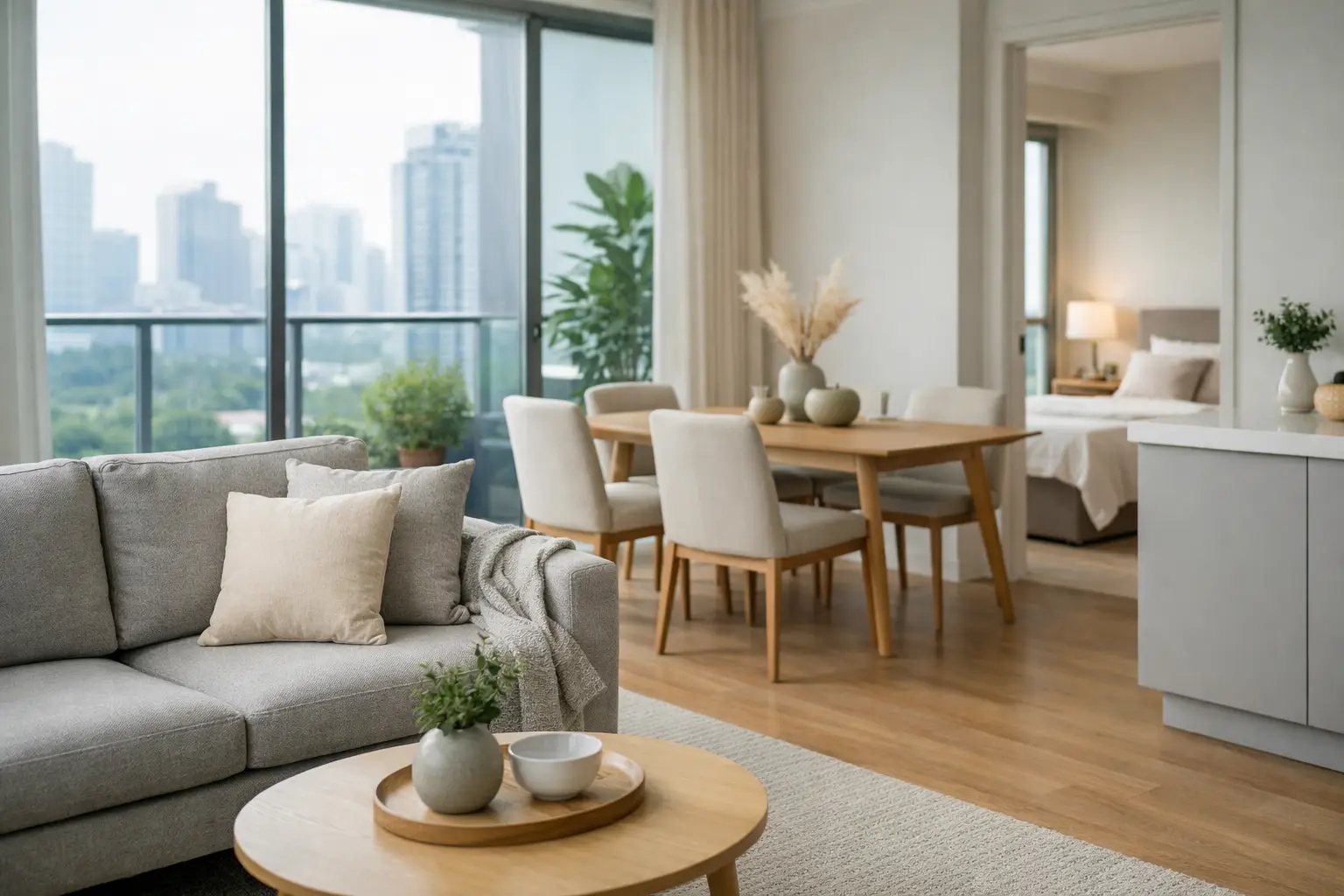
An empty home can look bigger than it is in photographs, yet feel surprisingly difficult to understand at a viewing. Without furniture, buyers may struggle to judge whether a living room fits a family-sized sofa, where a dining table belongs, or how a compact bedroom could work day to day. Vacant property staging Singapore gives each room a clear purpose, helping a listing feel more considered from the first online search to the final viewing.
For property agents, sellers and landlords, the aim is not to fill every corner. It is to remove uncertainty. Well-chosen furniture, calm styling and sensible space planning allow potential buyers or tenants to picture how they would live in the property. That can make the marketing process feel far more straightforward, particularly when a unit is vacant, newly completed or waiting between tenancies.
Why an empty property can be harder to market
A vacant property has its advantages. It is easier to access, free from personal clutter and often appears clean. But bare rooms can also look cold, echoing and smaller than expected. Wide-angle photography may exaggerate space, while in-person viewings can leave visitors questioning where their own furniture would go.
This is especially relevant in Singapore, where buyers compare many listings quickly and often make initial decisions from photographs, floor plans and short videos. If the property does not communicate its layout clearly online, it may receive fewer enquiries before anyone has stepped through the door.
Staging gives the eye useful reference points. A sofa shows the scale of the living area. A dining setting makes an open-plan layout easier to read. A properly dressed bed demonstrates that a bedroom is genuinely usable, rather than simply appearing as an empty box. These are practical cues, not decoration for its own sake.
When vacant property staging Singapore makes sense
Vacant staging is particularly useful when presentation is doing most of the selling work. A seller who has already moved out, an inherited home, a newly renovated unit and an investment property between tenants are all common examples. It can also help with listings that have been available for some time without gaining enough meaningful interest.
For agents, staging may be worth considering before professional photography is arranged. Good images are more effective when rooms have a clear function and balanced proportions. A thoughtfully furnished home is also easier to film for a listing reel or virtual tour, because there are natural focal points in each space.
The decision is not identical for every property. A highly sought-after unit in an exceptional location may need only light styling, while a larger vacant landed home may benefit from furnishing several key areas to prevent it feeling impersonal. Budget, expected marketing period, target buyer and the condition of the home should all guide the scope.
Start with the buyer or tenant you want to attract
The strongest staging does not try to appeal to everyone at once. It considers who is most likely to view the property and what they need to see.
A one-bedroom condominium near the CBD may suit a working professional who values a practical living zone and a compact dining or work area. A family-sized HDB resale flat may need a comfortable lounge, dining space and bedrooms that show everyday functionality. For a landed property, buyers may respond well to clear zoning across larger rooms, so the home feels warm and manageable rather than empty.
This does not mean creating a themed interior. Neutral colours, contemporary furniture and restrained accessories generally give visitors enough visual direction without imposing a particular lifestyle. The home should feel welcoming and achievable, rather than like a showroom that bears no relation to normal living.
Show the purpose of each room
One of the most valuable parts of staging is making ambiguous rooms understandable. A spare room can become a study, a guest room or a child’s bedroom depending on the likely audience. An awkward recess may work as a reading corner or compact workstation. These small decisions can answer questions before a viewer asks them.
However, the chosen function should be credible. Trying to force a large home office into a very narrow bedroom may draw attention to its limitations. In that situation, a single bed, bedside table and soft lighting may make better use of the space. Good staging works with the room, not against it.
Focus the budget on the rooms that carry the listing
Not every room needs the same level of attention. In most homes, the living area, dining zone, main bedroom and balcony or outdoor space create the strongest first impression. These are usually the areas that feature most prominently in listing photographs and shape the overall feeling of a viewing.
The entrance also matters. A clean, uncluttered arrival sets the tone before visitors reach the main living space. A simple console or bench, where the layout permits, can make an otherwise blank entry feel intentional.
Secondary bedrooms, kitchens and bathrooms often need a lighter approach. They should be clean, bright and easy to inspect, with only enough styling to show use and maintain visual consistency. Over-furnishing every room can make a property feel crowded and increases costs without always improving the result.
Choose furniture for scale, access and practicality
The furniture that looks right in a spacious showroom is not always right for a Singapore flat. Measurements matter. A sofa should define a living area without blocking circulation. A dining table needs enough clearance for chairs to be used properly. Beds must leave room to walk around them and open wardrobes or doors.
Access should be checked early too. lift dimensions, stairwells, loading rules, delivery slots and building management requirements can affect what can be brought in and when. This is where a managed staging service can save agents and owners time. Rather than coordinating multiple suppliers, a single team can handle furniture selection, delivery, installation and collection at the end of the agreed period.
At Expats Partner, this practical side is treated as part of the staging process, not an afterthought. The goal is to make the home ready for photography and viewings without creating another lengthy project for the agent or owner to manage.
Keep the styling calm and camera-ready
A staged home should look good in photographs, but it also needs to feel natural in person. Natural-light interiors, neutral furnishings, simple artwork and a small number of carefully placed accessories usually photograph well and suit a broad range of buyers.
Too many cushions, ornaments or oversized decorative pieces can distract from the property itself. Equally, furniture that is too sparse may make the home feel unfinished. The right balance allows architectural features, windows and room proportions to remain visible.
Before photography, check practical details that are easy to overlook: open curtains and blinds to bring in daylight, turn on suitable lights, remove packaging and tools, straighten rugs, and ensure cables are hidden. These finishing touches can make a meaningful difference to how polished the listing appears.
Plan around the marketing timeline
Staging works best when it is scheduled as part of the listing plan, rather than booked after photos have already been taken. Allow time for an initial discussion, site assessment where needed, furniture selection, delivery, installation and photography. If the home requires cleaning, minor repairs or repainting, those tasks should be completed before the furniture arrives.
The rental period should reflect the likely sales or leasing timeline. A short initial term may suit a property expected to move quickly, while a longer arrangement can be more practical for a slow-moving listing or a landlord preparing for several tenant viewings. Flexibility matters, but so does avoiding the rush of removing furniture too early while marketing is still active.
It is also sensible to agree who will keep the property viewing-ready. A staged unit needs basic upkeep between appointments: curtains opened, lights checked, dust removed and furniture returned to its intended position. This protects the first impression created at the photo shoot.
Staging is presentation, not a promise
Staging cannot change a property’s location, floor level, condition or asking price. If pricing is out of step with the market, furniture alone will not solve the issue. It can, however, help ensure that buyers assess the home on its genuine strengths rather than being distracted by an empty layout or an uninviting first impression.
For sellers and landlords weighing the cost, the useful question is not simply whether furniture rental is cheaper than buying. It is whether a clearer, more attractive listing may support better enquiry, more purposeful viewings and less time spent explaining what each room could become. The answer depends on the property and market conditions, but presentation is often one of the few elements that can be improved quickly.
A vacant home does not need to feel unfinished. With realistic furniture choices, a clear plan and dependable coordination, it can give every visitor a more confident sense of what life in the property could look like.