
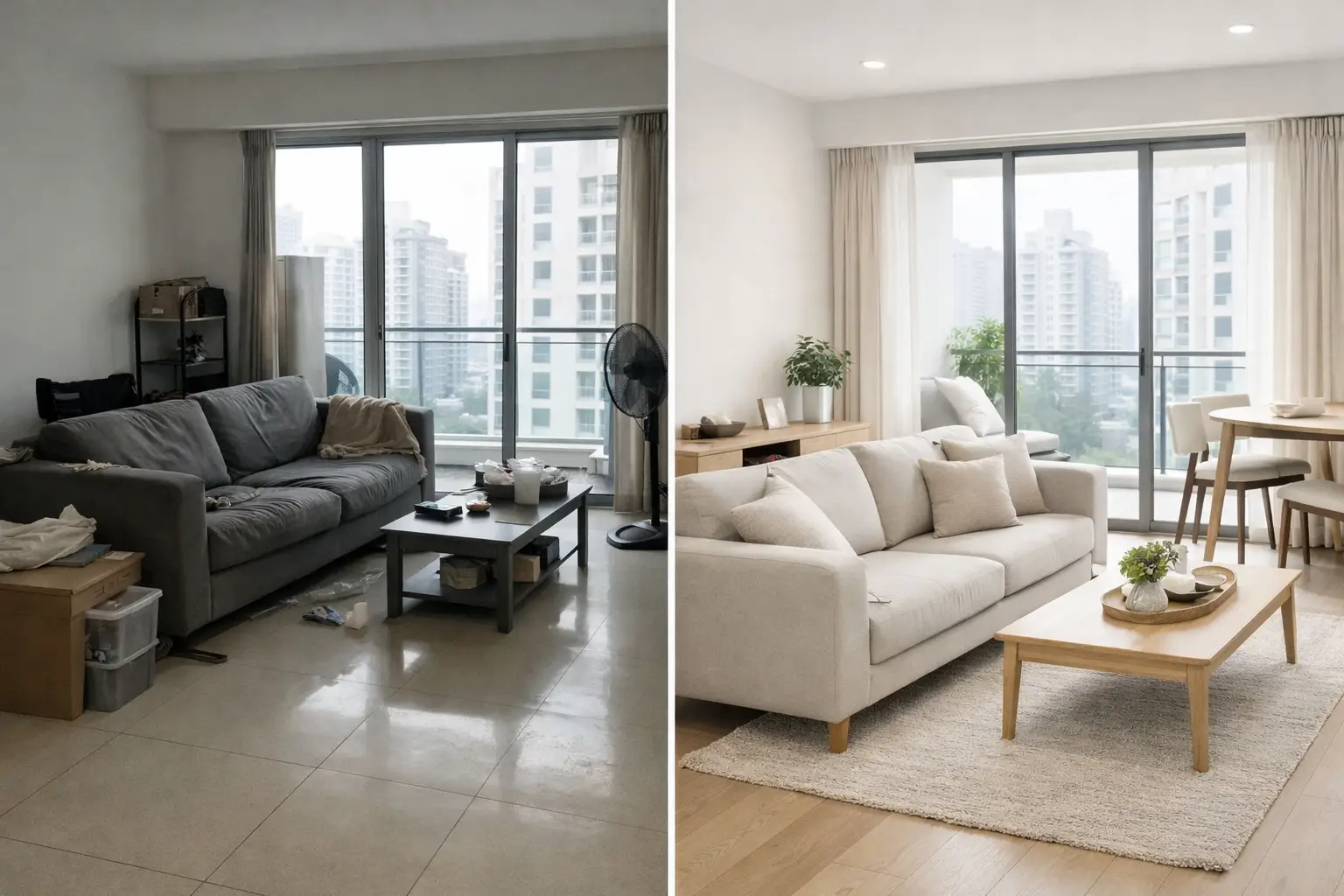
A vacant living room can look larger in a photograph, yet feel cold and difficult to read at a viewing. A room filled with personal belongings may have the opposite problem: buyers see the owner’s life rather than the property’s potential. Home staging before and after is valuable because it makes this difference visible. It shows how considered furniture, clearer layouts and a calmer visual approach can help a buyer understand what they are looking at within seconds.
For property agents, sellers and landlords in Singapore, this is not about making every home look like a catalogue. It is about presenting the space in a way that supports stronger listing photographs, more purposeful viewings and fewer questions about whether a room is usable. The right staging helps a home feel ready to consider, rather than like a blank task waiting for the next owner or tenant.
What Changes in Home Staging Before and After
The most noticeable change is usually not the furniture itself. It is the sense of proportion. An empty master bedroom, for example, can make buyers underestimate its size or struggle to picture where the bed, wardrobes and side tables would sit. Once furnished with pieces chosen to suit the room, the layout becomes clear. Buyers can see circulation space, window access and the practical scale of the bedroom without having to imagine it all themselves.
In a lived-in home, staging often begins with editing rather than adding. Bulky storage, heavily patterned furnishings, family photographs and overcrowded shelves can distract from good features such as a balcony, built-in cabinetry or natural light. Removing visual noise lets the architecture do more of the work. A few well-placed furnishings then give each area a clear purpose.
This matters particularly in online listings. Most prospective buyers decide whether to enquire after a quick look at the photographs. A bright, orderly living area with a defined dining space reads more clearly than a sparsely furnished room with uncertain function. Staging cannot alter a property’s location, condition or layout, but it can ensure those qualities are shown honestly and at their best.
Before: The Problems Buyers Often Notice First
A property does not need to be old or poorly maintained to benefit from staging. Many homes simply present poorly because the furnishings do not match the marketing goal. A seller may have kept practical pieces for daily family life, while an investor may be listing a vacant unit between tenancies. In both cases, the home can feel less compelling than it actually is.
Common issues include a living room with no focal point, a dining area used as storage, or a spare room that leaves buyers guessing whether it is intended as a study, nursery or bedroom. Dark curtains, tired cushions and oversized furniture can also make a room appear smaller than it is. Even a well-located condominium can lose attention when its photographs look dim, cluttered or incomplete.
For agents, these issues create an avoidable challenge. More time is spent explaining the layout during viewings, arranging repeated photography, or encouraging a hesitant seller to make small changes after interest has already been limited. A staged home gives the marketing campaign a clearer starting point.
After: A Home That Is Easier to Understand
Effective staging provides visual answers. A sofa and rug establish a living zone. A compact dining set demonstrates that meals can be enjoyed comfortably without crowding the room. A properly dressed bed makes a bedroom feel restful and gives buyers an immediate reference for scale. In a smaller unit, the choice of furniture is especially important: pieces should make the room feel usable, not packed.
Colour also plays a quiet role. Neutral foundations, soft textures and restrained accessories tend to photograph well and appeal to a wider range of viewers. This does not mean stripping a home of personality. It means avoiding a style so specific that buyers focus on replacing it rather than appreciating the property. A few natural materials, greenery and simple artwork can add warmth without overwhelming the room.
Light is another part of the after effect. Opening curtains, positioning furniture to avoid blocking windows and using suitable lamps can soften shadowed corners. In Singapore, where many buyers value brightness and ventilation, allowing daylight to reach the camera and the viewing route can improve the overall impression considerably.
Staging Is About Function, Not Just Appearance
The strongest staged homes show how people might live there. A home office corner can be useful in a two-bedroom unit aimed at working professionals. A clean, flexible second bedroom may better suit a family-focused listing. In a landed home, staging can help connect larger spaces that would otherwise feel disconnected or underused.
The intended buyer or tenant should guide these decisions. A compact city flat marketed to an expatriate couple may benefit from a practical work-and-dining arrangement, while a larger family home may need a clear children’s room and a comfortable entertaining area. There is no single staging formula, and copying a trend without considering the property can look forced.
This is where a practical styling plan matters. Furniture must fit the dimensions, complement the existing finishes and leave enough space for viewers to move naturally. Too little furniture can leave rooms ambiguous; too much can make a home feel constrained. The best result sits between those two extremes: polished, believable and easy to picture living in.
How to Prepare for a Useful Before-and-After Result
Start by viewing the home as a buyer will. Enter through the front door and notice what is seen first. Is there a clear line of sight into the living area? Does the property feel bright, clean and spacious? Then move through each room and ask whether its purpose is obvious.
For owner-occupied homes, decluttering before staging is essential. Personal collections and everyday items do not need to disappear entirely, but kitchen worktops, bathroom surfaces and open shelving should feel calm. Repairs also deserve attention. A loose handle, stained wall or damaged blind may seem minor, but these details can suggest that maintenance has been overlooked.
Vacant properties need a different approach. Their clean lines can be an advantage, yet large empty rooms often photograph without depth. Focus the staging budget on the areas that shape the first impression: the living room, dining area, master bedroom and any room whose purpose is unclear. If the budget allows, smaller finishing touches in the entryway, balcony or study can create a more complete viewing experience.
Timing is equally practical. Staging should be completed before professional photography and before the first round of viewings. Moving furniture in after a listing has already received weak engagement can still help, but the property may have missed the impact of a stronger launch. Agents managing tight timelines also benefit from having delivery, set-up and collection coordinated as one service rather than arranging several suppliers.
When Full Staging May Not Be Necessary
Not every listing needs a fully furnished scheme. A recently renovated home with well-maintained, neutral furniture may only require decluttering, rearrangement and styling accessories. Similarly, a rental unit with a limited budget may benefit most from furnishing key rooms rather than every corner.
The decision depends on the property’s current presentation, price point, target audience and expected marketing period. A vacant unit competing with many similar listings may need more help to stand apart in photographs. A distinctive home with excellent natural light may need very little beyond careful preparation. The aim is not to spend for the sake of it, but to use presentation where it removes uncertainty for potential buyers or tenants.
For sellers and agents who need a swift, managed solution, Expats Partner can provide furniture rental, styling, delivery, set-up and collection around the property timeline. This can be particularly helpful when a property is vacant, a seller has already moved out, or the listing needs to be ready for photography without further coordination.
A well-staged home should still feel like a real place to live. When buyers can walk in, understand the rooms and imagine their own routines there, the before-and-after difference has done its job.