
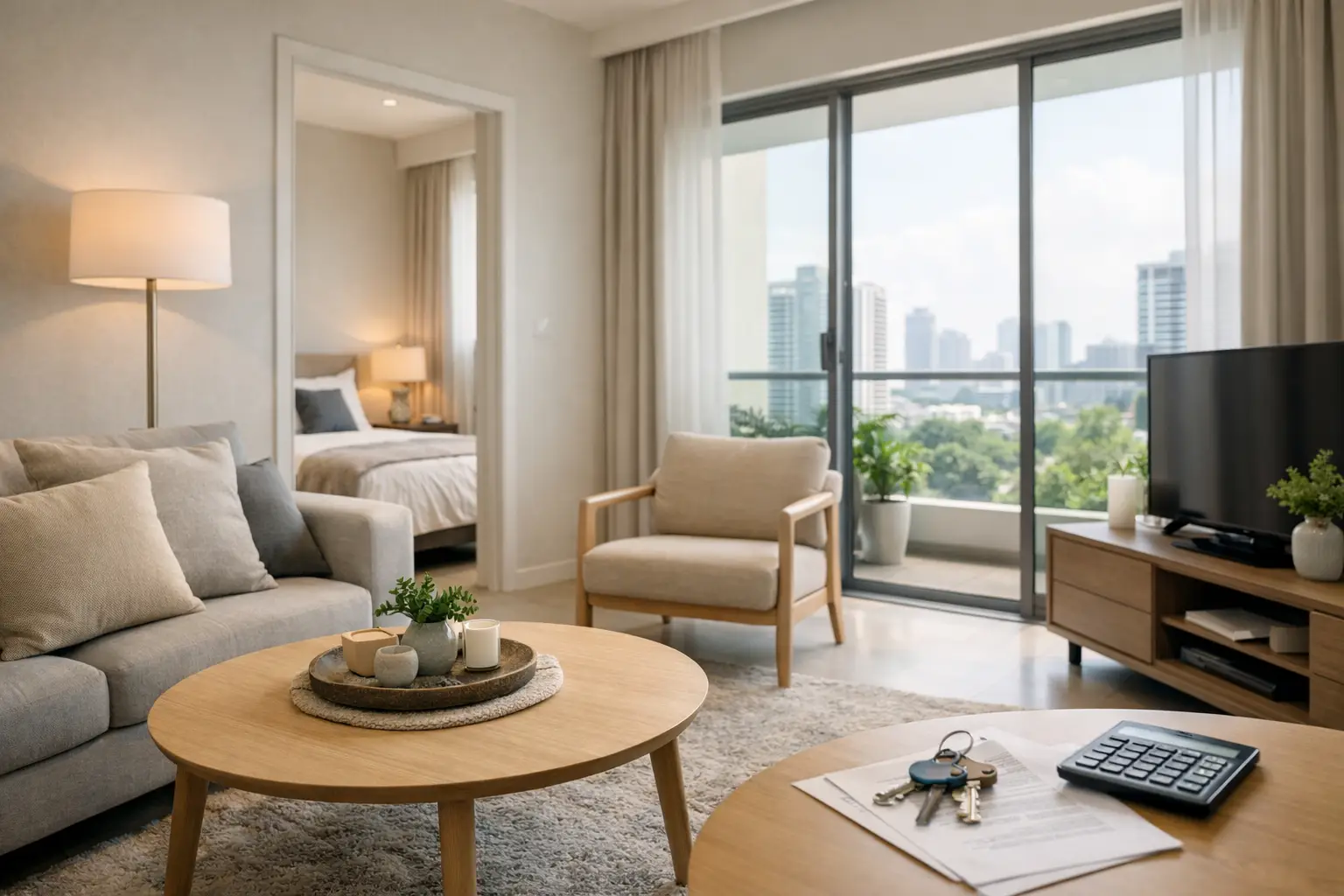
A vacant condominium can look larger than it really is in listing photos, while an owner-occupied home can feel smaller because personal belongings obscure its layout. Home staging cost is therefore not simply a furniture expense. It is a property-marketing decision: one that helps buyers understand the space quickly, picture daily life there and arrive at a viewing with clearer expectations.
For property agents, sellers and landlords in Singapore, the right budget depends on the property’s size, condition, target market and the level of work needed before photography and viewings. A compact vacant unit may need only a carefully chosen living and dining setup. A landed home, by contrast, may require furniture across several rooms, styling accessories and more detailed space planning.
What Does Home Staging Cost in Singapore?
There is no single standard price for home staging because each property needs a different level of preparation. Staging is commonly priced as a package, covering furniture rental for an agreed period alongside delivery, installation, styling and collection. The final quote may also account for the number of rooms, access conditions, required turnaround time and whether the property needs new pieces sourced specifically for the project.
As a practical guide, a modest staging scheme for a smaller flat is usually less expensive than furnishing a large family home in full. Costs rise when more rooms need to be presented, when premium furniture is required to suit the property’s positioning, or when the project involves a longer rental period. Rather than comparing packages by headline price alone, it is more useful to ask what is included and whether the presentation will support the listing’s particular strengths.
A well-planned scheme should make the budget visible in the result. It should improve the photographs, define the purpose of each room and make the home feel proportionate without filling it unnecessarily.
The size and type of property
A one-bedroom flat and a five-bedroom landed property are different projects, even when both are vacant. Larger homes require more furniture, more styling time and more logistics. Properties with several living areas may also need careful decisions about which spaces deserve attention, particularly where the budget is focused on the rooms buyers will notice first.
For many private flats, the living room, dining area, primary bedroom and balcony have the greatest impact on first impressions. In a larger home, a study, family room or outdoor area may be equally important because these spaces help communicate the lifestyle the property offers.
How much furniture is needed
Home staging can range from light styling to near-complete furnishing. A home with good existing furniture may only need decluttering advice, a few replacement pieces and accessories that make photographs feel cleaner and more current. A vacant unit needs the essentials to establish scale: a sofa that shows the width of the living room, a dining set that demonstrates circulation space, and beds that make bedrooms feel usable rather than empty.
The more a staged home must do from scratch, the more the home staging cost is likely to increase. Yet adding every possible item is not always the answer. Sparse but considered furniture can be more effective than a crowded room, especially in compact Singapore homes.
Rental period and marketing timeline
Most sellers want a property staged long enough to cover professional photography, listing launch and an initial run of viewings. If the property sells quickly, a shorter period may be sufficient. If it is a slower-moving listing, the furniture may need to remain in place for longer, which affects the rental component of the quote.
It is worth discussing the marketing plan before confirming the staging period. An agent who expects an immediate launch may prioritise a fast installation. A seller who is still completing repairs or legal paperwork may be better served by scheduling staging closer to the point when viewings can begin. Paying for furniture to sit in a property before it is market-ready is rarely the best use of budget.
Access, timing and site conditions
Operational details matter. Lift access, loading arrangements, parking restrictions, stair-only access and building management requirements can all affect delivery planning. A tight turnaround may also involve additional coordination, particularly if installation needs to happen around cleaning, painting, photography or handover dates.
These are not minor considerations. A reliable staging plan allows enough time for furniture to be delivered, placed properly and checked before the photographer arrives. Rushing this stage can leave an otherwise attractive property looking unfinished.
What Should a Staging Quote Include?
A clear quote should state the rental period, the rooms being staged and the core furniture and accessories supplied. It should also make clear whether delivery, installation, styling and collection are included. This gives agents and owners a realistic view of the full commitment, rather than a low initial figure followed by separate logistical charges.
Ask how extensions are handled if the property remains on the market beyond the original period. It is also sensible to check responsibility for accidental damage, changes to the property schedule and any access costs imposed by the building. These details are especially useful for agents coordinating on behalf of an overseas owner or a seller who has already moved out.
The best quotes are specific without being overly complicated. They connect the furniture plan to the property itself: for example, using a smaller dining table to preserve movement in a narrow space, or placing a desk in a spare bedroom so buyers can see its potential as a study.
Is Staging Worth the Cost for Your Property?
The value of staging is not measured only by the furniture in the room. It lies in whether the home is easier to market. Empty spaces can be difficult to photograph and even harder for some buyers to interpret during a viewing. They may struggle to judge whether a sofa fits, where a dining table belongs or how a bedroom could be arranged.
Staging answers those questions visually. It can also bring order to homes with dated, mismatched or heavily personalised furnishings, where buyers might otherwise focus on the owner’s possessions rather than the property’s proportions, light and layout.
That said, not every property needs a full staging package. A recently renovated unit with tasteful furniture may benefit more from editing, rearrangement and professional photography. A lower-value property with a tight sales budget may need a more selective approach, concentrating on the main living area and primary bedroom. The right decision depends on the likely buyer, the competition nearby and the current condition of the listing.
For landlords, the calculation is slightly different. Furnishing and styling a rental unit can help prospective tenants see it as move-in ready, particularly for expatriate tenants working to a tight relocation schedule. Here, a furniture rental arrangement may offer greater flexibility than buying items outright, especially when the landlord wants to test demand or avoid the burden of storage and future replacement.
How to Set a Sensible Staging Budget
Start with the property’s marketing challenge. Is it vacant and difficult to understand online? Is it an older home that needs a cleaner, more current presentation? Has it been listed for some time with low enquiry levels? The answer will help determine whether the budget should cover full-room furnishing or targeted improvements.
Next, prioritise the spaces that carry the listing. The entrance, living room, dining area and primary bedroom often feature most prominently in photographs and viewings. Secondary rooms should be included when they add a meaningful selling point, such as a work-from-home area, a nursery or a flexible guest room.
Finally, factor staging into the broader launch plan rather than treating it as a last-minute add-on. Cleaning, minor repairs, painting, photography and staging work best when coordinated in the right order. This reduces repeated visits to the property and makes sure the home is ready to present as soon as it goes live.
A staging partner should help make those decisions easier, not add another layer of coordination. Expats Partner supports agents, owners and landlords with furniture rental, practical space planning, installation and collection, allowing the presentation to move in step with the property timeline.
Before committing to a package, walk through the home as a buyer would. Notice the first room they see, the spaces that feel unclear and the features that deserve more attention. A considered staging budget gives those moments the clarity they need, helping the property make a confident first impression from the first photograph to the final viewing.