
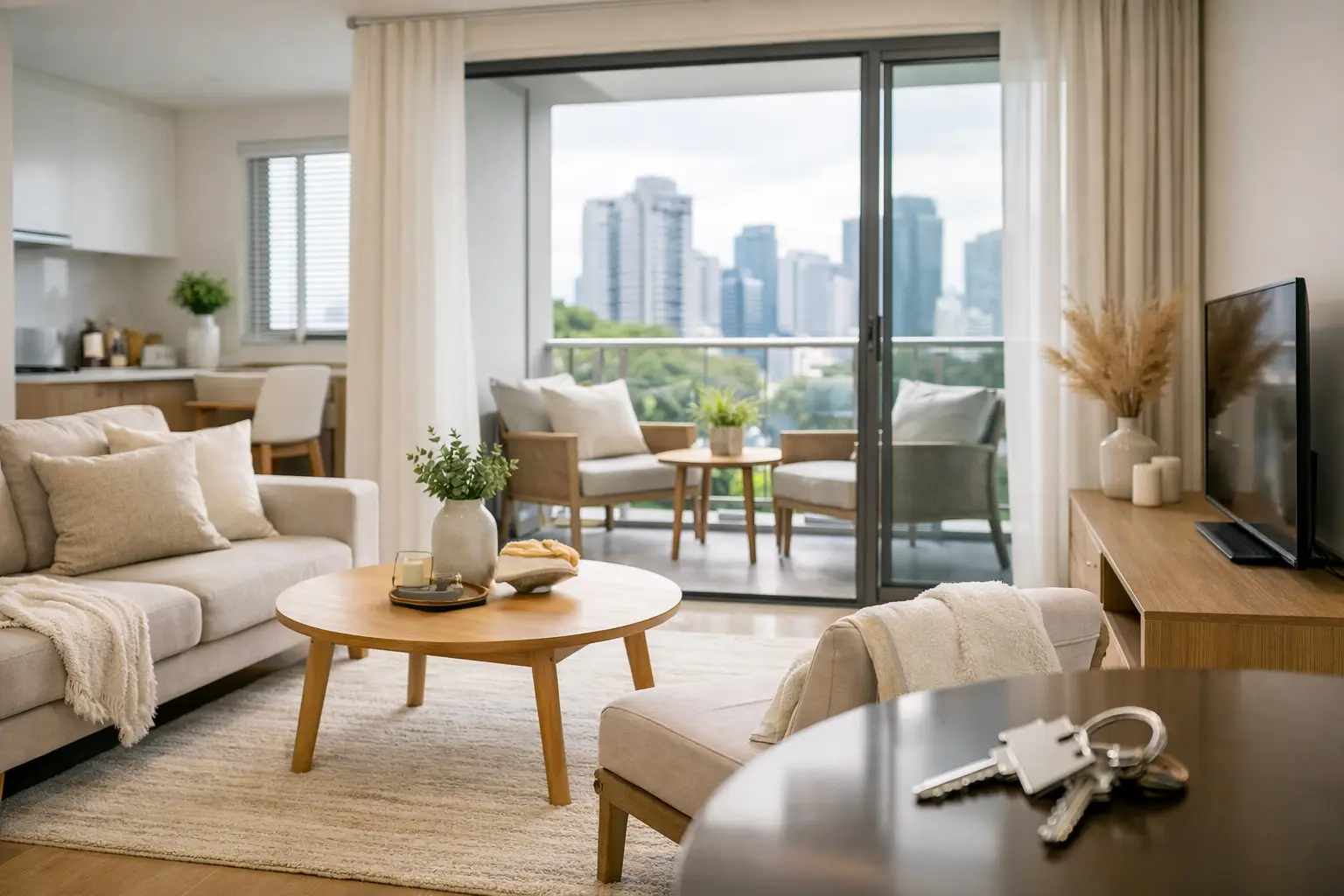
A vacant living room can look larger in person than it does online, yet buyers scrolling through a listing often see only an echoing space with no clear sense of scale. Home staging gives that room purpose. It shows where people might sit, dine, work or relax, helping prospective buyers understand the home before they arrive for a viewing.
For property agents, homeowners and landlords in Singapore, presentation is not simply a finishing touch. It is part of the marketing plan. Well-chosen furniture, calm colours and a tidy layout can make listing photographs clearer, give viewings more direction and reduce the amount of imagination required from a buyer or tenant.
What home staging is designed to do
Home staging is the temporary furnishing and styling of a property for sale or rent. It is not about making a home look like a showroom or imposing one design style on every property. The purpose is more practical: to present each room at its best, make the layout easy to read and create a setting that feels welcoming to a broad range of viewers.
An empty bedroom can be hard to judge. Is there enough space for a bed, wardrobe and side tables? A staged bedroom answers that question at a glance. The same applies to an awkward corner, a compact dining area or a second room that could work as a study. When a space has a clear function, buyers can assess it with more confidence.
Staging is especially helpful for vacant condominiums, inherited homes, units that have already been vacated by tenants, and owner-occupied properties with furniture that is worn, oversized or highly personal. It can also support slow-moving listings where the current photographs are not drawing enough enquiries.
Why property presentation matters before the viewing
The first viewing usually happens on a screen. Buyers compare several properties quickly, often looking at room photos before studying the floor plan in detail. Bright, organised images can encourage them to pause and consider a listing. Dark corners, bare rooms and visual clutter can make a property feel less appealing than it really is.
Good staging supports photography because it creates structure. A sofa defines a living zone. A dining table shows how many people the area can comfortably accommodate. Soft furnishings add warmth without distracting from key features such as windows, ceiling height, flooring or a balcony view.
It also creates a more consistent experience when buyers arrive. If the online listing suggests a neat, comfortable home and the viewing matches that impression, the property feels more considered. That consistency matters, particularly when buyers are arranging several viewings in one day.
There is a balance to strike. Overfilling a room with furniture can make it feel smaller, while styling that is too sparse may leave it cold. The right approach depends on the size of the home, its target market, condition and asking price. A family-sized landed property needs a different furniture plan from a one-bedroom city flat.
Start with the rooms that influence a decision
Not every room needs the same level of attention. In most homes, the living area, dining space, main bedroom and any flexible room are the strongest places to start. These are the areas buyers use to judge comfort, scale and day-to-day living.
The living room should show a natural route through the space and avoid blocking windows or balcony access. Furniture should be proportionate. A compact sofa and occasional chair may work better than a large sectional in a smaller condominium, even if the sectional technically fits.
In the dining area, a table with the right number of chairs helps viewers understand capacity. A two-seater table in a space that could comfortably hold four may unintentionally understate the home. Conversely, forcing a large table into a narrow area can highlight limitations rather than strengths.
Bedrooms benefit from a simple, restful arrangement. A properly sized bed, bedside tables and restrained accessories can make the room feel useful without making it seem crowded. For spare rooms, choosing a clear purpose is often more effective than leaving them empty. A study setup may appeal to professionals, while a guest room arrangement can suit family buyers. The best choice should reflect likely occupants rather than a passing trend.
A practical home staging process
The most effective projects begin with an honest assessment of the property. Agents and owners should first identify what photographs well, what needs softening and which spaces are difficult to interpret. This may include dated furniture, excessive personal items, poor lighting or a layout that does not immediately make sense.
Decluttering comes before styling. Personal photographs, collections, bulky storage and everyday household items can make it harder for viewers to focus on the home itself. This does not mean stripping away all personality. It means leaving enough visual calm for buyers to picture their own routines there.
Next comes a furniture plan. The pieces should suit the room dimensions, property type and expected audience. Neutral, well-maintained furnishings tend to work well because they photograph cleanly and allow architectural details to remain visible. Cushions, rugs, lamps, artwork and greenery can add warmth, but they should support the room rather than become its main feature.
Finally, arrange professional photography after the property is fully prepared. Take time to check curtains, lights, table settings and sightlines from each camera angle. A small adjustment, such as moving a chair away from a doorway or removing an extra side table, can make a room look more open in photographs.
Renting furniture can keep preparation simple
Buying new furniture for a short sales campaign is not always practical. It requires time to select pieces, arrange delivery, coordinate assembly and decide what to do with everything once the property has sold. For an empty unit or a time-sensitive listing, furniture rental can offer a more controlled route.
A staging partner can provide a coordinated furniture package, plan the setup, arrange delivery and installation, then collect the items after the agreed period. This reduces the coordination required from an agent or seller and helps keep the property preparation on schedule.
It can also be a more sustainable choice. Using well-maintained pre-owned furniture extends the useful life of quality pieces, while still allowing a property to look current and well cared for. Where a particular brief calls for it, new items can be sourced too. The important point is that the furniture serves the property, not the other way around.
At Expats Partner, staging is approached as a property presentation service rather than a furniture drop-off. The aim is to make the setup practical for photography and viewings, while keeping the process manageable for people already coordinating a sale, tenancy or move.
When staging may need a different approach
Home staging is valuable, but it cannot solve every listing challenge on its own. If a property needs repairs, deep cleaning, repainting or significant maintenance, those issues should be addressed first. Buyers may appreciate a well-furnished room, but they will still notice damaged fittings, stains or poor upkeep.
Likewise, a fully furnished owner-occupied home may not require a complete staging package. Sometimes selective editing is enough: removing excess furniture, changing a few pieces, improving lighting and styling the key rooms for photography. This can be a sensible option where the existing furniture is in good condition but the overall impression feels dated or cluttered.
For rental properties, the emphasis may shift towards durability and tenant practicality. A landlord preparing a furnished unit needs furniture that looks attractive while supporting everyday use. A seller, by comparison, may prioritise a more presentation-led setup for a shorter period. Knowing the goal early helps avoid spending on items that do not support the outcome.
Prepare for the practical details
Before installation day, confirm building access, lift bookings, loading arrangements and any management requirements. In Singapore, condominium rules can affect delivery times and the use of service lifts. Clear access prevents unnecessary delays and gives the installation team time to focus on the setup itself.
It is also worth agreeing the staging period, collection arrangements and whether the home will remain available for viewings after an offer is accepted. Clear planning helps agents avoid a rushed removal date while they are still managing negotiations.
A well-presented home does not need to be extravagant. It needs to be easy to understand, pleasant to walk through and consistent with the promise made in its listing photographs. When buyers can picture their life in the rooms, the conversation moves beyond empty square footage and towards the possibility of living there.