
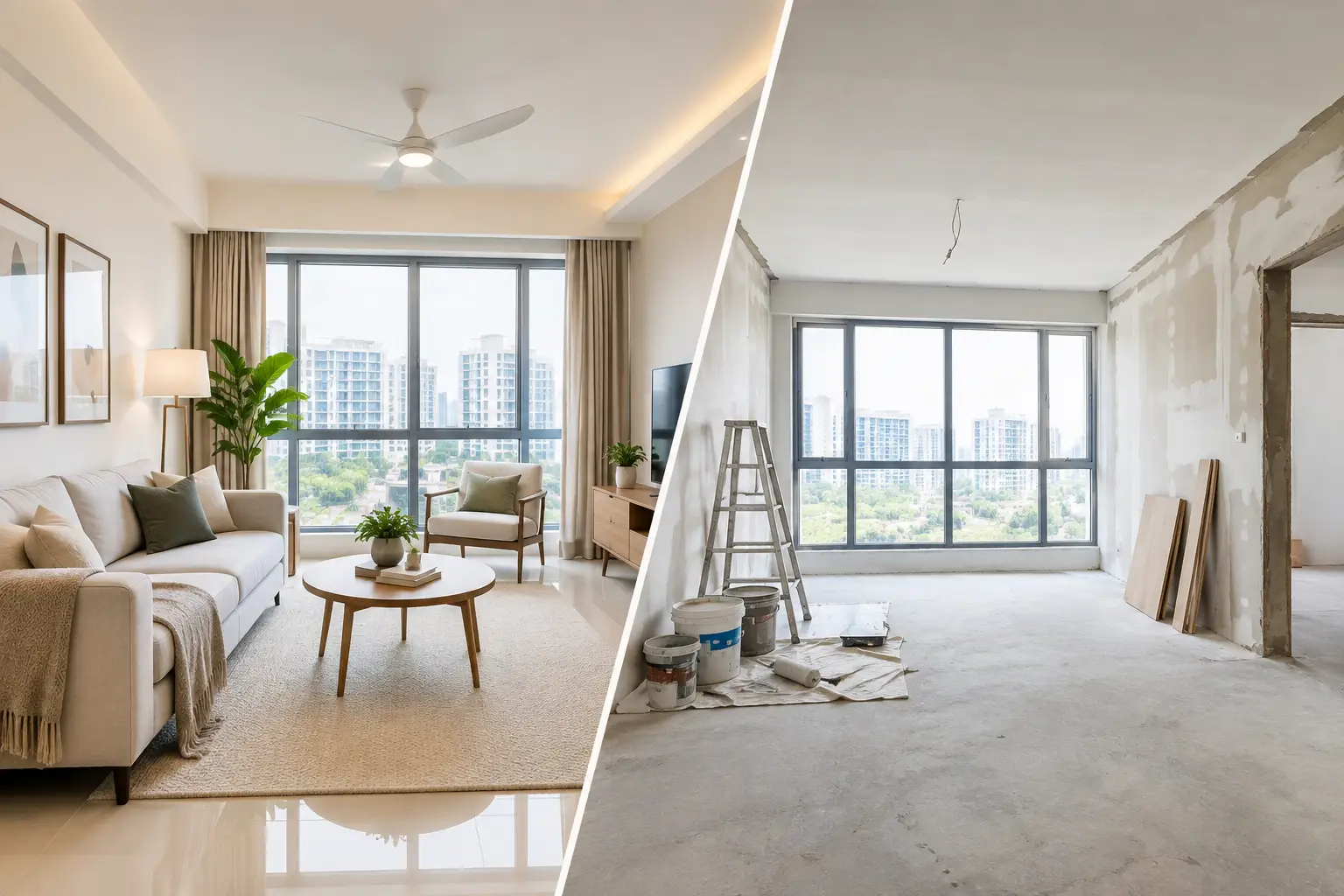
A vacant condominium with dated tiles can prompt an expensive question: should the owner renovate, or simply stage it well? In the decision between home staging versus renovation, the right answer depends less on making a home look new and more on removing the barriers that stop a buyer or tenant from seeing its potential.
For property agents, sellers and landlords in Singapore, presentation has to work quickly. Listing photographs need to earn attention, viewings need to feel clear and welcoming, and every room should make sense at first glance. Renovation and staging can both help, but they solve different problems, come with different costs and require very different levels of commitment.
What each option is designed to do
Home staging prepares a property for marketing through furniture, layout, lighting, soft furnishings and selected accessories. It gives empty rooms a purpose, improves the sense of scale and creates a more considered setting for photographs and viewings. The furniture is usually rented for a defined period, then collected once the property is sold, leased or no longer needs to be presented.
Renovation changes the physical property. It may involve repainting, replacing flooring, updating a kitchen or bathroom, repairing built-in fittings, rewiring, plumbing work or more substantial alterations. These works can improve the condition and long-term usability of a home, but they also require time, coordination and a larger budget.
The distinction matters. Staging helps people imagine living in a property. Renovation fixes, replaces or upgrades the property itself. A well-staged home cannot hide serious defects, while a newly renovated but empty home can still feel cold, smaller than it is or difficult to understand online.
Home staging versus renovation: start with the buyer’s objection
Before approving any work, ask a straightforward question: what might make a prospective buyer hesitate?
If the answer is, “I cannot tell whether a sofa fits here” or “This bedroom feels small and featureless”, staging is often the more direct solution. A properly scaled sofa, dining set, bed and occasional furniture show how the rooms can function. Styling also guides the eye towards natural light, storage, views and useful architectural details.
If the answer is, “The bathroom is leaking”, “The kitchen cabinets are damaged” or “The flooring is badly worn”, renovation or repair deserves priority. Buyers may accept a neutral, older finish if the home is clean and sound. They are far less likely to overlook faults that suggest hidden costs or immediate disruption after completion.
For many homes, the sensible route is not a choice between two extremes. It is targeted maintenance followed by staging. Fresh paint, minor repairs, deep cleaning and decluttering can remove the distractions. Furnishing then gives the property warmth, proportion and a clear lifestyle story without committing to a full refurbishment.
When staging is likely to be the better investment
Staging is particularly useful for vacant properties, inherited homes, investment units and owner-occupied homes with furniture that is too large, mismatched or tired. These are common situations where the space may be perfectly serviceable, but its presentation is working against the listing.
A vacant living room often photographs as a blank rectangle. Buyers cannot easily judge where to place a television, whether there is room for a dining table or how a family might move through the space. Staging answers those questions quietly. It also helps an agent create photographs that are easier to scan and remember among similar listings.
It can be a practical choice when time is limited. Furniture rental, delivery, installation and collection avoid the need to shop, assemble, store or resell pieces after the marketing period. For a seller who has already moved out, or an agent preparing a listing on a tight schedule, that operational simplicity matters as much as the visual result.
Staging also offers budget control. Rather than purchasing furnishings for a home that will soon change hands, the owner pays for presentation over a set period. Well-maintained pre-owned rental furniture can make this a more considered option for clients who want to avoid unnecessary consumption while still showing the property at its best.
When renovation is worth the time and cost
Renovation is justified when it addresses an issue buyers or tenants will see as a genuine liability. Water damage, mould, broken fixtures, unsafe electrical points and visibly deteriorated finishes should not be disguised with attractive furniture. Addressing them protects the viewing experience and reduces the risk that a buyer assumes the rest of the home has been neglected too.
It may also make sense when the target market clearly expects a certain standard. A landlord preparing a higher-value rental unit, for example, may need to replace an unusable kitchen worktop or repair damaged wardrobes before furnishing the home. A modest upgrade can support rental expectations when it improves daily living rather than simply following a short-lived design trend.
The caution is overcapitalisation. A major renovation does not automatically produce an equivalent increase in sale price or rental return. Highly personal finishes may narrow appeal, and extensive works can delay photography and viewings. In a competitive market, losing several weeks can be more costly than choosing a clean, neutral finish and presenting it thoughtfully.
Consider timing before making a design decision
Renovation is rarely a quick cosmetic exercise. Even a smaller scope can involve quotations, building management approvals, contractor schedules, material lead times and unexpected discoveries once work begins. For condominiums, access rules and permitted working hours can add further constraints.
Staging is designed around a different timetable. Once a furniture plan is agreed, the property can be furnished and styled in a short window, ready for photography and viewings. That is useful when an empty unit has just been handed over, a tenant has moved out, or an agent needs to relaunch a slow-moving listing with stronger images.
This does not mean staging should be rushed. The best results begin with practical information: floor plans, photographs, room measurements, the likely buyer or tenant profile, building access and the intended marketing date. Good space planning prevents overcrowding and ensures furniture suits both the room and the price point of the property.
A practical way to decide
Assess the home in daylight and view it as a prospective buyer would. Look first for defects, then for distractions, then for missing cues about how each room is used. Defects should be repaired. Distractions such as clutter, poor paint touch-ups or mismatched furnishings should be removed or simplified. Missing cues are where staging has the greatest value.
Next, consider the likely audience. A compact one-bedroom flat may need a dining nook and work-from-home setup to show flexibility. A family-sized condominium may benefit from a properly furnished living room, dining area and main bedroom, so buyers can understand circulation and storage. A landed home may need more careful zoning to make larger rooms feel purposeful rather than empty.
Finally, set a marketing-led budget rather than a purely decorative one. Spend where it changes confidence: essential repairs, cleaning, paint touch-ups, lighting and appropriate furniture. Avoid upgrades that consume the budget but have little effect on photographs, viewings or the next owner’s experience.
Presentation is not a substitute for condition
A staged home should still feel honest. Furniture can soften an awkward corner, but it should not obstruct signs of damage or make a room appear to serve a purpose it cannot realistically support. Buyers notice when a property has been styled beyond its practical limits.
The goal is clarity, not theatre. Neutral colours, suitable furniture scale and tidy surfaces allow the home itself to remain the focus. This approach tends to appeal more broadly because buyers can see a comfortable, credible version of the space and still picture their own lives within it.
For sellers and agents, Expats Partner can make this process more manageable by coordinating furniture selection, delivery, setup and collection around the property timeline. The value is not simply in adding furniture. It is in making the home easier to photograph, easier to understand and more reassuring to walk through.
A property does not need a full renovation to make a stronger impression. It needs the right response to its real limitations, followed by a presentation that helps the next person see what the space can become.