
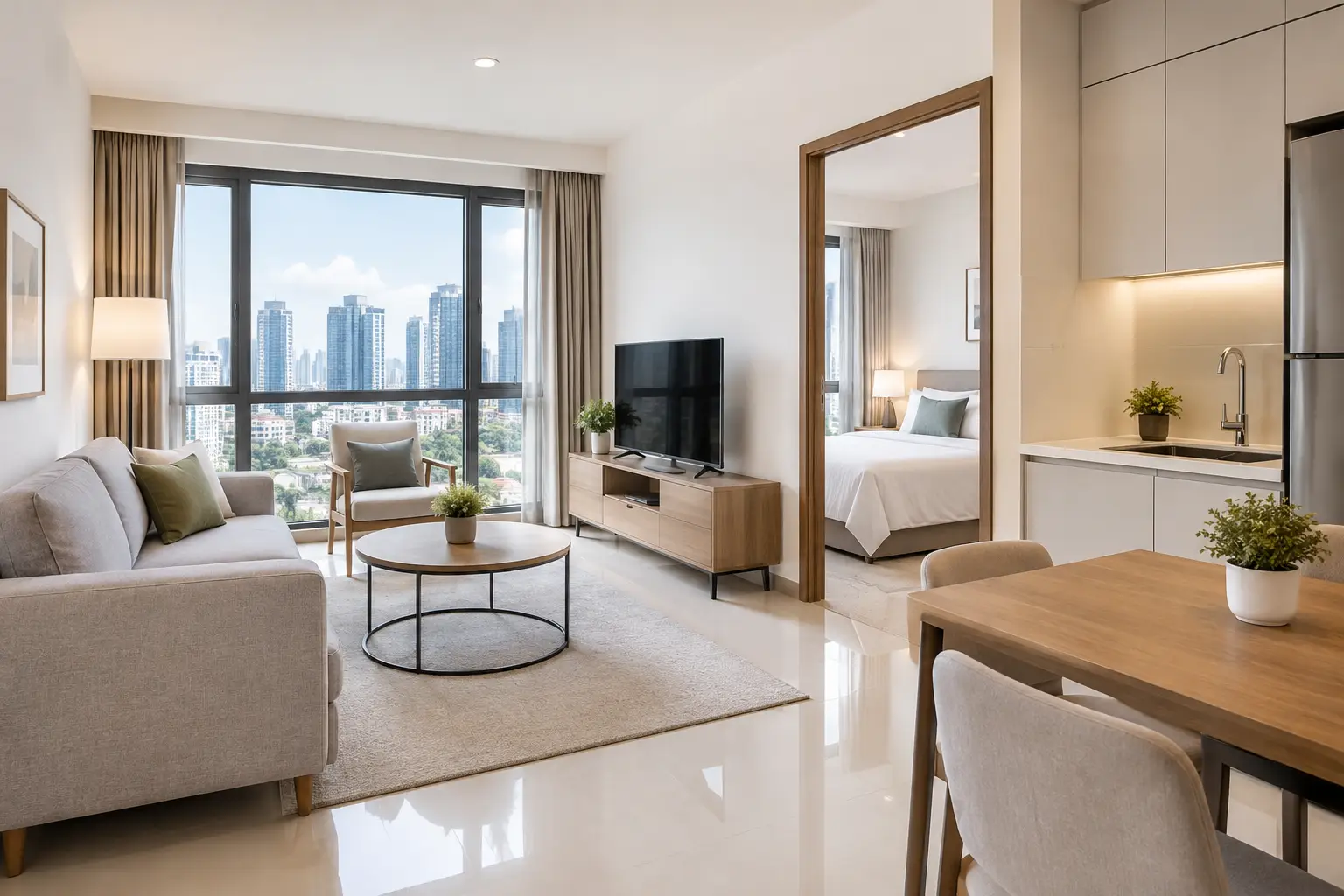
A serviced flat can look well presented in photographs yet still disappoint a guest on their first evening. A dining chair may be uncomfortable for working, the kitchen may lack basic equipment, or there may be nowhere sensible to put a suitcase. Knowing how to furnish serviced flats means planning for real routines, not simply filling rooms with attractive pieces.
For landlords, operators and property agents in Singapore, the aim is usually clear: prepare a home that feels move-in ready, photographs well, withstands regular use and can be turned around without unnecessary cost or delay. The right furnishing plan supports guest comfort, rental appeal and smoother operations at the same time.
Start with the guest and the length of stay
The furnishing brief should change according to who will use the flat. A two-bedroom unit for a relocating family needs a different setup from a compact flat aimed at business travellers staying for six weeks. Before selecting furniture, decide whether the property is likely to serve short-stay visitors, corporate assignees, families between homes, or longer-term tenants who want the convenience of a serviced arrangement.
Shorter stays call for clarity and ease. Guests should immediately understand where to sleep, eat, work, store belongings and relax. Longer stays require more storage, a proper dining setting and seating that remains comfortable after many evenings. Families may value a generous dining table, bedside storage and practical laundry provisions more than decorative accessories.
It also helps to set a realistic occupancy level. A one-bedroom flat may sleep two comfortably, but a sofa bed can give an operator flexibility where local regulations, layout and the rental model allow it. Do not add extra beds simply to increase capacity if they make circulation awkward or make the living room feel cramped in listing photographs.
Plan each room before ordering furniture
Measure every room, doorway, lift and access route first. This is particularly important in condominiums, where a piece that suits the floor plan may not fit into the lift or through the entrance. Record wall lengths, window positions, power points, air-conditioning units and built-in storage, then create a simple furniture plan with clear walking paths.
The living area should establish the flat’s purpose at a glance. A compact sofa, coffee table, rug and media console often provide enough structure without overcrowding the room. Where space allows, add an occasional chair rather than an oversized sectional. It can improve the layout for couples or colleagues without blocking light or access to the balcony.
A dining area should be usable rather than symbolic. A table with enough elbow room and chairs that can support a relaxed meal or laptop session is more valuable than a large statement table that dominates the room. In smaller units, a round table or extendable design can be a sensible compromise.
Give guests a proper place to work
Many guests of serviced flats need to answer emails, join calls or complete focused work from home. A dedicated desk, supportive chair, task lamp and convenient power access can make a modest unit more appealing to corporate occupants. If there is no separate study, position a small desk near natural light but away from the dining table where possible.
Avoid treating the bed as the only work surface. It may save space on paper, but it sends the wrong message to a guest staying for several weeks.
Make bedrooms calm and practical
Bedrooms do not need excessive styling, but they do need to feel complete. Provide a comfortable bed and mattress, bedside tables or shelves, bedside lighting, blackout curtains or blinds where appropriate, hangers and usable wardrobe space. A full-length mirror, laundry basket and a small luggage bench can also make arrival and unpacking easier.
Choose neutral bedframes and upholstered or timber finishes that are easy to maintain. White bedding photographs crisply, although operators should balance this with the laundering requirements of frequent changeovers. Layering a bed with cushions may look appealing, but too many decorative items create extra handling, storage and cleaning work.
Choose durable furniture with a residential feel
Serviced flats need furniture that can cope with moving luggage, regular cleaning and varied guest habits. This does not mean every item must look commercial. The best results usually combine hard-wearing materials with a warm, residential appearance.
Look for sofas with durable upholstery, removable or cleanable covers where available, tables with resilient surfaces and dining chairs that are stable and straightforward to wipe down. Avoid delicate glass, pale untreated fabrics and furniture with loose parts that are easily damaged. A lower-priced item is not always the more economical choice if it needs replacing after a few turnovers.
Colour choices matter too. A base of warm neutrals, soft grey, natural timber and muted textiles makes rooms feel bright and broadens their appeal across different guest profiles. Add character through cushions, artwork, lamps and a few considered accessories. These are easier to refresh than large furniture items if the property needs a new look later.
Safety and maintenance should shape every decision. Secure tall furniture where needed, check that rugs have non-slip backing, select stable lamps, and keep clutter away from walkways. If a piece is difficult for your cleaner to move, inspect or maintain, consider whether it belongs in a serviced property.
Furnish the kitchen for everyday use
A serviced flat kitchen should allow someone to cook a simple meal on the first night without hunting for basics. Stock it for the property’s intended occupancy, rather than offering a random collection of leftover utensils. Two guests may manage with four place settings, but a family flat needs more capacity and a sensible range of cookware.
The essentials normally include:
- Plates, bowls, mugs, glasses and cutlery for more people than the maximum occupancy.
- Pots, frying pans, ovenware, chopping boards, knives, utensils and food-storage containers.
- A kettle, toaster, microwave where suitable, and basic small appliances that fit the guest profile.
- Dishwashing supplies, drying equipment, bins and clear storage for everyday items.
Keep the selection practical and replace missing items between stays. Expensive specialist gadgets rarely justify the cost unless the property targets a premium market and guests genuinely expect them. Clear cupboard organisation also helps cleaners spot what needs replenishing.
Budget for the full setup, not only the furniture
The cost of furnishing is more than sofas and beds. It may include appliances, linen, kitchenware, curtains, delivery, installation, styling, storage, maintenance and collection at the end of a lease. Allow for replacements too, especially for mattresses, dining chairs, lamps, towels and small household items that receive frequent use.
Buying can suit an operator with a stable portfolio, a long holding period and storage capacity for spare items. Renting furniture can be a more practical route when a unit must be prepared quickly, the lease is temporary, or the furnishing requirements may change. It reduces the upfront outlay and avoids leaving an owner with bulky furniture when the property is sold, renovated or returned unfurnished.
A furniture rental partner can also coordinate delivery, placement and collection, which is useful when an agent or landlord is managing multiple deadlines. Expats Partner, for example, can supply well-maintained pre-owned furniture alongside new pieces where the brief requires it. The right route depends on the expected rental period, target rate, property condition and how much operational work the owner wants to take on.
Style for listing photos and real viewings
A furnished flat should help people understand the scale and function of each room. Keep windows clear enough to maximise daylight, use appropriately sized rugs to define zones, and avoid pushing every piece of furniture against the walls. A few books, cushions, artwork and greenery can make a property feel lived in, but surfaces should still look easy to maintain.
Before photography or a viewing, remove packaging, spare furniture, cleaning equipment and personal items from sight. Check that lamps work, curtains hang properly, bedding is smooth and dining chairs are aligned. These small details influence whether a listing appears orderly and ready for occupation.
The best setup is not necessarily the most elaborate one. It is the one that lets a prospective guest walk in, picture an ordinary week there and feel that the practical details have already been considered.