
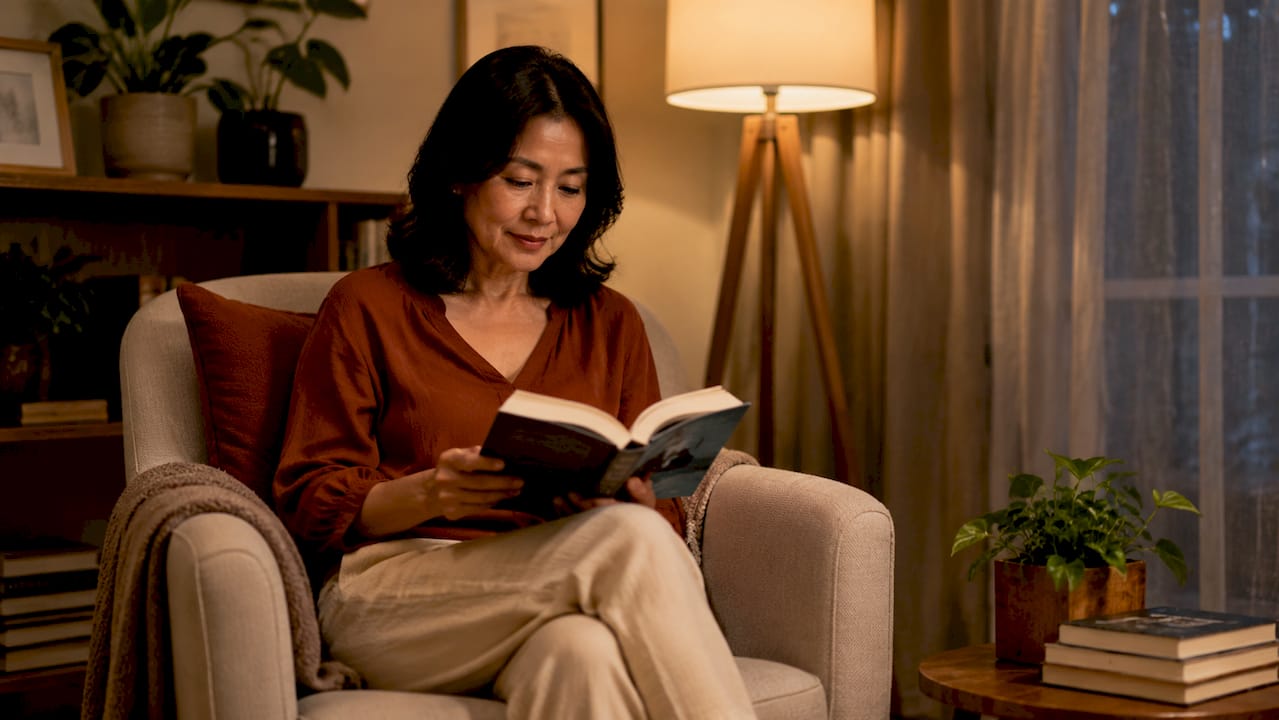
Making a large landed home feel warm and liveable requires deliberate layering of lighting, furniture scale, textiles, and spatial zoning to create intimacy within generous spaces. Without this intention, even a beautifully finished property can feel cold, echoey, and impersonal. The principles of residential design psychology show that warmth emerges from experience, not from square footage. The good news is that the core tools are practical and accessible: warm white lighting in the 2700K–3000K range, correctly scaled furniture, large area rugs, and layered textiles. Apply these consistently across your Singapore landed home and the difference is immediate.
How does lighting affect warmth in large landed homes?
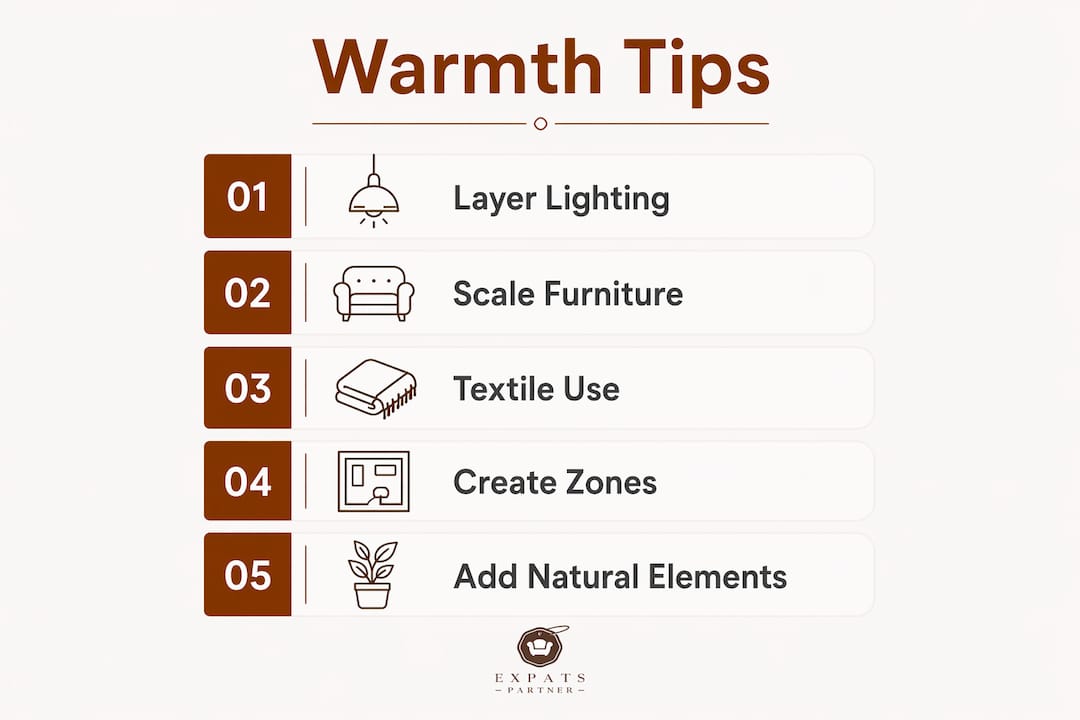
Lighting is the single most impactful variable in how a large home feels. A room lit entirely by cool-white LEDs at 5000K or above reads as clinical, regardless of how well it is furnished. Switching to warm white bulbs in the 2700K–3000K range immediately shifts the emotional register of a room from sterile to inviting. This is one of the lowest-cost, highest-impact changes you can make.
The second problem is reliance on a single overhead source. Large homes frequently suffer from what designers call centre-darkness, where the middle of a room is adequately lit but corners and edges fall into shadow. That contrast creates a cold, unfinished feeling. The solution is layered lighting across three types:
- Ambient lighting: Ceiling fixtures, recessed downlights, or pendant lights that provide general illumination across the room.
- Task lighting: Table lamps, reading lights, and under-cabinet strips that serve specific functional areas.
- Accent lighting: Wall sconces, picture lights, and LED strips that highlight artwork, shelving, or architectural features.
Each layer serves a different purpose. Together, they fill a large room with light from multiple heights and angles, which softens the space and removes the harshness of a single overhead source.
Pro Tip: Install dimmer switches on all ambient circuits. The ability to reduce overhead brightness in the evening and rely on table lamps and accent lights is what separates a genuinely warm home from one that only looks good in photographs.
What furniture scale and zoning strategies prevent emptiness?
Furniture that is too small for a large room creates the “floating island” effect. Each piece sits in isolation, surrounded by empty floor, and the room feels unfinished rather than spacious. The fix is to match furniture scale to room scale, and then anchor each grouping with a correctly sized rug.
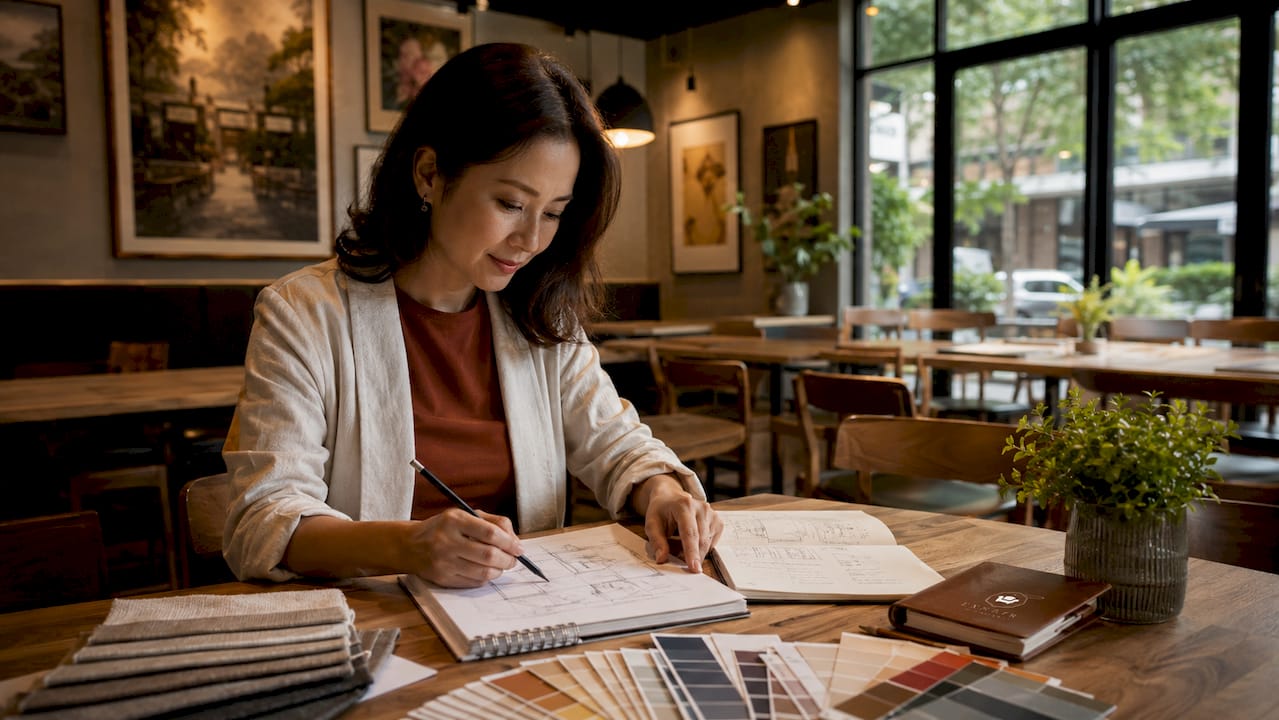
Large area rugs of at least 10×14 or 12×15 feet are the foundation of any successful large living zone. A rug this size pulls all the furniture legs onto its surface, visually unifying the seating group into a single cohesive zone. A rug that is too small does the opposite: it makes the furniture look like it is floating above the floor with no connection to the room.
Follow this sequence when zoning a large room:
- Map the walkways first. Identify the natural paths people take through the space. Furniture placement must respect these routes or the room will feel awkward to move through, regardless of how it looks.
- Define the conversation zone. Place a large sofa, two armchairs, and a coffee table in a U or L configuration. All pieces should sit on the rug.
- Create a secondary zone. In a very large room, add a reading corner or a games table at the far end. This gives the room a second purpose and prevents the back half from feeling abandoned.
- Leave breathing room between zones. A clear gap of roughly 90–120 cm between zones maintains flow without making the room feel chopped up.
Pro Tip: Before buying furniture, tape out the footprint of each piece on the floor with masking tape. Walk around it for a day. You will quickly see whether the scale works and whether the walkways remain clear.
| Approach | Effect on large room |
|---|---|
| Small rug, small sofa | Furniture floats, room feels cold and unfinished |
| Large rug, scaled sofa group | Furniture anchors, zone feels cohesive and warm |
| Single central zone only | Back half of room feels empty and purposeless |
| Two defined zones with clear walkways | Room feels full, functional, and inviting |
How do textiles and focal points add warmth to spacious rooms?
Minimalism without tactile layering makes large homes feel cold. Sleek surfaces look polished in photographs but do little to absorb sound or create the sensory comfort that makes a home feel lived in. Textiles address both problems at once.
Layer fabrics deliberately across each room:
- Wool or jute rugs on timber or stone floors to absorb echo and add visual warmth underfoot.
- Cushions in velvet, linen, or bouclé on sofas and armchairs to introduce texture and colour at eye level.
- Throws draped over armchairs or the end of a sofa to signal comfort and informality.
- Curtains in a heavier fabric such as linen or cotton velvet, floor to ceiling, to frame windows and soften the vertical scale of tall rooms.
Focal points are equally important. Humans require visual anchor points every 6–8 feet along sightlines, and large rooms that lack them feel cold and unfinished. The optimal size for a focal object in a large space is 25–34 cm, placed deliberately at key sightlines rather than scattered randomly. A single large artwork above a sofa, a sculptural floor lamp beside an armchair, or a statement vase on a console table all serve this function. Oversized art or feature walls also work particularly well in rooms with high or double-volume ceilings, where vertical focal points visually reduce the soaring height and add character.
Pro Tip: Avoid scattering small decorative items across shelves and surfaces. Clustered decor at the 25–34 cm scale reads as intentional and warm. Dispersed small pieces read as clutter or, worse, as an afterthought.
Design psychology principles for a truly liveable large home
Design psychology is the study of how spatial decisions affect emotional comfort. In large landed homes, the most common emotional complaint is that the space feels impressive but not comfortable. Addressing this requires a few specific interventions.
Create lower-ceiling retreat zones. Lower perceived ceiling heights encourage intimacy and calm, which is why double-volume living rooms can feel overwhelming despite their grandeur. You can create a lower-ceiling effect without structural work by positioning a large pendant light low over a dining table, using a canopy bed in the master bedroom, or placing a bookshelf across one wall to visually compress the vertical scale.
Use material transitions to maintain cohesion. Consistent materiality across floors prevents a large landed home from feeling like a collection of disconnected rooms. Choose a timber species or stone type and carry it through the ground floor. Introduce a variation on the first floor, but keep the palette related. This creates a sense of the home as one cohesive experience rather than a series of separate boxes.
Bring in natural elements. Plants, natural timber, and stone all soften the atmosphere of large rooms. In Singapore’s climate, indoor plants thrive with minimal maintenance. A large fiddle-leaf fig or a cluster of potted palms beside a window adds life and colour without requiring structural change.
Prioritise conversation zones over display. A large living room arranged for conversation, with seating facing inward and a clear focal point, feels warmer than one arranged to showcase the room’s size. The room should feel like it is designed for the people in it, not for the people looking at it.
What are the most common mistakes in large landed home design?
Several recurring mistakes undermine warmth and livability in large homes, even when the budget and intentions are good.
- Under-furnishing. Leaving large areas of floor empty because the room “has space” creates coldness. Fill the room to its natural scale.
- Scattering small decor. Small items dispersed across a large room disappear visually. Use fewer, larger pieces placed with intention.
- Relying on overhead lighting alone. A single ceiling fixture in a large room creates harsh shadows and cold corners. Layer ambient, task, and accent sources.
- Choosing a rug that is too small. A rug that does not extend under the front legs of all seating pieces fails to anchor the zone.
- Ignoring walkways. Furniture placed without regard for natural movement paths creates awkward, uncomfortable spaces.
- Skipping textiles. Hard surfaces throughout a large room create echo and visual coldness. Rugs, curtains, and cushions are not optional extras.
Pro Tip: Prioritise functional zones before aesthetics. Decide how each area of the room will be used, then furnish to support that use. Aesthetic decisions made on top of a functional plan always produce better results than aesthetic decisions made in isolation.
Key takeaways
Making a large landed home feel warm and liveable depends on layering lighting, anchoring furniture with correctly scaled rugs, adding tactile textiles, and designing each zone around how people actually use the space.
| Point | Details |
|---|---|
| Warm white lighting is foundational | Switch to 2700K–3000K bulbs and layer ambient, task, and accent sources to remove cold shadows. |
| Rug size determines zone cohesion | Use rugs of at least 10×14 feet to anchor furniture groups and prevent the floating island effect. |
| Textiles absorb echo and add comfort | Layer wool rugs, cushions, throws, and curtains to create tactile warmth across every room. |
| Focal points anchor large sightlines | Place clustered decor at the 25–34 cm scale every 6–8 feet to give the eye a place to rest. |
| Zoning follows walkways, not aesthetics | Map natural movement paths first, then define conversation and retreat zones around them. |
What we have learned from furnishing large landed homes in Singapore
Working with homeowners and expats across Singapore’s landed property market has taught us one consistent lesson: the homes that feel warmest are rarely the ones with the most furniture or the highest budgets. They are the ones where every decision was made with the person living there in mind.
Singapore’s landed homes present a specific challenge. The combination of high ceilings, open-plan ground floors, and hard-surface finishes common in local construction creates spaces that look impressive on a floor plan but can feel cold and echoey in daily life. The climate also means that air conditioning runs for much of the year, which removes the natural warmth that soft furnishings and layered lighting have to work harder to replace.
The most effective approach we have seen is to treat the home as a sequence of experiences rather than a collection of rooms. Each zone should have a clear purpose, a defined boundary through rugs and furniture placement, and at least one tactile element that invites you to sit, touch, or linger. When those three conditions are met across every room, the home stops feeling like a large property and starts feeling like a place where people genuinely want to spend time.
Livability is not a style choice. It is a design discipline. And it is one that pays off every single day you live in the space.
— Expats Partner
Furnishing a large landed home with the right support
Getting the furniture scale, zoning, and layering right in a large landed home is easier when you are not committed to buying every piece outright.
Expats Partner provides flexible furniture rental in Singapore for homeowners, expats, and landlords who need well-scaled, quality furnishings without the long-term commitment of purchasing. Whether you are furnishing a newly rented landed property, preparing a home for sale, or simply testing a layout before investing, rental gives you the freedom to get the scale right. Expats Partner also offers home staging in Singapore for landed homes, covering spatial planning, furniture placement, and styling to create a warm, viewing-ready result. Speak to the team to find out which option suits your property and timeline.
FAQ
What lighting colour temperature makes a large home feel warm?
Warm white bulbs in the 2700K–3000K range create the most inviting atmosphere in large homes. Avoid cool-white LEDs at 5000K or above, which read as clinical regardless of the furnishings around them.
How big should a rug be in a large living room?
A rug of at least 10×14 or 12×15 feet is recommended for large living zones. The rug should extend under the front legs of all seating pieces to anchor the furniture group and prevent the floating island effect.
How do you create intimate zones in an open-plan landed home?
Define each zone with a large area rug, position furniture inward to face a focal point, and use a pendant light or floor lamp to lower the perceived ceiling height. This creates a sense of enclosure and calm within a larger open space.
Why does a large home feel cold even when it is well furnished?
Cold feelings in large homes typically come from hard surfaces, insufficient lighting layers, and a lack of tactile textiles. Wool rugs, cushions, throws, and curtains absorb echo and add sensory warmth that hard finishes cannot provide on their own.
Can furniture rental work for a large landed home in Singapore?
Furniture rental is well suited to large landed homes because it allows you to select correctly scaled pieces without committing to a purchase. Expats Partner offers furniture rental packages in Singapore designed for various home sizes, including full-home options for landed properties.