
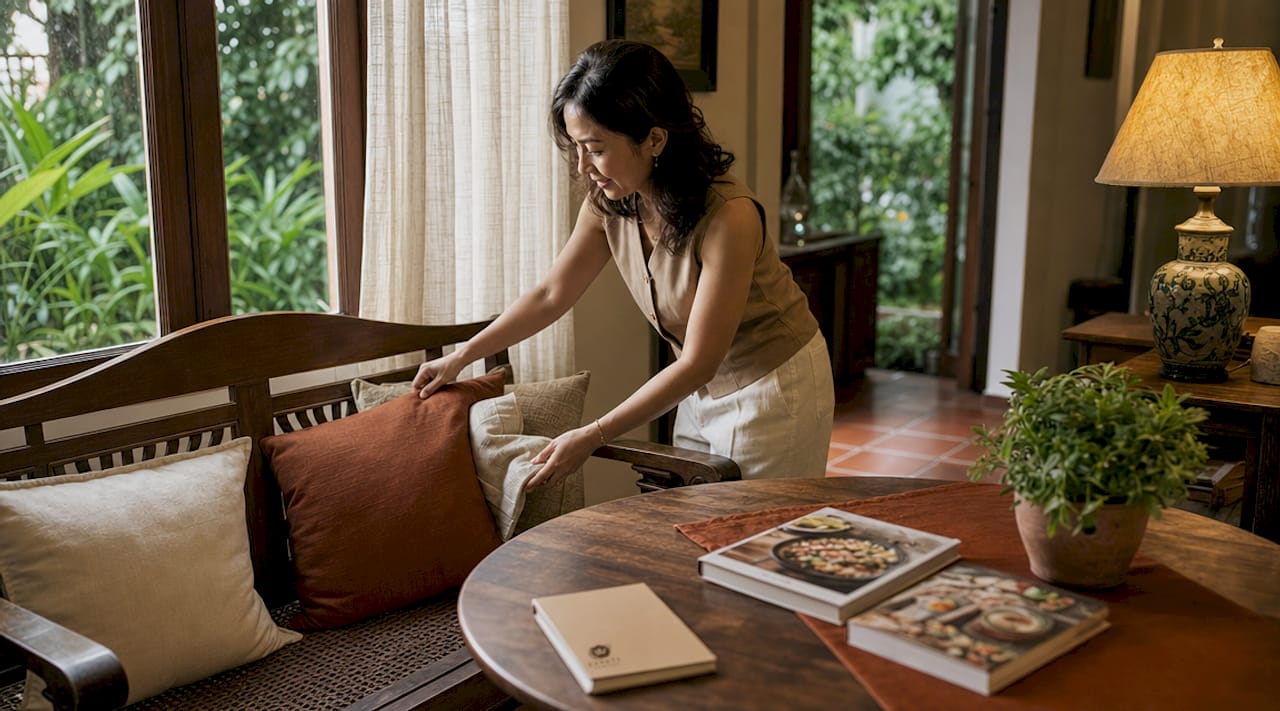
Home staging for terraced houses in Singapore is most effective when it prioritises natural light, spatial flow, and neutral colour palettes to appeal broadly to buyers and renters. Terraced houses present a specific architectural challenge: they are narrow and elongated, which creates a “tunnel” effect that can make interiors feel confined. The good news is that professional property staging in Singapore can increase sale offers by 5–15%, making it one of the highest-return investments a homeowner or agent can make before listing. The ideas below are drawn from real staging practice and terraced house interior design principles specific to Singapore’s market in 2026.
1. Living room layout ideas for narrow terraced houses
The living room sets the tone for every viewing, and in a narrow terrace, furniture placement is the single most important decision you will make. Low-profile, slim-legged sofas and chairs keep sightlines open, allowing natural light to travel deeper into the room. Bulky, high-backed furniture placed against the longest wall creates a visual blockage that shrinks the perceived width of the space.
Arrange seating to maintain a direct visual path from the front entrance through to any outdoor view or rear garden. Sightline staging makes narrow terraces feel wider by preserving this unobstructed view from entrance to garden, directly countering the tunnel effect common in Singapore terrace layouts. A clear sightline is not just an aesthetic choice; it is a psychological one that makes buyers feel the home breathes.
- Choose sofas with exposed legs rather than skirted bases to create a sense of floor space
- Keep the central floor area free of rugs that are too small, as undersized rugs fragment the visual field
- Use a single, large mirror on the side wall to reflect light and add perceived width
- Layer window treatments with sheer curtains plus a blockout blind for flexible light control and privacy
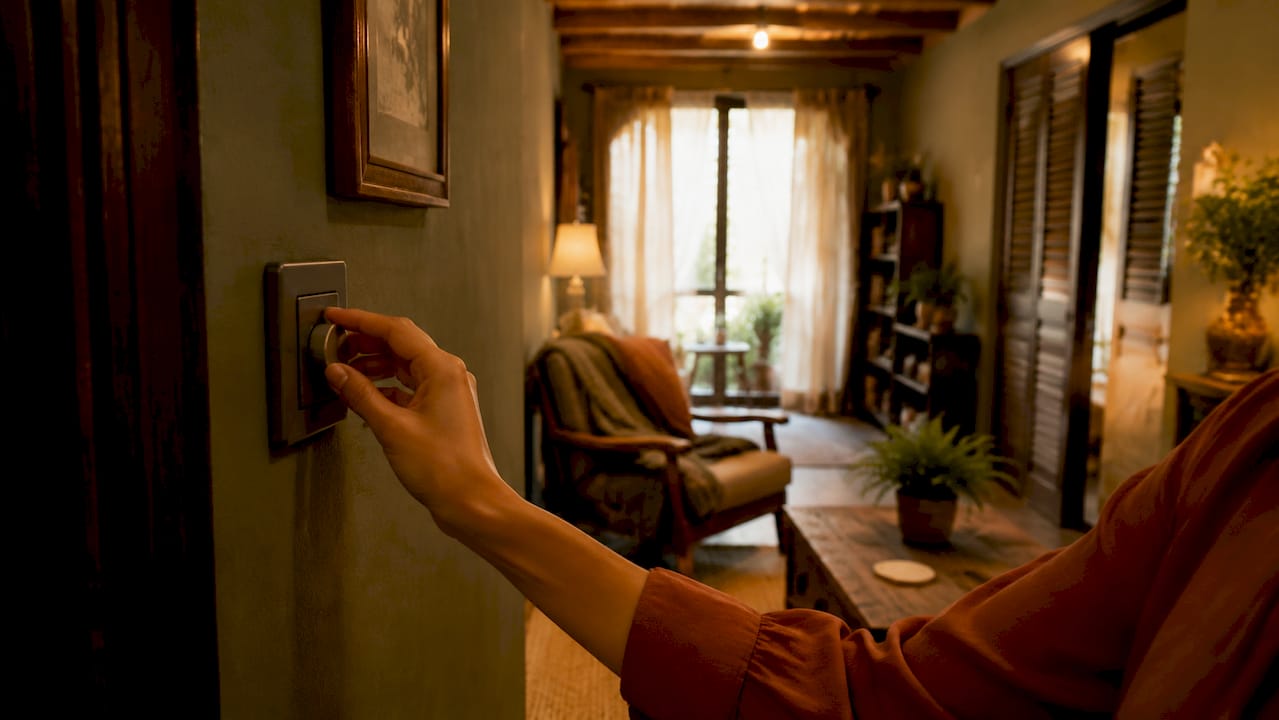
Pro Tip: Install warm LED lighting on dimmer switches in the living room. Adjustable ambiance lets you set the right mood for morning viewings versus evening viewings without changing a single piece of furniture.
2. Kitchen staging ideas that improve flow and perceived space
The kitchen in a Singapore terraced house is often compact, and poor layout choices can make it feel claustrophobic during a viewing. The most important rule is to avoid kitchen islands in narrow layouts where walkway clearance falls below 36 inches. An island that restricts movement creates a bottleneck that buyers notice immediately, even if they cannot articulate why the kitchen feels uncomfortable.
- Choose an L-shaped or galley layout. These configurations keep circulation paths clear and allow two people to move through the kitchen without obstruction.
- Run cabinetry from floor to ceiling. Ceiling-height cabinetry adds strong vertical lines that create the impression of a taller, more generous space, particularly in terraces with standard 2.7-metre ceilings.
- Use a light, neutral colour palette. Soft white, warm cream, or pale grey on cabinet doors and walls maximises the reflection of natural light and makes the kitchen feel open.
- Conceal appliances and reduce counter clutter. Integrated appliances and closed storage remove visual noise. A clear counter reads as a functional, well-organised kitchen to a prospective buyer.
Pro Tip: Replace open shelving with closed upper cabinets before a viewing. Open shelves require perfect styling to look good; closed cabinets look tidy regardless of what is inside.
3. Bedroom and bathroom staging for comfort and space
Bedrooms in terraced houses benefit most from a calm, restrained approach to colour and texture. Staging four key rooms, including bedrooms and bathrooms, with neutral palettes of whites, beiges, and soft earthy tones maximises natural light reflection and creates broad appeal across buyer demographics. Colours like soft white, oat, and mushroom work particularly well in Singapore’s bright tropical light, reading as warm rather than cold.
- Use quality linen or cotton bedding in neutral tones. Texture adds comfort and warmth without introducing distracting colour.
- Keep bedside tables proportionate to the bed. Oversized furniture in a small bedroom signals a poor fit and makes the room feel crowded.
- Remove at least half of all wardrobe contents before viewings. An organised, half-full wardrobe signals generous storage to buyers.
- In bathrooms, choose proportionate freestanding tubs only if floor space genuinely permits. A tub that crowds the bathroom does more harm than good.
- Add moisture-loving plants such as peace lilies or pothos if ventilation is adequate. A single plant on a bathroom shelf adds a spa-like quality without requiring significant investment.
- Consider whether a skylight or enlarged window is feasible in the master bedroom. Even a modest increase in daylight changes the character of the room entirely.
The bathroom is often underestimated in staging. Clean grout, fresh towels in a single coordinated colour, and a small tray of toiletries on the vanity are low-cost details that signal care and quality to buyers.
4. Decluttering, cleaning, and scent control as staging foundations
Decluttering and deep cleaning are not optional preparation steps. They are the foundation on which all other staging decisions rest. A beautifully furnished room with lingering odours or visible grime will not convert a viewing into an offer.
- Declutter at least 50% of personal belongings no fewer than seven days before viewings. This timeline allows you to identify what remains, reorganise storage, and address any gaps in presentation before the first buyer walks through the door.
- Commission a professional deep clean. Pay particular attention to kitchens and bathrooms, where grease, limescale, and mould accumulate in ways that are not always visible but are always noticed.
- Address odour control as a priority, not an afterthought. Odour neutralisation is critical in Singapore’s humid climate. Older terraced houses are especially prone to stale or damp smells that persist even after cleaning. Premium staging packages often include industrial odour neutralisation for this reason.
- Maintain neutral scents throughout the home. Avoid strong artificial fragrances, which can signal that something is being masked. A light diffuser with a clean, subtle scent such as white tea or eucalyptus is sufficient.
Pro Tip: Open all windows and run fans for at least two hours before a viewing. Fresh air circulation is the most effective and least expensive form of scent management available.
5. Biophilic design and natural light strategies
Biophilic design is one of the strongest trends in Singapore home staging in 2026, and terraced houses are uniquely well-suited to it. The indoor-outdoor connection created by floor-to-ceiling glass and indoor courtyards gives terraced homes a holiday-at-home quality that resonates strongly with buyers and tenants.
The table below compares the most practical biophilic strategies for terraced houses, ranked by impact and cost:
| Strategy | Impact on perceived space | Approximate cost |
|---|---|---|
| Floor-to-ceiling glass doors to garden | High | S$3,000 to S$8,000 |
| Indoor courtyard or light well | Very high | S$8,000 and above |
| Layered window treatments (sheers plus blockout) | Medium | S$500 to S$1,500 |
| Indoor plants and greenery | Medium | S$100 to S$500 |
| Sightline staging (furniture arrangement only) | High | No cost |
- Use layered window treatments to create depth and nuance. Sheers diffuse harsh midday light while blockout blinds provide privacy at night, avoiding the clinical brightness that over-lit rooms often produce.
- Bring greenery indoors with plants placed at varying heights. A tall fiddle-leaf fig in the corner of the living room and trailing pothos on a shelf create a layered, natural quality.
- Stage sightlines deliberately so that a buyer standing at the front door can see through the living area to the garden. This single arrangement decision does more for perceived space than almost any furniture choice.
For a broader view of what is working in Singapore’s property market right now, the latest staging trends for 2026 are worth reviewing before you finalise your approach.
6. Affordable staging solutions that deliver results
Not every homeowner has the budget for a full-service staging package, and that is entirely workable. The key is to allocate spending where it has the greatest visual impact. Basic staging preparation in Singapore starts from around S$500 to S$1,200, covering cleaning and minor styling. Standard staging sits between S$1,500 and S$3,000, while premium full-service packages start at S$4,000 and above.
For homeowners working within tighter budgets, furniture rental is a practical alternative to purchasing new pieces. Renting a sofa, dining table, and bed frame for a six-week listing period costs a fraction of buying, and the pieces can be returned once the property is sold or tenanted. This approach is particularly useful for vacant terraced houses, where empty rooms consistently underperform furnished ones during viewings. You can read more about the cost breakdown and what each tier includes in this 2026 staging price guide.
Prioritise spending in this order: deep cleaning first, then lighting upgrades, then key furniture pieces in the living room and master bedroom. These three areas account for the majority of a buyer’s first impression.
Key takeaways
Effective home staging for terraced houses in Singapore requires solving light, flow, and storage problems simultaneously, using sightline staging, neutral palettes, and biophilic design to make narrow spaces feel generous and liveable.
| Point | Details |
|---|---|
| Sightline staging costs nothing | Arrange furniture to maintain a clear view from entrance to garden to counter the tunnel effect. |
| Neutral palettes maximise light | Use whites, beiges, and soft earthy tones in all four key rooms to reflect natural light broadly. |
| Odour control is non-negotiable | Singapore’s humidity makes scent management critical; address it before any visual staging begins. |
| Kitchen islands can reduce appeal | Avoid islands where clearance is under 36 inches; L-shaped or galley layouts serve narrow terraces better. |
| Furniture rental suits vacant homes | Renting key pieces for the listing period is more cost-effective than buying and avoids empty-room underperformance. |
What we have learned staging terraced houses in Singapore
After working with homeowners, landlords, and agents across Singapore’s terraced house market, the pattern that stands out most clearly is this: the staging mistakes that cost the most are rarely about furniture choices. They are about scale and light.
We see it regularly. A homeowner places a large sectional sofa in a narrow living room because it looks impressive in the showroom. On-site, it blocks the window, kills the sightline, and makes the room feel half its actual size. Our advice before any purchase is to tape out the furniture footprint on the floor and walk around it. If you cannot move freely, neither can a buyer’s imagination.
The other area where we see consistent underinvestment is lighting control. Singapore’s terraced houses often have limited window placement on side walls due to party wall constraints. This makes the front and rear openings the primary light sources, and staging must work with that reality. Dimmers on layered lighting circuits, combined with sheer window treatments, give you far more control over how a room reads at different times of day than any single design choice.
Climate is also a factor that many staging guides overlook. Singapore’s humidity affects not just scent but material durability. Upholstery, rugs, and soft furnishings in staged homes need to be appropriate for the environment. Mould-resistant fabrics and moisture-absorbing accessories are practical choices, not premium ones.
The homes that perform best in viewings are not the most expensively furnished. They are the ones where light, scale, and scent have all been addressed with care and intention.
— Expats Partner
Stage your terraced house with confidence
Expats Partner provides home staging and furniture rental services tailored to Singapore’s terraced houses, condos, and landed properties. Whether you need a full staging package with furniture, a consultation to refine your existing layout, or flexible furniture rental for a vacant property ahead of viewings, we can support you with transparent pricing, real inventory, and reliable delivery and setup. Our team understands the specific constraints of narrow, elongated terrace layouts and stages with those constraints in mind. Contact Expats Partner for a personalised consultation and find out how we can help your property present at its best.
FAQ
How much does home staging cost for a terraced house in Singapore?
Basic staging preparation starts from S$500 to S$1,200, standard staging ranges from S$1,500 to S$3,000, and premium full-service packages begin at S$4,000. The right tier depends on the property’s condition and listing goals.
What is the most effective staging idea for a narrow terraced house?
Sightline staging is the single most impactful technique. Arranging furniture to maintain a clear, unobstructed view from the front entrance through to the rear garden counters the tunnel effect and makes the home feel significantly wider.
Should I use a kitchen island when staging a terraced house?
No, if the walkway clearance is under 36 inches. An island in a tight kitchen restricts movement and reduces perceived space. An L-shaped or galley layout serves narrow terrace kitchens far better during viewings.
How do I control odours when staging a terraced house in Singapore?
Commission a professional deep clean, run fans and open windows for at least two hours before viewings, and use a subtle diffuser with a neutral scent. In older terraces, industrial odour neutralisation may be needed due to Singapore’s humidity.
Is furniture rental a good option for staging a vacant terraced house?
Yes. Renting key pieces such as a sofa, dining table, and bed frame for the listing period is cost-effective and avoids the consistent underperformance of empty rooms during viewings. Pieces are returned once the property is sold or tenanted.