
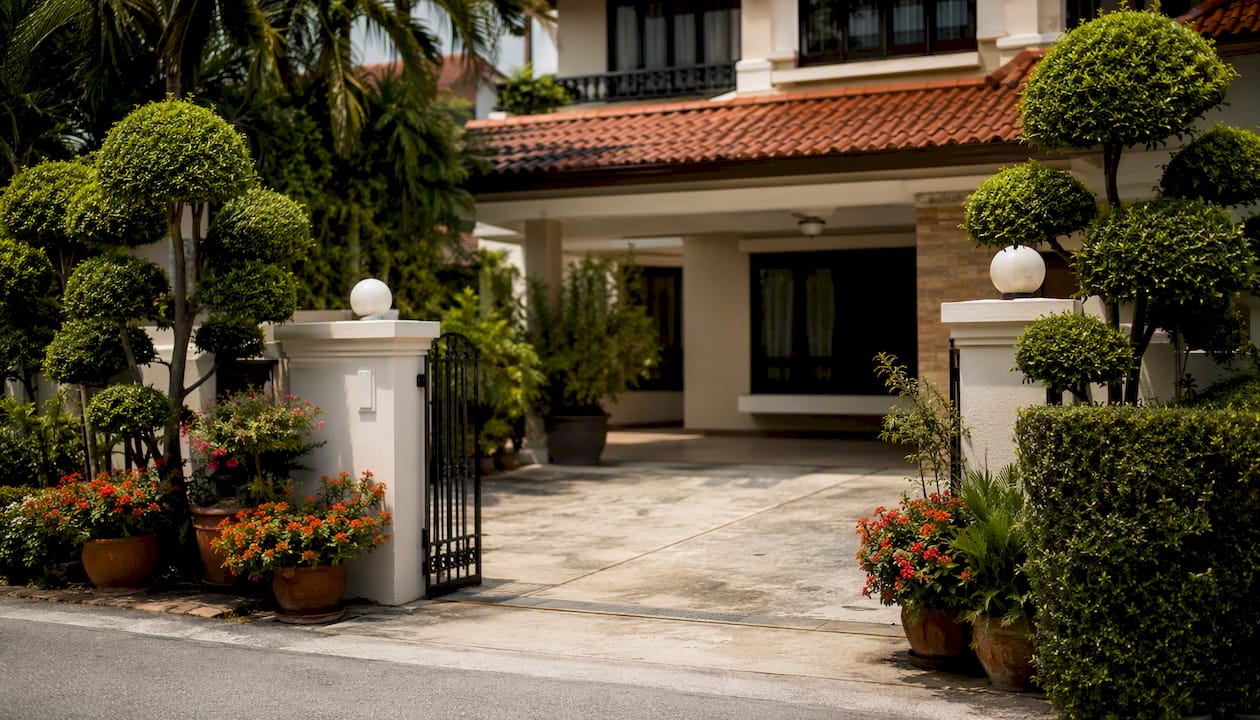
The quickest way to make a vacant landed house look more valuable is to fix the kerb appeal first, address minor repairs second, and get photo-ready staging in place before the photographer arrives. Buyers in the UK begin their search online, which means your listing photographs set the price expectation before anyone books a viewing. A vacant property already works against you: empty rooms look smaller, colder, and harder to imagine living in. The good news is that targeted, low-cost actions close that gap fast.
Your 72-hour priority checklist:
- Deep clean every room, including windows, skirting boards, and kitchen surfaces.
- Tidy the front garden, sweep the path, and remove any debris or overgrown growth.
- Repaint or touch up the front door if the colour is faded or chipped.
- Fix obvious cosmetic defects: dripping taps, broken door handles, cracked grout.
- Stage at least one hero room physically (living room or primary bedroom) with a rug, bed, and a few accessories.
- Book a professional photographer and brief them on hero rooms, exterior angles, and natural light timing.
- Consider virtual staging for remaining rooms to complete the online gallery.
Pro Tip: If you only have one day and a tight budget, spend it on the front door, the front path, and one staged room. Those three things drive the most viewing appointments.
Key takeaways
The single most effective action for a vacant landed house is to combine kerb appeal fixes with targeted hero-room staging and professional photography before the listing goes live.
| Point | Details |
|---|---|
| Kerb appeal comes first | The front elevation sets price expectations before buyers step inside; fix it before anything else. |
| Hybrid staging reduces cost | Physical staging of 1–2 hero rooms plus virtual staging for the rest reduces total staging cost significantly. |
| Vacant homes face a price penalty | Unstaged vacant homes can sell for less and spend longer on the market compared with staged equivalents. |
| Photography drives viewings | Listing images are the primary driver of viewing appointments; brief your photographer carefully. |
| Expats Partner offers a practical route | Flexible short-term furniture rental and staging packages let you stage hero rooms without buying or storing furniture. |
Useful sources and further reading
- UK House Price Index (gov.uk): — The government’s official tracker for residential property prices by region and property type. Check it before deciding how much to invest in pre-sale improvements.
- Propertymark: — The UK’s leading professional body for estate agents publishes practical guidance on home improvements that add value before sale, including decluttering, repairs, and landscaping priorities.
- Redfin: — US-based property platform with widely cited research on staged versus unstaged homes, including data on time on market and sale price differences.
- RoomWren: — Publishes practical vacant home staging guidance, including the hybrid staging model and cost comparisons between physical and virtual staging approaches.
- Investopedia: — Covers return on investment for home improvements, consistently ranking kerb appeal and minor kitchen or bathroom updates above large bespoke projects.
Table of Contents
- 1. Kerb appeal fixes that set your price expectation
- 2. How to present the interior of a vacant landed house
- 3. Listing photography and visual assets that sell a vacant house
- 4. Minor repairs and cosmetic upgrades worth doing before you list
- 5. Securing and maintaining a vacant landed house during marketing
- 6. Timeline and budget tiers for improving a vacant landed house
- 7. Choosing the right professionals: agents, stagers, photographers and landscapers
- 8. Your complete pre-listing checklist for a vacant landed house
- 9. Interior staging strategies tailored for vacant landed houses
- What we have learned from staging vacant landed homes
- Expats Partner: furniture rental and staging for vacant properties
- FAQ
1. Kerb appeal fixes that set your price expectation
Agents consistently say that kerb appeal sets the price expectation before a buyer steps inside. A neglected exterior signals interior neglect, and buyers adjust their offers accordingly. For a vacant landed house, where no one is living there to maintain daily appearances, this risk is higher than average.
The front gate, path, and driveway are the first things a buyer photographs on their phone. Weeds growing through paving, a rusted gate latch, or a stained driveway all communicate the same message: this property has been left. Exterior upgrades, from a new entry door to a freshened driveway, consistently rank among the highest-return improvements you can make before listing.
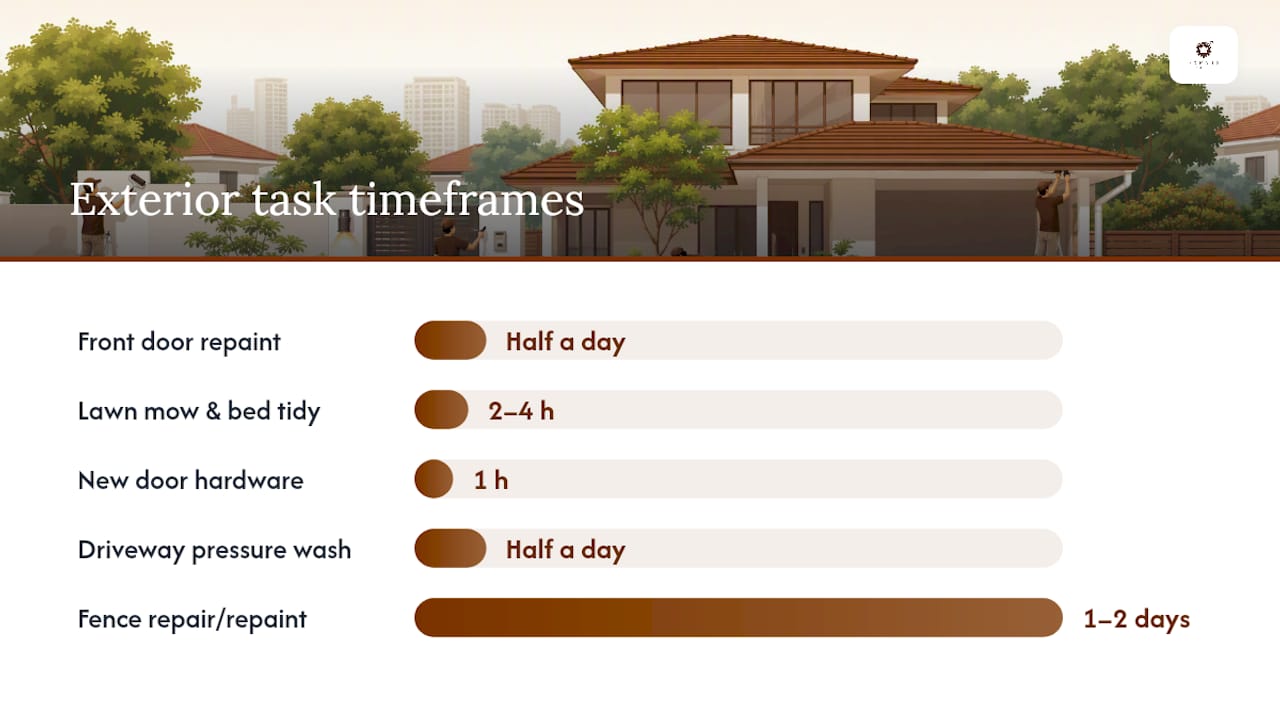
| Exterior task | Typical cost band | Timeframe | Perceived impact |
|---|---|---|---|
| Front door repaint | Low (under £200) | Half a day | High |
| Lawn mow and bed tidy | Low (under £1,000) | 2–4 hours | High |
| New door hardware | Low (under £1,000) | 1 hour | Medium–High |
| Driveway pressure wash | Medium (£1,000–£7,500) | Half a day | High |
| Fence repair or repaint | Medium (£1,000–£7,500) | 1–2 days | Medium |
| Low-voltage path lighting | Medium (£1,000–£7,500) | Half a day | Medium |
| New planters at entrance | Low (under £1,000) | 1 hour | Medium |
For small-cost wins under £200, a single coat of paint on the front door, a new brass or matte-black door knocker, and two matching planters with seasonal plants make a measurable difference in listing photos. Path lighting is worth adding if viewings may occur in the evening.
Planning note: Most cosmetic exterior work on a landed house does not require planning permission. However, if you are adding a structure (a pergola, a new gate post, or a wall above a certain height), check with your local planning authority first. The Land Registry can also confirm boundary lines before you carry out any landscaping that touches the property edge.
Pro Tip: Shoot a quick photo of your front elevation on your phone before you start any work. That before image becomes a useful reference for your agent and photographer, and it documents the improvement for your own records.
2. How to present the interior of a vacant landed house
Empty rooms create three problems for buyers: they look smaller than they are, they feel cold and unwelcoming, and they photograph harshly without soft furnishings to absorb light. Staging fixes all three. Staged homes sell faster and for higher prices than their vacant equivalents, and vacant homes that go to market without any staging typically sell for less and spend longer on the market compared with staged equivalents.
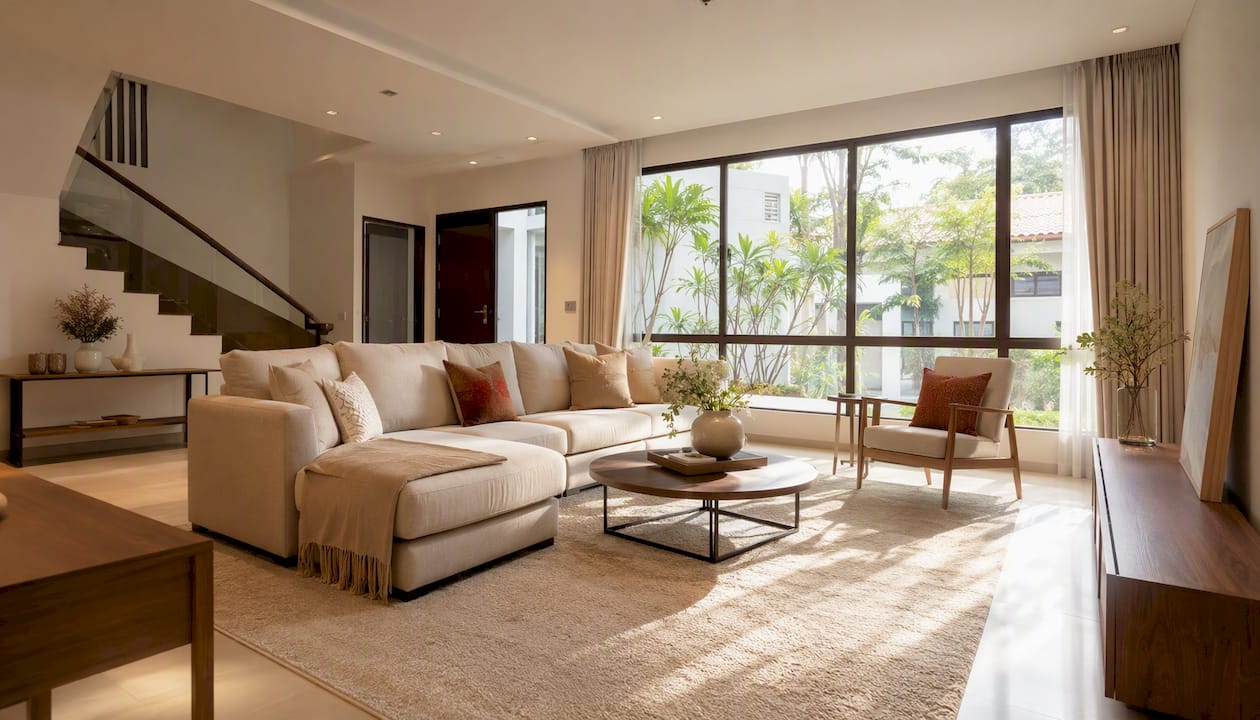
You have three practical options:
Targeted physical hero-room staging means renting furniture for one or two key rooms, typically the living room and the primary bedroom. A sofa, coffee table, rug, and a few accessories in the living room; a bed frame, bedding, and bedside tables in the bedroom. This approach is the most effective for in-person viewings because buyers can physically walk through a furnished space and assess scale. Cost is moderate, and turnaround is usually 2–5 days depending on the rental provider.
Hybrid staging combines physical hero rooms with virtual staging for the remaining spaces. A professional virtually stages the kitchen, secondary bedrooms, and bathrooms using the empty-room photographs. It is the most cost-effective route for most sellers of vacant landed houses.
Full virtual staging dresses every room digitally. It is the lowest-cost option and works well for online galleries, but it offers no in-person impact. Buyers who arrive at a viewing after seeing a virtually staged gallery will find empty rooms, which can create a disconnect. If you use full virtual staging, keep one or two unstaged images in the listing for transparency.
Hero rooms to prioritise for a landed house:
- Living room (largest, most photographed space)
- Primary bedroom
- Kitchen or dining area
- Main outdoor entertaining area or garden terrace
Pro Tip: Place furniture at least 30 cm from the walls in a staged living room. It creates a more intentional layout and helps buyers read the room’s traffic flow and scale during viewings.
For staging an empty property effectively, the principle is the same whether it is an apartment or a landed house: anchor the key rooms, warm the light, and give buyers something to imagine.
3. Listing photography and visual assets that sell a vacant house
When a property is vacant, listing photographs are the primary driver of viewing appointments. Buyers scroll through dozens of listings; the images decide whether they click through or move on. Getting the photography right is not optional.
Brief your photographer on these specifics:
- Shoot the living room and primary bedroom first, while natural light is at its best (typically mid-morning in the UK).
- Include a twilight exterior shot if the property has good outdoor lighting or an attractive façade.
- Request drone or elevated shots if the plot size or garden is a key selling point.
- Capture before-and-after pairs where virtual staging has been applied, so you have both versions available.
- Keep one or two unstaged images in the gallery for transparency, particularly if virtual staging has been used throughout.
A note on virtual staging disclosure: UK estate agents and property portals expect listings to be accurate. If you use virtual staging, label those images clearly (“virtually staged for illustrative purposes”) in the listing description. Buyers who arrive expecting furnished rooms and find empty ones lose trust quickly, and that trust is hard to recover during a negotiation.
For decluttering before property photography, the goal is to remove anything that distracts from the room’s proportions: cleaning products left under sinks, stray cables, and any personal items left behind by previous occupants.
Best time of day for UK light: Mid-morning (9–11 AM) gives warm, directional light through east-facing windows. Overcast days are often better than bright sunshine for interior shots because they reduce harsh shadows. For exteriors, early morning or late afternoon light is flattering.
Pro Tip: Ask your photographer for a minimum of 20 edited images plus a floorplan. Listings with floorplans receive significantly more enquiries because buyers can assess room layout before booking a viewing.
4. Minor repairs and cosmetic upgrades worth doing before you list
Targeted improvements such as kerb appeal fixes, minor kitchen updates, and bathroom refreshes typically deliver some of the highest return on investment compared with large, bespoke projects. The key is knowing where to stop.
Priority cosmetic tasks, in order of impact:
- Repaint internal doors and skirting boards in a neutral white or off-white.
- Replace dated or broken light fittings with simple, clean alternatives.
- Fix grout in bathrooms and kitchens; re-seal around baths and sinks if needed.
- Repair or replace door handles, hinges, and cabinet hardware throughout.
- Clean or repair gutters and downpipes; blocked gutters are visible in exterior photos and signal neglect.
- Touch up external paintwork, particularly around window frames and the front elevation.
Where not to over-invest: Avoid bespoke or highly personalised upgrades before a sale. A new fitted kitchen in a style the buyer may not share costs tens of thousands and rarely returns its full value. The same applies to custom built-in wardrobes or specialist bathroom finishes. Buyers prefer a blank canvas they can personalise over a finished product they did not choose.
| Cost band | Typical scope | Expected impact on perceived value |
|---|---|---|
| Low (under £500) | Door repaint, new hardware, grout repair, light fittings | Noticeable improvement in photos and viewings |
| Medium (£1,000–£7,500) | Full internal repaint, bathroom refresh, gutter repair | Meaningful uplift; removes buyer objections |
| High (above £7,500) | Kitchen update, new flooring, external render touch-up | High impact but requires careful cost-benefit assessment |
Pro Tip: Walk through the property as a buyer would: start at the front gate, move to the front door, and work room by room. Note every item that catches your eye negatively. Those are your repair priorities.
5. Securing and maintaining a vacant landed house during marketing
A vacant property is more vulnerable than an occupied one. Break-ins, water leaks, and pest issues can all occur undetected for days. Keeping the property secure and well-maintained during the marketing period protects your investment and keeps it viewing-ready at short notice.
Security and maintenance checklist:
- Test the alarm system and confirm it is active and monitored.
- Arrange weekly check-ins by your estate agent, a trusted neighbour, or a caretaker.
- Set interior lights on timers to simulate occupancy, particularly in the evenings.
- Check all taps, pipes, and the boiler monthly; a slow leak in a vacant property can cause significant damage before it is noticed.
- Clear gutters and drains before autumn and winter to prevent blockages.
- Maintain the lawn and garden on a fortnightly schedule during the growing season.
- Check smoke and carbon monoxide detectors monthly and replace batteries as needed.
- Inspect for signs of pest activity (rodents, wasps) at each visit and act promptly.
Insurance note: Notify your insurer as soon as the property becomes vacant. Most standard home insurance policies have a clause that limits cover after a property has been unoccupied for 30–60 days. A specialist vacant property insurance policy is worth arranging if the marketing period is likely to extend beyond that window. Keep a dated log of all maintenance visits and photographs as evidence of due diligence.
Pro Tip: A simple timed exterior light and a visible alarm box are low-cost deterrents that also improve the property’s appearance at evening viewings. Buyers notice a well-lit, secure-looking property.
6. Timeline and budget tiers for improving a vacant landed house
Planning your timeline before you commit to any work prevents the common mistake of starting a project that delays your listing date. The government House Price Index is worth checking before you decide how much to spend: if local prices are flat or falling, a lower-cost intervention strategy is usually the right call.
| Task | Typical timeframe | Budget tier |
|---|---|---|
| Deep clean and declutter | 1–2 days | Low |
| Front door repaint and hardware | Half a day | Low |
| Lawn tidy and planting | 1 day | Low |
| Minor internal repairs (grout, handles, fittings) | 1–3 days | Low–Medium |
| Hero-room physical staging (furniture rental) | 2–5 days | Medium |
| Virtual staging (photography + editing) | 2–3 days after photos | Low–Medium |
| Professional photography and floorplan | Half a day | Low–Medium |
| Full internal repaint | 3–7 days | Medium |
| Driveway or path repair | 2–5 days | Medium–High |
| Landscaping (new beds, planting scheme) | 2–5 days | Medium–High |
Budget tiers at a glance:
- Low (under £1,000): Clean, repair, front door, lawn tidy, virtual staging, photography. This tier alone can close a significant portion of the perception gap for a vacant property.
- Medium (£1,000–£7,500): Adds hero-room furniture rental, full internal repaint, bathroom refresh, and driveway pressure wash or minor repair.
- High (above £7,500): Includes landscaping schemes, kitchen updates, external render, or structural cosmetic work. Requires careful cost-benefit assessment against local comparables.
Getting quotes: Always obtain at least two written quotes for any work above £500. For landscaping and staging, ask for a fixed price rather than a day rate. For photography, confirm the number of edited images, turnaround time, and whether a floorplan is included. Ballpark estimates are useful for planning, but a fixed quote protects you from cost overruns.
Carry cost versus uplift: Every additional day spent improving the property costs you in mortgage payments, insurance, and council tax. If a medium-tier intervention is likely to add more to the sale price than it costs in time and money, it is worth doing. If the improvement is marginal, list sooner and price accordingly.
7. Choosing the right professionals: agents, stagers, photographers and landscapers
The quality of the professionals you hire directly affects the quality of your listing. A poor set of photographs cannot be fixed after the listing goes live without taking it down and relaunching, which costs time and signals to buyers that something changed.
Decision criteria for each professional:
- Estate agent: Local market knowledge, recent sales of comparable vacant or landed properties, clear fee structure, and a track record of achieving asking price or above.
- Staging provider: Portfolio of vacant property staging (not just occupied homes), clear rental terms, delivery and collection logistics, and flexibility on rental duration.
- Photographer: Property-specific portfolio (not just lifestyle or commercial work), experience with vacant interiors, and the ability to deliver virtual staging or work alongside a virtual staging service.
- Landscaper: Local references, liability insurance, and experience with residential front gardens rather than commercial landscaping.
Questions to ask when taking quotes:
- Can you show me examples of vacant or landed properties you have worked on recently?
- What is your turnaround time from booking to completion?
- What is included in the quoted price, and what would be charged as an extra?
- What are your cancellation terms if the listing date changes?
- Do you carry public liability insurance?
Red flags to watch for:
- No local portfolio or only stock images on their website.
- Vague timelines (“we’ll get it done when we can”).
- Reluctance to provide before-and-after examples.
- No written quote or contract.
- Pressure to commit before you have compared alternatives.
For a complete guide to staging a property listing, including how to compare physical and virtual staging options, the decision framework is the same: prioritise providers with relevant vacant-property experience and clear, written terms.
8. Your complete pre-listing checklist for a vacant landed house
Use this checklist in the 48–72 hours before photography and the first viewing. Work through it in order: exterior first, then interior, then staging, then security, then the photographer brief.
Exterior:
- Mow the lawn and trim edges.
- Clear paths, driveway, and front gate of debris, weeds, and moss.
- Repaint or touch up the front door if needed.
- Check and replace door hardware if worn.
- Add planters or seasonal plants at the entrance.
- Clean windows externally.
- Check gutters and downpipes are clear and undamaged.
Interior:
- Deep clean all rooms, including inside cupboards, bathrooms, and the kitchen.
- Clean all windows internally.
- Replace any blown light bulbs and confirm all fittings work.
- Fix any outstanding cosmetic defects: grout, handles, skirting scuffs.
- Remove any items left by previous occupants.
Staging:
- Confirm hero-room furniture is in place and arranged correctly (living room, primary bedroom).
- Add textured accessories: a throw, cushions, a simple vase or plant.
- Check that all staged areas are clean and dust-free.
- Confirm virtual staging brief has been sent to the provider if applicable.
Security:
- Test the alarm and confirm it is set.
- Check all locks on doors and windows.
- Confirm timed lighting is working.
- Note the agent’s check-in schedule and emergency contact.
Photographer brief:
- Confirm shoot time (mid-morning for best UK light).
- Provide a list of hero rooms and key exterior angles.
- Request a twilight shot if relevant.
- Confirm floorplan is included.
- Agree on turnaround time for edited images.
Agent notes field: (Use this space for local quirks, access instructions, or specific buyer feedback to address before the shoot.)
For a vacant property presentation guide that covers the full preparation process from first assessment to listing day, the checklist above is a practical starting point.
9. Interior staging strategies tailored for vacant landed houses
Landed houses present a specific staging challenge: the rooms are often larger than a flat or apartment, which means empty spaces feel even more cavernous and harder for buyers to scale. A sofa that would anchor a compact living room can look lost in a double-reception room. The strategy, therefore, is to define zones rather than simply fill rooms.
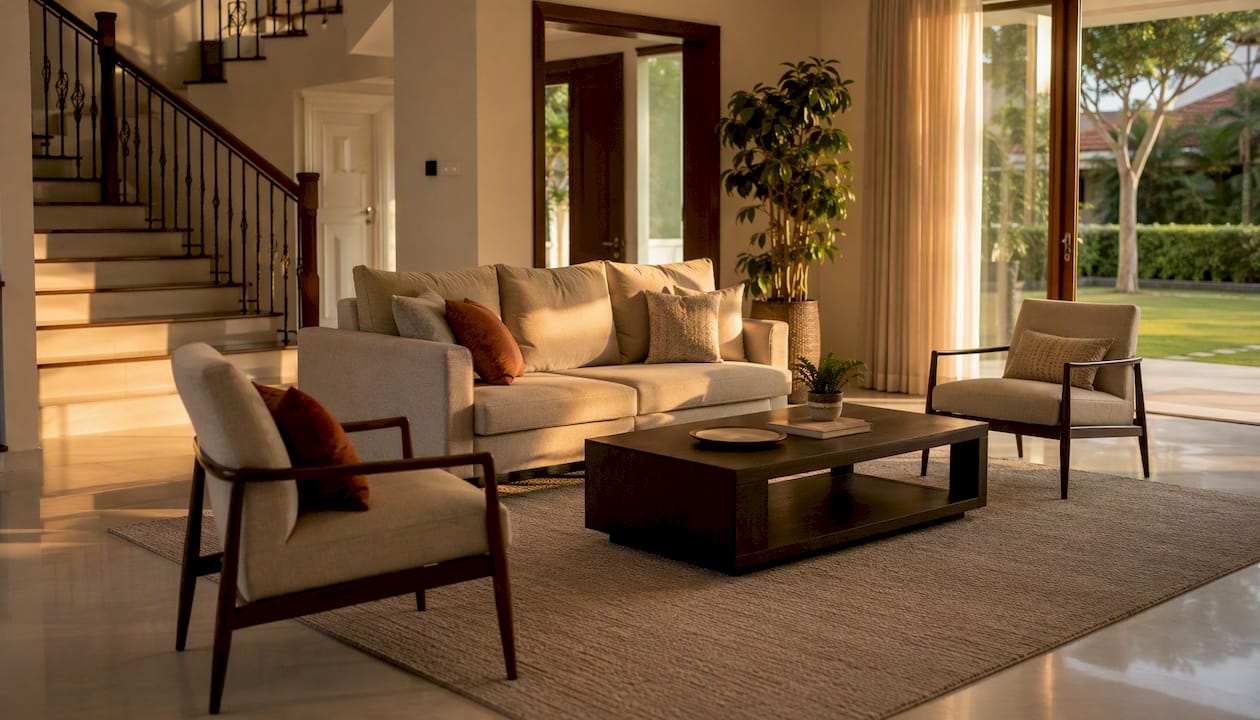
In a large living room, use a rug to anchor the seating area and keep furniture grouped within that zone rather than spread across the full floor. A 2.7m x 3.6m area rug is a practical size for a typical landed-house reception room: it defines the space without overwhelming it. Pair it with a sofa, two chairs, and a coffee table, all pulled at least 30 cm from the walls, and the room reads as intentional and proportionate.
For the primary bedroom, the bed is the non-negotiable piece. A dressed bed with layered bedding, two bedside tables, and a simple lamp on each side gives buyers the scale reference they need. Avoid over-accessorising: a few well-chosen items read better in photographs than a cluttered dressing table.
The kitchen and dining area benefit most from a simple dining setting: a table, four chairs, and a small centrepiece. This is often the room buyers spend the most time imagining family life in, so the emotional connection here is worth the staging investment.
For outdoor entertaining areas, which are a genuine selling point for landed houses, a clean outdoor table and chairs, a potted plant or two, and a pressure-washed patio surface are enough to communicate the lifestyle the space offers. Buyers respond to spaces they can picture using immediately.
The hidden truth about empty homes is that buyers do not just buy square footage; they buy the feeling of a life they want to live. Staging gives them that feeling, even in a property no one currently calls home.
What we have learned from staging vacant landed homes
Vacant landed houses are one of the most misunderstood categories in property marketing. Sellers often assume that buyers will “see past” the emptiness and imagine the potential. In practice, most buyers cannot. The emotional connection that drives offers does not come from blank walls and bare floors; it comes from a space that feels ready to live in.
The hybrid staging approach, physical furniture in one or two hero rooms combined with virtual staging for the rest, is the most practical solution for the majority of sellers. It preserves the in-person impact that matters during viewings while keeping the total cost manageable. Full virtual staging works well for the online gallery but creates a disconnect at the viewing stage if nothing physical is in place.
What sellers consistently underestimate is the cumulative effect of small, low-cost actions. A freshly painted front door, a tidy path, clean windows, and a single staged room can shift buyer perception more than a kitchen renovation. The perception of care and maintenance is what buyers are really reading, and those signals are visible in the first 30 seconds of a viewing.
Expats Partner: furniture rental and staging for vacant properties
Vacant properties sell better when they are staged, and staging is most cost-effective when you rent the furniture rather than buy it. Expats Partner offers flexible home staging and furniture rental for landed houses, condos, and apartments, with short-term rental packages designed specifically for the property marketing window.
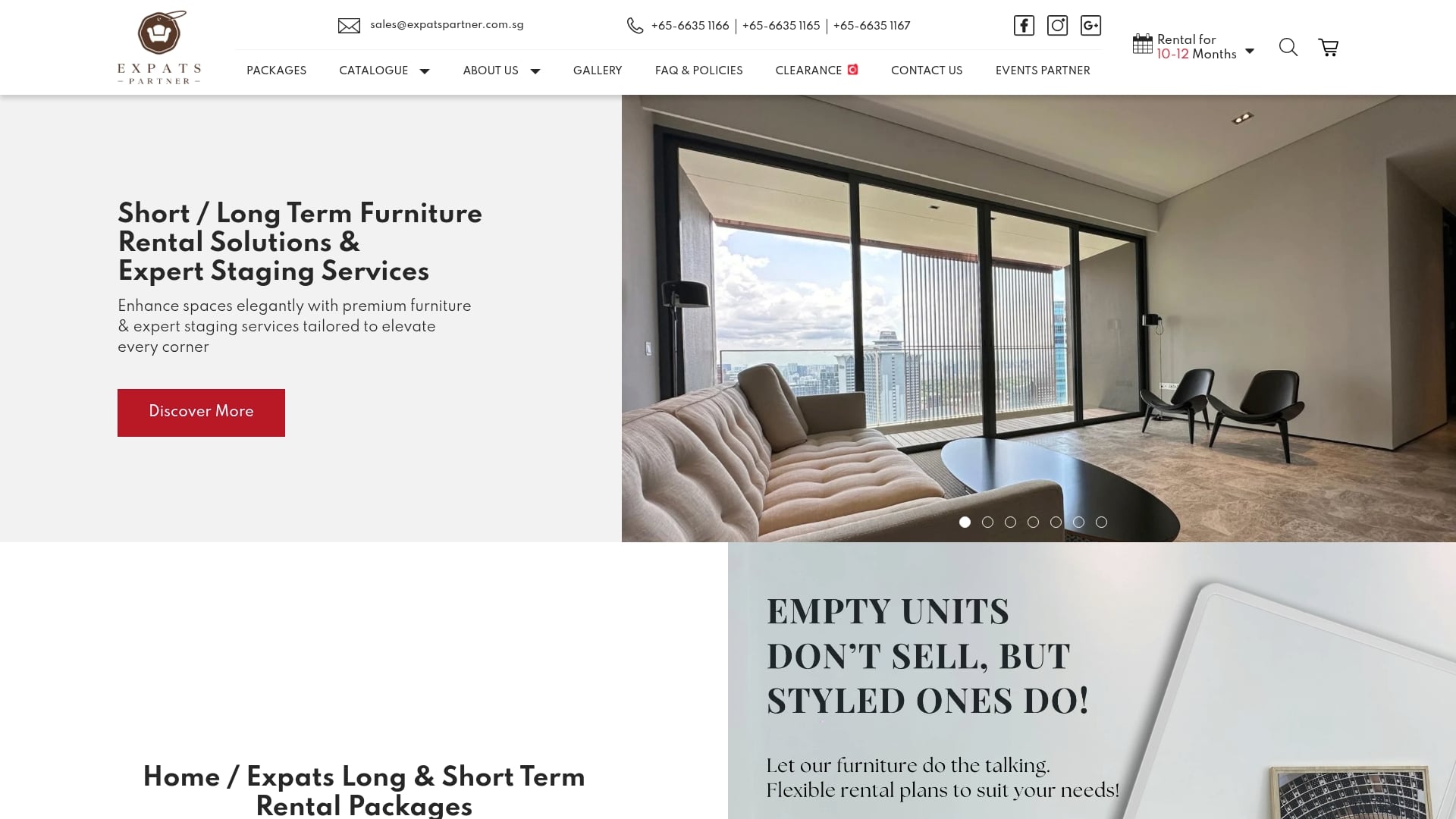
You choose the rooms to stage, select from real inventory, and Expats Partner handles delivery, setup, and collection. There are no long-term contracts and no need to store or dispose of furniture after the sale. For sellers who want hero-room staging without the cost of a full physical fit-out, the short-term furniture rental option is a practical, transparent-priced route to a viewing-ready home. Contact Expats Partner to get a tailored quote for your property.
FAQ
How do you make an empty house look good to sell?
Stage at least one hero room physically (living room or primary bedroom), tidy the exterior, and invest in professional photography. Virtual staging can dress the remaining rooms for the online gallery at a fraction of the cost of full physical staging.
What devalues a house the most?
Poor kerb appeal, visible maintenance neglect (blocked gutters, peeling paint, overgrown gardens), and damp or structural issues have the greatest negative effect on perceived value. For vacant properties, emptiness itself is a devaluing factor because buyers struggle to assess scale and feel no emotional connection.
What are some practical ways to make a home look more expensive?
Replace dated light fittings, repaint internal doors and skirting boards in a clean neutral, fix grout and door hardware, and add a large area rug to anchor the living room. These low-cost cosmetic fixes consistently improve buyer perception without requiring significant investment.
What adds the highest value to a house before selling?
Kerb appeal improvements, minor kitchen and bathroom refreshes, and targeted staging of hero rooms typically deliver the strongest return relative to cost. Large bespoke projects such as full kitchen replacements rarely return their full investment at sale.