
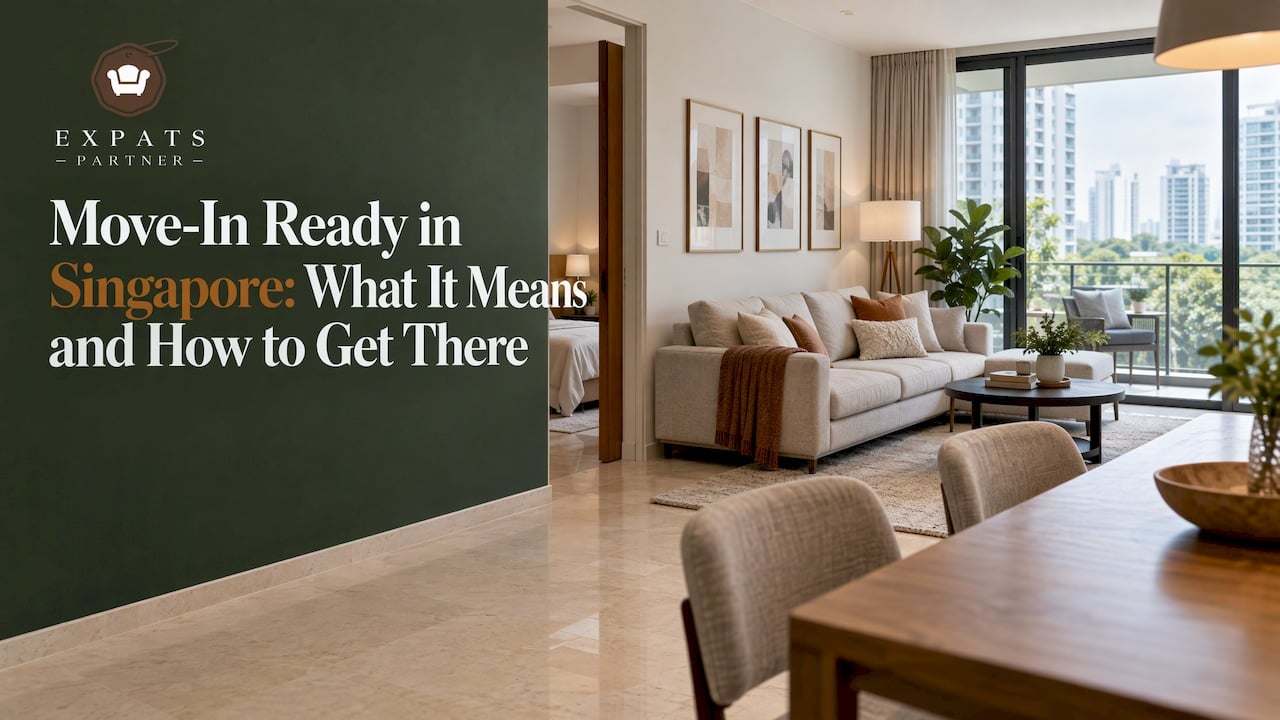
In Singapore, “move-in ready” has no fixed definition. It usually means you can live in the home from day one without major works, but whether it includes furniture, appliances or a finished fit-out depends on the listing. The reliable way to get a truly move-in ready home is to agree in writing what is included, then fill any gap with furnished packages, so the unit is liveable on the day the keys change hands. At Expats Partner, we rent furniture and appliances for exactly that gap, with delivery and collection coordinated for you.
TL;DR
- “Move-in ready” is a marketing phrase, not a standard. Treat it as a test: can you sleep, cook, wash and work in the unit on day one?
- A home can be renovated yet still lack beds, a sofa or appliances. Renovation and furnishing are separate things.
- Before move-in, record the condition and an inventory in writing, with dated photos, and send defects to the landlord or agent the same day.
- Condo and HDB rules (move-in bookings, lift reservations, tenant registration) can affect your move date.
- Furniture rental closes the furnishing gap without buying, storing or disposing of furniture.
Table of Contents
- What “move-in ready” means in Singapore
- Move-in ready, furnished, renovated, turnkey: four different things
- What condition should the home be in on handover?
- What tenants and landlords should agree in writing
- Closing the furnishing gap
- Who this matters for, and what to do
- A simple move-in timeline
- FAQ
What “move-in ready” means in Singapore
A practical reading is that the home is usable immediately without major works: floors, kitchen, bathrooms, wardrobes, lighting and basic air-conditioning should work. The phrase alone does not promise a particular specification.
For some buyers it means no renovation at all. For others it means the home can be occupied while minor improvements are completed. A unit can look presentable at a viewing and still need spending on lighting, appliances, furniture or paint.
So define your own meaning before you compare homes. Ask the listing agent or owner directly whether the unit is in move-in condition or needs repairs before occupation.
Move-in ready, furnished, renovated, turnkey: four different things
The terms get mixed together in listings. Here is how to separate them.
| Term | What it usually covers | What it may leave out |
|---|---|---|
| Move-in ready | Usable without major works | Furniture, appliances, specific finishes |
| Renovated | Updated finishes, kitchen, bathrooms | Beds, sofa, dining table, appliances |
| Furnished | Loose furniture in place | Condition of fittings, wiring, waterproofing |
| Turnkey / fully fitted out | Fully furnished and fitted out | Rarely standard for new launches |
Buyers should budget on the basis that purchase price, transaction costs, renovation, furnishing and a contingency together make up the real starting commitment. A renovated unit can still lack a sofa, beds or appliances.
A unit can also appear ready yet have inadequate storage, old wiring, layout compromises or tired waterproofing. Appearance at a viewing is not the same as readiness.
What condition should the home be in on handover?
The condition depends on the type of home.
New HDB BTO flats. HDB’s MyNiceHome guide says new flats may have minor imperfections in surfaces, fixtures and fittings. Owners should inspect systematically, mark defects and keep a defect list.
Resale homes. Resale properties are almost immediately available for occupation, but they carry no one-year Defects Liability Period, so the condition needs careful assessment before you commit.
Rentals. Included fittings and appliances are whatever your tenancy documents and agreed inventory say. Nothing else can be assumed.
A quick day-one check
Before you sign or accept keys, run every tap and shower, flush every toilet, check under sinks for leaks, test switches and sockets, and operate the air-conditioning. Look for water stains, damp patches, bubbling paint and mould smells, and check doors, windows, locks and included appliances.
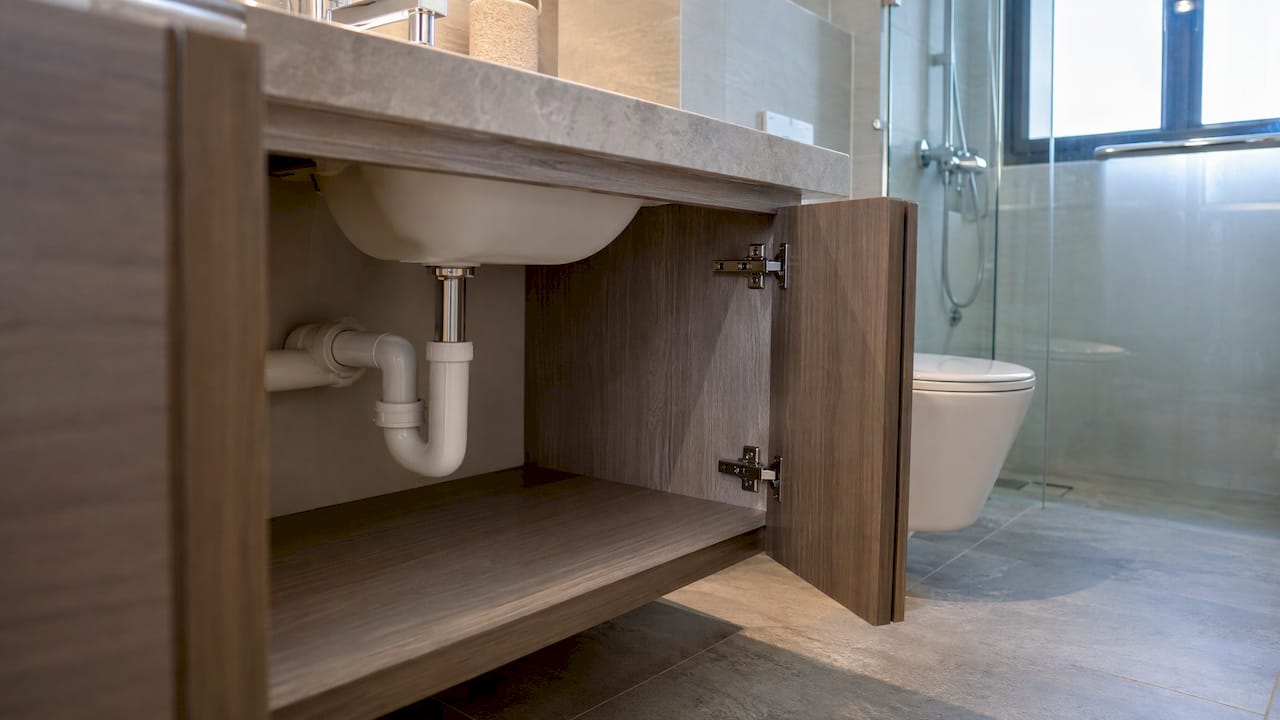
If you want a structured way of looking at a property’s condition before occupation, a practical inspection checklist shows how to work through visible checks systematically, a habit that carries over to walls, ceilings and fittings in your own unit.
What tenants and landlords should agree in writing
Verbal assurances do not protect either side. The representing agent should record the unit’s visible condition in writing and keep that record with the tenancy documents.
- Inventory and condition report. Ask for a room-by-room list of furniture, fixtures and fittings and their condition, endorsed by both landlord and tenant.
- Photos before furniture arrives. Take dated close and wide photographs of every wall, floor, ceiling, appliance and fixture, then send the defect list to the landlord or agent the same day.
- Appliances and air-conditioning. Note warranty status and servicing history, and who pays for servicing.
- Small items. List lights, curtains, keys, access cards and remotes.
- Costs and dates. Confirm who pays maintenance charges and utilities, and fix a firm move-in date with key readiness.
- Rules that affect the move. For condos, ask for current MCST by-laws and confirm move-in bookings, lift reservations, delivery access, renovation hours and noise rules.
For HDB rentals, the Council for Estate Agencies offers a tenant checklist and a non-compulsory tenancy agreement template for HDB flats. HDB tenancies must run for at least six months. The maximum is three years per application for Singaporeans and Malaysians, and two years per approval for non-Malaysian non-citizens. For whole-flat rentals, confirm that authorised-tenant registration and any non-citizen quota requirements have been handled.
Also check the cleaning and condition terms at the end of tenancy. Our note on furniture cleaning policy and deposit loss explains how to avoid disputes.
Closing the furnishing gap
Most rentals and many purchases are “ready” in the sense of works, not in the sense of living. The missing pieces are usually beds, a sofa, dining table, lamps and appliances. You have three routes: buy everything, which means upfront cost, delivery, and later storage or disposal; leave the home half-empty for weeks; or rent a coordinated set.
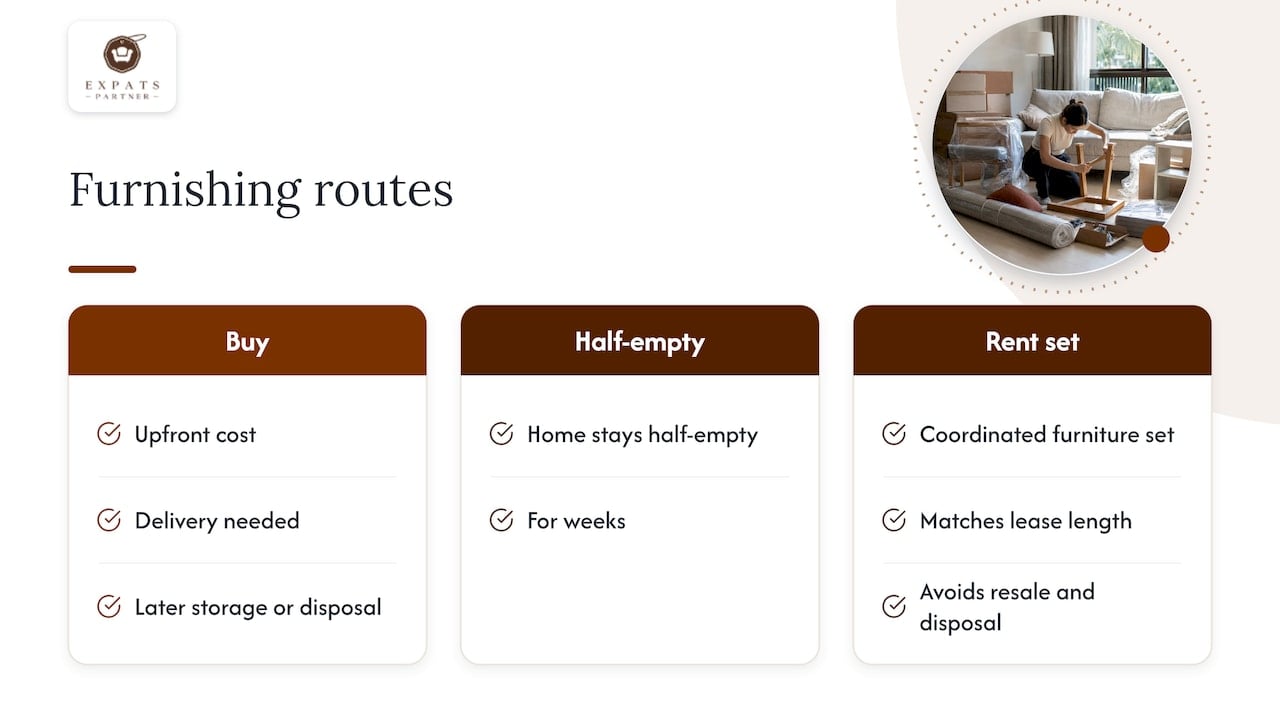
Renting suits Singapore’s pattern of fixed-term moves. HDB tenancies run for set periods of six months to a few years, and many assignments are the same. Furniture that matches the lease length avoids the resale and disposal work at the end.
How we handle it
We offer short and long-term furniture rental, full-home and room-specific packages, appliance rental and coordinated delivery, setup and collection. Our packages are suited to Singapore home sizes. Published monthly prices:
| Package | Home size | Price |
|---|---|---|
| Vital+ | 1 bedroom apartment | S$178 per month |
| Comfy | 1 bedroom apartment | S$338 per month |
| Family | 2 bedroom apartment | S$718 per month |
Those are the prices published on our site; pricing depends on rental duration and the items selected. See the furniture packages for what each includes.
Who this matters for, and what to do
Tenants and relocating families. Confirm the inventory first, then book furnishing so delivery lands on or just after key collection. Our guide on move-in ready furniture rental for tenants walks through it, and the expatriate furnishing guide covers the wider move. Families should read the HDB fire checks and furnishing checklist before choosing layouts.
Landlords and agents. A unit that is genuinely liveable on viewing day is easier to let. The landlord furnishing guide compares furnishing, renting and staging by lease length. For sale, see staging for resale flats.
HR and corporate housing teams. Standardised, quickly delivered furnishing for assignees is covered in our corporate housing furnishing guide, and for serviced units in our serviced apartment furniture standards.
Developers and showflat teams. Confirm which finishes and appliances are standard and which are showflat upgrades. Loose furniture and décor are not included, and the actual unit’s walls, dimensions, orientation, view and light may differ from the showflat. Buyers respond to homes that show how the space lives, which is where staging helps. Developers also commonly fit out unsold completed units because buyers are more attracted to move-in condition.
A simple move-in timeline
- Four to six weeks before: agree the inventory, appliances and move-in date; check building rules.
- Two weeks before: confirm furniture packages, delivery slot and any lift booking.
- Key day: photograph everything before furniture arrives; send the defect list the same day.
- Delivery day: furniture is placed and set up against your room plan.
- First week: test appliances again and report anything missed.
To start, see our furniture rental options and tell us your home size and rental period.
FAQ
What does move-in ready mean in Singapore?
It generally means a home can be occupied immediately without major works. It does not guarantee furniture, appliances or a specific finish, so ask the agent or owner what is included and get it in writing.
Is a move-in ready home furnished?
Not necessarily. Renovation and furnishing are separate: a unit can be renovated yet lack beds, a sofa or appliances. Only a turnkey or fully furnished listing includes loose furniture, and the inventory should confirm it.
What should I check before moving into a rental?
Test taps, toilets, switches, air-conditioning and appliances, look for damp and leaks, and photograph every surface with dates. Agree an endorsed inventory and send any defects to the landlord or agent on the same day.
Can I rent furniture to make a home move-in ready?
Yes. We rent furniture, appliances and full-home packages for short or long terms in Singapore, with coordinated delivery, setup and collection, so you avoid buying and storing furniture.