
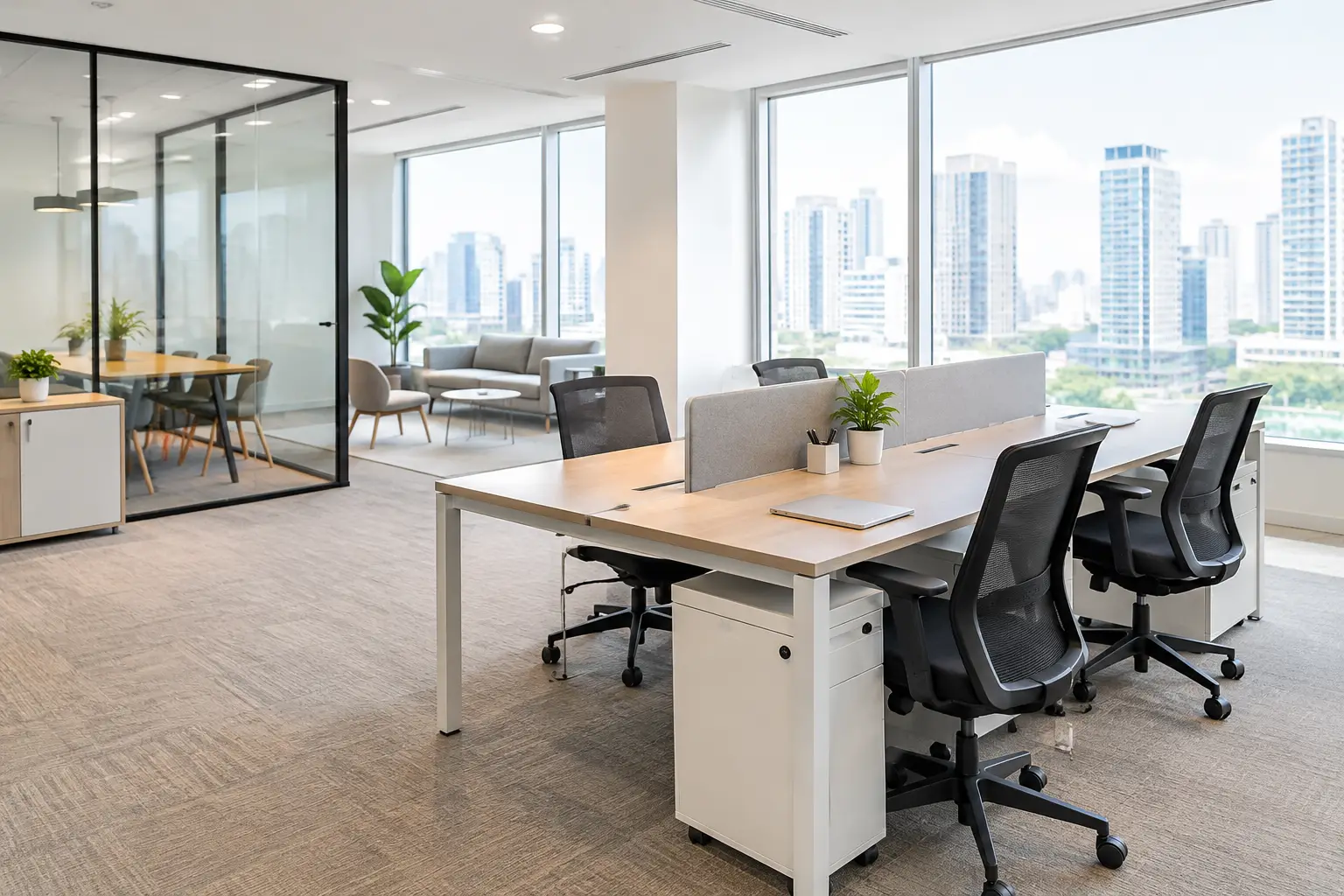
A new office lease can move from signed to move-in date far faster than expected. At the same time, the team size, working pattern and client-facing needs may still be changing. Office furniture rental gives businesses a practical way to create a comfortable, professional workspace without committing capital to desks, chairs and meeting-room pieces that may not suit the next stage of growth.
For companies in Singapore, this is not simply a question of avoiding a large upfront purchase. It is about getting the space ready on time, making sensible choices for the lease period, and leaving the delivery, installation and eventual collection to one coordinated service.
When office furniture rental makes sense
Furniture rental is particularly useful when the length or future shape of an office is uncertain. A company opening a project office, setting up a temporary swing space during renovation, or moving staff into a serviced office may only need furniture for several months. Buying for these situations can leave the business storing, reselling or disposing of surplus items later.
It can also suit established companies taking a cautious approach to a new location. Instead of buying a full office fit-out before the team has settled into the space, they can rent the essentials and adjust after seeing how the office is used. Perhaps the original plan included a large boardroom, but staff prefer smaller collaboration tables and quiet work areas. Rental allows that decision to be informed by daily use rather than guesswork.
For landlords preparing an office unit for lease, a furnished setup can help prospective tenants understand the capacity and flow of an otherwise empty space. A clear reception point, practical workstations and a well-proportioned meeting area make viewings easier to read. The aim is not to over-style a commercial unit, but to show its potential in a believable, useful way.
The real value is in readiness, not just furniture
An office can have attractive desks and still feel poorly planned. Walkways may be too tight, monitor positions uncomfortable, storage insufficient, or the meeting room unable to seat the people it is meant to serve. Good office furniture rental begins with the working requirements of the space.
This means considering how many people will attend regularly, whether desks need to support laptops or fixed screens, and how often the office will receive clients. A small consulting team may need a polished meeting table and discreet storage more than a dense bank of workstations. A customer service operation may prioritise ergonomic task chairs, cable management and layouts that allow supervisors to support staff easily.
Practical details have a direct effect on how the office feels. Chairs should be adjustable and appropriate for full working days. Desks need enough depth for the equipment in use. Storage should reduce visual clutter rather than becoming an afterthought. In client-facing areas, furniture should feel consistent and well maintained, because the reception or meeting room often shapes a visitor’s first impression of the business.
A capable rental partner helps turn these needs into a workable plan, then manages the physical work of supplying, delivering and positioning the furniture. That coordination matters when a lease start date, handover window and staff move are all happening within the same week.
Renting versus buying: look beyond the ticket price
Buying office furniture can be the right decision for a stable, long-term office with well-defined requirements. Ownership gives a business complete control over its pieces and may cost less over a sufficiently long period. However, the purchase price is only one part of the calculation.
Businesses should also allow for design selection, sourcing, delivery, assembly, installation, maintenance, storage and end-of-life disposal. These tasks take internal time, and they can become difficult when a move is urgent or the office is located in a building with strict delivery arrangements.
Rental replaces much of that operational burden with a predictable arrangement. The cost is spread over an agreed term, while furniture selection, logistics and collection are handled as part of the service. This can protect cash flow, especially for businesses that would rather keep capital available for recruitment, technology, marketing or expansion.
There are trade-offs. Rental ranges are often curated around versatile, commercially suitable pieces rather than every finish or niche design preference. A business with highly specific branding, specialist technical furniture or a permanent headquarters may find a mix of purchased and rented items more suitable. The best approach depends on the expected lease length, budget, degree of flexibility required and the role the office plays in the company’s brand.
Plan the space before selecting individual pieces
Furniture choices are easier when the office has been divided into clear working zones. Start with the everyday areas: workstations, meeting points, reception, storage and any quiet or breakout spaces. Then consider movement through the office. People should be able to reach their desks, use storage and enter meeting rooms without weaving around chairs or interrupting colleagues.
It is tempting to maximise the number of desks, particularly in a compact Singapore office. Yet an overcrowded plan can make the workplace feel uncomfortable and diminish the practical value of the space. Allowing for sensible circulation, adequate chair clearance and places for informal conversations often creates a better experience for staff and visitors alike.
A useful furniture schedule should state the number of each item, its intended location and the dates required. It should also account for building rules, lift access, loading bay bookings and any restrictions on delivery hours. These are small details, but overlooking them can delay an otherwise straightforward installation.
Choose flexible pieces that work hard
For many offices, a restrained selection of adaptable furniture is more useful than a large collection of specialised items. Modular desks can be arranged in banks or smaller clusters as teams change. Folding or stackable chairs can support training sessions and larger meetings without occupying valuable floor area every day. Mobile pedestals and storage units can move with staff as layouts evolve.
Meeting-room furniture deserves particular care. The table should suit the usual number of attendees, not only the occasional large meeting. If videoconferencing is common, leave sufficient room for screens, cameras and cables. If clients visit frequently, select chairs that are comfortable enough for longer discussions and finishes that look appropriate under office lighting.
Neutral, well-kept furniture tends to work across different industries and locations. It also gives businesses room to express their identity through artwork, signage, plants and carefully chosen accessories, without making the workspace feel overly temporary. At Expats Partner, this practical balance is supported by curated furniture, coordinated installation and collection at the end of the agreed rental period.
A more considered approach to sustainability
Office moves often create unnecessary waste. Perfectly usable desks and chairs can be discarded because they do not fit the next layout, while new furniture is purchased for a short-term requirement. Renting well-maintained pre-owned furniture extends the useful life of quality items and can reduce the demand for unnecessary new production.
Sustainability should still be considered alongside condition, comfort and suitability. Furniture must be clean, safe and presentable, especially in spaces used by employees and clients every day. Where a specific piece is needed to meet a design brief or operational requirement, sourcing new furniture may be the sensible choice. The goal is thoughtful use, not a one-size-fits-all rule.
Make the move-in process easier
The smoothest installations begin with a clear brief and realistic lead time. Share the floor plan, headcount, lease dates, building access information and any existing furniture that will remain. Confirm who can approve placement decisions on site, particularly if the office is being handed over while other contractors are still working.
Once the furniture is installed, walk through the space before staff arrive. Check desk spacing, chair movement, cable access, meeting-room seating and reception sightlines. A few adjustments at this stage can prevent daily frustrations later. If the office is intended for tenant viewings, inspect it from the entrance and consider whether each area clearly communicates its purpose.
A workspace does not need an extravagant fit-out to feel ready. It needs furniture that supports the people using it, a layout that makes sense at first glance, and a plan that remains sensible if circumstances change. That is where rental can offer real reassurance: the office can be ready for work now, without forcing the business to make a permanent decision too soon.