

Most home staging mistakes in Singapore come down to one thing: the unit stops looking like a space someone could live in. Too much stuff, furniture sized for a bigger room, a dim living area or an empty shell all make a flat feel smaller, older or harder to picture. The fix is rarely a big spend. It is a sequence of small, deliberate choices, and furniture that is right-sized, delivered on time and collected afterwards is the part most owners find hardest to arrange alone. That is where we come in: we rent furniture and stage homes across Singapore, so you do not have to buy, store or dispose of pieces you only need for a listing.
TL;DR
- The costliest mistakes are clutter, over-personalisation, oversized furniture, poor lighting and leaving rooms empty.
- Staging changes how a unit looks, not its size, facing, floor or layout, so aim for a clean, neutral, easy-to-picture home.
- Fix cheap things first: paint touch-ups, bulbs, switch covers, tidy entrance, clear wardrobes.
- Rented, properly scaled furniture avoids the cost of buying, storing and disposing of pieces.
- Real photos of the real, tidy unit matter more than heavy styling.
Table of Contents
- Why small staging errors cost so much
- Mistake 1: Leaving clutter and too much furniture
- Mistake 2: Over-personalising the space
- Mistake 3: Furniture that is the wrong size or in the wrong place
- Mistake 4: Leaving the home empty
- Mistake 5: Poor lighting, odours and tired finishes
- Mistake 6: Ignoring the entrance, balcony and room purpose
- Mistake 7: Spending in the wrong places
- Mistake 8: Misleading or weak listing photos
- Mistake 9: Treating every property type the same
- A quick pre-listing check
- How we help landlords, agents and developers
- FAQ
Why small staging errors cost so much
Buyers and tenants decide quickly. One Singapore condo-selling guide notes that people form an opinion within the first 30 seconds, shaped by smell, light and sense of space, and that a poor first impression is hard to undo. In a market where every square foot is expensive, perceived space matters almost as much as the real floor area.
Staging also has limits. A Singapore property research note makes the point that styling does not change fundamentals such as size, facing, floor or layout. So the goal is not to disguise the unit. It is to remove whatever stops a viewer from seeing it properly. Think of it as makeup, not plastic surgery: declutter, clean, repaint, make minor repairs and rearrange furniture.
Mistake 1: Leaving clutter and too much furniture
Clutter shrinks a room faster than anything else. Overfilled wardrobes, crowded counters, piles of shoes and extra chairs tell a viewer there is not enough storage or space.
What to do instead:
- Clear kitchen counters down to one or two items.
- Pack wardrobes to about half capacity so they look roomy.
- Put shoes away and clear the entrance.
- Store unused books, ornaments and spare chairs.
- In small rooms, remove pieces until you can walk through without turning sideways.
- In bathrooms, replace toiletries with matching folded towels.
If you want a fuller routine, our guide to decluttering before professional staging sets out the order of work room by room.
Mistake 2: Over-personalising the space
Family photos, bold accent walls, themed rooms and strong décor choices make viewers think about you, not about themselves living there. Neutral tones such as soft greys, whites and warm tans suit the widest range of buyers and tenants. Add colour with cushions, plants or art that can be removed.
The opposite error is stripping the home so bare that it feels cold. You want a calm, warm, lived-in feel without personal markers: soft furnishings, a few plants and layered lighting do that.
Mistake 3: Furniture that is the wrong size or in the wrong place
Oversized sofas and large dining sets are common in compact HDB flats and small condos. When visitors have to squeeze between pieces, the room reads as cramped and the owner looks to have measured badly. Furniture that is scaled to the room, with clear walking paths, makes the same floor area look larger.
Measure before you place anything. Give each room one obvious job: a living area, a dining spot, a study corner. Floating furniture awkwardly or pushing everything against one wall often wastes the layout.
This is the area where renting helps most. Instead of making do with whatever you own, you can bring in pieces sized for the unit. Our staging pages cover how this differs by property type, including small condos, HDB resale flats and semi-detached houses. If you wonder why the approach changes, read why HDB and private property staging differ.
Mistake 4: Leaving the home empty
An empty flat may look like a clean slate, but many viewers struggle to judge scale in an empty room, and small spaces can look smaller than they are. A few well-chosen pieces, a bed, sofa, dining table and lamps, show how the rooms work. Focus first on the living room and master bedroom, where viewers form most of their impression.
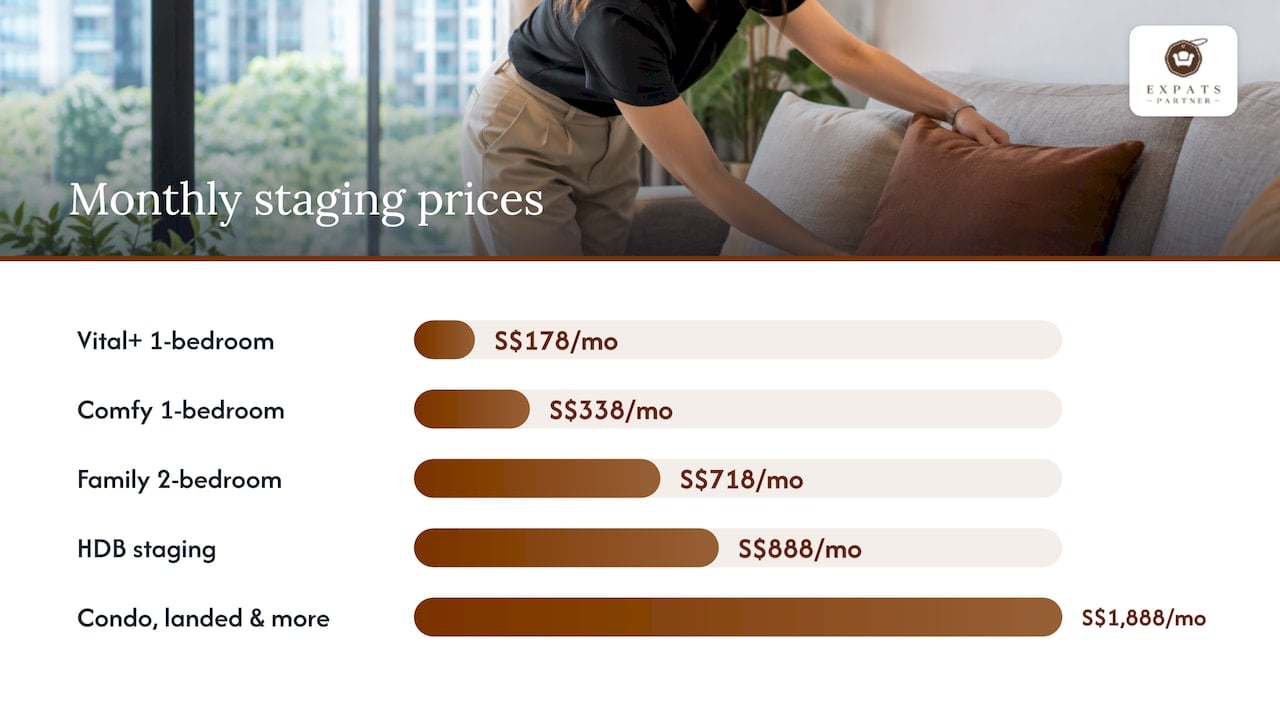
For vacant units, a furniture package is usually simpler than buying. Our published monthly prices are S$338 for the Comfy one-bedroom package, S$718 for the Family two-bedroom package and S$178 for the Vital+ one-bedroom package, with home staging from S$888 a month for HDB flats and S$1,888 a month for semi-detached, landed, condominium, penthouse and apartment homes. These prices are as published on our packages page.
Mistake 5: Poor lighting, odours and tired finishes
Dark rooms feel smaller and cheaper. Under poor light even fresh white walls can look yellow. Before every viewing:
- Open curtains and blinds and switch on every light.
- Replace burnt-out bulbs with warm-white LEDs.
- Touch up scuffed or yellowed walls with white paint, which typically costs a few tens of dollars a tin.
- Replace cracked switch covers and damaged socket faces, fix leaking taps.
- Take down faded or messy curtains rather than leave them as the biggest object in the room.
- Keep scents neutral. Musty, smoky or pet smells put viewers off immediately, and strong air fresheners can do the same. Clear laundry and drying racks.
Watch mismatched finishes too. Mixing vintage brass with ultramodern fittings, or leaving snaking cables and a stack of folding chairs, makes a unit look hodgepodge rather than considered.
Mistake 6: Ignoring the entrance, balcony and room purpose
The entrance is the first thing a viewer sees. A scratched door, cracked letterbox or crowded shoe rack signals poor maintenance before they step inside. Fix and clear it first.
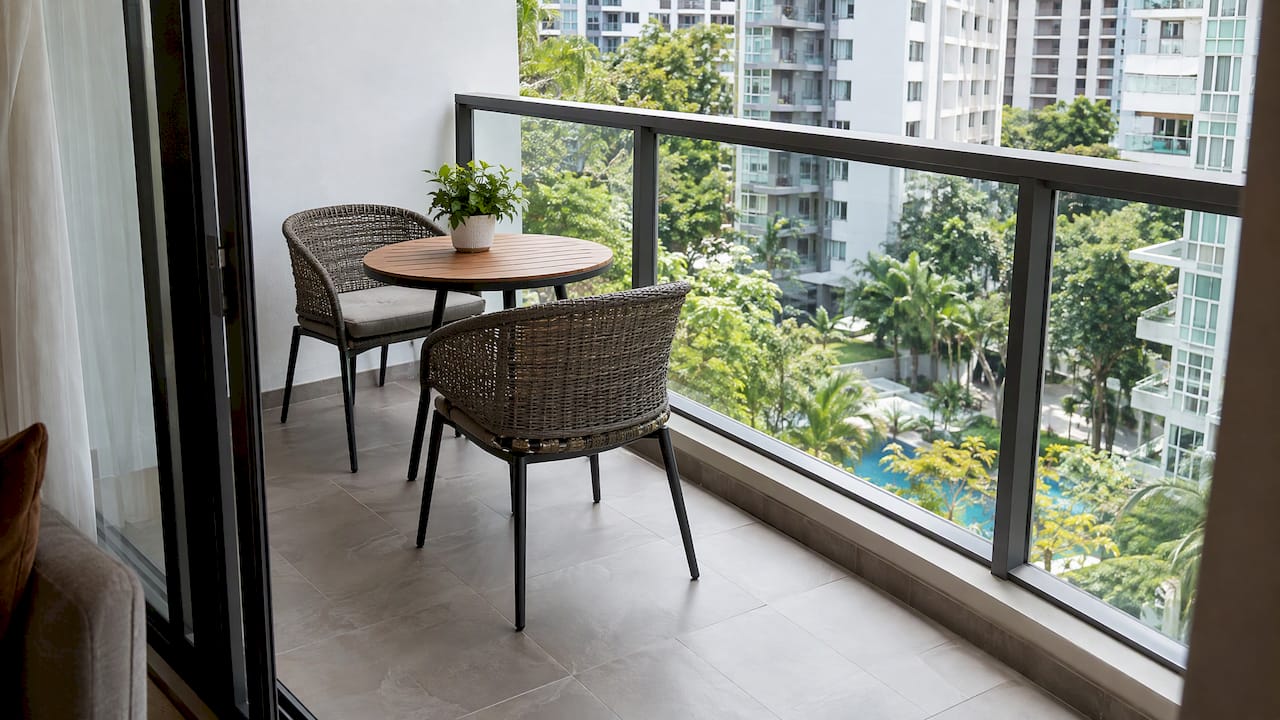
Balconies and service areas matter as well. A cluttered balcony suggests there is no storage. Clear it and, where it fits, set a small table and two chairs. Inside, avoid rooms with no clear purpose. A spare room filled with boxes should become a study, guest room or nursery in the viewer’s mind.
For a viewing-day routine, see our checklist on how to prepare a house for viewings.
Mistake 7: Spending in the wrong places
Staging is not a renovation. Spending on new furniture, high-end accessories or landscaping often returns less than simple, cheap work. A Singapore guide estimates decluttering and storage at S$150 to S$250 and rates the return well above its cost, though results vary by home. Put money where viewers look: living room, master bedroom, entrance, lighting.
Buying furniture only for a listing also leaves you with pieces to store or dispose of afterwards. Renting for the listing period avoids that.
Mistake 8: Misleading or weak listing photos
Photos are the first viewing. Singapore listing platforms typically ask for sharp pictures of every room, with no text or branding on the images, and real photos rather than artist impressions. Tidy first, open doors and blinds, switch on all lights and shoot from a corner at eye level in landscape mode. Heavily edited or computer-generated renderings can mislead buyers and tenants and lead to disappointment at the viewing.
Mistake 9: Treating every property type the same
A condo for expatriate tenants, an HDB resale flat and a landed home need different treatment. Tenants relocating from overseas want a unit that is ready to live in. Buyers in HDB resale want to see storage and flow. Landed homes need each floor to have a clear purpose. See our pages on condo staging for lettings, terraced houses and bungalows.
If you are deciding between layouts, a guide on penthouse and duplex condo layouts shows how differently the same square footage can feel.
A quick pre-listing check
| Area | Common mistake | Better approach |
|---|---|---|
| Entrance | Shoe pile, scratched door | Clear, repair, neutral mat |
| Living room | Oversized sofa | Scaled seating, clear paths |
| Bedrooms | Full wardrobes | Half-full, plain bedding |
| Kitchen | Crowded counters | One or two items |
| Bathroom | Toiletries on show | Folded matching towels |
| Lighting | Dim, mixed bulbs | Warm-white LEDs, all on |
| Walls | Bold colours, scuffs | Neutral, touched up |
| Empty rooms | No furniture | Essential rented pieces |
How we help landlords, agents and developers
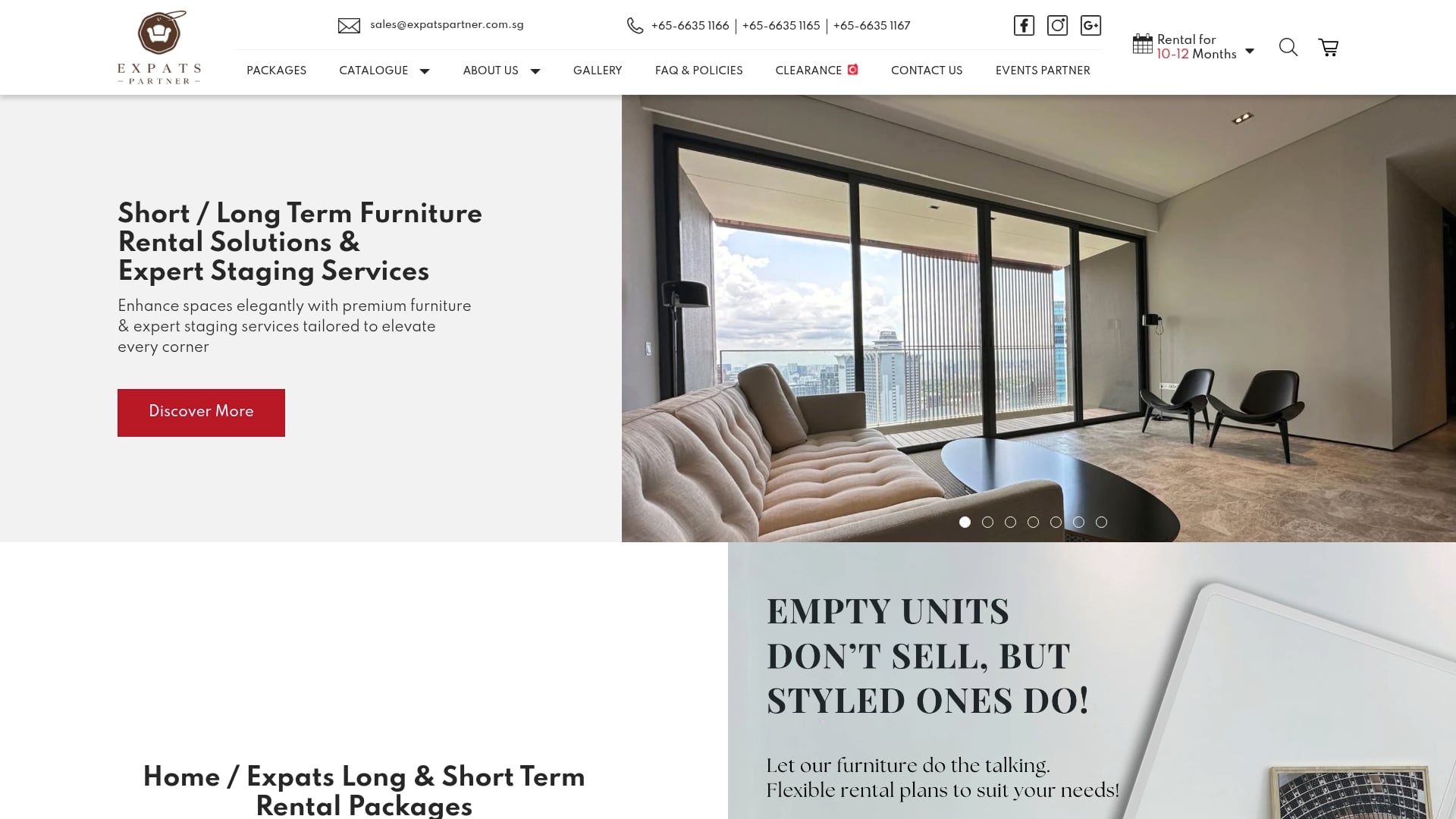
We offer short and long-term furniture rental, full-home and room-specific packages, home, property and office staging, and coordinated delivery, setup and collection. For owners, that means a viewing-ready unit without buying furniture. For agents and developers, it means presentable units for tenants and buyers across HDB, condo and landed homes. See our packages or contact us through our site to discuss your unit. Our staging results example shows what a finished unit looks like.
FAQ
What is the biggest home staging mistake?
Clutter and over-personalisation are the most commonly cited. Both stop viewers from picturing themselves in the home. Clearing surfaces, thinning wardrobes and removing family photos costs little and often makes the biggest difference.
Should I stage an empty home?
Yes, in most cases. Empty rooms make scale hard to judge. A few right-sized pieces in the living room and master bedroom show how the space works.
What happens to furniture after staging?
With rental furniture, it is collected at the end of the agreed period, so you have nothing to store or dispose of. If staging pieces such as lighting or carpets are lent, confirm in writing which items stay with the sale.
Do I need to renovate before staging?
No. Staging focuses on cleaning, decluttering, small repairs, paint touch-ups, lighting and furniture arrangement. Renovation is a separate decision and is rarely needed to present a home well.
Does staging change how much a home is worth?
Staging helps viewers picture how rooms are used, but it does not change size, facing, floor or layout. Its job is to present those strengths clearly.