
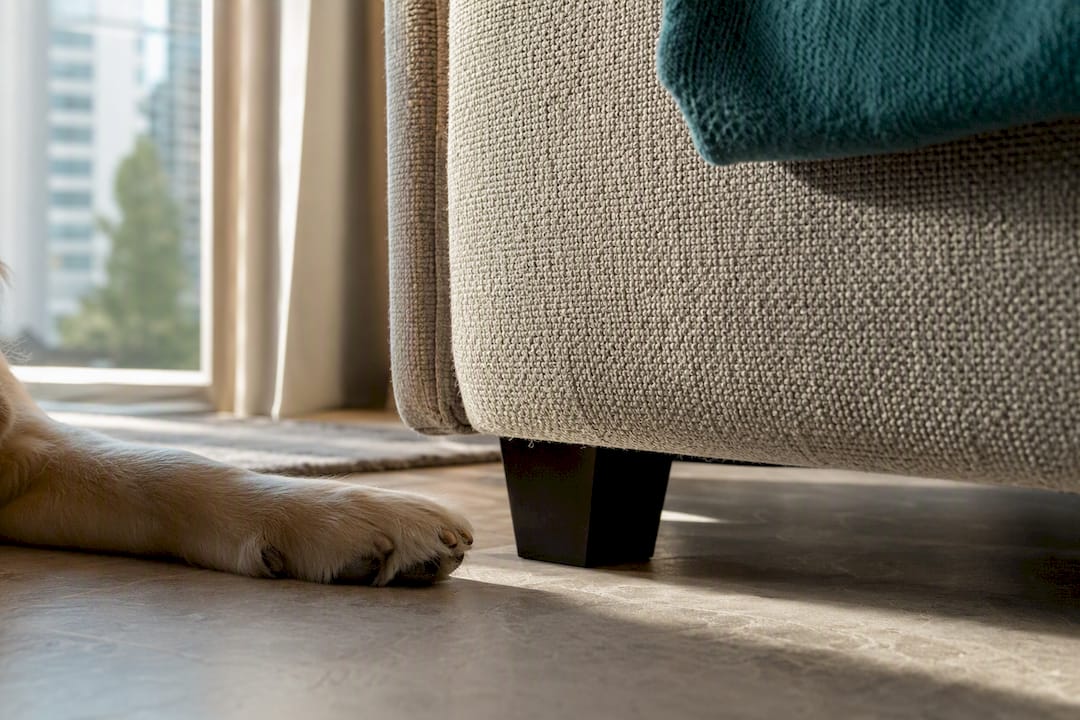
Pet-friendly rental furnishings are a workable, lower-risk option in Singapore once three things are in place: durable materials, a complete pet clause in the tenancy agreement, and a documented maintenance routine. HDB owners must first confirm NParks AVS cat licensing and any MCST bylaws before committing. From there, the next step is simple: get the pet clause into the letter of intent early, and choose furniture built for Singapore’s humidity, whether through direct purchase or a rental partner.
TL;DR:
- Using durable, performance fabrics and sealed flooring is essential for furniture longevity in pet households, especially in Singapore’s humid climate.
- A comprehensive pet clause must specify pet details, deposits, tenant responsibilities, licensing requirements, and breach triggers to avoid disputes.
- Presenting a clear, tiered pet-friendly furnishing package with certified materials and operational protocols enables smoother landlord acceptance and tenant compliance.
- Maintaining documented condition reports and engaging professional cleaning services early helps prevent deposit disputes related to pet damage.
- Rental solutions offering short or long-term pet-safe furniture streamline furnishing processes and reduce owners’ logistical burdens.
Table of Contents
- What furniture and materials survive pets in Singapore homes?
- What must a pet clause in the tenancy agreement include?
- How should landlords and agents package pet-friendly furnished rentals?
- How do you maintain and hand back a pet-friendly rental without disputes?
- How Expats Partner makes pet-ready furnishing simpler
- Sources and further reading
- FAQ
What furniture and materials survive pets in Singapore homes?
The furniture that holds up best in a pet household is not necessarily the most expensive. It is the furniture built with the right fabric, the right frame, and the right finish for Singapore’s climate.
Start with upholstery. Performance fabrics, solution-dyed weaves and microfibre outperform velvet, bouclé and other open weaves by a wide margin when a cat or dog is in the house. Tightly woven synthetics resist claw snags and shed less fibre for pet hair to cling to, and they cope far better with Singapore’s humidity than natural fibres that trap moisture and develop odour. Genuine leather is durable against scratches in the right grade, but it marks more visibly than fabric and needs conditioning in a humid flat, so it suits calmer households better than a boisterous puppy’s first year.
Frame construction matters just as much as the fabric on top. Kiln-dried hardwood frames and metal legs hold their shape in humid conditions, while poorly dried timber warps, loosens at the joints, and becomes an easy target for chewing.
Flooring choices set the tone for the whole home. Luxury vinyl tile (LVT) and sealed engineered timber resist scratches, moisture, and the odour absorption that untreated timber and carpet suffer from. A washable rug in the pet’s main zone protects flooring further while giving the animal a defined space of its own.
- Choose removable, machine-washable cushion and sofa covers wherever possible.
- Favour low-profile bed frames that a jumping cat cannot easily damage or dislodge.
- Round table edges reduce injury risk and the scuffing that sharp corners attract.
- Avoid loose, looped weaves that claws can snag and unravel over time.
Pro Tip: Ask any furniture rental provider whether pet-suitable fabric options are available before signing, rather than discovering the standard range is velvet-heavy after move-in.
What must a pet clause in the tenancy agreement include?
A vague pet clause is worse than no clause at all, because it gives both landlord and tenant something to argue about at move-out with no clear answer. A complete clause needs five elements, and it needs to appear in the letter of intent (LOI) before it migrates, unchanged, into the signed tenancy agreement (TA) or a stamped addendum.
- Pet description — species, breed, size, and number of animals permitted, named specifically rather than left as “one pet.”
- Pet deposit and refund conditions — a separate sum on top of the standard security deposit, with clear terms for what triggers a deduction and what does not.
- Tenant responsibilities — daily care standards, noise control, and who arranges professional cleaning if damage occurs.
- Licensing confirmation — proof of NParks AVS cat licensing for HDB flats, since fines for non-compliance under the Animals and Birds Act can be substantial, reaching up to several thousand Singapore dollars, plus MCST registration where a condo requires it.
- Termination triggers — specific breaches, such as unresolved noise complaints or hygiene issues, that entitle the landlord to end the lease early.
Property type changes how enforceable this wording is. HDB flats carry statutory licensing requirements that give a landlord a clear, checkable condition to write into the clause. Condos are different: MCST bylaws often permit up to three pets but can add breed or size restrictions, so the clause should explicitly confirm the tenant has checked management’s rules rather than assuming HDB-style clarity applies. Landed property generally gives landlords the widest discretion, since fewer external bylaws apply.
On deposits, a separate pet deposit rather than folding pet risk into the general security deposit gives both parties a cleaner accounting trail at move-out.
How should landlords and agents package pet-friendly furnished rentals?
Presenting a pet-ready package as a defined product, rather than a vague promise that “pets are fine,” makes cautious landlords far more comfortable and speeds up tenant acceptance. A landlord who hands an agent an itemised list of materials, a clause template, and a cleaning schedule removes most of the guesswork that stalls negotiations.
Before listing a unit as pet-friendly, run through a short checklist:
- Confirm sofa and chair covers are washable or professionally cleanable on short notice.
- Check flooring is sealed LVT or treated engineered timber, not exposed carpet.
- Add throw protection or a slipcover to any statement piece the landlord wants preserved.
- Avoid looped or bouclé fabrics on any furniture staying in the unit.
- Provide a defined pet zone with a washable mat near the main door or balcony.
Three package tiers work well for corporate housing teams and agents managing multiple units. A basic package covers standard furnishings with no pet-specific upgrades, suited to short lets with cautious tenants. A mid-tier package swaps in performance fabric sofas and washable rugs. A full pet-ready package adds sealed flooring recommendations, low-profile beds, rounded-edge tables, and a scheduled deep clean built into the rental term.
Operationally, coordinate delivery and setup so the pet zone is ready on day one, and build a fixed inventory rotation into the contract so worn pieces get replaced on a schedule rather than becoming a dispute at move-out. When advertising, say “pet-friendly with conditions” rather than an unqualified “pet-friendly,” and link the listing to the actual clause tenants will sign.
How do you maintain and hand back a pet-friendly rental without disputes?
Most deposit disputes trace back to gaps in documentation, not genuine disagreement about damage. Closing those gaps starts on day one and continues through to the final inspection.
- Build daily habits into the tenancy from the start. Wiping paws after walks and cleaning accidents immediately are the single most effective behaviours for protecting furnishings and deposits, and they cost nothing to encourage.
- Call in professional help early, not late. Upholstery or carpet cleaning and odour remediation specialists handle set-in stains and smells that home cleaning cannot reach, and using them promptly usually costs less than replacing a damaged piece.
- Document condition on the way in and the way out. A dated photo inventory and a signed checklist at move-in give both parties a fair baseline for judging what counts as damage versus ordinary wear.
- Separate repair costs from fair wear and tear. A worn cushion after two years of normal use is not the same claim as a chewed table leg, and the clause should make that distinction obvious.
Where a deduction is genuinely disputed, Singapore’s Small Claims Tribunal can hear the case, and a landlord with clear photographic evidence and a signed pet clause is in a far stronger position than one relying on memory. A fully furnished rental property landlord’s guide sets out how inventory documentation works across a standard tenancy, and the same discipline applies directly to pet households.
Pro Tip: Keep receipts for every professional clean carried out during the tenancy. They double as evidence that the tenant maintained the property responsibly if a dispute ever reaches the deposit stage.
How Expats Partner makes pet-ready furnishing simpler
Sourcing pet-suitable sofas, beds, and flooring-safe furniture piece by piece takes time most landlords and corporate housing teams do not have, and buying outright leaves them holding depreciating stock once a tenant moves out. There are managed alternatives offering short and long-term rental furniture, full-home packages built around durable materials, and coordinated delivery and collection that removes the logistics from your side of the tenancy.
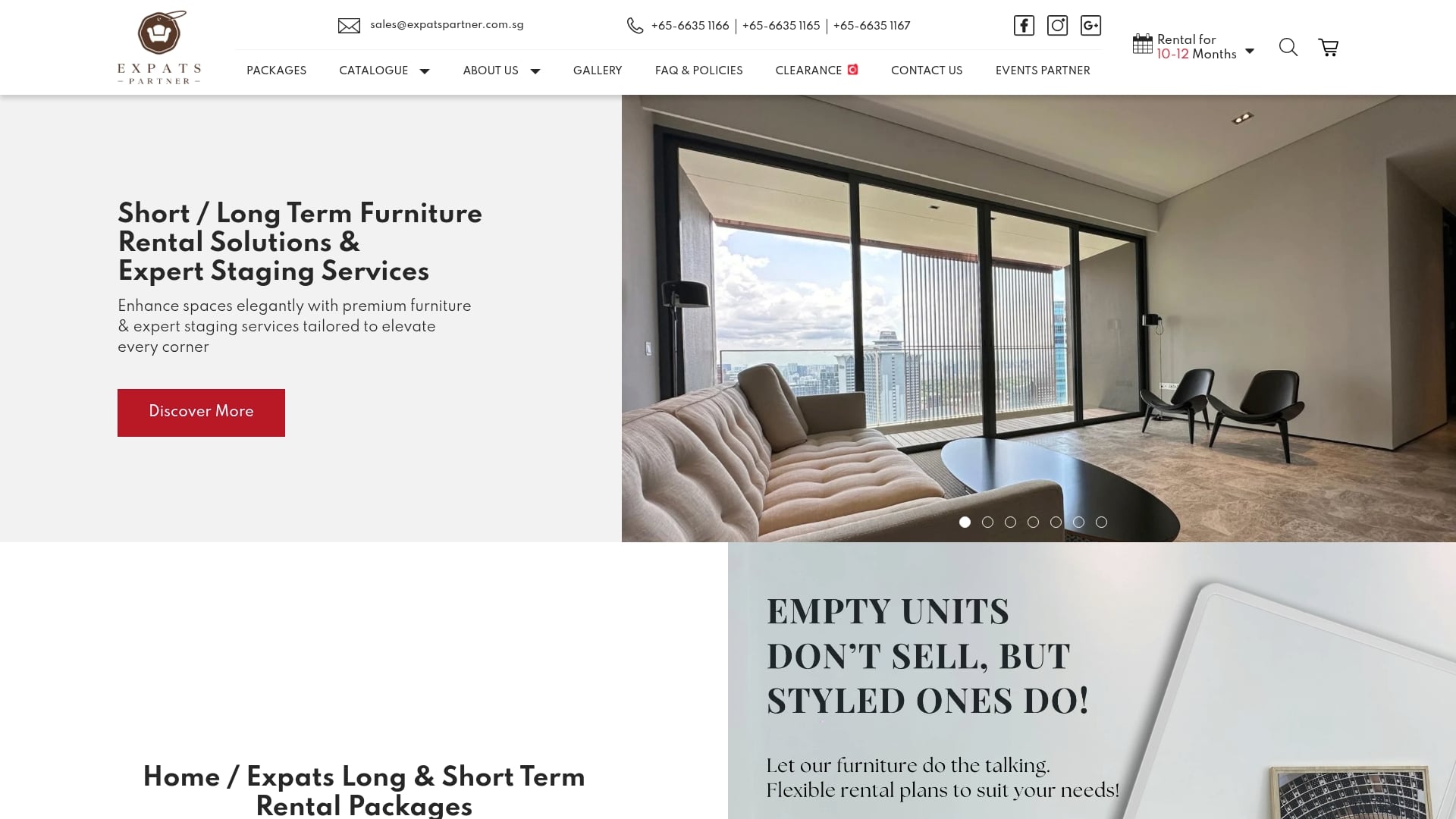
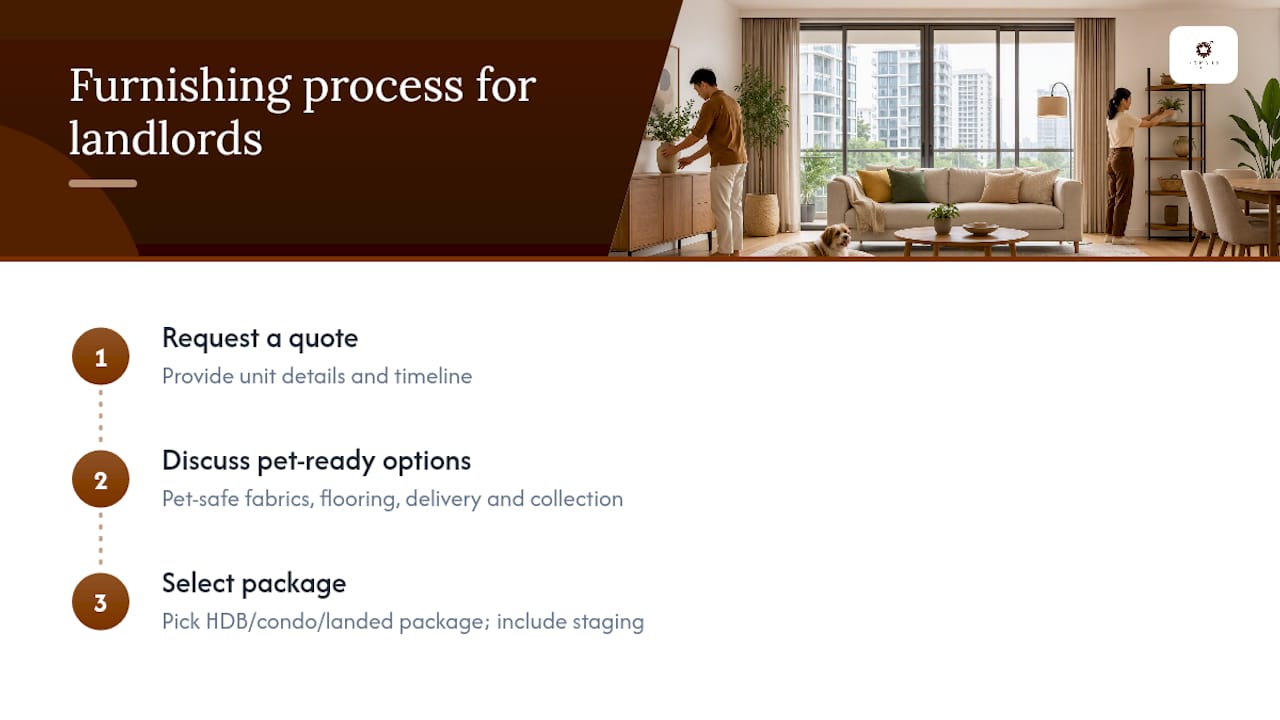
For landlords preparing a unit between tenants, or corporate relocation teams furnishing a new arrival’s flat, the process is straightforward: request a quote, discuss the pet-ready fabric and flooring options relevant to the unit, and select a package suited to an HDB flat with professional painting services, condo, or landed home. Property and home staging services are also available where a pet-tolerant, viewing-ready look matters for a sale or new listing.
Browse furniture rental for landlords in Singapore to see package options, or look at relocation furniture packages for Singapore moves if you are furnishing an incoming tenant with a pet. Either page is a good starting point for a quote once you know the unit and timeline.
Sources and further reading
For the regulatory detail behind the licensing points in this guide, HDB’s cat licensing scheme under NParks AVS sets out registration requirements and penalties for non-compliance directly. Practical guidance on condo pet policy and MCST bylaws, along with landlord move-out remediation practices, comes from published rental-policy guides covering HDB, condo, and landlord rules in Singapore. Fabric and flooring recommendations reference established pet-friendly furniture design and durable flooring guidance used throughout the materials section above.
This article is general information, not a substitute for advice from a qualified lawyer. Consult a qualified legal professional about your own circumstances before acting on anything here.
FAQ
Do I need a licence to keep a cat in an HDB flat?
Yes. HDB requires cat owners to register under the NParks AVS licensing scheme, with fines for non-compliance under the Animals and Birds Act reaching up to S$5,000.
How much should a pet deposit be on top of the standard deposit?
There is no fixed statutory figure, but landlords typically negotiate a separate pet deposit distinct from the general security deposit, with refund conditions tied to the unit’s condition at move-out.
What counts as pet damage versus normal wear and tear?
Chewed frames, deep claw gouges, and set-in stains or odours typically count as damage, while minor fabric fading or light cushion wear from ordinary use is generally treated as fair wear and tear.
Can pet-friendly rental furniture be insured?
Furniture itself is not usually insured against pet damage separately; landlords instead rely on the pet deposit, the tenancy clause, and documented condition reports to cover repair or replacement costs.
Does Expats Partner offer furniture suited to homes with pets?
Yes. There are short and long-term rental furniture and full-home packages that can be matched to pet-friendly material preferences, with coordinated delivery and collection included.