
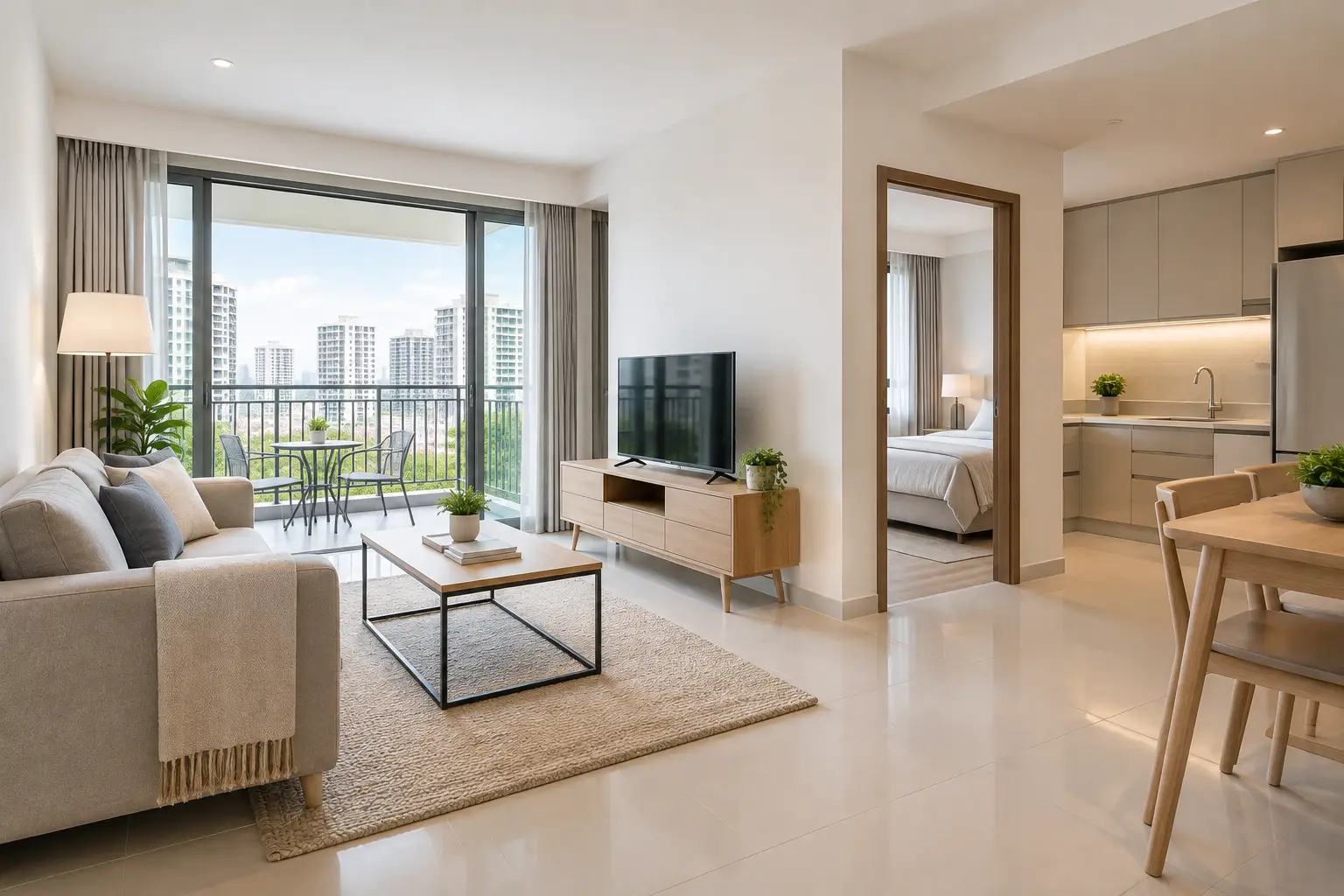
A vacant flat can look larger in person than it does online, yet still leave prospective tenants unsure where a sofa, dining table or bed would fit. This tenant-ready flat guide is designed for Singapore landlords who want to remove that uncertainty, present their property clearly and prepare for viewings without buying furniture that may not suit the next tenancy.
A tenant-ready home is not simply a furnished one. It should feel practical from the moment someone walks in: a place where daily routines make sense, rooms have a clear purpose and the level of furnishing matches the expected rental market. Getting those details right can support stronger listing photos, more confident enquiries and a smoother move-in process.
Start with the tenant you want to attract
Before choosing a single item, consider who is most likely to rent the flat. A compact one-bedroom near an MRT station may appeal to a professional couple or an individual relocating for work. A larger condominium unit may be better suited to a family, corporate lease or a group of colleagues. Their priorities are different, and the furniture plan should reflect that.
For example, a professional tenant may value a proper work area, blackout curtains and useful storage more than a large dining set. A family will usually notice bedroom capacity, durable seating and whether the living area allows everyone to spend time together comfortably. The aim is not to guess every tenant’s taste. It is to provide a sensible, neutral base that makes the home easy to use.
It also helps to look at comparable listings in the development and surrounding area. If similarly priced properties are furnished, an unfurnished unit may need a clear price advantage. If most are simply furnished, a clean and thoughtfully equipped flat can stand out without becoming over-styled.
Make each room easy to understand
Tenants should not have to work out how to live in a room. An empty space can be hard to judge, particularly in photographs, while a cluttered one can look smaller than it is. Furnishing gives scale and shows the intended use of each area.
Living and dining areas
The living room should establish comfort without blocking the flow of the home. Choose a sofa proportionate to the room, a coffee table with safe clearance around it, and a television console or sideboard where appropriate. A rug and simple lighting can help define the seating area, especially in open-plan layouts.
For dining, provide enough seats for the likely household but avoid forcing an oversized table into a narrow space. In many Singapore flats, a round or compact rectangular table is a more practical choice than a large formal dining set. It photographs neatly and leaves a clear route between the kitchen, dining area and living room.
Bedrooms and workspaces
A bed frame, mattress, bedside tables and wardrobe are expected basics in many furnished rentals. Check that wardrobe doors and drawers can open freely once the bed is in place. This sounds straightforward, but poor spacing is one of the quickest ways to make a bedroom feel inconvenient during a viewing.
Where the layout allows, include a desk and supportive chair. Hybrid working remains common, particularly for expatriates and corporate tenants. A modest workstation in the master bedroom, study or a quiet corner of the living room can make a property more useful without requiring a dedicated office.
Kitchens, bathrooms and outdoor spaces
Kitchens do not need decorative excess, but they do need to look clean, workable and complete. Make sure appliances are functioning, cabinet interiors are wiped down and any obvious gaps in practical equipment are considered. A simple dining setup nearby can help tenants picture everyday meals at home.
Bathrooms should be bright, dry and free of personal items. Replace tired shower curtains, damaged toilet seats and heavily worn accessories before photography. If the unit has a balcony, keep it tidy and show its potential with modest outdoor seating only where there is enough space to use it comfortably.
Choose furniture for rental life, not showroom impact
Rental furniture needs to look considered while handling regular use. Neutral colours, durable fabrics and simple shapes give tenants room to add their own belongings, while making the property easier to remarket between occupancies. A pale sofa can look attractive, but it may not be the best choice for a family-oriented unit unless the upholstery is hard-wearing and easy to maintain.
Prioritise useful items over decorative volume. A comfortable sofa, practical dining table, good-quality beds, storage and window coverings are usually more valuable than multiple small accessories. Mirrors, cushions, lamps and artwork can soften the presentation, but they should support the room rather than distract from its size or layout.
There is a balance to strike. A home furnished too sparsely may feel cold and unfinished. One filled with trendy or highly personal pieces may make tenants feel they are borrowing somebody else’s home. A calm, contemporary scheme generally gives the widest appeal.
Build your tenant-ready flat checklist around condition
Furniture alone will not compensate for maintenance issues. Before arranging photography or viewings, walk through the unit as a tenant would. Open cabinets, test lights, run taps, check air-conditioning controls and look at walls from a few steps back. Small faults are more noticeable in an otherwise tidy home.
Pay particular attention to these areas:
- Air-conditioning, appliances, lighting and internet readiness should be checked and clearly documented.
- Walls, skirting, grout, curtains and blinds should be cleaned or repaired where wear is visible.
- Keys, access cards, remote controls and manuals should be gathered in one clearly labelled place.
- The inventory should match what is actually in the flat, including furniture, appliances and any existing fixtures.
Professional cleaning is worthwhile just before photography and handover, but timing matters. If the flat sits open for several weeks after cleaning, dust and humidity can quickly affect the finish. Plan the clean close to the point at which marketing or tenancy begins.
Decide whether to buy or rent the furnishings
Buying can make sense for landlords with a long holding period, a stable furnishing plan and storage capacity for replacements or removed items. It gives complete ownership, but it also means handling selection, delivery, assembly, repairs and eventual disposal. Those costs are easily underestimated, particularly when a tenant leaves and the property needs refreshing quickly.
Furniture rental can be more suitable when the tenancy length is uncertain, the unit is being tested in the market, or speed matters. It can also reduce the risk of purchasing items that date quickly or do not fit a future property. With a managed furniture leasing service, delivery, setup and collection can be coordinated around the property schedule, leaving the landlord or agent more time to focus on marketing and tenant selection.
The right choice depends on expected rental income, the condition of existing furniture and how often the unit may need to change. The key is to set a furnishing budget early rather than making rushed purchases after the listing has gone live.
Prepare for photographs and viewings
Good property photos should show proportion, light and flow. Open curtains and blinds where privacy allows, switch on lamps as well as ceiling lights, and remove cleaning products, spare boxes, loose cables and excessive personal items. Photograph the strongest features first, whether that is the living space, a bright master bedroom, a usable study or an appealing view.
For viewings, keep the temperature comfortable and the flat lightly scented only if necessary. Strong fragrances can be off-putting. Ensure the agent can access the property easily and knows which features deserve attention, such as built-in storage, recent improvements, included appliances or the flexibility of a spare room.
A tenant may not remember every cushion or lamp, but they will remember whether the home felt orderly, functional and ready for them. When a flat answers practical questions before they are asked, it becomes easier for people to picture moving in and making it their own.