
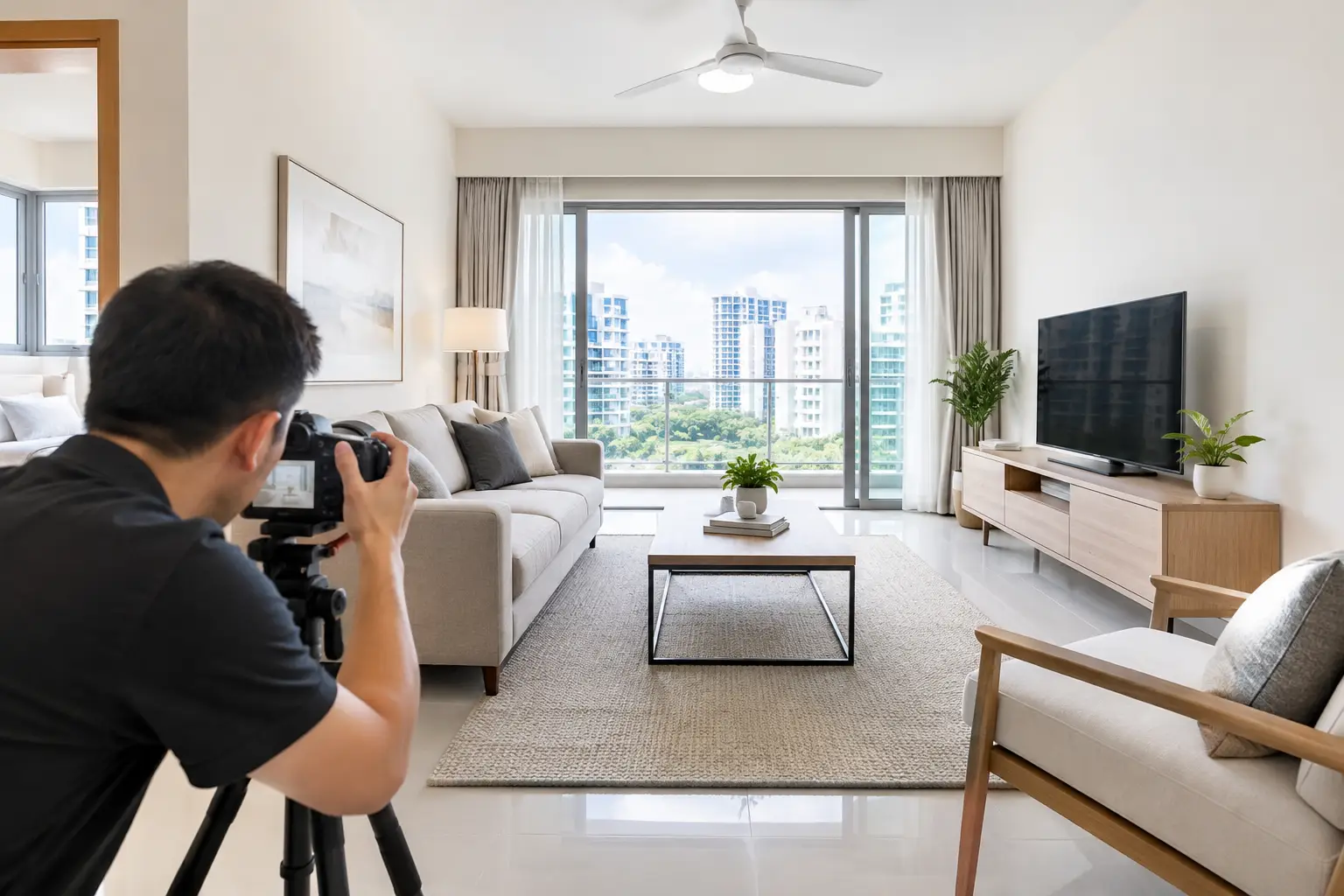
A buyer scrolling through property portals decides within seconds whether a home deserves a closer look. Before they notice the floor plan, renovation details or nearby amenities, they notice whether the rooms feel bright, orderly and easy to understand. To prepare listing photographs well is not about making a property look unreal. It is about removing distractions and helping people see the home’s genuine potential.
For property agents, sellers and landlords in Singapore, this work can make a meaningful difference to how confidently a listing enters the market. A well-presented photograph gives each room a purpose, shows its proportions and makes the viewing feel worth arranging. Poorly prepared images can make even a good property appear smaller, darker or harder to imagine living in.
Prepare listing photographs before the photographer arrives
Photography day should not be the first time anyone considers what the home needs to communicate. Start by identifying the strongest selling points of the property. It may be a generous living area, an unobstructed view, a practical study, a balcony, high ceilings or a bedroom that comfortably fits a family.
This helps determine what deserves space in the photo sequence. Not every corner needs to be photographed, and not every room needs the same amount of attention. A compact unit, for example, benefits from images that clearly show how the living, dining and storage areas work together. A landed home may need more emphasis on flow between spaces and the lifestyle offered by outdoor areas.
Walk through the property as a prospective buyer would. From the entrance, ask whether each room is immediately understandable. If a space has become a storage area, laundry zone or collection point for boxes, it will be difficult for buyers to picture its intended use. Decide whether the room should be cleared, restyled or furnished differently before the shoot.
Clear visual noise, not all personality
Decluttering is one of the most effective ways to improve listing photographs. It does not mean stripping every surface bare. A home should still feel lived-in and welcoming, but personal belongings should not compete with the architecture or layout.
Remove excess items from kitchen counters, bathroom ledges, open shelving and dining tables. Store paperwork, visible cables, pet accessories, cleaning products and oversized children’s toys. Family photographs, highly personal artwork and collections may be meaningful to the owner, yet they can make it harder for a buyer to imagine the space as their own.
The aim is calm, not emptiness. A neatly made bed, a simple dining setting, a tray on a coffee table or a small plant can give an image warmth without creating clutter. In a smaller flat, restraint matters particularly. Too many accessories can make the room feel busy and reduce the sense of available space.
Keep furniture in proportion
Furniture that is too large for a room can make a perfectly functional layout look constrained. A bulky sofa, an oversized dining table or a crowded bedroom often causes buyers to assume the property itself is small. In reality, the issue may simply be scale.
Where possible, choose pieces that suit the dimensions of the room and leave clear walkways. A two-seater sofa with an occasional chair may photograph better than a large sectional. A round dining table can soften a tight dining zone, while a properly sized bed lets viewers see the usable space around it.
This is where staging is especially helpful for vacant homes, inherited properties or listings with dated furnishings. Rather than asking buyers to imagine an alternative, suitable rental furniture and considered styling can demonstrate it directly. The result should feel believable for the likely resident, not like a showroom display.
Use light to show the home honestly
Singapore’s natural light can be a real advantage in property photography, but timing is important. Photograph rooms when daylight is strongest for that side of the home. Open curtains and blinds fully, clean the windows and move objects that block the view or restrict light.
Artificial lighting still has a role. Switch on lamps and ceiling lights where they make a room feel warmer or reduce dark corners. However, be cautious of mixed lighting. Different bulbs can create yellow, blue or green casts that make walls and furnishings appear inconsistent in photographs. Matching bulb temperatures where practical gives the photographer a cleaner starting point.
Do not rely on heavy editing to solve a dark room. Over-brightening can make windows look washed out and interiors appear artificial. It is better to improve the room itself by opening the window treatments, replacing a failed bulb, cleaning the glass and arranging furniture so that light can travel through the space.
Give every room a clear role
Buyers respond better when they do not have to guess how a room could be used. A spare bedroom with a mattress, drying rack and cartons may be functional for the current owner, but it creates uncertainty online. Is it a bedroom, a study or storage?
Set it up with one clear purpose. A compact desk and chair can establish a study. A bed, bedside table and soft bedding can show a guest or children’s room. If the property is likely to appeal to families, a flexible room can be styled in a way that demonstrates both comfort and practicality.
This is not about forcing every home into the same look. The most useful setup depends on the target market. A city-fringe condominium marketed to professionals may benefit from a focused work-from-home corner. A larger family home may need a dining setting and welcoming living area that show how people can spend time together. Good styling supports the marketing story already being told in the listing.
Attend to the details cameras reveal
A room can look acceptable during a quick visit yet reveal many small issues in a photograph. Camera frames tend to notice crooked blinds, loose cables, stained cushions, dust on dark surfaces and items left beneath furniture. These details can suggest that a property has not been properly cared for, even when that is not the case.
Before the shoot, check mirrors, glass tables and glossy cabinetry for fingerprints. Straighten rugs, align dining chairs and smooth bed linen. Close toilet lids, remove bins where possible and keep towels simple and fresh. In the kitchen, clear the sink and take magnets, notes and packaging off the fridge.
Outside, sweep balconies and patios, tidy shoes at the entrance and remove drying laundry. If there is a view, make it visible. A balcony filled with miscellaneous items is not just untidy in a photo – it hides a feature buyers may value.
Plan the shoot around the listing, not just the rooms
The strongest listing photographs work as a sequence. They should give viewers a natural sense of arrival, main living spaces, bedrooms, bathrooms and any distinctive features. Think about what someone needs to see before deciding to book a viewing.
Discuss priorities with the photographer in advance. Let them know if the unit has a sought-after stack, a newly renovated kitchen, an efficient layout or an uncommon feature such as a private lift lobby. If certain areas are less appealing, do not try to conceal them through misleading angles. Instead, prepare them properly and ensure the overall set of photographs is balanced and accurate.
Wide shots are useful for scale, while closer images can show quality finishes or thoughtful styling. Both have a place. Too many close-ups make it difficult to understand the layout; too many wide images can feel impersonal. The right mix depends on the property and the platform where the images will appear.
When professional staging is worth considering
Not every listing needs a full staging package. An owner-occupied home in good condition may only need decluttering, furniture rearrangement and a few styling adjustments. A vacant unit, however, can be difficult to photograph because empty rooms often appear smaller and lack a sense of function.
Staging is also worth considering when a property has been on the market without sufficient enquiry, when existing furniture is dated or mismatched, or when an agent needs to prepare a listing quickly. Furniture rental can offer a practical middle ground: the home is furnished for photography and viewings without the owner purchasing items they will not need after a sale or tenancy begins.
A hands-on staging partner such as Expats Partner can manage the furniture selection, delivery, setup and later collection, which reduces coordination for agents and owners working to a tight timeline. The best approach remains proportionate to the property’s likely price point, target buyer and marketing period.
Before the photographer arrives, stand at the doorway of each room and look once more at what the image will say. If it communicates light, space, purpose and care, it gives the next buyer a much better reason to keep looking.