
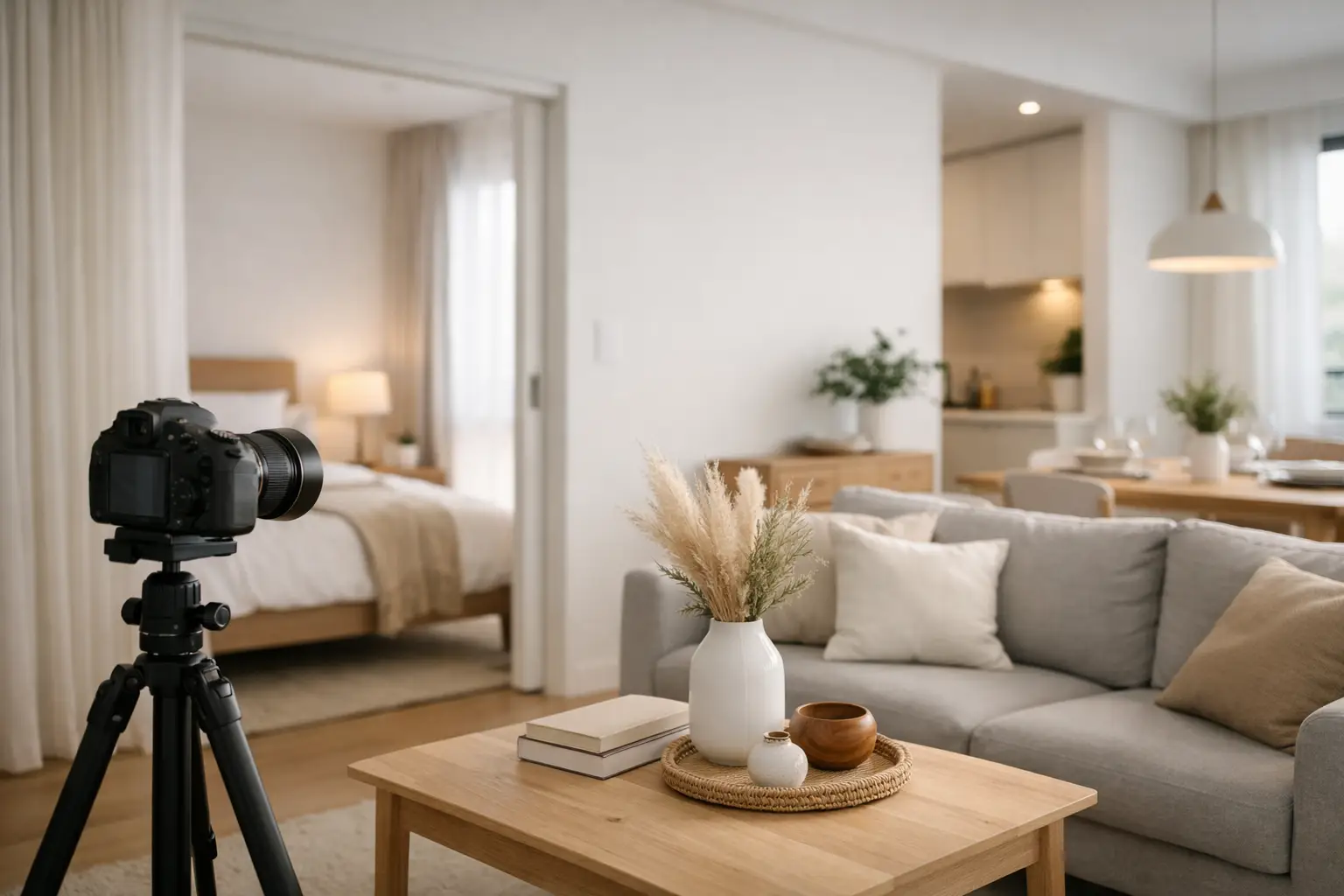
A bright listing photograph can lose its impact quickly when the room feels empty, crowded or difficult to read. Rental listing photography styling is about making each image answer the questions prospective tenants ask at a glance: How large is the living area? Where would I work, eat or relax? Could this feel like home?
For property agents and landlords in Singapore, those first few seconds matter. Most interest begins online, often with a quick comparison between several similar units. A well-presented home does not need to look extravagant. It needs to feel clear, current and easy to understand.
Why styling changes the way a rental listing is read
An unfurnished room can appear smaller than it is in a photograph. Without a sofa, dining table or bed to provide scale, viewers may struggle to judge the layout. They may also assume that an empty space will be inconvenient or costly to furnish, especially if they are relocating from overseas.
The opposite problem is equally common. A lived-in property may have good furniture but still photograph poorly because of personal belongings, bulky pieces, dark curtains or too many competing colours. The aim is not to erase every sign of life. It is to reduce distraction so the property itself remains the focus.
Thoughtful styling gives each room a purpose. A compact corner becomes a workable study area. An awkward dining space becomes a place for everyday meals. A secondary bedroom can show whether it works for a child, guest or home office. These visual cues help tenants make decisions with more confidence before they book a viewing.
Start with the listing, not the furniture
The strongest styling decisions begin with the likely renter and the property’s position in the market. A one-bedroom condominium near the CBD may appeal to a professional seeking a practical, move-in-ready home. A larger family unit may need to show generous dining, storage and bedroom functions. The furniture should support that story rather than follow a fixed design formula.
Before arranging anything, review the agent’s listing plan. Consider the asking rent, floor area, natural light, key features and likely tenant profile. A higher-end unit may benefit from more considered layers, such as a textured rug, side tables and restrained decorative objects. A value-focused rental may need a clean, complete setup that shows functionality without adding unnecessary cost.
It also helps to decide which rooms need the most attention. In many rental listings, the living room, main bedroom, dining area and kitchen carry the most weight. A balcony, study nook or utility room should be styled only if it adds a genuine advantage. Trying to fill every corner can make a home feel busy rather than generous.
Rental listing photography styling room by room
Give the living area a clear focal point
The living room often appears first in a listing gallery, so it should show both proportion and comfort. Choose a sofa size that suits the room, leaving visible walkways around it. A small coffee table, simple rug and occasional chair can create a natural seating arrangement without blocking sightlines.
Avoid pushing every item against the wall simply to expose more floor. Sometimes bringing the sofa slightly forward creates a better composition and makes the area feel intentionally planned. Keep the coffee table lightly styled – perhaps with one tray, a book and a small plant – so the image feels lived-in but not cluttered.
Show how bedrooms can be used
A bed is one of the clearest ways to establish scale. In the main bedroom, use an appropriately sized bed, bedside tables where space permits, and plain bedding in soft neutral tones. Fresh linen, a simple cushion arrangement and an uncluttered bedside surface tend to photograph better than heavily patterned accessories.
For secondary bedrooms, the right approach depends on the rental audience. A family home may benefit from a single or queen bed setup. In a unit likely to attract professionals, a desk can show useful flexibility. What matters is that the room has a believable purpose. A half-furnished room with random leftover items can make viewers question whether the property is complete.
Make dining and work areas believable
Singapore homes often need to work hard for their footprint. A dining table that is too large can make a room feel constrained, while no dining setup at all can leave a potential tenant wondering where daily routines will happen. Select a table with enough seating to suggest real use, while preserving clear movement around it.
If there is an alcove, spare bedroom or broad hallway suitable for a workstation, style it simply. A desk, supportive chair and modest lamp are usually enough. This is particularly useful for corporate tenants and new arrivals who expect the home to support hybrid working.
Prepare the property before the camera arrives
Styling cannot compensate for poor preparation. Cleaning, repairs and lighting should be addressed before furniture and accessories are brought in. Replace failed bulbs, remove temporary storage, check that curtains and blinds operate properly, and make sure air-conditioning controls are not hidden behind clutter.
Natural light is usually the best starting point for property photography. Open curtains fully, clean the windows and schedule photography at a time when the main rooms receive even light. Where daylight is limited, switch on matching warm-white lights. Mixed colour temperatures can make a room look dull or oddly tinted on camera.
Personal items need careful editing. Family photographs, toiletries, fridge magnets, cables, pet equipment and overflowing shelves draw attention away from the layout. For owner-occupied homes, this can feel personal, but temporary packing is often worthwhile. The property should still feel welcoming, just less specific to the current household.
Small practical details make a difference too. Straighten dining chairs, align cushions, hide visible bins and remove drying racks from balconies. Kitchen counters should be almost clear, with perhaps one restrained touch such as a bowl of fruit or a small plant. The camera notices visual noise that may go unnoticed during a busy preparation day.
Use neutral styling without making the home bland
Neutral colours work well because they suit a broad range of tastes and help rooms appear brighter. However, neutral does not have to mean lifeless. A mix of warm wood, soft beige, grey, muted green or terracotta can add depth while keeping the overall look calm.
The key is restraint. Choose one visual direction and repeat it across the home, rather than introducing a different colour scheme in every room. Matching the scale and style of furniture also matters. A sleek modern sofa beside a heavy traditional cabinet can make the room feel less coherent, even if each piece is attractive on its own.
Accessories should support the photograph, not demand attention. Greenery, artwork and cushions can soften a vacant unit, but too many objects make the listing harder to scan. If a decorative item does not improve the image, it probably does not need to be there.
Common mistakes that weaken listing photographs
The most frequent issue is using furniture that is either too large or too sparse for the room. Oversized pieces reduce the visible floor area; minimal furniture can leave the layout unclear. Good styling sits between those extremes, providing scale while allowing the home to breathe.
Another mistake is treating photographs and viewings as separate tasks. The home should look as good when a prospective tenant walks through the door as it does in the online gallery. If styling is removed immediately after the shoot, or if the unit becomes cluttered again, the viewing experience may not meet the expectation set by the photographs.
Finally, avoid styling solely for trends. Strongly themed interiors can date quickly and may narrow the appeal of a rental home. A clean, considered setup is usually a safer commercial choice, particularly when the objective is to attract enquiries across a wide tenant pool.
When furniture rental makes sense
For vacant properties, short-term furniture rental can be a practical way to prepare a listing without committing to a full furniture purchase. It is also useful when an agent needs a unit ready quickly, a landlord is testing rental demand, or an owner-occupied property needs selected pieces to improve its presentation.
The right level of furnishing depends on the property and the intended rental arrangement. Some landlords want a staged setup for marketing only, while others need a fully furnished home ready for a tenant to move in. Expats Partner can coordinate suitable furniture, styling, delivery, installation and collection, reducing the number of separate arrangements an agent or owner needs to manage.
Good rental listing photography styling is not about creating a showroom. It is about helping the next tenant see a credible, comfortable version of daily life in that particular home. When the rooms are clear, well-proportioned and ready to photograph, the listing has a better chance of earning the attention it deserves.