
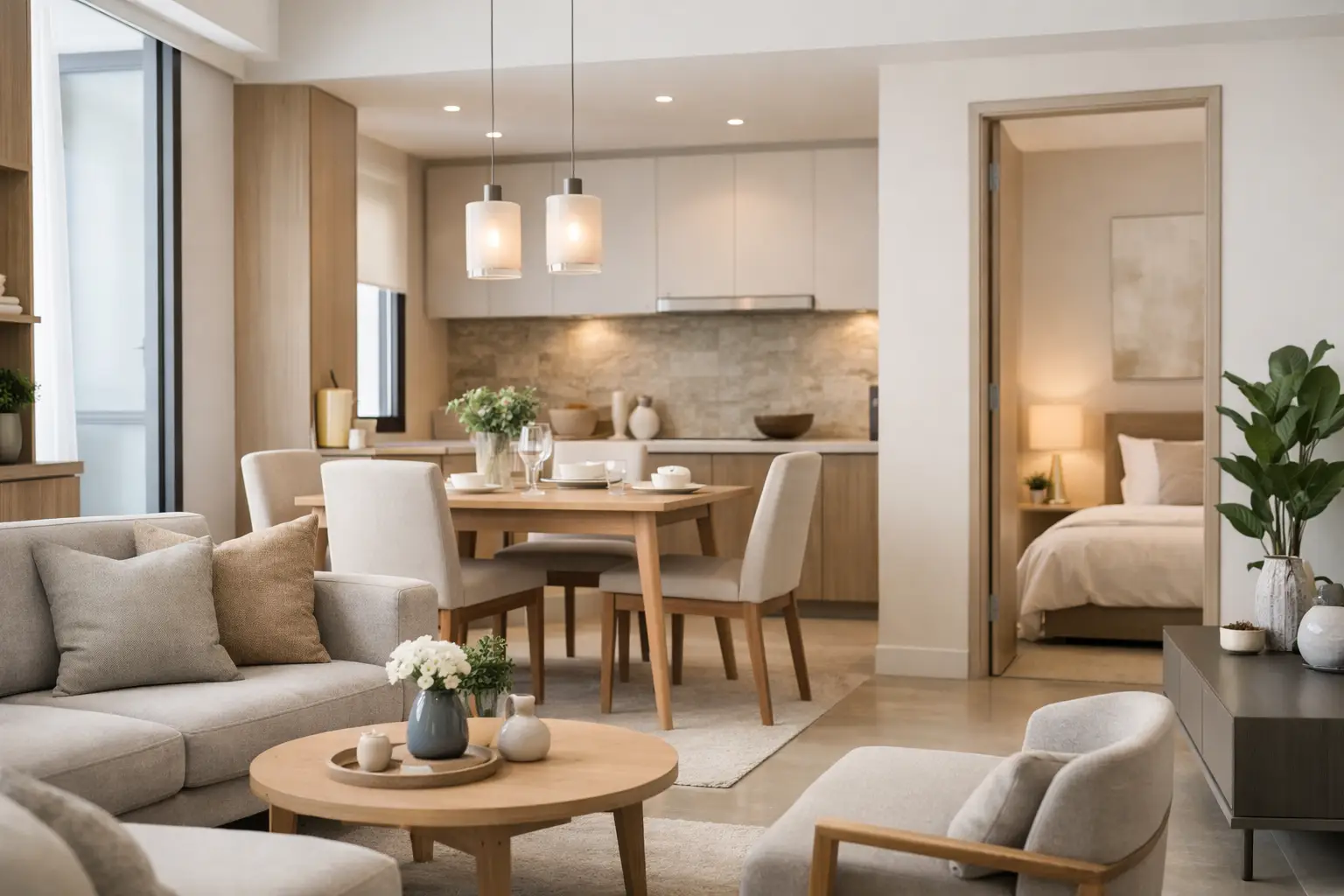
A show flat rarely loses interest because the finishes are wrong. More often, it underperforms because the space feels awkward, empty or harder to picture living in than it should. The best show flat furniture ideas solve that problem fast. They help buyers and tenants understand scale, movement and purpose the moment they walk in.
For agents, developers and owners, that matters more than decoration alone. A well-furnished unit can make photos stronger, viewings smoother and decision-making quicker. The goal is not to impress with expensive pieces. It is to make the property feel clear, usable and ready.
What good show flat furniture ideas actually do
Furniture in a show flat has a job to do. It should define each area, soften empty corners and guide the eye towards the property’s strengths. In a compact flat, that may mean showing how a dining area can exist without crowding the living room. In a larger unit, it may mean preventing generous rooms from feeling cold or underused.
This is where many setups go wrong. Oversized sofas, too many accessories or heavy dark finishes can make a property feel smaller than it is. On the other hand, staging that is too sparse can make rooms look unfinished and reduce emotional connection. The right balance sits somewhere in the middle – styled enough to feel lived in, restrained enough to let the property lead.
Start with scale before style
The first of any useful show flat furniture ideas is simple: choose pieces for the room, not for the catalogue. Scale influences buyer perception almost immediately. If a three-seater sofa overwhelms the living space, viewers assume the flat is tight. If every piece is too small, the room can feel oddly temporary and less valuable.
A two-seater sofa paired with one accent chair often works better than a full lounge set in smaller units. It leaves clearer walkways and helps the room breathe. In bedrooms, slim bedside tables and beds with clean lines usually perform better than bulky frames with oversized headboards.
This is especially relevant when staging for photography. Cameras already compress space slightly. Furniture that is one size too large will be felt even more strongly in listing images.
Use furniture to explain the layout
Open-plan units often benefit most from thoughtful staging because buyers need help reading the room. Without furniture, a combined living and dining area can feel vague. With the right placement, it becomes intuitive.
A rug beneath the sofa and coffee table creates a visual anchor for the living zone. A compact dining set nearby clarifies where meals happen. A console behind the sofa can subtly divide space without adding walls or visual heaviness.
This matters in show units where buyers are trying to work out whether their daily routines will fit. If the layout is doing too much explaining on its own, viewers may leave uncertain. Furniture should remove that friction.
Keep the palette neutral, not bland
Neutral styling remains one of the most reliable show flat furniture ideas for a reason. It broadens appeal and keeps the focus on the property. But neutral does not mean lifeless. The difference usually comes from texture.
A beige sofa, light timber dining table and soft grey rug can work very well together if the materials feel layered. Linen, boucle, wood and matte finishes bring warmth without making the space feel overly personalised. Cushions and art can add contrast, but they should support the room rather than dominate it.
In Singapore, lighter palettes also tend to work well in bright interiors because they reflect natural light and help spaces feel fresh. Very glossy or very dark furniture can be effective in some premium homes, but it depends on the architecture and target audience. For most sale and rental staging, calm tones are the safer commercial choice.
Prioritise the key rooms first
Not every room needs the same level of attention. If budget or timeline is tight, focus on the spaces that shape first impressions and online performance most directly.
The living room should almost always be furnished because it carries the emotional centre of the home. The master bedroom comes next, as it helps buyers read comfort and proportion. A dining area is useful if the layout allows it. Secondary bedrooms can often be staged more lightly, perhaps as a guest room or study, depending on the likely buyer profile.
This is one of the more practical show flat furniture ideas because it recognises commercial reality. Full furnishing is not always necessary to create impact. Selective staging often delivers a stronger return than trying to fill every corner.
Show function, especially in smaller units
Smaller homes need furniture that demonstrates practicality without looking makeshift. A round dining table can improve movement in a tight layout. A bench may be more space-efficient than extra chairs. A study nook with one desk and a well-proportioned chair can turn an unused corner into a feature.
The point is not to cram in multi-use furniture purely because it is clever. It is to show how the home can support real routines. Buyers and tenants respond well when they can instantly picture working, dining or relaxing in the space.
This is where staging differs from interior design for long-term living. A show flat is not meant to express every lifestyle possibility. It is meant to present the most appealing and believable version of the one most likely to convert interest into action.
Let accessories support the sale
Furniture does most of the structural work, but styling details finish the picture. The mistake is treating accessories as the main event. Too many decorative items create visual noise and can make a property feel smaller, fussier and less premium.
A few well-judged pieces usually do more. One large artwork above the sofa often works better than a crowded gallery wall. Bedding should feel crisp and hotel-like rather than overly personal. A simple vase, tray or lamp can add warmth without distracting from the room itself.
There is a trade-off here. Styling that is too minimal may feel cold in person, while styling that is too specific can narrow appeal. The right answer depends on the property type. A family-sized unit may need a touch more softness than an investor-focused city flat. Either way, restraint tends to age better across multiple viewings and marketing channels.
Don’t ignore circulation and viewing flow
People do not experience a show flat from one fixed angle. They move through it. That means circulation matters just as much as appearance.
Furniture should make the route through the property feel natural. Viewers should be able to enter, pause, turn and pass between rooms without sidestepping chairs or brushing against table corners. When movement feels easy, the flat feels bigger and more comfortable. When it feels tight, objections start forming quietly.
This is one reason rental furniture is often a practical staging solution. It allows the setup to be tailored to the layout, then adjusted if needed after initial photos or viewings. That flexibility is useful when speed matters and the presentation needs to work hard from day one.
Match the furniture to the buyer, not your taste
One of the most commercially smart show flat furniture ideas is to stage for the likely audience. A unit aimed at young professionals may benefit from a cleaner, more contemporary look with a clear work-from-home corner. A family-oriented home may need a warmer dining setup and softer bedroom styling. A premium property may call for stronger materials and more generous spacing between pieces.
Personal taste can get in the way here. Owners sometimes prefer bold colours or highly decorative furniture because it reflects how they would live. But staging is about market fit, not self-expression. The better question is always: what helps the right viewer say yes faster?
Why rental furniture often works better for show flats
Buying furniture for a show flat can seem sensible at first, but it often creates extra decisions, storage issues and sunk cost. Rental furniture gives agents, owners and developers more control over timing and presentation. It can be installed quickly, styled to suit the property, and removed once the job is done.
That matters when listings need to go live on schedule or when units may be sold, leased or repurposed within a short period. It also helps avoid committing to furniture that may not suit the next property. For staging, flexibility is not a nice extra. It is part of what keeps the process efficient.
Practical staging works best when every piece earns its place. That is the thread connecting the strongest show flat furniture ideas: clear layout, believable function, balanced styling and furniture scaled to support the sale rather than compete with it. When that comes together, the property feels easier to understand and easier to choose.
If you are preparing a listing, show unit or rental property, the best setup is usually the one that makes the viewer stop thinking about furniture and start imagining life in the space.
Contact us now at: Kevin Chang – 80119753 sales@expatspartner.com.sg Sales Specialist