
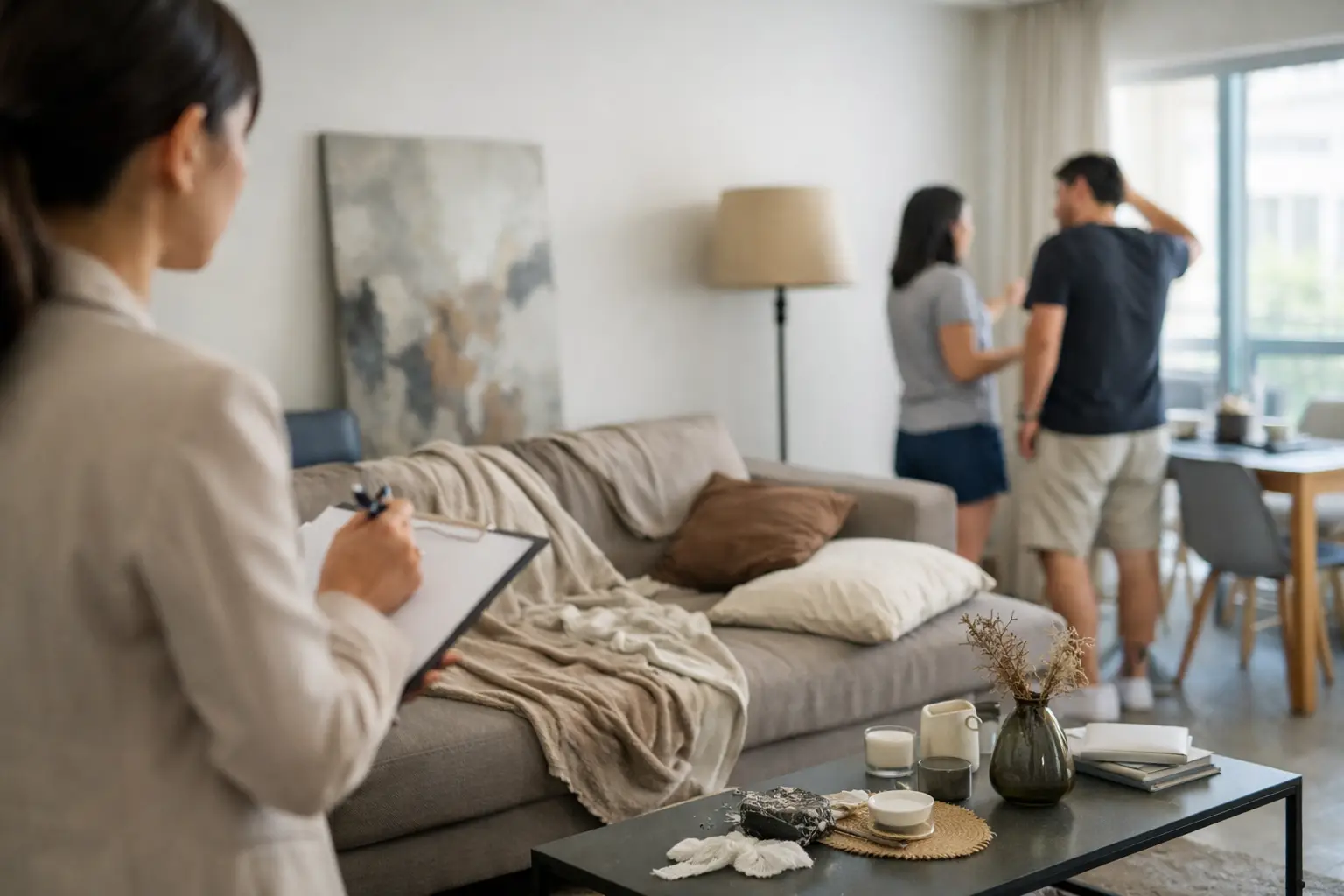
A listing can have the right location, sensible pricing and solid photography, yet still feel flat the moment buyers arrive. That often comes down to presentation. Many of the top staging mistakes property agents make are not dramatic errors. They are small decisions that quietly weaken first impressions, reduce emotional connection and make a property feel harder to picture as home.
For agents, that matters because staging is not decoration for its own sake. It is a sales tool. It helps buyers and tenants understand scale, use and lifestyle more quickly. When that is done well, enquiries feel warmer, viewings feel more focused and conversations move forward with less hesitation.
Why staging mistakes cost more than they seem
Most buyers decide how they feel about a property before they start discussing floor area, renovation budgets or lease terms. They respond first to what the space suggests. If a room feels awkward, empty, cluttered or confusing, that reaction tends to stay with them.
This is where agents sometimes lose value without realising it. A poorly staged flat can make the listing photos underperform online, but it can also create friction during viewings. Prospects spend their time trying to work out where the sofa would go, whether the dining area is practical, or why a bedroom feels smaller than expected. Good staging removes those questions early.
Top staging mistakes property agents make before a viewing
1. Treating empty rooms as easier to market
An unfurnished property looks clean on paper. In practice, many empty rooms feel smaller, colder and less useful than they are. Buyers struggle to judge scale without visual anchors, and photos often make vacant spaces look less inviting.
There are exceptions. Some premium properties with strong architecture can carry emptiness better than others. But for most sale and rental listings, strategic furnishing helps a room feel intentional. A sofa, dining set or bed frame does more than fill space. It shows proportion and suggests how daily life might work there.
2. Using furniture that is too large or too small
Scale is one of the most common staging problems. Oversized furniture makes circulation feel tight and can exaggerate layout limitations. Furniture that is too small creates the opposite problem – the room feels oddly empty and underwhelming.
This matters particularly in Singapore homes, where efficient layouts are common and every metre counts. Buyers notice immediately when a room feels cramped. They also notice when the furniture arrangement leaves too much dead space and makes the home feel unfinished. The right scale helps a property look comfortable without overstating what it can realistically hold.
3. Styling for taste rather than broad appeal
Agents sometimes inherit a seller’s decorative preferences or try to create impact with bold styling choices. Strong colours, highly specific themes and unusual statement pieces may photograph well in isolation, but they can narrow appeal.
The goal is not to make a property look bland. It is to make it easy for a wide range of viewers to imagine themselves living there. Neutral, clean and well-balanced styling usually performs better because it supports the architecture rather than competing with it.
Top staging mistakes property agents make during listing preparation
4. Forgetting that photos come first
A staged home has two jobs. It needs to work in person, but it also needs to work online where most interest begins. Some agents prepare a property for viewings yet overlook how it reads through a camera lens.
That can show up in several ways. Accessories may be too sparse, leaving rooms visually flat in photos. Or there may be too many small objects, making images feel busy. Sometimes furniture is placed in a way that feels acceptable in person but blocks key sightlines in wide-angle shots.
Staging and photography should support each other. Before the shoot, it helps to consider what each room needs to communicate in a single frame. Is the priority spaciousness, function, light, or lifestyle? The answer shapes what stays in the room and what goes.
5. Leaving awkward rooms undefined
One of the top staging mistakes property agents make is presenting flexible space without giving it purpose. A study corner, alcove or extra room may seem self-explanatory to the agent, but viewers often need help reading it.
If a space has no defined use, people tend to read it as wasted area. A small spare bedroom without a bed or desk can feel smaller than it is. A blank nook may simply look inconvenient. Even a modest styling decision, such as setting up a compact work area or a simple reading corner, can turn uncertainty into value.
6. Assuming cleanliness is enough
A clean property is necessary. It is not the same as a staged property. Many agents prepare a unit well from an operational point of view – tidy, swept, aired – but stop there. Cleanliness removes objections. Staging creates interest.
The difference is subtle but commercially important. A clean room may feel acceptable. A staged room feels ready. That sense of readiness affects how buyers judge maintenance, care and overall value. It also shortens the mental distance between viewing and decision-making.
Mistakes that weaken the viewing experience
7. Overcrowding the property with accessories
When a room feels bare, the temptation is to add more. Cushions, plants, trays, lamps and decorative objects can help, but only to a point. Too many items create visual noise and make spaces look harder to maintain.
This is especially risky in smaller homes. Accessories should support warmth and scale, not become the focus. If viewers are noticing the décor more than the layout, the staging is doing too much. Restraint generally performs better than effort that is too visible.
8. Ignoring lighting conditions
Lighting is often treated as a fixed condition rather than part of presentation. Yet poor lighting can make a well-styled home feel tired. Dim corners, mismatched bulbs and closed curtains all affect how spacious and welcoming a property feels.
Natural light should be used where possible, but it depends on orientation and viewing time. That is why layered lighting matters. A well-placed floor lamp or table lamp can soften a room and improve balance, particularly in evening viewings or shadowed interiors. It does not need to feel decorative. It needs to help the space read clearly.
9. Staging every room the same way
Consistency matters, but uniformity can flatten a listing. A family home, investor unit and rental property do not all need the same staging approach. Even within one home, the living area, principal bedroom and secondary rooms should not all carry equal visual weight.
The most commercially effective approach is selective emphasis. Focus on the spaces that influence perceived value most strongly. Usually that means the living room, dining area and principal bedroom first. Secondary rooms still need to feel coherent, but they rarely need the same level of visual layering.
10. Leaving staging too late
This is often the most expensive mistake because it affects everything else. When staging is treated as a last-minute add-on, agents have less flexibility around furniture selection, photography dates and listing launch timing. The result is usually a rushed setup that solves only part of the problem.
Early planning gives better control. It allows the property to be assessed properly, the right level of furnishing to be selected and the visual strategy to align with the target buyer or tenant. It also reduces the stress of trying to coordinate multiple moving parts at the point of marketing.
How agents can avoid these staging mistakes
The most useful shift is to stop viewing staging as cosmetic support and start treating it as part of the sales process. That changes the questions agents ask. Instead of wondering whether a property looks nice enough, the better question is whether the presentation helps viewers understand the home quickly and favourably.
That often means being realistic about what the property needs. Some units need full staging because vacancy makes them feel cold or unclear. Others may only need partial furnishing, better layout definition and a tighter styling pass. It depends on the condition of the home, the target audience and how the listing will be marketed.
A service-led staging approach tends to work best because it focuses on outcome, not decoration. The right setup should support photography, improve the viewing experience and reduce uncertainty for buyers or tenants. For agents managing multiple listings, it also helps to work with a partner who can move quickly, supply appropriate furniture and keep coordination simple. That is often where the operational value matters just as much as the visual result.
Presentation will not fix pricing issues or poor fundamentals. But when the property is market-ready, staging can make the difference between passive interest and serious engagement. Buyers rarely say they are responding to staging alone. They say the home feels right, easy to picture, or ready to move on. That is usually the point.
If you are preparing a listing and want the space to work harder from the first photo to the final viewing, a clear staging plan is often the quiet advantage.
Contact us now at: Kevin Chang – 80119753 sales@expatspartner.com.sg Sales Specialist