
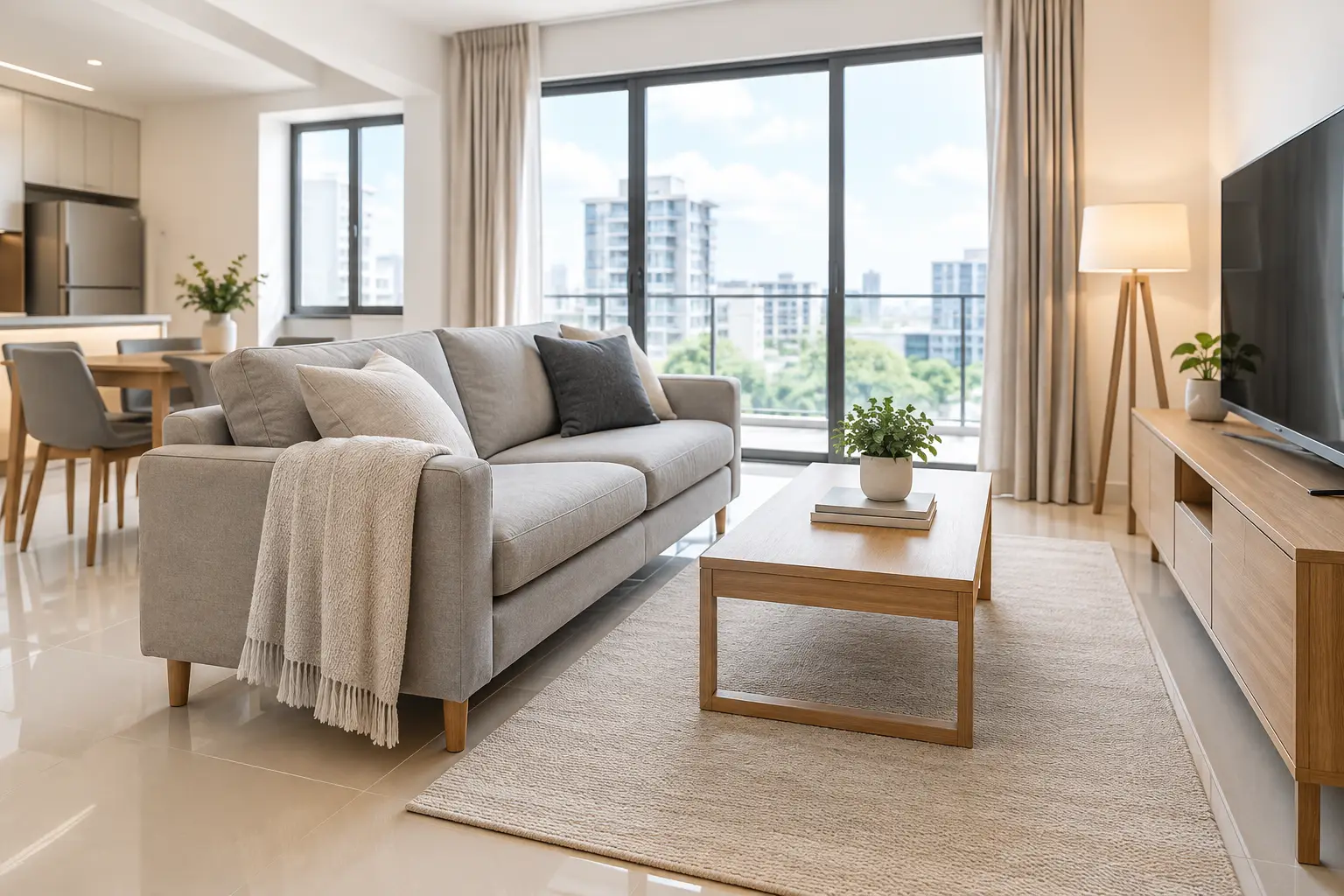
A sofa can make a vacant living room feel immediately liveable, or make it look smaller, darker and harder to photograph. For landlords and property agents, choosing the best sofas for rental homes is not simply about finding a pleasant design. The right piece needs to suit the room, appeal to a broad range of tenants or buyers, cope with regular use and support a clear, well-presented listing.
In Singapore, where many condominiums have compact living areas and move-in timelines can be tight, a sofa must work especially hard. It should give the space a natural focal point without overwhelming the layout or creating another item for an owner to manage. The strongest choice is usually practical, neutral and proportionate rather than highly decorative.
What makes a sofa suitable for a rental home?
A rental sofa has a different job from a sofa chosen for a long-term family home. Personal preference matters less than flexibility. A bold curved design in a distinctive colour may look striking in one setting, but it can limit how easily a property is styled, photographed and shown to different audiences.
For most furnished rentals and staged homes, choose a sofa that makes the room feel open and easy to understand at first glance. Tenants want to see that there is somewhere comfortable to sit. Buyers viewing a vacant property need help seeing how the living area could function. A sofa should establish that purpose without blocking sightlines, balcony access or the route between the entrance and dining space.
Durability also matters. Furniture in rental homes may be used by several households over time, while staging furniture can move between properties. A well-built frame, firm but comfortable cushions and an easy-care upholstery fabric will usually provide better value than a visually impressive piece that marks or sags quickly.
Best sofas for rental homes: start with proportion
The most common mistake is selecting a sofa before measuring the room. A large sectional may feel luxurious in a showroom, but in a typical condominium living room it can dominate the floor plan, restrict circulation and make listing photographs appear crowded.
Begin with the available wall length, then allow space around the sofa for movement. As a practical guide, keep a clear walking route from the entry point to key areas such as the balcony, kitchen or bedrooms. Consider the location of doors, windows, power points and air-conditioning units too. These details affect where a sofa can sit comfortably.
Two-seater and compact three-seater sofas
A two-seater is often the most useful option for a one-bedroom or smaller two-bedroom flat. It gives the room a finished feel while leaving space for a coffee table, occasional chair or television console. A compact three-seater can work well in a larger two-bedroom or three-bedroom unit, particularly when the aim is to show that the living room accommodates relaxed everyday use.
Look for designs with slimmer arms and visible legs. They tend to take up less visual weight than deep, boxy models, which can help a smaller room look lighter. This does not mean the sofa needs to be delicate. A clean-lined design with a supportive seat is often both comfortable and adaptable.
L-shaped sofas when the layout supports them
An L-shaped sofa is useful when there is a clear corner to fill and enough floor area to maintain an open route through the room. It can create a welcoming lounge zone in a larger family home, landed property or spacious condominium. It may also help define the seating area in an open-plan layout.
However, an L-shape is not automatically the best use of space. In a narrow room, its chaise can obstruct the path to a balcony or dining area. It is also more directional, which makes it less flexible if the unit needs to be reconfigured later. When in doubt, a straight sofa paired with one or two occasional chairs often offers more styling freedom.
Choose neutral colours that photograph well
Soft grey, warm beige, taupe, oatmeal and muted stone shades are reliable choices for rental properties. They work with a wide range of flooring, wall colours and existing fixtures, while making it easier to introduce personality through cushions, throws, artwork and accessories.
Very pale upholstery can look fresh in professional photographs, but it needs more careful maintenance. Deep navy, charcoal or olive may be practical in the right property, although these colours can absorb light in a compact living room. For most listings, a mid-tone neutral provides the best balance between a clean appearance and everyday forgiveness.
The goal is not to make every property look identical. A sofa should give the home a calm, contemporary base. Styling can then be adjusted to suit the property, whether that means adding warmer textures for a family home or keeping the look clean and minimal for a city-centre rental.
Fabric matters more than it first appears
A rental sofa should be selected with cleaning, humidity and repeated use in mind. Textured woven fabrics can be attractive and comfortable, but very loose weaves may snag. Delicate fabrics may be better suited to a carefully managed show unit than a tenancy with children, pets or frequent guests.
Tightly woven upholstery in a mid-tone colour is often a sensible choice. Where available, stain-resistant or easy-clean fabrics can reduce the pressure of minor spills and everyday marks. Removable cushion covers are helpful, although they are not essential if the fabric itself is durable and the sofa can be professionally cleaned between tenancies.
Leather and leather-look finishes can be simple to wipe down, but they have trade-offs. In Singapore’s warm climate, some people find them less comfortable for extended sitting, and lower-quality finishes can crack or peel. A fabric sofa generally creates a softer, more homely impression, especially in photos and viewings.
Prioritise comfort without choosing oversized seating
A sofa does not need to be unusually deep to feel comfortable. In fact, excessively deep seats can look informal and take up valuable floor space. A medium seat depth with supportive back cushions tends to suit the widest range of people and properties.
Avoid very low sofas unless the room has a deliberately modern, low-profile design throughout. Low seating can make standing up less comfortable for some viewers and may make a standard-height coffee table look awkward. Similarly, overstuffed recliners can feel too personal and bulky for a property intended to appeal to many potential tenants.
A good rental sofa should look inviting at a viewing, but it should also support real day-to-day living. This balance is what helps a furnished unit feel considered rather than temporary.
Match the sofa to the property’s likely tenant
The best choice depends partly on who is expected to live in the home. A compact one-bedroom unit aimed at a professional couple may benefit from a refined two-seater and a small armchair. A family-sized home may need a larger three-seater or a practical L-shaped arrangement that suggests room for shared evenings.
For a corporate rental or expatriate relocation, the sofa should feel comfortable enough for a tenant settling into a new city, while remaining neutral enough to work with a complete furnishing package. For a sale listing, the emphasis may be slightly different: the sofa should demonstrate scale, give the living room a purpose and allow buyers to focus on the home’s potential.
This is why furniture should not be selected as an isolated item. The sofa needs to relate to the rug, coffee table, television console, dining set and available natural light. A well-proportioned arrangement will do more for the room than an expensive sofa placed without a plan.
Renting sofas can keep the process practical
Purchasing a sofa can make sense for owners who will hold and manage a furnished property over the long term. But for a short tenancy, relocation, home staging project or uncertain timeline, renting can offer more control. It avoids the need to source, receive, assemble, store and later dispose of a large item of furniture.
A furniture rental partner can also help select a size and style that suit the unit, coordinate delivery and installation, and collect the furniture when it is no longer required. This is particularly useful for agents and landlords managing several deadlines at once. At Expats Partner, sofa selection is considered as part of the wider room plan, so the property is prepared to look coherent in photographs and comfortable during viewings.
The right sofa does not need to steal attention. It simply needs to make the living room feel usable, balanced and ready for the next person to imagine themselves at home.