
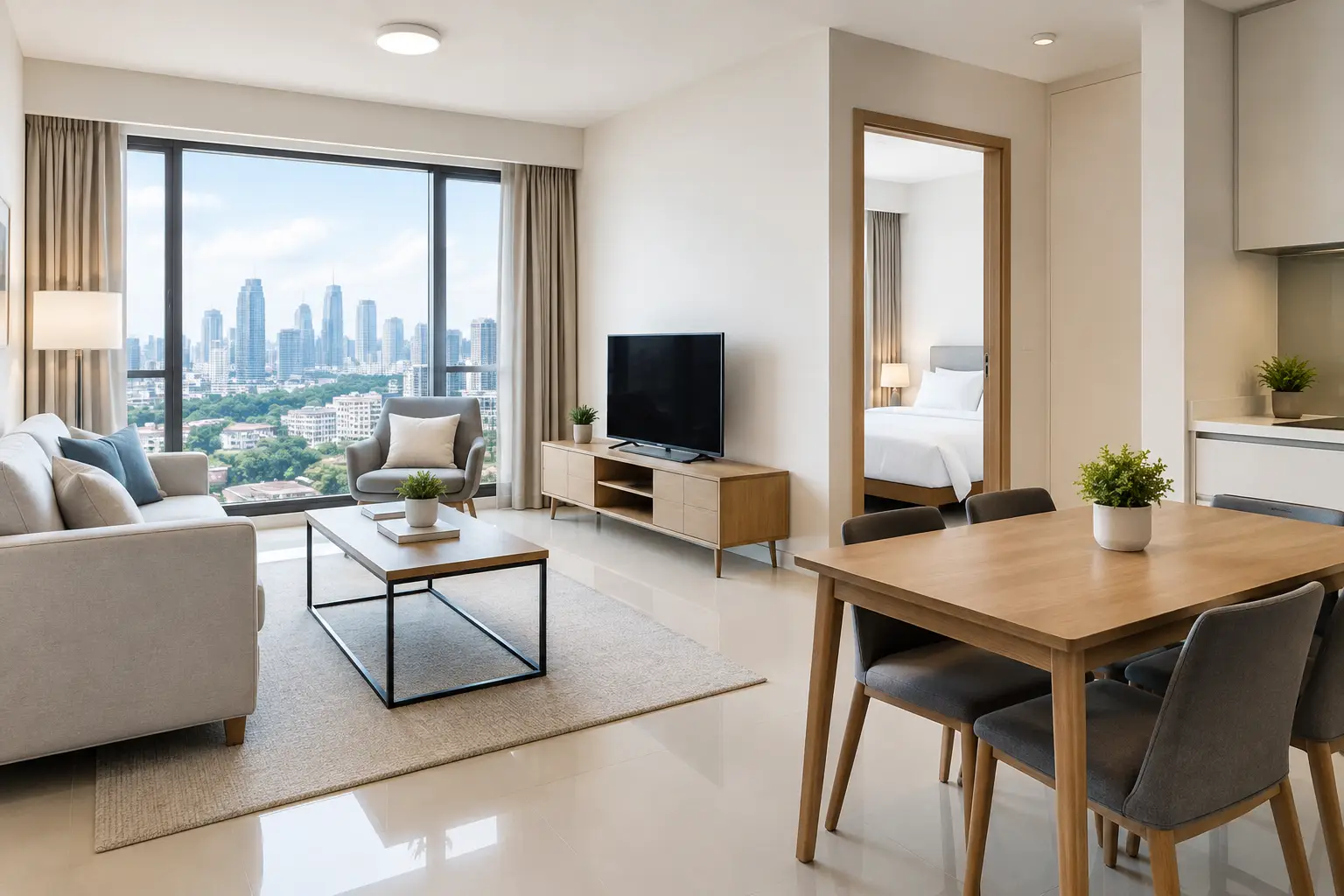
A corporate tenancy can be agreed in days, while furnishing a home from scratch can take weeks. For landlords, relocation teams and property agents, that gap can mean a delayed move-in date, a missed tenant or an unnecessary period of vacancy. This corporate housing furniture guide explains how to furnish a Singapore home for working professionals without overbuying, overstyling or creating more logistics than the property requires.
Corporate housing is not simply a furnished flat with a desk added to the corner. It needs to help someone arrive, settle and work comfortably from the first evening. The best schemes balance a calm, well-presented interior with durable furniture, practical storage and a clear plan for delivery, installation and collection.
Start with the tenancy, not a shopping list
The right furniture package depends on who will live in the property and for how long. A one-bedroom condominium for a single assignee has different needs from a three-bedroom home for a relocating family. A short-term stay may call for a fully equipped, move-in-ready setup, while a two-year corporate lease may justify a few more considered additions.
Before selecting furniture, establish the expected occupancy, tenancy duration, budget, building access arrangements and whether the resident will work from home. It is also useful to confirm what is already provided. Many Singapore properties include white goods, built-in wardrobes and curtain tracks, but the condition and suitability of these items should be checked rather than assumed.
A clear brief prevents two common problems: paying for pieces the resident will not use, or leaving obvious gaps that make the home feel unfinished. A bare living room can look spacious in photographs, but it rarely feels ready for a new arrival.
Prioritise the rooms that shape daily life
For most corporate homes, the living room, bedrooms, dining area and workspace deserve the largest share of the budget. These are the spaces tenants notice first and use most often. The aim is not to fill every wall. It is to make each room easy to understand and comfortable to use.
Living and dining areas
Choose a sofa with enough seating for the likely household, a coffee table that does not obstruct circulation and a television console or storage unit that keeps cables and devices contained. In compact units, furniture with visual lightness matters. Raised-leg sofas, modestly sized tables and open space around walkways can make a room feel less crowded.
A dining table should suit both meals and occasional laptop use. Four seats are often appropriate for a one- or two-bedroom property, even if only one person is expected to live there. It gives the tenant flexibility to host colleagues or family without making the room feel overly formal.
Bedrooms
A good mattress, bedframe, bedside tables and practical lighting are essential. Quality sleep has a direct effect on how quickly a relocating employee feels at home, so this is not the place to cut corners. Where space permits, include a chest of drawers or additional wardrobe storage, particularly in older units where built-in storage may be limited.
Keep bedroom styling quiet and adaptable. Neutral bed linen, simple artwork and soft curtains make a room feel considered without imposing a highly personal look on the tenant.
Work-from-home provision
A dedicated desk and supportive chair can be a deciding factor for corporate tenants. Not every property has room for a separate study, but a compact workstation in a bedroom or living area is usually better than expecting someone to work permanently at the dining table.
Consider the practical details: proximity to power points, natural light, chair clearance and the ability to take video calls without the bed or kitchen becoming the background. A small desk lamp and sensible cable management make the setup feel intentional.
Choose furniture that travels well between tenancies
Corporate housing furniture must work harder than furniture bought for one private home. It may be moved, cleaned, stored and installed again between occupancies. Durability, adaptability and ease of maintenance therefore matter as much as appearance.
Select materials that cope well with regular use. Performance fabrics, wipeable dining surfaces and sturdy bedframes are generally more practical than delicate finishes. Light-coloured upholstery can photograph beautifully, but it may require more frequent cleaning in a high-turnover property. A mid-tone fabric or removable covers can be a better long-term choice.
Scale is equally important. Oversized furniture can make a condominium look cramped and complicate lift access, while pieces that are too small can make a larger landed home feel sparse. Measure doorways, lifts, corridors and the usable floor area before confirming the package. Building management rules can also affect delivery times, lorry access and the use of service lifts.
A flexible rental collection is often useful here. Rather than buying furniture that may not suit the next tenant or property, landlords can select well-maintained pieces for the current tenancy and adjust the package when requirements change. This also reduces the risk of storing unwanted furniture between leases.
Build a complete move-in experience
Furniture is the foundation, but a corporate tenant will judge the property by how easily they can live there from day one. Small omissions can create an inconvenient first week, especially for someone arriving from overseas.
A practical setup usually includes lamps, rugs, curtains or blinds where needed, mirrors, artwork, basic kitchen equipment and a sensible amount of storage. The exact scope depends on the lease agreement, but the principle is simple: the home should feel settled rather than temporarily assembled.
Soft furnishings also have a commercial role. Rugs can define a living area in an open-plan layout, curtains soften a room with hard surfaces and cushions add warmth to listing photographs. Used carefully, these details help a unit appeal to both the person approving the accommodation and the employee who will live in it.
For landlords preparing a unit before it is marketed, presentation should be addressed before photography. Well-positioned furniture shows the true purpose of each room and helps prospective tenants understand proportions. A spare bedroom can read as an office, nursery or guest room depending on the likely target tenant, but it should not be left as an empty, ambiguous space.
Plan the operational side early
The best furniture scheme can still become stressful if delivery is poorly coordinated. Corporate moves frequently run to fixed handover dates, and buildings may only allow deliveries during certain hours. Confirm the tenancy start date, access permissions, loading arrangements and any protection requirements for lifts or common areas well in advance.
A hands-on furnishing provider can coordinate delivery, assembly, placement and eventual collection, giving the landlord or relocation contact one point of responsibility. This is particularly helpful when the client is overseas, managing several properties or working to a tight handover schedule.
Before the resident arrives, check that furniture is stable, drawers and doors operate properly, lamps work and the layout allows doors, wardrobes and balconies to open freely. Photograph the completed setup for inventory and marketing records. These final checks take little time and avoid avoidable questions on move-in day.
A practical corporate housing furniture checklist
Use this as a final check before confirming the order:
- Does the layout suit the expected number of residents and their daily routines?
- Is there a comfortable, usable place to work from home?
- Can furniture be delivered through the building and installed within management rules?
- Are the materials durable enough for repeat use and straightforward cleaning?
- Does the package include the finishing items that make the property feel ready to occupy?
When renting makes more sense than buying
Buying can be sensible for a long-held corporate portfolio with stable requirements. However, it also means managing procurement, storage, repairs, replacements and eventual disposal. For a single unit, a temporary assignment or an uncertain tenancy length, furniture rental can provide stronger budget control and less administrative work.
Rental is particularly useful when the property needs to be furnished quickly, when the tenant profile may change, or when a landlord wants to avoid committing to a style that could date quickly. Well-maintained pre-owned furniture can also be a more considered choice than purchasing low-cost items for one tenancy and discarding them later.
Expats Partner can help coordinate a furniture package around the property, tenant profile and required timeline, from selection and installation through to collection at the end of the rental period.
A well-furnished corporate home does more than meet a lease requirement. It gives a new resident a practical place to begin, while giving landlords and relocation teams confidence that the property is ready when it needs to be.