
Decluttering a home before professional staging is defined as the deliberate removal of excess belongings, personal items, and unnecessary furniture to create a neutral, spacious environment that buyers can imagine as their own. 83% of buyers’ agents say staging helps buyers visualise the home as theirs. That figure alone explains why decluttering is not optional preparation. It is the foundation that makes every staging decision work. Without it, even the most carefully chosen furnishings compete with clutter for a buyer’s attention. Decluttered homes also sell faster and at higher prices, with some agents reporting price improvements in the 3%–5% range.
Why decluttering is a critical first step before staging
Staging works by creating a neutral, spacious setting where buyers can project their own lives onto the property. Clutter blocks that process entirely. When a buyer walks into a room filled with personal items, their attention shifts from the home’s features to the owner’s belongings. That distraction costs you.
Depersonalisation is the professional term for this process. It means removing items that signal one specific person’s life: family photographs, hobby collections, religious objects, and personalised décor. The goal is a blank slate for buyers so they can picture their own furniture, their own routines, and their own memories in the space. This is not a judgement on your taste. It is a practical step to widen buyer appeal.
The industry standard most staging professionals follow is the 30% Rule. Removing around 30% of your belongings creates the balance buyers respond to: a home that feels lived-in but spacious, warm but not crowded. Going beyond that threshold risks making the property feel sterile. Staying below it leaves too much visual noise for staging to overcome.
One common mistake sellers make is treating decluttering as subtraction with no strategy. Staging professionals describe it differently. Decluttering is subtraction, not addition. You are not removing things because the home is wrong. You are removing things so the home can speak for itself.
- Remove all family photographs from walls and shelves
- Clear kitchen countertops of appliances, utensils, and paperwork
- Reduce decorative items to no more than three per surface
- Pack away hobby gear, sports equipment, and collections
- Clear bathroom counters of personal grooming products
Pro Tip: Start with the rooms buyers judge first: the entrance, the living room, and the master bedroom. A strong first impression in these three spaces sets the tone for the entire viewing.
How to plan your decluttering process for staging
A room-by-room approach is the most reliable method for preparing a home for staging. Attempting to declutter the entire property in one session leads to fatigue and inconsistent results. Prioritise the master bedroom, kitchen, living room, and bathrooms first. These are the spaces buyers weigh most heavily when forming an opinion.
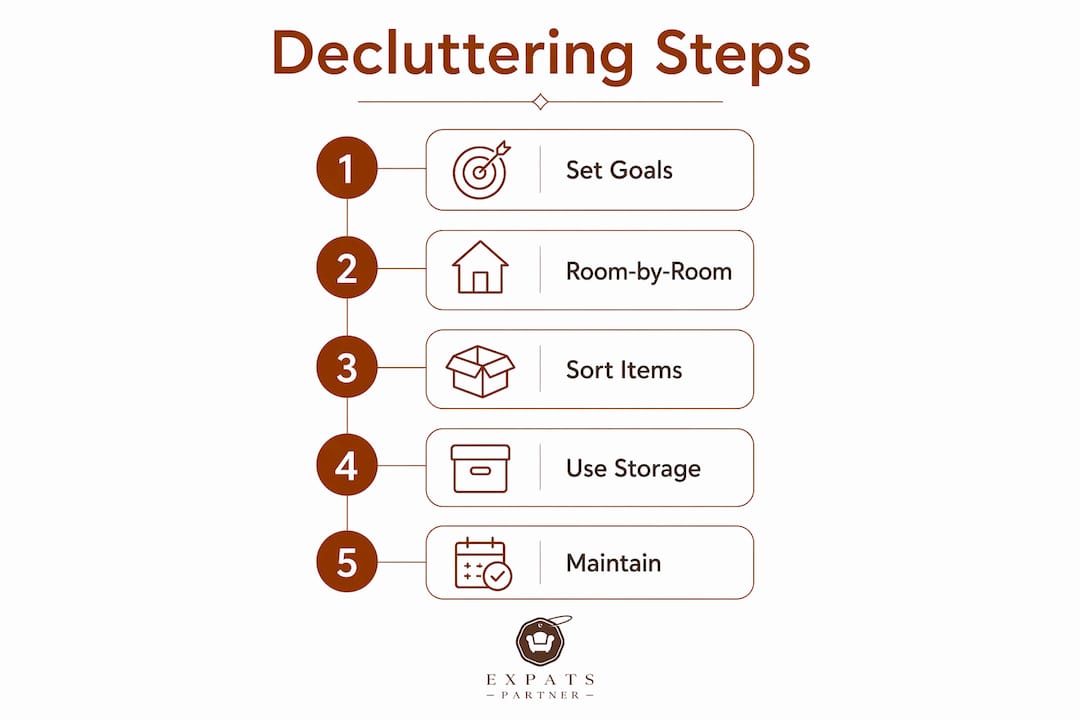
Setting realistic session goals prevents burnout. Staging professionals recommend the 15-minute timer technique: set a timer, focus on one area only, and stop when it rings. This keeps momentum high and prevents the paralysis that comes from staring at a full wardrobe or a cluttered study. Short, focused sessions across several days produce better results than one exhausting weekend push.
Sort every item into one of four categories: keep, store, donate, or discard. This framework removes the decision fatigue that slows most sellers down. If an item is not going back into the staged home, it needs a destination before you start. Knowing where things are going makes the process faster and more decisive.
Storage is where many sellers create a new problem while solving the original one. The table below shows the key differences between storage options during a staging period.
| Storage option | Buyer impact | Recommended use |
|---|---|---|
| On-site garage or store room | Negative. Signals insufficient storage to buyers | Avoid during viewings |
| On-site wardrobes and cupboards | Risky. Buyers open doors and check capacity | Keep contents to 50% or less |
| Off-site self-storage unit | Neutral. Keeps property clear and buyer-ready | Recommended for excess belongings |
| Trusted friend or family member | Neutral. Removes items from the property entirely | Good for bulky or sentimental items |
Off-site storage is the professional recommendation for a reason. Buyers open cupboards, wardrobes, and garage doors during viewings. A space packed with overflow signals that the home lacks storage capacity. That perception is difficult to reverse once formed.
Pro Tip: Hire a self-storage unit for the duration of your listing period. The cost is modest compared to the risk of a buyer walking away because your garage was full of boxes.
Step-by-step decluttering checklist for staging
A structured checklist keeps the process consistent across every room. Use this sequence to work through the property methodically before your staging team arrives.
Living room
- Remove all but two or three decorative items from shelves and coffee tables
- Clear the television unit of cables, remote controls, and stacked media
- Pack away children’s toys, games, and hobby equipment
- Reduce throw cushions to a maximum of four per sofa
- Remove any furniture that crowds the room or blocks natural pathways
Kitchen
- Clear every countertop completely, including the toaster, kettle, and knife block
- Remove fridge magnets, notes, and children’s artwork from appliance surfaces
- Organise visible pantry shelves so they appear half-full, not overflowing
- Store cleaning products under the sink and out of sight
- Remove excess chairs if the dining area feels crowded
Master bedroom
- Clear all bedside surfaces except for one lamp and one small item per side
- Pack away clothing, shoes, and accessories from open storage
- Remove personal photographs and decorative mirrors that feel too personalised
- Reduce wardrobe contents to 50% capacity so doors open to a tidy, spacious interior
- Strip the bed and replace with neutral, hotel-quality linen for viewings
Bathrooms
- Remove all personal grooming products from counters and shower ledges
- Replace personal towels with fresh, matching sets in neutral colours
- Clear under-sink storage to 50% capacity
- Remove bath toys, children’s products, and medication from visible areas
After completing each room, consolidate books and decorative items into intentional groupings rather than scattering them across surfaces. Three books stacked neatly on a coffee table read as styled. Fifteen books spread across three shelves read as clutter. The distinction is small but the visual effect is significant.
Removing personal photos and collections is the step sellers most often resist. The reasoning is understandable. These items represent your life in the home. But buyers need to imagine their own life there, and personal photographs make that harder. Pack them carefully and treat it as the first step of your move, not a loss.
For a full open house preparation sequence, the staging checklist for open house success from Expats Partner covers the complete viewing-day process in detail.
Common mistakes to avoid when decluttering for staging
The most damaging mistake sellers make is hiding clutter in the garage or storage rooms. Buyers check these spaces. A garage stacked with boxes tells them the home does not have enough storage for normal life. That concern follows them through the rest of the viewing and into their offer decision.
- Hiding clutter on-site. Buyers open every door. Store excess belongings off-site.
- Over-minimising. Removing too much leaves the home feeling cold and uninviting. Follow the 30% Rule, not a 70% rule.
- Underestimating the time required. A thorough declutter of a three-bedroom condo typically takes several days, not one afternoon.
- Failing to depersonalise sufficiently. Leaving family photographs and collections in place reduces buyer imagination and narrows your appeal.
- Letting clutter creep back. Surfaces and counters must stay clear for every viewing, not just the first one.
“Hiding clutter out of sight misleads buyers who will check storage spaces, potentially raising concerns about storage capacity. The only reliable solution is to remove excess belongings from the property entirely during the listing period.”
Maintaining a clutter-free home during an active listing period requires daily discipline. Assign a five-minute reset routine each morning: clear surfaces, straighten cushions, and check that wardrobes and cupboards remain tidy. Buyers sometimes request viewings with short notice. A home that is always viewing-ready removes the stress of last-minute preparation.
For guidance on preparing your property specifically for photography, the decluttering before property photography guide from Expats Partner covers the additional steps needed to make a home camera-ready.
Key takeaways
Decluttering before professional staging is the single most impactful step a seller can take to improve buyer perception and maximise the return on staging investment.
| Point | Details |
|---|---|
| Declutter before staging begins | Staging cannot compensate for clutter. Clear the property first, then bring in furnishings. |
| Follow the 30% Rule | Remove approximately 30% of your belongings to achieve the balance buyers respond to. |
| Use off-site storage | Store excess items away from the property to avoid signalling inadequate storage to buyers. |
| Depersonalise every room | Pack away photographs, collections, and personal items so buyers can imagine their own life in the space. |
| Maintain the standard daily | Keep surfaces clear and cupboards tidy throughout the entire listing period, not just for the first viewing. |
What I have learned from working with staged homes in Singapore
The sellers who get the best results from professional staging are almost always the ones who declutter thoroughly before the staging team arrives. This is not a coincidence. A staging professional can work with a clear, neutral space in a fraction of the time it takes to work around a home still full of personal belongings. The result is a more considered, cohesive presentation.
What surprises many sellers is how quickly buyers form an impression. Research consistently shows that buyers make their initial judgement within the first few minutes of entering a property. Clutter disrupts that impression before a single word is spoken. A decluttered home, by contrast, gives the staging every opportunity to do its job.
The emotional side of decluttering is real and worth acknowledging. Packing away photographs and personal items can feel abrupt, particularly in a home where you have lived for many years. The practical reframe that helps most sellers is this: you are not erasing your life in the home. You are preparing it for someone else’s life to begin there. That shift in perspective makes the process feel purposeful rather than painful.
Sentimental items deserve careful handling, not rushed disposal. Box them properly, label them clearly, and store them safely off-site. You will unpack them in your next home. In the meantime, their absence is doing real work for your sale.
The properties that sit on the market longest in Singapore are rarely the ones with the worst layouts or the oldest fittings. They are the ones where buyers could not picture themselves living. Decluttering solves that problem before staging even begins. It is the quietest, most cost-effective preparation a seller can make.
— Expats Partner
How Expats Partner supports your staging preparation
Once your home is decluttered and viewing-ready, professional staging brings the space to life with the right furniture and styling.
Expats Partner provides home staging in Singapore for condos, landed homes, HDB resale flats, and rental properties across the island. The service works best when the property has been cleared and depersonalised beforehand, which is exactly the preparation this guide covers. For sellers who need furnishings during the staging period, Expats Partner also offers furniture rental packages that provide neutral, well-proportioned pieces suited to Singapore’s residential property market. Whether you are preparing a vacant unit or refreshing a lived-in home for sale, the team at Expats Partner can advise on the right approach for your property type and timeline.
FAQ
What does it mean to declutter before professional staging?
Decluttering before professional staging means removing excess belongings, personal items, and unnecessary furniture so the property presents as a neutral, spacious environment. It is the preparation step that allows staging to work effectively.
How much should I remove when decluttering for staging?
The 30% Rule is the standard guideline: remove approximately 30% of your belongings to create a balanced, appealing space. This avoids both the visual noise of clutter and the coldness of an over-emptied home.
Where should I store items removed during the staging period?
Off-site self-storage is the recommended option. Storing excess items in your garage or cupboards signals to buyers that the home lacks adequate storage, which can reduce their confidence in the property.
How long does decluttering take before staging?
A thorough declutter of a three-bedroom property typically takes several days when done properly. Using the 15-minute timer technique across focused daily sessions produces more consistent results than a single rushed effort.
Does decluttering actually affect the sale price?
Decluttered and staged homes sell faster and can achieve price improvements compared to unstaged properties. The effect comes from buyers being able to focus on the home’s features rather than the owner’s belongings.