
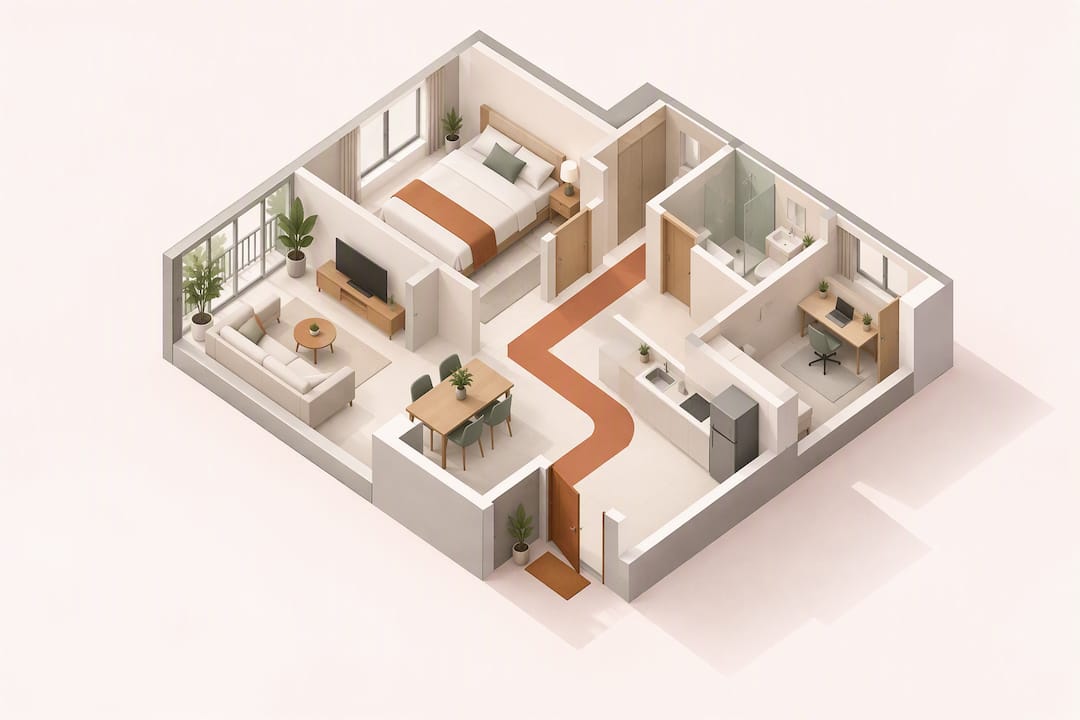
The non-negotiables for move-in day are a bed and mattress for every family member, seating, a dining surface, a working fridge and laundry setup, basic lighting and window coverings, a starter kitchen kit, a working Home Fire Alarm Device check, and activated utilities. Families who want all of this sorted at once, rather than piecing it together over weeks, often turn to a turnkey rental package for coordinated delivery and immediate usability.
TL;DR:
- Start planning six to eight weeks before key collection, confirm orders two to three weeks out, and reserve delivery access with the landlord or council.
- Measure the apartment door, corridor, lift, and stairwell turns before ordering large furniture; a piece that fits the room may not fit the delivery route.
- Test every Home Fire Alarm Device, remove renovation dust covers, check window restrictors, and keep shared escape routes clear before the family’s first night.
- Renting suits shorter assignments because it avoids end of lease storage and disposal, while buying better suits families planning a long term stay.
- Photograph existing damage, file defects within the flat’s Defects Liability Period, and keep appliance manuals, invoices, and installation contacts together.
Table of Contents
- Room-by-room essentials for every family member
- Move-in paperwork and HDB-specific checks before you unpack
- Fire safety and your first night in a new flat
- Making the most of space in a Singapore family flat
- Planning your timeline and budget for furnishing
- How Expats Partner helps families get settled quickly
- Major appliances and where to source them in Singapore
- Selecting family-friendly and durable furniture materials
- Ergonomic and child-safe furniture considerations
- Incorporating multifunctional furniture for space efficiency
- Eco-friendly and sustainable furnishing options
- Tips for personalising and decorating a family apartment
- Maintenance and cleaning tips for furniture longevity
- Consider a move-in ready package from Expats Partner
- FAQ
- Sources
Room-by-room essentials for every family member
A family apartment comes together room by room, and each space has its own short list of items that matter more than the rest.
In the living room, the sofa needs to fit the family that uses it daily, not just the floor plan. A coffee table, a space-saving media mount instead of a bulky console, layered lighting and proper window treatments for Singapore’s strong afternoon sun all belong on the list. A shoe storage unit by the entrance keeps the rest of the home clean, which matters more in a tropical climate where outdoor grit travels indoors quickly.
The dining area needs a table sized for how the family actually eats, whether that means four chairs or a bench-and-chair combination that tucks away more easily. Families with toddlers should plan for a high chair or booster seat early, since these are easy to forget until the first meal becomes a negotiation. In smaller apartments, a dining table that extends or folds down does double duty as a homework desk.
The kitchen needs a fridge sized to the household, basic cookware, dinnerware for the whole family, a rice cooker, a kettle, food storage containers, and a dish rack. Singapore’s recycling system expects households to segregate recyclables, so a dedicated bin for paper, plastic and glass alongside general waste saves confusion later.
Bedrooms each need a mattress suited to the sleeper’s size and support needs, adequate wardrobe or modular storage, and blackout curtains for anyone who works shifts or has young children who nap. Children’s beds benefit from rails or wall anchors, and mattress protectors extend the life of a mattress considerably in Singapore’s humidity.
Bathrooms need simple organisers for toiletries, non-slip mats, shower hooks and a check that the extractor fan or window actually ventilates the space, since mould appears quickly in humid conditions.
A study or work corner needs a desk that fits the available footprint, an ergonomic chair, and a sensible cable route for the modem and any work devices, especially where a parent works from home.
The service yard is where the washing machine goes, along with a dryer or a drying rack if line-drying is not practical, and a quick gas safety check if the unit uses gas for cooking or water heating.
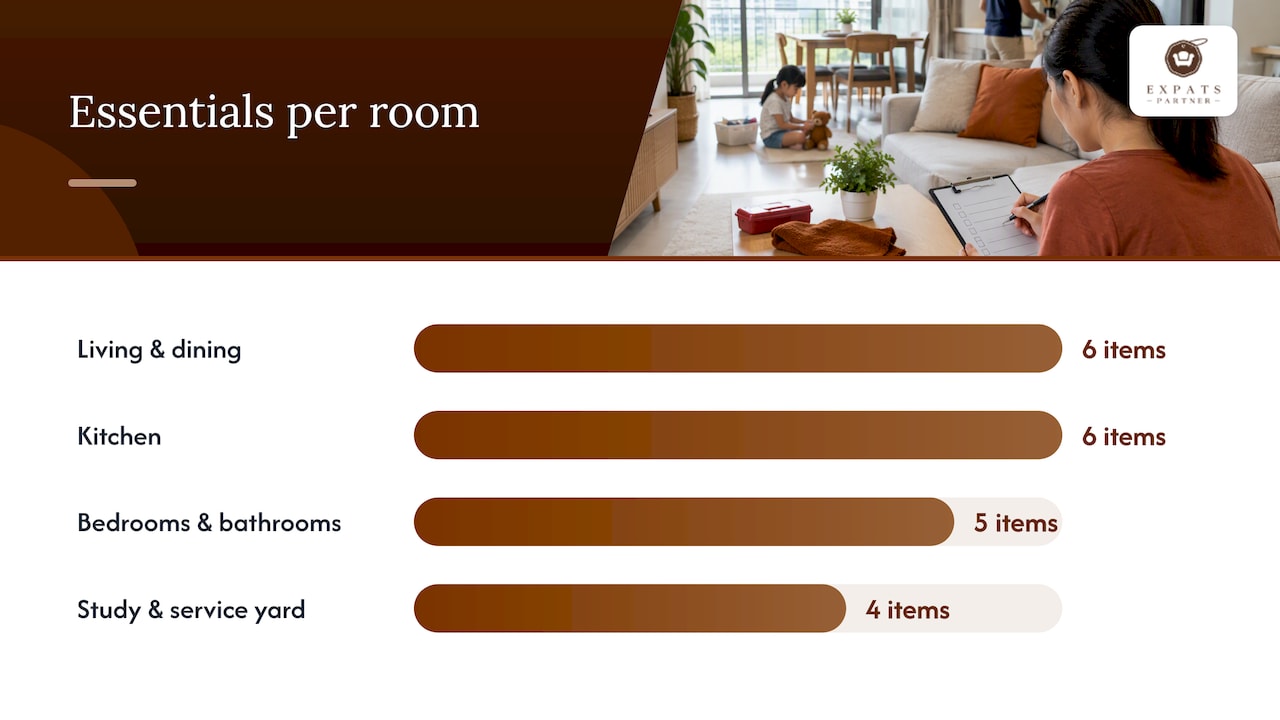
- Living and dining: sofa, coffee table, dining table and seating, lighting, curtains, shoe storage.
- Kitchen: fridge, cookware, rice cooker, kettle, food storage, recycling bins.
- Bedrooms and bathrooms: mattresses, wardrobes, blackout curtains, bed rails, non-slip mats.
- Study and service yard: desk, ergonomic chair, washing machine, drying solution.
Move-in paperwork and HDB-specific checks before you unpack
Furniture is only half the job. The administrative side of moving into a Singapore flat causes more delays than most families expect, and it is worth tackling before the delivery trucks arrive.
- Set up utilities with SP Services or your chosen electricity retailer before the move. Note the security deposit required and how long activation takes, since a flat without power on move-in day derails everything else.
- Inspect and document what the flat already provides. HDB’s move-in guidance confirms that BTO flats come fitted with ceiling-mounted Home Fire Alarm Devices and sample anchors, and these should be tested rather than covered by renovation dust sheets. Check window restrictors, flooring, skirting and sanitary fittings too, and photograph anything that looks off.
- File any defects within the Defects Liability Period. Missing this window means paying for repairs that should have been covered.
- Keep every appliance manual, invoice and installation contact in one folder, physical or digital. This single habit makes warranty claims and any future handover to a landlord far less painful.
- Confirm lift booking and delivery access windows with your landlord or the Management Corporation Strata Title council before ordering large furniture. Many estates restrict goods lift use to certain hours, and missing that window means a rescheduled delivery.
Fire safety and your first night in a new flat
Safety checks take fifteen minutes and matter more than any item on the furniture list. Test every Home Fire Alarm Device in the flat and replace batteries where the unit allows it, and remove any plastic dust covers left over from renovation work, since these can block the sensor.
Walk through each room and check for overloaded sockets, particularly in the kitchen and any room with multiple appliances. Use extension leads rated for the load they carry, and route cables away from where a toddler can reach them. Fire safety guidance from SCDF recommends never leaving cooking unattended and avoiding overloaded sockets as two of the simplest ways to cut household fire risk.
Keep corridors and stairwells clear of bulky items, since shared escape routes in HDB estates need to stay passable at all times. Know that Singapore’s emergency number for fire and ambulance services is 995.
Furnishing, household equipment and routine maintenance account for around 6% of household spending in Singapore’s expenditure distribution, a useful reminder that safety checks cost nothing and matter more than any single purchase on this list.
Before the first night, assemble a small kit so the family can function while bigger furniture is still being installed, and be sure to review the Singapore HDB room rental rules to stay compliant:
- A torch and a basic first-aid kit.
- Bedding, towels and toiletries for everyone.
- A kettle, a few plates and a set of cutlery.
- Cleaning cloths and bin bags for the inevitable unpacking mess.
Making the most of space in a Singapore family flat
Singapore apartments, especially HDB flats, reward furniture choices that work twice as hard. A storage bed, a sofa bed for guests, or a dining table that folds down against the wall all multiply what a small footprint can hold.
Vertical shelving matters as much as floor space. A tall, narrow bookcase stores more than a low, wide one without eating into the room, and wall-mounted shelving in a child’s room keeps toys off the floor without needing extra furniture.
Before ordering anything large, measure the delivery route properly: the apartment door, the common corridor, the lift’s internal dimensions, and any stairwell turns if the lift is out of service. A sofa that fits the room but not the lift becomes someone else’s problem on delivery day.
Pro Tip: Sketch or photograph your delivery route, including lift dimensions, before you order anything larger than a dining chair.
For the entrance, a slim shoe cabinet keeps footwear tidy without crowding the doorway, and stackable containers in the kitchen and service yard make use of vertical space that otherwise sits empty.
- Choose multi-purpose furniture: storage beds, extendable tables, sofa beds.
- Use vertical shelving rather than wide, low units.
- Measure doorways, lifts and corridors before ordering large items.
- Add soft pads to furniture legs to protect vinyl and tiled floors, and anchor tall units to the wall where the building allows it.
Planning your timeline and budget for furnishing
A sensible furnishing timeline starts well before the keys arrive.
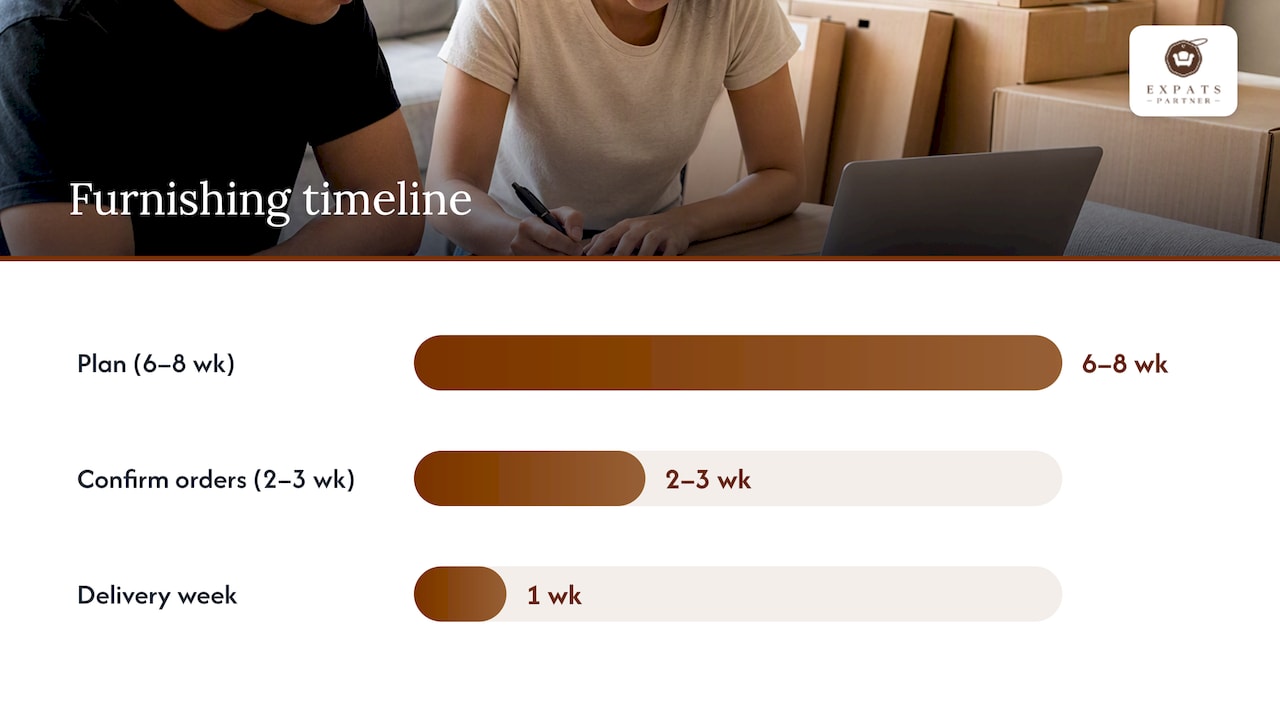
- Six to eight weeks out: plan room by room, decide what you already own, and work out what needs sourcing.
- Two to three weeks out: confirm all orders, whether that means purchases or a rental agreement, and lock in delivery dates.
- Delivery week: confirm lift access with the landlord or MCST, inspect items on arrival, and test every appliance before the delivery team leaves.
On budget, Singapore’s own household spending data gives useful context rather than a target to hit. Furnishing, household equipment and routine household maintenance make up around 6% of typical household expenditure in the national distribution of spending, which suggests most families treat furnishing as a modest, bounded slice of the budget rather than the main event.
Whether renting or buying makes more sense depends on how long you plan to stay and how much hassle you want to avoid. Renting tends to suit shorter assignments, since it avoids the cost of disposal and storage when the lease ends. Buying suits families settling in for the long term who want to build a permanent home. Either way, the decision is about timeframe and effort, not just upfront cost. For a step-by-step look at the renting side, our guide to renting furniture in Singapore walks through the whole process.
How Expats Partner helps families get settled quickly
We offer full-home furniture packages, short and long-term rental, and appliance rental, designed to help make a family flat livable without the cost and hassle of buying everything outright. Our packages include options for 1-bedroom and 2-bedroom apartments, with monthly pricing details available on our packages page.
Working with us typically follows a simple sequence: we help select inventory suited to the flat and the family, coordinate delivery and collection, handle installation, and remain available afterwards for any adjustments needed.
Before committing to any rental provider, it is worth asking a few direct questions: what exactly is included in the inventory, how far ahead delivery needs booking, what happens if something is damaged during the rental period, and how collection or extension works at the end of the lease. Our expatriate furnishing guide covers these points in more depth for families planning a move.
Major appliances and where to source them in Singapore
Fridges, washing machines and air conditioning units sit at the top of most families’ shopping lists, and Singapore offers several routes to get them. Major electronics retailers carry the full range of brands and sizes, and many offer installation as part of the purchase. Appliance rental is a growing alternative for families who want major items without committing to ownership, particularly useful for shorter stays or while deciding on a longer-term setup.
When choosing a fridge, think about family size rather than kitchen size alone: a larger household eating most meals at home needs more capacity than the apartment’s floor plan might suggest. Washing machines come in top-load and front-load formats, and front-load units generally fit more easily into a compact service yard.
Air conditioning servicing and installation usually needs a licensed contractor, and it is worth checking whether the unit is already fitted before ordering a new one, since many HDB flats come with existing points. For families who prefer not to commit to a purchase before confirming space and fit, appliance rental through a service such as our Electrolux appliance rental option covers fridges, washing machines and other essentials without a long-term buying decision.
Selecting family-friendly and durable furniture materials
Furniture in a family home takes more daily wear than furniture anywhere else, so material choice matters more than style alone. Solid wood and plywood with a proper veneer hold up to years of use better than particleboard, which tends to swell in humidity and loosen at the joints over time.
For sofas and chairs, tightly woven fabrics or performance textiles resist spills and stains far better than loose weaves, and leather or faux leather wipes clean quickly after a spilled drink. Singapore’s humidity makes mould resistance worth checking too, particularly for anything upholstered that sits near a window or in a less ventilated room.
Metal frames on tables and chairs tend to outlast all-wood joints under heavy daily use, especially where children climb on furniture rather than simply sitting on it. For flooring-adjacent pieces, water-resistant finishes matter near kitchens, bathrooms and entryways where spills and tracked-in moisture are routine.
Ergonomic and child-safe furniture considerations
Furniture that fits the people using it reduces strain and accidents in ways that are easy to overlook until something goes wrong. A desk and chair pairing should let feet rest flat on the floor and forearms sit level with the desk surface, which often means a different chair height for a parent working from home than for a child doing homework at the same table.
For children’s furniture specifically, rounded corners on tables and shelving reduce injury from the inevitable bump, and furniture anchored to the wall prevents tipping, which matters most for tall bookcases and chests of drawers in a child’s room. Bed rails on a child’s bed prevent falls during the transition out of a cot, and low, stable furniture suits toddlers better than anything with a narrow base.
Window safety deserves its own check: window restrictors, often already fitted in HDB flats, should be tested rather than assumed to work, and any furniture placed near a window should not be climbable.
Incorporating multifunctional furniture for space efficiency
Singapore’s apartment sizes make multifunctional furniture less a style choice and more a practical necessity for most families. A storage bed with drawers underneath replaces a chest of drawers entirely, freeing floor space in a bedroom that would otherwise feel cramped. An extendable dining table handles everyday family meals at a smaller size and expands for visitors without needing a separate table in storage.
A sofa bed converts a living room into a guest room overnight, useful for families who host visiting relatives but do not have a spare bedroom to dedicate to it. Ottomans with storage inside double as seating and a place to stash blankets or toys, which matters in a living room that also functions as a play area.
Wall-mounted or folding desks suit a study corner that needs to disappear when not in use, particularly in a one or two-bedroom flat where every room serves more than one purpose across the day.
Eco-friendly and sustainable furnishing options
Furnishing choices affect more than the apartment itself, and a growing number of families factor sustainability into what they buy or rent. Furniture built from certified sustainable wood or recycled materials tends to last longer and creates less waste at the end of its life than cheaper particleboard pieces that often end up discarded within a few years.
Renting furniture is itself a sustainability choice worth considering: it keeps usable pieces in circulation across multiple households rather than each family buying new items that get thrown out at the end of a lease. This matters particularly for expatriate families on shorter assignments, where furniture bought for a two-year posting often has nowhere to go afterwards.
Low-VOC finishes on paint, varnish and upholstery reduce indoor air pollutants, which matters in Singapore’s largely air-conditioned, less ventilated apartments. Choosing durable materials over disposable ones, covered in more detail in the furniture materials section above, is itself one of the simplest sustainable furnishing decisions a family can make.
Tips for personalising and decorating a family apartment
A furnished apartment starts to feel like home once personal touches go in, and this does not need to mean a full renovation. Family photographs, artwork and a few well-placed plants do more to warm up a space than any single piece of furniture.
Florals and plants suited to Singapore’s indoor light levels, such as peace lilies or snake plants, bring life into a room without demanding much maintenance. Textiles, cushions, throws and rugs, are the easiest way to shift a room’s feel without touching the furniture underneath, and they are simple to swap out as children grow and tastes change.
Lighting deserves attention beyond the basic ceiling fixture: a floor lamp in a reading corner or warmer bulbs in a living room change how a space feels in the evening far more than people expect. Letting children personalise their own rooms, within reason, gives them ownership of the new home, which often eases the adjustment of a move more than parents anticipate.
Maintenance and cleaning tips for furniture longevity
Furniture lasts longer with routine care rather than occasional deep cleans. Wiping down surfaces weekly prevents dust and grime from building up into stains, particularly on wooden tables and shelving that sit near windows and collect more dust in Singapore’s climate.
Upholstered furniture benefits from a vacuum pass every week or two, with spot cleaning for spills as soon as they happen rather than left to set. Leather and faux leather pieces need a dedicated cleaner rather than general household products, which can dry out or crack the surface over time.
Humidity is the main enemy of furniture longevity in Singapore, so keeping air circulating, particularly around wardrobes and anything pushed flush against a wall, helps prevent mould and warping. Soft pads under furniture legs protect flooring and also reduce wear on the furniture itself from being dragged during cleaning, and tightening any loose screws or joints every few months keeps chairs and tables stable for longer.
Consider a move-in ready package from Expats Partner
If pulling this entire checklist together feels like more than your schedule allows, our packages give you a coordinated alternative: real in-stock inventory, flexible rental periods, and delivery and setup handled as one coordinated process rather than a dozen separate deliveries.
Renting also sidesteps the disposal and storage questions that come with ownership once a lease ends or a posting moves on. Browse our relocation furniture packages for Singapore moves, or view the full packages range to see what suits your flat and timeline, and get in touch to check availability for your move-in date.
FAQ
What is the most important item on a family furnishing checklist?
A bed and mattress for each family member comes first, followed closely by a working fridge and confirmed utilities. Everything else, including seating and decor, can follow once sleep and food storage are sorted.
Do HDB flats already come with fire safety devices fitted?
Yes, BTO flats come fitted with ceiling-mounted Home Fire Alarm Devices as part of the handover, and these should be tested on move-in rather than left covered by renovation dust sheets. Checking them early is one of the simplest safety steps on any move-in list.
Is renting furniture or buying it better for a family in Singapore?
It depends mainly on how long you plan to stay. Renting suits shorter postings by avoiding disposal and storage costs at the end of a lease, while buying suits families settling in Singapore long term who want to build a permanent home.
How much should a family budget for furnishing a new apartment?
That suggests most families treat furnishing as one bounded part of the budget rather than the largest expense of settling in.
What packages does Expats Partner offer for family apartments?
We offer several furniture rental packages for family apartments, with pricing details available on our packages page. Pricing covers coordinated delivery and setup rather than piecing furniture together separately.