
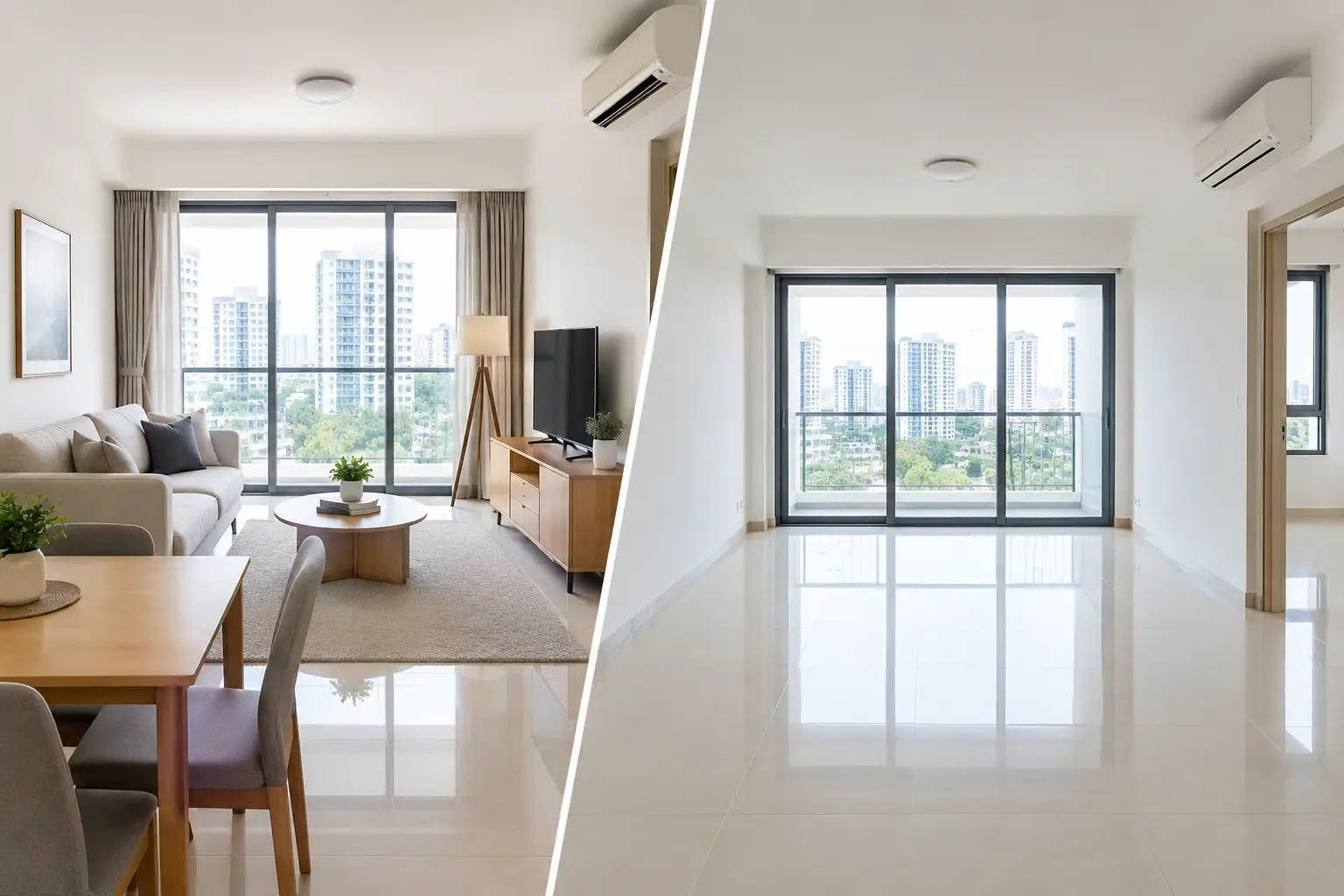
A vacant condominium can photograph beautifully yet still leave prospective tenants asking the same question at a viewing: where would everything go? At the other end of the scale, a fully furnished flat can feel immediately liveable but create more responsibility for the landlord. A furnished versus unfurnished tenancy is not simply a question of adding a sofa and bed. It affects the tenant pool, rental strategy, upfront spend, maintenance workload and the speed at which a property can be brought to market.
For landlords and agents in Singapore, the right choice usually comes down to the property, its location and the type of resident it is most likely to attract. A compact city-fringe unit aimed at newly arrived professionals has different needs from a landed home suited to a family planning a longer stay.
What furnished and unfurnished really mean
A furnished tenancy generally provides the main items needed for everyday living. This commonly includes beds and mattresses, a sofa, dining furniture, wardrobes or storage, major kitchen appliances, a washing machine and sometimes smaller items such as curtains, lighting or kitchenware. The exact inventory should always be clear before a tenancy begins.
An unfurnished tenancy is usually supplied with the fixed essentials: built-in kitchen cabinets, sanitary fittings, air-conditioning units and perhaps selected appliances, depending on the agreement. The tenant brings or buys movable furniture and may have more freedom to make the home feel personal.
There is also a useful middle ground. A partially furnished property might include appliances, curtains, built-in wardrobes and a dining set, while leaving tenants to provide beds, a sofa or their own work-from-home setup. This can suit tenants who already own some furniture but do not want the cost and effort of sourcing large appliances.
The labels matter less than a precise inventory. Avoid assumptions about whether a television, microwave, outdoor furniture or a study desk is included. Clear photographs and an itemised list help prevent disputes when the tenancy ends.
Furnished versus unfurnished tenancy: the landlord view
A furnished home can widen appeal among expatriates, corporate tenants, students, and people relocating quickly for work. These renters often arrive with luggage rather than household goods. They are looking for a practical home from the first night, particularly when their employer, family schedule or temporary accommodation creates a tight moving timeline.
For a landlord, that convenience can support a stronger asking rent where the location and quality of furnishing justify it. A well-presented furnished unit also tends to make better use of listing photos and viewings. An empty living room may appear smaller than it is; a thoughtfully placed sofa, rug and dining table make the layout easier to understand.
However, furnishing is not a guaranteed route to a higher return. The furniture must suit the rental level and the target market. Overfilling a one-bedroom unit with bulky pieces can make it feel cramped, while worn or mismatched items can weaken the impression of an otherwise good property. The initial outlay, delivery coordination, repairs, cleaning and replacement of damaged items must also be factored into the expected rental income.
An unfurnished property usually requires less capital at the start and involves fewer movable items to inspect and maintain. It may appeal to long-term tenants, families and residents who have accumulated their own furniture in Singapore. Such tenants can be more inclined to settle in, although this is never a substitute for proper tenant screening.
The trade-off is that an unfurnished listing may attract a narrower group of enquiries, especially in areas popular with relocating professionals. It can also take more imagination for a prospective tenant to picture how a bare room will function. For marketing purposes, temporary furniture rental or staging can still give the property a clear, welcoming presentation before handover.
Consider the likely tenancy length
Length of stay is a practical starting point. Tenants on one- or two-year assignments may prefer furnished accommodation because purchasing, assembling and later selling furniture is inconvenient. A family expecting to remain for several years may value the freedom to choose their own pieces and arrange rooms around their routines.
This is not a fixed rule. Some expatriate families ship their belongings, while some local tenants want a fully equipped place with minimal effort. The most useful question is: what does the tenant profile for this particular development usually expect?
Look at comparable listings, not just headline rent
Before deciding, review competing homes of a similar size, condition and location. Notice whether the listings receiving attention are furnished, partially furnished or empty, and whether the furniture looks current, clean and proportionate to the rooms.
Compare likely rental income against the full cost of supplying the home, including delivery, installation, inventory checks, repairs and eventual replacement. A slightly lower rent on an unfurnished tenancy can still be commercially sensible if it reduces upfront cost and ongoing responsibility. Conversely, a furnished unit that lets quickly and avoids a long vacancy may produce a better overall result.
The tenant view: convenience, control and cost
For tenants, a furnished tenancy removes many early pressures. There is no need to visit several shops, arrange separate deliveries, wait for items to arrive or decide what to do with them at the end of a posting. This is particularly valuable for someone moving to Singapore from overseas, starting a new role or renting temporarily while deciding where to settle.
A furnished home can also make budgeting more predictable. Instead of a large initial furniture purchase, the tenant can focus on rent, utilities, deposits and the everyday costs of moving. But convenience should not mean accepting an unsuitable setup. Check mattress condition, storage capacity, desk space, kitchen equipment and whether the furniture works for the household size.
An unfurnished tenancy gives greater choice. Tenants can bring familiar furniture, select pieces that match their style and adapt the layout for children, hobbies or remote work. It may be the more comfortable route for a long stay, particularly if the rent reflects the lack of furnishings.
The downside is time and coordination. Buying furniture involves measuring rooms, arranging access for deliveries, assembling items and dealing with disposal or resale later. In Singapore, where move-in dates are often fixed and lift bookings may be required, those tasks can become more demanding than expected.
How to choose the right furnishing level
Start with the property’s natural audience rather than a personal preference for bare or decorated rooms. A centrally located one-bedroom condominium near offices and MRT connections may benefit from a polished, fully furnished setup. A larger family home in an established residential area may be better offered unfurnished or partly furnished, with high-quality built-ins and appliances in place.
Next, consider the condition of the property. If walls, flooring, lighting or curtains need attention, address those basics before spending heavily on furniture. Tenants notice overall care. A simple, tidy scheme with durable furniture is usually more effective than a crowded room full of decorative items.
Finally, plan for operational reality. Who will receive the furniture, supervise installation, document the inventory and coordinate collection or repairs? A furnishing partner can manage these practical stages, helping a landlord or agent prepare a property without purchasing items outright. This can be especially useful when a listing needs to be photographed, shown and occupied within a short period.
Presentation still matters for an unfurnished home
Choosing an unfurnished tenancy does not mean marketing an empty shell. Empty rooms can be difficult to photograph and can leave viewers unsure about the scale of a bedroom, dining area or awkward corner. Light staging, either physical or through a carefully planned furnished setup before listing, can show purpose without committing the landlord to a fully furnished lease.
For agents, this distinction is valuable. The furniture used to present a property for sale or rental does not have to become part of the tenancy agreement. It can simply help prospective tenants see how the space works, creating clearer listing photographs and more confident viewing conversations.
Whether the final lease is furnished or unfurnished, the best decision is the one that matches the likely tenant, protects the property’s condition and can be managed without unnecessary stress. A clear inventory, sensible furniture choices and a well-prepared home give everyone a better starting point when the keys change hands.