
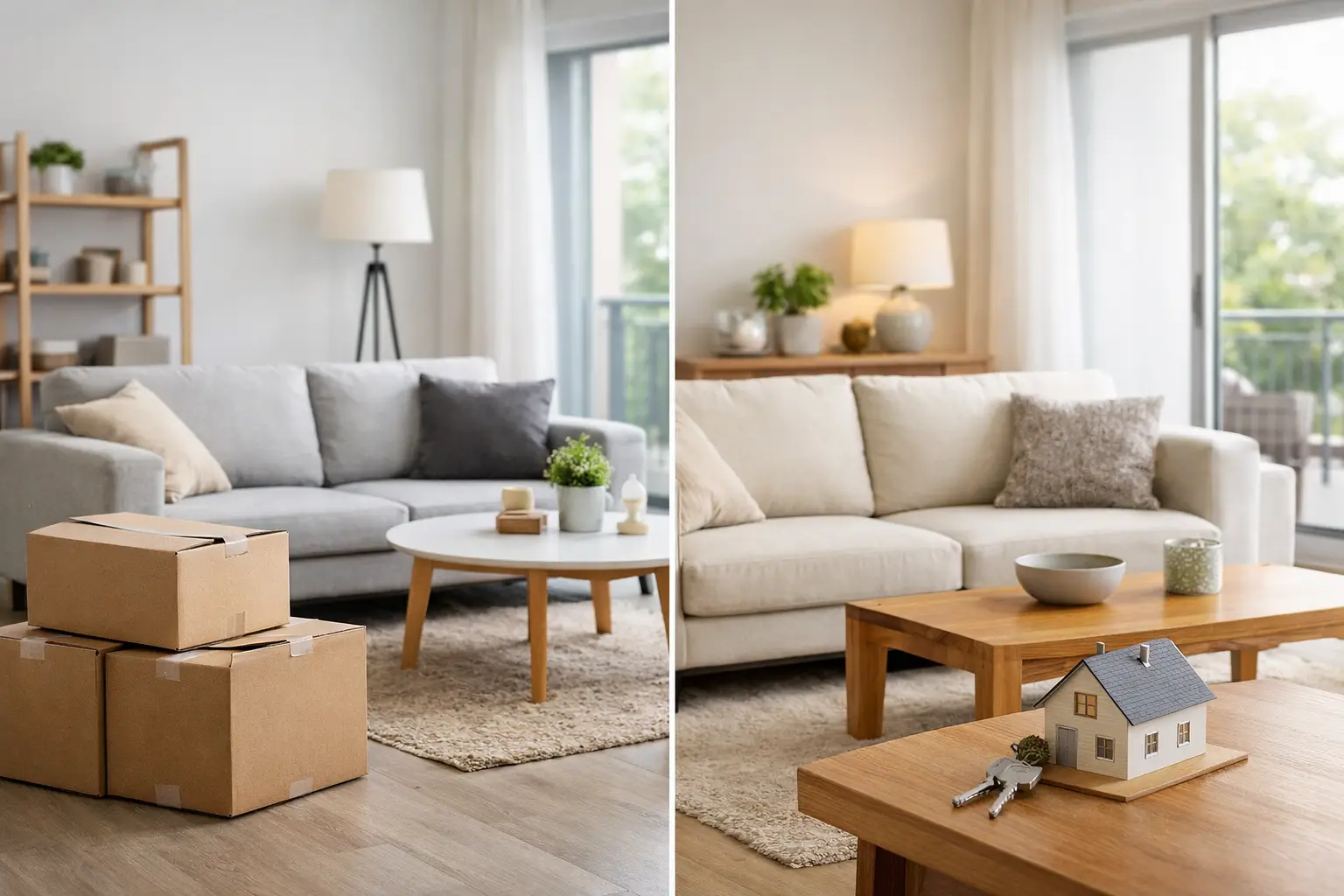
A vacant condominium can look smaller than it is in listing photos. A newly arrived family can be living out of suitcases while waiting for furniture deliveries. A landlord may need a rental-ready unit without committing capital to pieces that could be outdated after one tenancy. In each case, furniture rental versus buying is not simply a question of price. It is a decision about timing, flexibility, presentation and the work involved.
For Singapore property owners, agents, landlords and relocating residents, the best choice depends on how long the furniture is needed and what the property needs to achieve. Buying can make sense for a settled home. Renting is often the more practical route when a home must be ready quickly, a tenancy is temporary, or a property needs to make a better impression on the market.
Furniture rental versus buying: the real comparison
The purchase price is usually the first figure people compare, but it rarely tells the whole story. Buying furniture means paying upfront, arranging delivery, assembling items where required, and deciding what to do with everything when circumstances change. There may also be storage, repair, resale and disposal costs later.
Furniture rental spreads the cost across an agreed period and includes a service element. The furniture is selected for the space, delivered, placed and collected when the rental ends. This can be particularly useful where there is a clear end date, such as an expatriate assignment, a fixed tenancy, a home sale or a short-term corporate requirement.
Neither option is automatically better. A homeowner planning to stay for many years may reasonably prefer to buy chosen pieces gradually. A landlord furnishing several units for long-term operation may also find ownership worthwhile, provided there is a plan for maintenance, replacement and storage between tenancies. The stronger choice is the one that reflects the property’s purpose rather than the lowest initial number.
When buying furniture is likely to suit
Buying is often appropriate when the home is permanent and the owner has time to choose pieces that reflect their lifestyle. It allows for greater personal preference, from a specific dining table size to a favourite sofa fabric. Over a long enough period, quality furniture that is well cared for can offer good value.
It can also suit a landlord whose target tenant and furnishing standard remain consistent over several years. In that situation, ownership gives direct control over the inventory. However, this only works smoothly when someone is available to handle replacements, damaged items, deliveries and the practical task of refreshing the look when the unit begins to feel dated.
The challenge is that furniture is not always as permanent as the purchase suggests. A change in household size, a move to a different layout or a decision to sell can quickly make previously suitable pieces inconvenient. Large items also tend to lose resale value, while selling them takes time that busy owners and agents may not have.
When furniture rental makes more sense
Rental is designed for situations where the need is temporary, the deadline is close, or flexibility matters more than ownership. It can give an empty property the essential structure buyers and tenants expect to see: a defined living area, a workable dining space and bedrooms that show how the room can function.
For relocating residents, renting can remove a significant part of the settling-in process. Rather than visiting multiple shops, coordinating different suppliers and waiting at home for deliveries, they can move into a prepared space. This is especially valuable when a lease period is known but not permanent, or when the family wants time to understand the home before making long-term purchases.
For landlords, a rental package can help prepare a unit for viewings or occupation without tying up a large amount of capital in furniture. If the tenant profile changes, the furnishing approach can change too. A compact one-bedroom flat aimed at young professionals may need a different setup from a family-sized condominium intended for corporate tenants.
Consider the property outcome, not just the furniture
A home being marketed for sale has different needs from one being furnished for everyday living. Staging is not about filling every corner. It is about helping a buyer understand the scale, flow and purpose of each room. The right sofa placement can make a living room feel balanced. A dining setting can show that an open-plan area has room to host. A properly dressed bedroom can prevent an empty space from feeling narrow or overlooked.
In this setting, renting is often the more commercially sensible option. The furniture is there to support photographs, online enquiries and viewings during the marketing period. Once the sale is complete, it can be collected without the seller needing to find storage or negotiate individual resale listings.
The same principle applies to a slow-moving listing. If a property is clean but empty, viewers may focus on bare walls, awkward corners or the effort required to furnish it. If it is cluttered or furnished with mismatched pieces, they may struggle to see its potential. A considered rental and styling plan can provide a calmer, more current presentation without asking the owner to buy a full household of new furniture.
Costs that are easy to overlook
Before deciding, it helps to compare the complete cost of each route over the period you actually need it. With buying, this includes the purchase price, delivery charges, assembly, possible installation, repairs, cleaning, storage and eventual disposal or resale. There is also the cost of delay if separate suppliers cannot meet the required move-in or listing date.
With rental, check the monthly fee, minimum rental term, delivery and collection arrangements, and what happens if the period needs to be extended. It is sensible to understand the condition and care expectations as well. A clear agreement helps landlords, tenants and owners avoid surprises.
The value of rental is often clearest when time has a financial impact. A property that can be photographed and launched sooner may begin receiving enquiries sooner. A furnished rental that is ready for tenant viewings can reduce the gap between occupancies. For a relocating employee, fewer days spent managing furniture logistics can mean a more comfortable start to life in Singapore.
Choose furniture for the audience and duration
The right furnishings should reflect who will use or view the space. A sales staging package needs broad appeal rather than highly personal taste. Neutral colours, sensible proportions and tidy layouts help rooms photograph well and allow visitors to picture their own belongings there.
A furnished rental needs more everyday functionality. Tenants will look for practical seating, adequate dining arrangements, bedroom storage and a home that feels ready rather than improvised. In a corporate setting, durability and a professional appearance may take priority. The choice is not about making every property look the same. It is about matching the furniture to the audience, unit size and expected period of use.
This is where a hands-on furnishing partner can save time. Expats Partner can coordinate suitable furniture, delivery, installation and collection, allowing agents and owners to concentrate on the sale, tenancy or move rather than on operational details. Well-maintained pre-owned furniture can also be a more considered option for temporary needs, while new items can be sourced where a particular brief requires them.
Questions to ask before you decide
Start with the end date. If you know the furniture will only be needed for a few months or a fixed lease, rental deserves serious consideration. If the property will be your long-term home, buying may offer more freedom and better value over time.
Then consider the deadline. Are professional photographs booked next week? Is a tenant arriving shortly? Is an incoming employee moving from overseas with little time to shop? When speed matters, a coordinated rental service can be worth more than the apparent saving of sourcing each item independently.
Finally, ask what will happen after the furniture is no longer needed. If the answer involves a storage unit, repeated online listings or asking friends to help move a sofa, the convenience of collection has real value.
The most useful furnishing decision is the one that leaves the property ready for its next step. Whether that means a home that feels settled, a rental that appeals to the right tenants, or a listing that gives buyers a clearer first impression, choose the approach that supports the outcome you need now.