
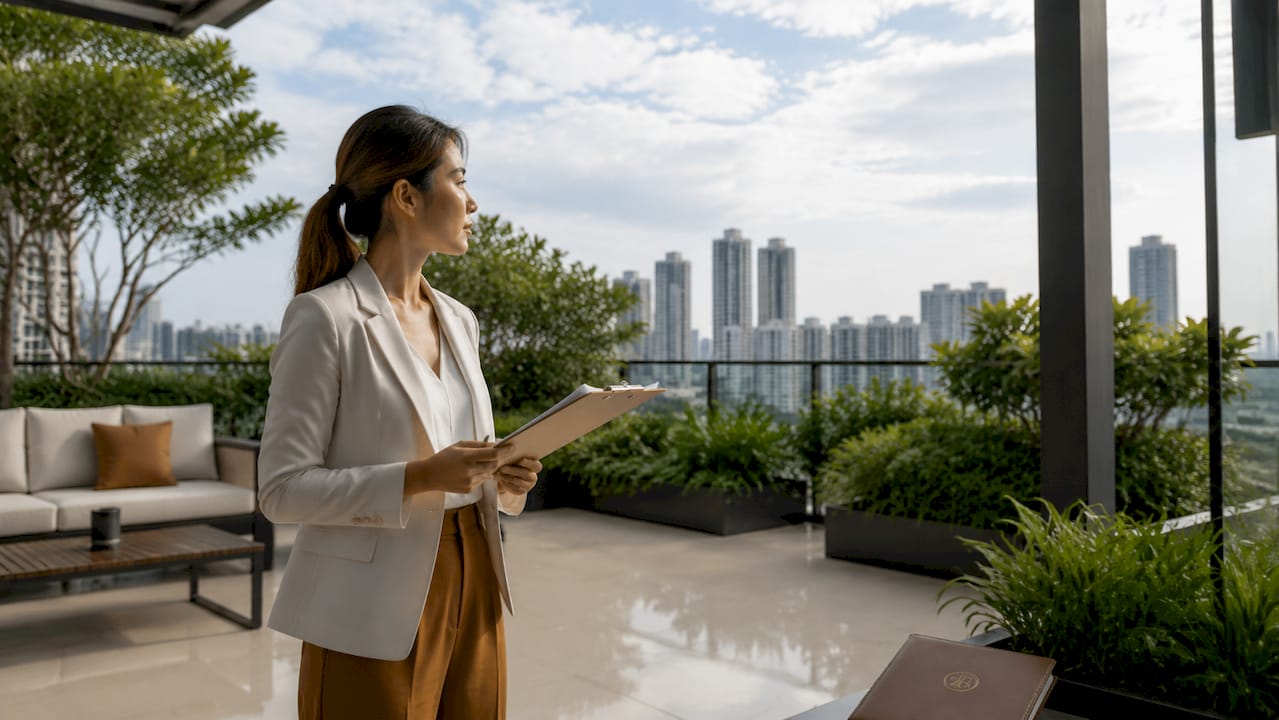
Vacant homes are defined in property markets as residential units listed for sale without furniture, occupants, or staged interiors. They consistently sell for 6% to 10% less than staged or occupied equivalents and spend longer on the market. The core reasons why empty homes don’t sell quickly come down to three compounding problems: buyers cannot picture themselves living there, minor defects become impossible to ignore, and the emotional pull that drives purchase decisions simply never forms. Professional home staging and furniture rental directly address all three. Understanding each factor gives homeowners and property agents in Singapore a clear path to better outcomes.
1. Why empty homes don’t sell: the emotional connection problem
Buyers purchase a lifestyle, not just square footage. When a property is empty, there is nothing to anchor that emotional response. Rooms feel clinical, ambiguous, and hard to connect with. That absence of feeling translates directly into lower offers and longer listing periods.
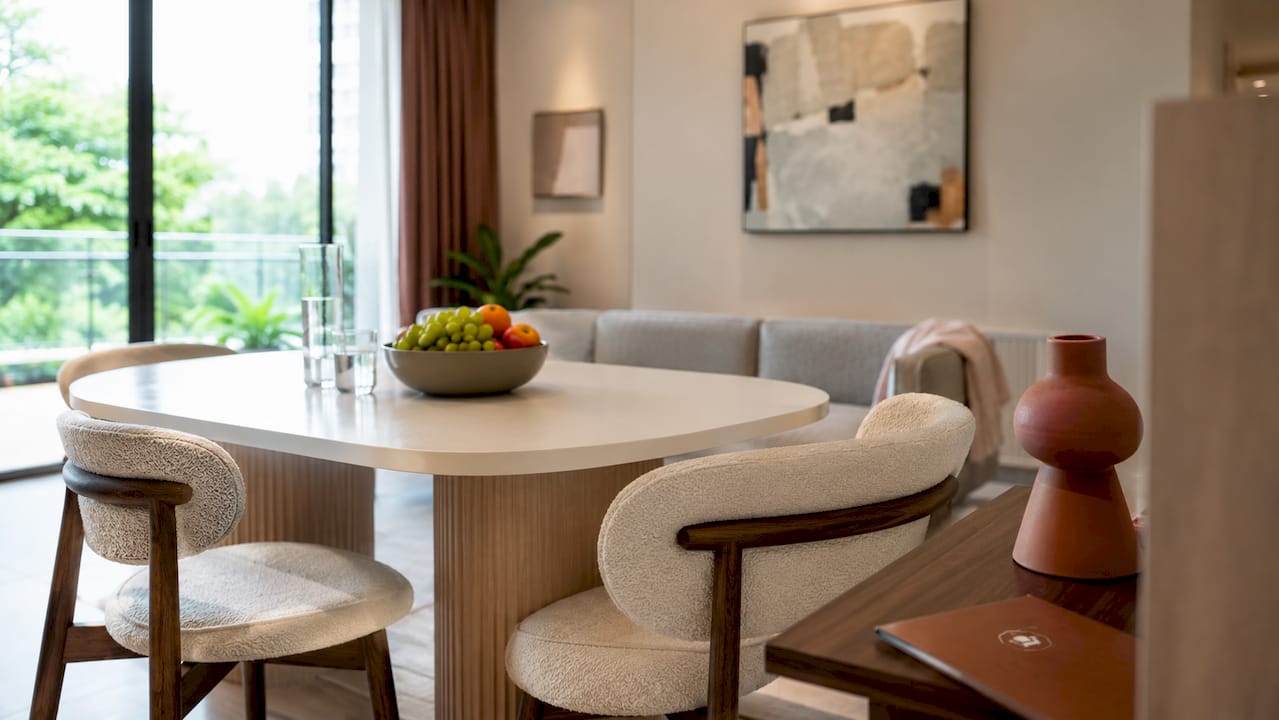
Home staging sells a lifestyle, not just space. A sofa, a dining table, and a few well-placed accessories tell a buyer: “This is where your family eats dinner.” An empty room says nothing at all. The difference in buyer response is measurable and consistent.
The data supports this clearly. 83% of buyers’ agents report that staging significantly helps buyers visualise a property as a future home. That figure reflects a fundamental truth about how purchase decisions are made: emotion leads, logic follows.
- Staged rooms create familiarity and warmth that empty rooms cannot replicate
- Buyers form emotional attachments to furnished spaces within minutes of entering
- Emotional attachment drives competitive offers and reduces negotiation resistance
- Empty properties leave buyers feeling uncertain, which delays decisions
Pro Tip: Place a small dining set and a sofa in even a compact Singapore condo unit before viewings. These two pieces alone shift the emotional register of the entire flat.
2. How poor spatial visualisation keeps vacant properties unsold
Most buyers cannot accurately judge room size or furniture fit in an empty space. Without a bed to anchor a bedroom or a sofa to define a living area, the room feels smaller and less useful than it actually is. That misjudgement directly reduces perceived value.
Buyers without physical references routinely misjudge room sizes, often thinking rooms are smaller than they are. This pushes down their willingness to pay. A buyer who thinks the master bedroom cannot fit a king-sized bed will not offer the asking price, even if the room is perfectly adequate.
Only around 10% of buyers can accurately picture how an empty space will look once furnished. That means 90% of your viewing audience is guessing. Guessing creates doubt, and doubt kills deals.
Staging provides concrete spatial references that remove this uncertainty:
- A queen bed in the master bedroom confirms scale and layout at a glance
- A dining table shows whether the kitchen-dining area flows comfortably
- A study desk signals that the spare room works as a home office
- Furniture placement guides buyers through the flat in a logical, comfortable sequence
For Singapore condos in particular, where units are compact and layout efficiency matters enormously, spatial clarity is not optional. It is the difference between a buyer who leaves confident and one who leaves unsure.
3. How empty homes magnify defects and reduce perceived value
An unfurnished room is a spotlight on every flaw. Scuffs on skirting boards, hairline cracks above door frames, dated light fittings, and worn parquet flooring all become the focal point when there is nothing else to look at. Buyers enter a flaw-finding mindset almost automatically.
Vacant homes’ acoustics also amplify noise. Footsteps echo. Voices carry. Pipe sounds become noticeable. These acoustic effects make buyers feel uncomfortable in a way they cannot always articulate, but which registers as a negative impression of the property.
Staging acts as a defensive asset protection method. It defines room usage, covers minor cosmetic flaws, and redirects buyer attention toward lifestyle and comfort. Without staging, buyers enter inspection mode. With staging, they enter aspiration mode.
Here is how defect amplification plays out in practice:
- Bare walls draw attention to paint chips, stains, and uneven finishes that artwork or shelving would conceal
- Uncovered floors expose scratches, grout discolouration, and worn patches that rugs would naturally hide
- Empty corners make rooms feel neglected and poorly maintained
- Hollow acoustics create a subconscious sense that the property is cold and unwelcoming
- No soft furnishings remove the warmth that makes a space feel cared for
Pro Tip: Before any viewing, walk through the empty unit with fresh eyes. Note every scuff, crack, and dated fitting. Then decide whether to repair or stage around each one. Staging is often faster and cheaper than repainting an entire flat.
4. Financial and logistical drawbacks of selling empty homes
Vacant properties carry ongoing costs that increase seller pressure and weaken negotiating position. Mortgage payments, maintenance fees, property tax, and insurance continue regardless of whether the unit is occupied. That financial pressure often pushes sellers to accept lower offers than they should.
The risks go beyond holding costs. Leaving utilities off to reduce expenses can cause appraisals to fail. FHA and VA appraisers require verification of HVAC, plumbing, and electrical systems before approving loans. A failed appraisal can collapse a sale that was otherwise agreed.
Empty properties also carry security risks. Vacant units attract unwanted attention and can suffer from vandalism, water leaks that go unnoticed, or pest infestations that damage the property further. Each of these issues adds cost and delays the sale.
- Holding costs accumulate monthly, increasing seller urgency and weakening their negotiating stance
- Utility disconnection risks appraisal failure and loan rejection from buyers using bank financing
- Security and maintenance risks grow the longer a unit sits vacant
- Longer market times reduce buyer confidence and invite lower offers
5. How mortgage rate conditions affect vacant home sales
Mortgage rate lock-in effects create market stagnation. When owners hesitate to sell because moving means taking on a higher rate, supply tightens. Buyers become more selective. Empty homes, which already face perception challenges, suffer disproportionately in this environment.
Selective buyers in a low-supply market have the luxury of waiting for the best-presented property. An empty unit competing against a well-staged one will almost always lose, even at a lower asking price. The staged home simply feels more worth the money.
This dynamic makes staging not just a cosmetic choice but a competitive necessity. In Singapore’s condo resale market, where buyers compare multiple units in the same development, presentation is often the deciding factor.
6. Why listing photos of empty homes underperform
Property listings live or die on their photography. Empty rooms photograph poorly. Without furniture to create depth, scale, and visual interest, photos look flat, cold, and uninviting. Buyers scroll past listings that do not immediately capture their attention.
Staged homes provide spatial cues and emotional triggers that impact buyers’ willingness to pay. This effect begins before the viewing, in the listing photos. A well-staged bedroom photograph communicates comfort, scale, and lifestyle in a single image. An empty bedroom communicates nothing.
For Singapore property listings on platforms such as PropertyGuru and 99.co, thumbnail images determine click-through rates. A staged unit generates more enquiries, which creates more viewings, which creates more competition among buyers.
Pro Tip: Stage the unit before commissioning photography. The cost of furniture rental for a photo shoot is small relative to the difference in enquiry volume a strong set of listing images generates.
7. The impact of vacant properties on buyer negotiation psychology
Buyers know when a property has been sitting on the market. A long listing history signals that something is wrong, even if nothing is. Empty homes tend to accumulate days on market faster than staged ones, and that history becomes a negotiating tool for buyers.
A buyer who sees a unit listed for 90 days will open negotiations well below asking price. They assume the seller is motivated and the property has issues. That assumption is hard to overcome, regardless of the actual condition of the unit. The challenges of selling empty homes are therefore partly psychological and partly statistical.
Reducing time on market is one of the clearest benefits of staging. A property that sells in three weeks does not accumulate the stigma of a long listing. It sells at or near asking price, with less negotiation pressure on the seller.
8. How empty homes fail the lifestyle marketing test
Property marketing in 2026 is lifestyle marketing. Buyers respond to images and spaces that show them how they will live, not just where they will live. An empty flat cannot communicate lifestyle. It can only communicate vacancy.
Staging counters buyer ambiguity by selling a lifestyle rather than just space. This is particularly relevant in Singapore, where buyers and tenants often compare new launches, resale condos, and rental units simultaneously. A resale unit that presents as well as a show flat competes on equal terms. An empty resale unit does not.
The lifestyle marketing gap is widest in premium properties. A high-end condo in Orchard Road or Buona Vista needs to justify its price through presentation. Empty, it looks like any other flat. Staged, it looks like the home a buyer aspires to own.
9. Strategies to overcome the challenges of selling empty homes
Professional staging and short-term furniture rental are the two most direct solutions to the factors preventing home sales in vacant properties. The table below compares the main approaches available to sellers.
| Approach | Cost level | Time to implement | Impact on sale price | Best suited for |
|---|---|---|---|---|
| Full professional staging | Moderate to high | 3–7 days | High | Premium condos, landed homes |
| Short-term furniture rental | Low to moderate | 2–5 days | Moderate to high | Resale condos, rental units |
| Virtual staging (digital only) | Low | 1–2 days | Low to moderate | Budget listings, overseas buyers |
| Partial staging (key rooms only) | Low to moderate | 1–3 days | Moderate | Smaller units, tight budgets |
| No staging | None | Immediate | Negative | Not recommended |
Short-term furniture rental is particularly practical for Singapore landlords and homeowners who need a unit to look viewing-ready without committing to a full interior design project. Renting a sofa, bed, dining table, and a few accessories for four to eight weeks costs a fraction of what a price reduction would cost.
High-quality photography, accurate pricing, and a well-written listing description complete the picture. Staging without good photography wastes the investment. Pricing above market without staging compounds the problem. All three elements work together.
10. How to stage an empty apartment effectively in Singapore
Staging an empty Singapore apartment follows a clear sequence. Start with the rooms that matter most to buyers: the master bedroom, the living area, and the kitchen. These three spaces drive the majority of purchase decisions.
Keep the staging clean and neutral. Avoid personal items, bold colour choices, and cluttered surfaces. The goal is to help buyers picture their own lives in the space, not to impose a specific aesthetic. Neutral tones, good lighting, and well-proportioned furniture achieve this reliably.
Work with a staging or furniture rental provider who understands Singapore’s residential layouts. HDB-sized rooms, compact condo kitchens, and open-plan living areas each have specific requirements. A provider with local experience will know what fits and what overwhelms a space.
Key takeaways
Empty homes sell for less and take longer to sell because they fail to create emotional connection, obscure spatial clarity, and amplify every visible flaw.
| Point | Details |
|---|---|
| Price and time penalty | Vacant homes sell for 6%–10% less and stay on the market longer than staged equivalents. |
| Emotional connection is critical | 83% of buyers’ agents confirm staging helps buyers visualise a property as their future home. |
| Spatial clarity drives offers | Most buyers cannot judge room scale without furniture, leading to undervaluation and hesitation. |
| Defects become focal points | Empty rooms direct buyer attention to every scuff, crack, and dated fitting in the absence of furnishings. |
| Staging is the practical fix | Short-term furniture rental and professional staging are the most cost-effective responses to vacant property challenges in Singapore. |
What we have learned from staging empty homes in Singapore
Empty homes sit on the market longer than they should, and the reason is rarely price. Sellers often assume that buyers will see past the vacancy and imagine the potential. In practice, that almost never happens. Buyers respond to what is in front of them, not what could be there.
The misconception we see most often is that staging is a luxury reserved for premium properties. It is not. A two-bedroom resale condo in Tampines benefits from staging just as much as a penthouse in Sentosa Cove. The principle is the same: give buyers something to connect with emotionally, and they will pay more and decide faster.
We have also observed that sellers who invest in staging early, before the first viewing, consistently achieve better outcomes than those who stage after a price reduction. By the time a price cut happens, the listing has already accumulated days on market and buyer scepticism. Staging at the start prevents that cycle from beginning.
The Singapore market is competitive. Buyers compare multiple units in the same development on the same afternoon. Presentation is often the only differentiator. A well-staged unit with good photography and accurate pricing will outperform an empty unit at a lower asking price, almost every time.
If you are managing a vacant property and wondering why it is not attracting offers, the answer is rarely the market. It is almost always the presentation.
— Expats Partner
Stage your empty home faster with Expats Partner
Selling a vacant property in Singapore is significantly easier when it looks and feels like a home from the moment buyers walk in.
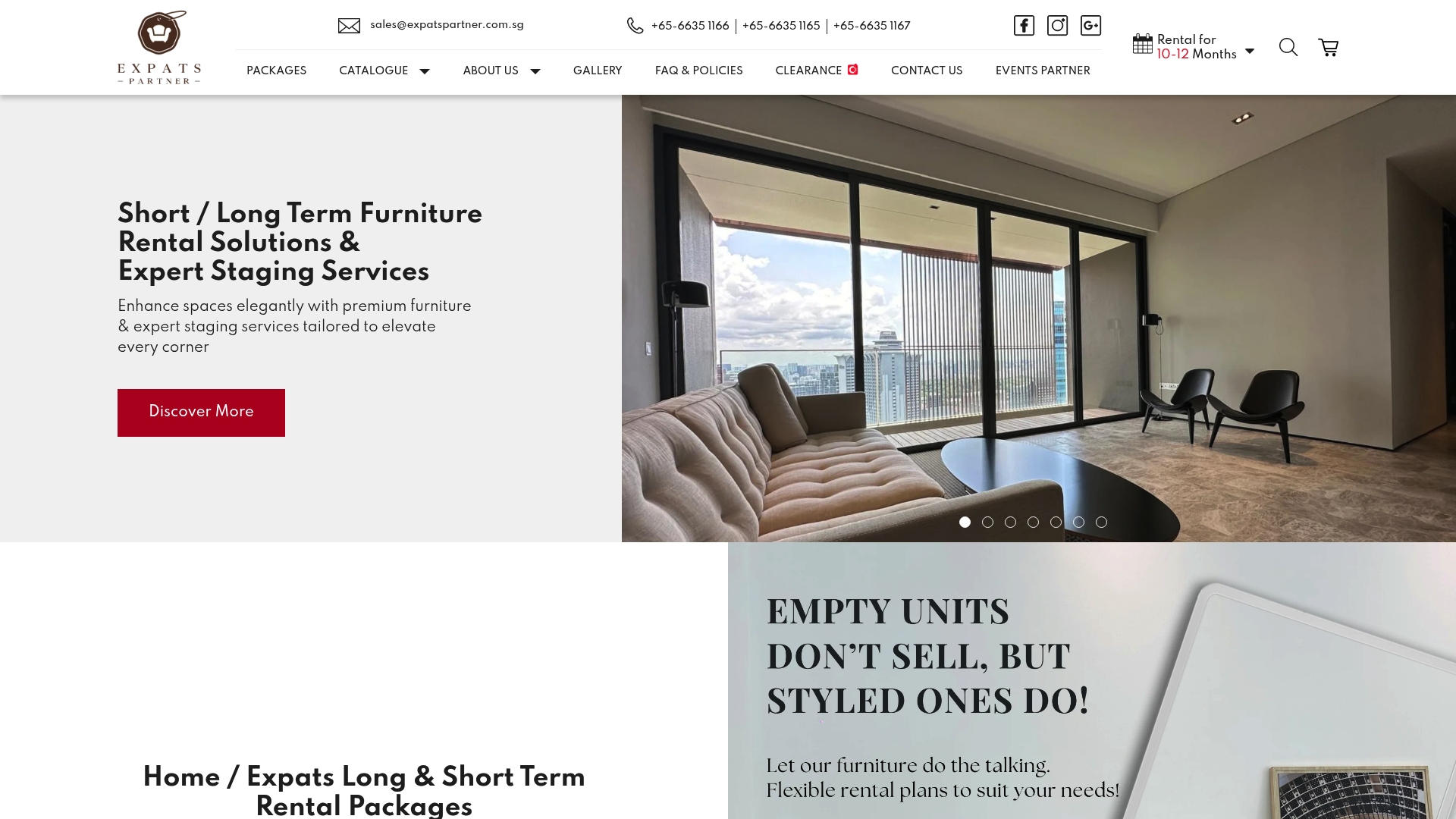
Expats Partner provides home staging in Singapore for condos, landed homes, and apartments, with flexible short-term furniture rental options that make staging practical and cost-effective. Whether you need a full-home package or just the key rooms furnished for viewings, Expats Partner delivers, sets up, and collects everything with clear pricing and reliable logistics. Speak to the team today to get your vacant unit viewing-ready.
FAQ
Why do empty homes sell for less than furnished ones?
Vacant homes sell for 6% to 10% less because buyers struggle to connect emotionally with unfurnished spaces and focus instead on visible defects. Staging restores perceived value by creating warmth, spatial clarity, and lifestyle appeal.
Does staging really help buyers visualise a property?
Yes. 83% of buyers’ agents confirm that staging significantly helps buyers picture a property as their future home. Only around 10% of buyers can accurately visualise an empty space without furniture as a reference point.
What are the risks of leaving a home vacant while selling?
Vacant properties face holding costs, security risks, and the possibility of appraisal failure if utilities are disconnected. Leaving utilities off prevents appraisers from verifying HVAC, plumbing, and electrical systems, which can result in loan rejection for buyers.
Is furniture rental a practical option for staging in Singapore?
Short-term furniture rental is one of the most practical staging solutions for Singapore homeowners and landlords. It provides viewing-ready furnishings without the cost of purchasing, storing, or disposing of furniture after the sale.
How long does it take to stage an empty Singapore condo?
Most staging projects for a standard Singapore condo take between two and seven days, depending on the size of the unit and the scope of furnishing required. Working with a provider who holds real inventory in Singapore reduces lead times considerably.