
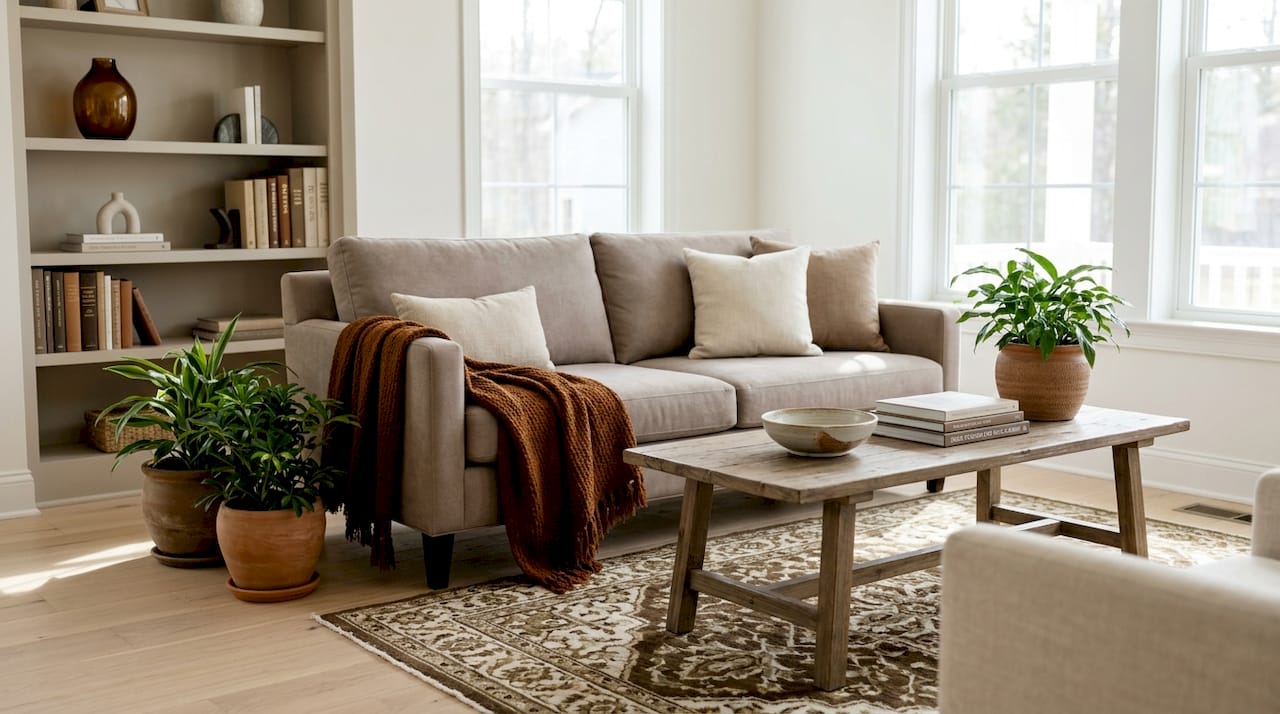
Home staging is the strategic presentation of a property to maximise its appeal to buyers, and it is one of the most reliable ways to sell faster and at a higher price. The practice goes well beyond tidying up. It involves depersonalising and neutralising the environment so that buyers can picture their own lives in the space rather than seeing yours. Industry data shows that staged homes sell up to 73% faster and receive offers 1 to 5% higher than unstaged properties. That is a meaningful financial return for what is often a modest upfront investment.
What does home staging for selling a house actually involve?
Property staging, as it is known in the industry, is distinct from interior design. Interior design reflects the owner’s personality. Staging, by contrast, removes personality from the equation entirely. The goal is a clean, calm, and broadly appealing space that photographs well and holds up in person.
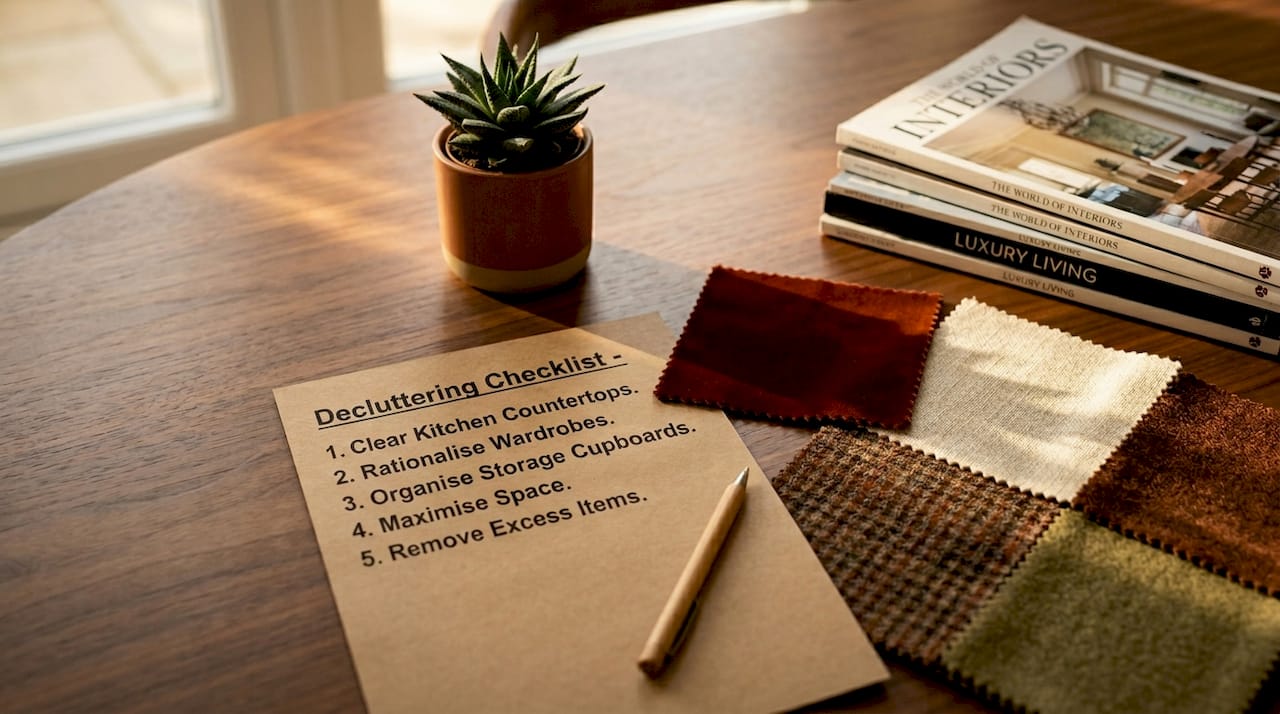
The National Association of Realtors describes staging as a photos-first merchandising strategy. Most buyers form their first impression online, which means every room must read clearly and attractively in a photograph before it ever earns a viewing. A stager typically asks sellers to pack away personal photos, toiletries, medicines, and valuables, and to remove excess furniture to improve room flow. What remains should feel spacious, light, and easy to imagine living in.
A well-staged home also signals care and maintenance to buyers, which increases their confidence and willingness to offer higher prices. Buyers interpret a tidy, well-presented property as one that has been looked after. That perception alone can shift the negotiation in your favour.
How to stage your home: the preparation checklist
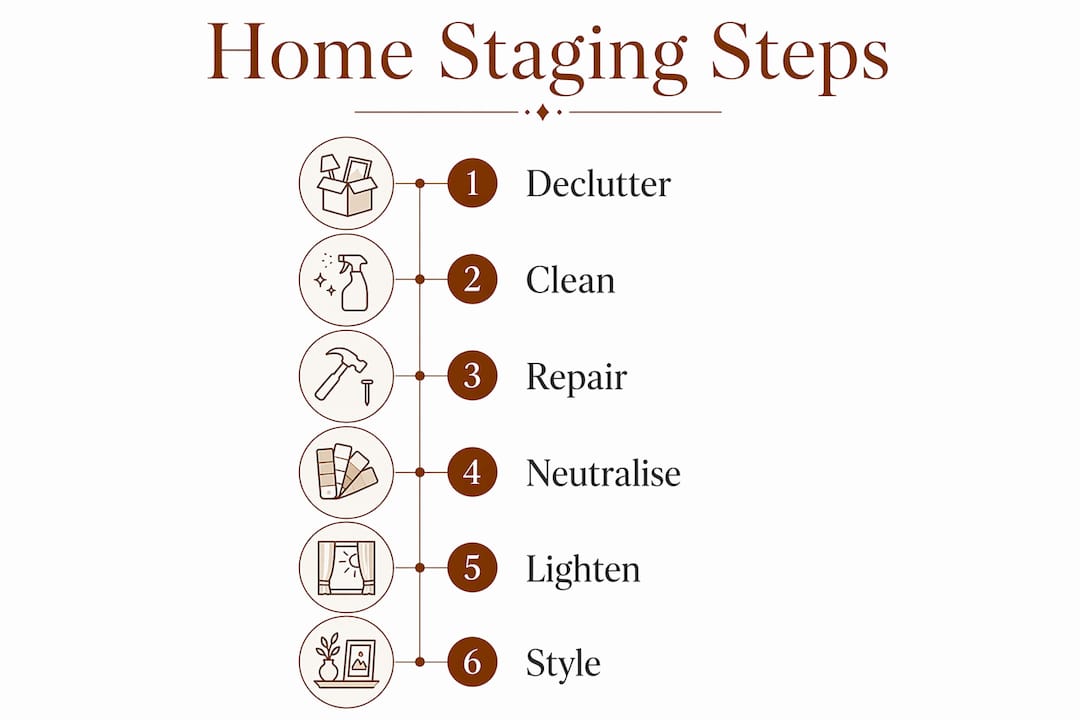
Effective staging begins with preparation, not decoration. Before you introduce any new accessories or rearrange furniture, the following tasks must be completed.
| Task | What to do |
|---|---|
| Declutter every room | Remove excess furniture, personal items, and anything that crowds surfaces or walkways |
| Depersonalise | Pack away family photos, collections, religious items, and political displays |
| Deep clean | Clean windows, skirting boards, grout, and appliances to a professional standard |
| Neutralise colour | Repaint bold or unusual walls in warm white, soft grey, or pale greige tones |
| Fix minor faults | Repair leaking taps, squeaky doors, cracked tiles, and scuffed paintwork |
| Improve lighting | Replace dim bulbs with brighter LED options; aim for warm-toned light throughout |
| Enhance kerb appeal | Tidy the garden, clean the front door, and add a simple potted plant or two |
These steps form your home staging checklist before any styling begins. Skipping them and going straight to accessories is one of the most common mistakes sellers make.
Pro Tip: Lighting improvements make a disproportionate difference to how rooms photograph. Approximately 100 watts per 50 square feet is a practical lighting benchmark for rooms to look inviting and spacious in listing photos.
Good kerb appeal is worth particular attention. Buyers often do a drive-by before booking a viewing. A clean, well-maintained exterior sets the expectation that the interior will match.
How to stage each room to appeal to buyers
Room-by-room staging is where the real work happens. Each space has a specific role to play in the buyer’s mental walkthrough, and each one needs to deliver a clear, positive impression.
- Living room. Arrange furniture to create a natural conversation area with clear sightlines to the main focal point, whether that is a fireplace, a window, or a feature wall. Remove any pieces that block natural light or make the room feel crowded. Add a simple throw and two coordinating cushions for warmth without clutter.
- Kitchen. Clear all worktops except for one or two considered items such as a coffee machine or a bowl of fresh fruit. Clean appliances, replace worn cabinet handles if the budget allows, and add a small plant or fresh flowers. Buyers spend significant time assessing kitchens, so cleanliness here is non-negotiable.
- Bathrooms. Remove all personal toiletries and replace them with a small set of matching white towels and a single candle or plant. Clean grout, re-seal around the bath if needed, and replace any discoloured accessories. A bathroom that reads as spa-like rather than lived-in commands more attention.
- Bedrooms. Use neutral bedding in white or soft linen tones. Remove personal items from bedside tables and wardrobes. Closets should appear half full, not packed to capacity, because buyers read storage space visually through the doorway. A half-full wardrobe signals that the home has adequate storage.
- Entryway and hallway. This is the first interior space a buyer experiences. Keep it clear, add a mirror to reflect light, and use a simple console table with a single decorative item. Mirrors are particularly effective here because they help buyers visualise themselves in the home and make narrow spaces feel larger.
- Storage areas. Garages, utility rooms, and loft hatches are inspected more often than sellers expect. Keep them tidy, well-lit, and organised. A chaotic storage area suggests the rest of the home may have hidden problems.
Pro Tip: Neutral decor does not have to feel clinical. A single vase of fresh flowers, a stack of books in coordinating colours, or a textured rug adds warmth without introducing personal taste that could alienate buyers.
Common home staging mistakes and how to avoid them
Even well-intentioned staging efforts can fall short. The following mistakes are the most common, and each one is avoidable with a little planning.
- Overcrowding with furniture. More furniture does not make a room feel more valuable. It makes it feel smaller. Remove at least one piece from every room and assess whether the space breathes better without it.
- Neglecting high-traffic areas. Hallways, kitchens, and bathrooms receive the most scrutiny. Neglecting cleanliness in these areas undermines the impression created elsewhere.
- Using bold or polarising decor. Strong colours, unusual artwork, and heavily themed rooms narrow your buyer pool. Neutral, broadly appealing decor keeps the focus on the property itself.
- Failing to maintain staging between showings. Staging is not a one-time event. Making beds and clearing counters before every showing preserves the presentation quality that earns offers.
- Staging around personal furniture that does not work. Trying to integrate dated, bulky, or mismatched personal items often creates a cluttered appearance. Replacing or editing furniture rather than working around it consistently produces better results.
“Staging is not about making a home look expensive. It is about making it look cared for, spacious, and easy to imagine living in.”
Pro Tip: Create a pre-showing checklist and pin it to the inside of a kitchen cupboard. Include tasks such as opening blinds, switching on lamps, removing pet items, and placing fresh hand towels in bathrooms. Running through it takes ten minutes and protects weeks of staging effort.
When to hire a professional stager
Professional staging is worth considering when the property has been sitting on the market without offers, when it is vacant and needs furniture to feel liveable, or when the asking price is high enough that a 1 to 2% increase in sale price would comfortably cover the cost. For occupied homes, a professional consultation followed by DIY implementation is often the most cost-effective route.
What does home staging cost, and how should you budget?
The cost of staging varies considerably depending on the level of service, the size of the property, and the location. The table below summarises typical price ranges in the UK.
| Service type | Typical cost range |
|---|---|
| Initial consultation | £150 to £400 |
| Partial staging (key rooms only) | £500 to £1,500 |
| Full styling with existing furniture | £800 to £2,500 |
| Full styling with furniture hire | £1,200 to £8,000 |
| Virtual staging (digital only) | £75 to £300 per room |
Staging in the UK averages around £1,500, which represents roughly 0.3% to 1% of the sale price for most properties. Full styling with furniture hire can exceed £5,000 in London, where property values and buyer expectations are both higher.
Virtual staging is a cost-effective alternative for vacant properties. A professional edits listing photos to show furnished rooms digitally, which helps buyers visualise the space without the cost of physical furniture hire. The limitation is that the property will still appear empty during in-person viewings, which can feel disappointing after the listing photos.
Pro Tip: If budget is limited, prioritise the living room, kitchen, and master bedroom. These three rooms carry the most weight in buyer decision-making and deliver the strongest return on staging investment.
For sellers in Singapore, furniture rental offers a practical middle ground between full professional staging and DIY. Renting furniture for the staging period avoids the cost of purchasing pieces you will not need after the sale, and it gives you access to staging-ready furniture that is selected for visual appeal rather than personal preference.
Our perspective on staging a home to sell effectively
From Expats Partner:
After working with landlords, agents, and homeowners across Singapore, one pattern stands out clearly. The sellers who achieve the best results are not always those who spend the most on staging. They are the ones who treat staging as an ongoing discipline rather than a one-time preparation.
The most common oversight we see is sellers who stage beautifully for the first viewing and then let standards slip. By the third or fourth showing, the kitchen surfaces are cluttered again, the beds are unmade, and the careful lighting setup has been ignored. Buyers who visit later in the marketing period receive a different experience from those who visited first. That inconsistency costs offers.
We also see sellers struggle with the emotional side of depersonalising. It can feel strange to pack away the things that make a home feel like yours. But the goal during the selling period is not to live in your favourite version of the home. It is to present the version that appeals to the widest possible range of buyers. Those two things are rarely the same.
One approach that works well for occupied homes is to stage in layers. Start with the rooms buyers see first and spend most time in. Get those right before moving to secondary spaces. This makes the process feel manageable and keeps the home liveable during what can be a stressful period.
Finally, do not underestimate the value of professional furniture for vacant properties. An empty room is genuinely harder for most buyers to assess than a furnished one. Rented furniture, chosen specifically for staging rather than personal use, gives buyers the spatial context they need to make a confident decision. You can read more about choosing the right staging duration depending on your market conditions and timeline.
— Expats Partner
Stage your property with confidence using Expats Partner
If you are preparing a property for sale and want professional results without the complexity of sourcing and managing furniture yourself, Expats Partner can help.
Expats Partner provides home staging and furniture rental solutions in Singapore, with flexible rental terms, real inventory, and reliable delivery and setup support. Whether you need a full-home furniture package for a vacant property or selected pieces to complete a partially furnished space, the service is designed to make your property viewing-ready without unnecessary cost or complication. Explore the options and find a solution that fits your timeline and budget.
Key takeaways
Staged homes sell faster and for more money because they allow buyers to visualise themselves in the space, signal care and maintenance, and photograph well for online listings.
| Point | Details |
|---|---|
| Staging accelerates sales | Staged homes sell up to 73% faster and attract offers 1 to 5% higher than unstaged properties. |
| Preparation comes before styling | Decluttering, deep cleaning, and neutralising colour must happen before any decorative staging begins. |
| Room-by-room approach matters | Prioritise the living room, kitchen, and master bedroom for the strongest return on staging effort. |
| Ongoing upkeep is non-negotiable | Staging must be maintained before every showing; a pre-showing checklist protects your presentation. |
| Budget can be managed flexibly | Furniture rental is a practical option for vacant properties, avoiding the cost of purchasing staging pieces outright. |
FAQ
What is the difference between home staging and decorating?
Home staging is the process of preparing a property for sale by depersonalising and neutralising the space to appeal to the widest range of buyers. Decorating reflects the owner’s personal taste and is not designed with buyer perception in mind.
How much does home staging cost in the UK?
Staging costs in the UK average around £1,500, with basic consultations starting at £150 and full styling with furniture hire ranging from £1,200 to £8,000 depending on property size and location.
Does home staging actually make a difference to sale price?
Industry data shows staged homes receive offers 1 to 5% higher than unstaged properties and sell up to 73% faster, making staging one of the most cost-effective preparations a seller can make.
Should I stage my home if it is already furnished?
Yes. Staging an occupied home involves editing and depersonalising existing furniture rather than replacing it entirely. Removing excess pieces, packing away personal items, and neutralising decor can significantly improve buyer perception without requiring new furniture.
How do I maintain staging during the selling period?
Create a pre-showing checklist covering tasks such as making beds, clearing surfaces, opening blinds, and switching on lamps. Running through it before every viewing takes under fifteen minutes and preserves the quality of your initial staging effort.