
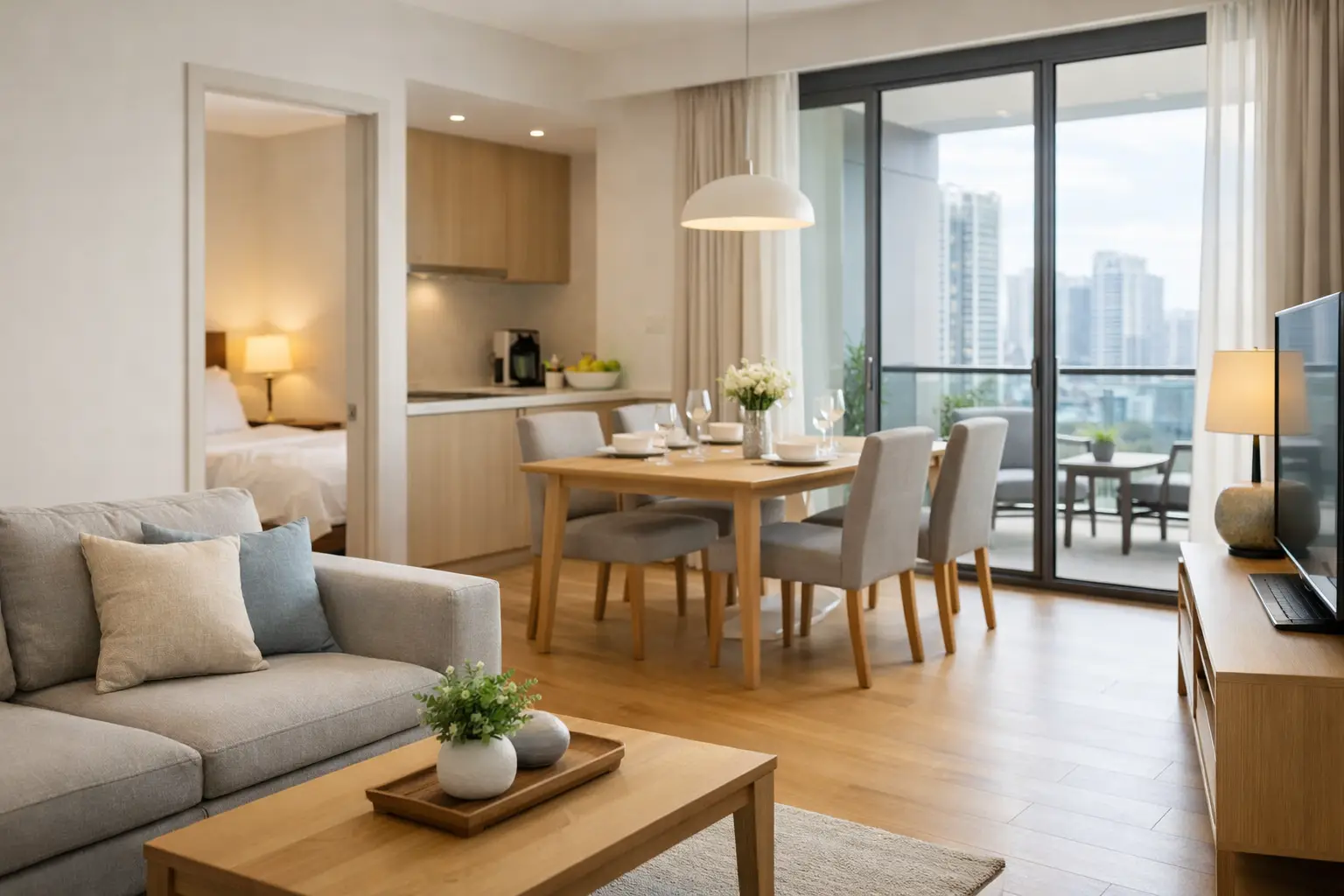
An empty Singapore flat can look straightforward on a floor plan, but furnishing it for an incoming tenant involves dozens of decisions: what will fit, what is genuinely needed, when it must arrive and who will manage the setup. Knowing how to furnish expatriate flats means balancing a welcoming first impression with practical, flexible choices that suit a temporary stay.
For landlords, agents and relocation teams, the goal is rarely to create a highly personal home. It is to prepare a clean, comfortable and well-organised space that helps a prospective tenant picture daily life from the first viewing.
Start with the tenancy, not the furniture
The right furnishing plan depends on the expected tenant profile and lease term. A one-bedroom city-fringe condominium aimed at a single professional needs a different approach from a three-bedroom family home near an international school. Before choosing a sofa or dining table, clarify who is most likely to live there, how long they may stay and whether the property will be marketed as fully or partially furnished.
A fully furnished expatriate flat should cover everyday living without making the tenant feel as though they are staying in a serviced apartment. The essentials normally include living-room seating, a dining setting, beds and mattresses, bedroom storage, basic lighting and functional window coverings where needed. Depending on the property and landlord’s offering, this may also extend to appliances, kitchen equipment and home-office furniture.
It helps to distinguish between essential items and personal additions. A comfortable bed, sensible storage and a usable dining area are essential. Decorative cushions, wall art and occasional tables help photographs and viewings, but they should support the room rather than fill it. This keeps the property appealing to a wider range of nationalities, lifestyles and household sizes.
How to furnish expatriate flats for the local market
Singapore tenants often expect a flat to be ready to use soon after key collection. Time matters, particularly when a new role, school term or relocation schedule has already been fixed. A furnishing plan should therefore begin with measurements, access arrangements and a clear installation date.
Plan for the actual room dimensions
A generous-looking sofa can quickly make a compact condominium living room feel narrow. Measure wall lengths, door clearances, lift dimensions and the route from loading bay to unit before furniture is selected. This avoids costly last-minute substitutions and protects the flow of the home.
Leave clear walking routes between the entrance, seating area, dining table and balcony. In bedrooms, allow room to open wardrobes and move around the bed comfortably. A room that is slightly less furnished but easy to navigate will usually feel more spacious and more liveable.
For listings, each room should also have an obvious purpose. A spare bedroom might be set up as a guest room, nursery or study depending on the likely tenant. If the room is compact, a desk and chair may be more useful than trying to force in a second bed. Clear space planning gives prospective tenants fewer questions and makes listing photographs easier to understand.
Choose a neutral, durable base
Neutral does not have to mean characterless. A foundation of warm whites, soft greys, timber finishes and restrained upholstery tends to work well across different property styles. It also photographs clearly in natural light and allows the tenant’s own belongings to settle into the space.
Durability matters just as much as appearance. Select dining chairs that are easy to clean, occasional tables with stable surfaces and upholstered seating in practical fabrics. Rental furniture needs to cope with regular use, lorry deliveries, moves and collection. Well-maintained pre-owned pieces can be a sensible, more sustainable choice where the condition and style are right; new items may be preferable for particular requirements or a higher-end positioning.
Avoid overfilling rooms with decorative pieces that have no useful purpose. A few thoughtful accessories, such as a rug, lamp, cushions and simple artwork, can make a flat feel settled. Too many accessories create visual clutter and give the tenant more items to manage at the end of a lease.
Put comfort before decoration
Expatriates arriving in Singapore are often adapting to a new climate, work routine and neighbourhood. The small practical details make a furnished property more appealing than a showpiece that looks good only in photos. Prioritise supportive mattresses, sufficient wardrobe capacity, blackout curtains or blinds in bedrooms, practical bedside tables and adequate task lighting.
Air-conditioning, ceiling fans and natural ventilation also influence furniture placement. Do not block airflow with oversized cabinets or position a desk where glare makes it difficult to work. If the property attracts professionals who work from home, a compact desk, a supportive chair and accessible power points can be a stronger selling point than additional decorative furniture.
Build the furniture package room by room
The living room should offer somewhere to sit, eat and relax without becoming crowded. In many Singapore flats, a two- or three-seater sofa, coffee table, television console and modest dining set are sufficient. If space allows, add an armchair or side table rather than another bulky sofa.
In the main bedroom, invest in the elements tenants use every day: a suitable bed frame, quality mattress, bedside tables and storage. A mirror can be useful where there is no dressing area, while a table lamp softens the room for evening use. Secondary bedrooms should remain flexible. A queen or single bed arrangement depends on the likely household, but it is usually wise to avoid furnishing every room identically.
The dining area deserves more attention than it sometimes receives. It is where tenants work, host friends and manage family routines. Choose a table that seats the expected household but still leaves room to pass behind chairs. Extendable tables can work well in larger flats, although a simple fixed table is often easier to maintain for a standard rental package.
Decide whether to rent or buy
Buying furniture may suit a landlord with a stable, long-term strategy and a clear understanding of the property’s tenant market. It offers ownership and can be worthwhile where the same furniture will remain in place over several tenancies. However, it also requires upfront capital, storage for replacements, repair coordination and a plan for outdated or damaged pieces.
Furniture rental is often more practical when speed, flexibility and budget control are priorities. It allows landlords to prepare a vacant unit without committing to a full purchase, while relocation clients can set up a temporary home without accumulating furniture they will later need to sell or ship. Delivery, installation and collection can also be handled as part of one coordinated service.
The better option depends on the expected length of use, desired quality level and how much operational work the owner wishes to take on. For a landlord testing the furnished market or an agent preparing a unit quickly for viewings, rental can reduce both delay and decision fatigue.
Treat installation as part of the furnishing plan
Furniture is only one part of a move-in-ready property. Confirm lift bookings, building management requirements, delivery access and whether the unit needs cleaning before installation. Appliances should be tested, beds assembled securely and packaging removed before the tenant or viewing party arrives.
Once the flat is furnished, inspect it as a tenant would. Stand at the entrance and look at the first sightline. Sit at the desk, open the wardrobe, walk around the bed and check whether dining chairs can be pulled out easily. This final check often reveals issues that are not obvious from a furniture layout alone.
For agents, schedule professional photographs only after the setup is complete. Straight cushions, working lamps, open curtains and clear surfaces can make a meaningful difference to how the listing reads online. The aim is not to make the home look untouchable. It should look ready for someone to live there.
Keep an inventory and plan for change
A clear inventory protects everyone. Record the condition of each item, include photographs where useful and state which pieces belong to the property. This makes handover, maintenance and eventual collection far simpler.
It is also worth planning for reasonable changes. A family may need an extra bed, while a corporate tenant may require a work desk. Flexible packages make these adjustments easier without requiring the landlord to start again. Expats Partner can coordinate furniture selection, delivery, setup and collection for clients who need a practical furnishing arrangement without the burden of purchasing and managing every item.
A well-furnished expatriate flat does more than fill empty rooms. It reduces friction at move-in, presents clearly in photographs and gives the next tenant confidence that the home will support everyday life from day one.