
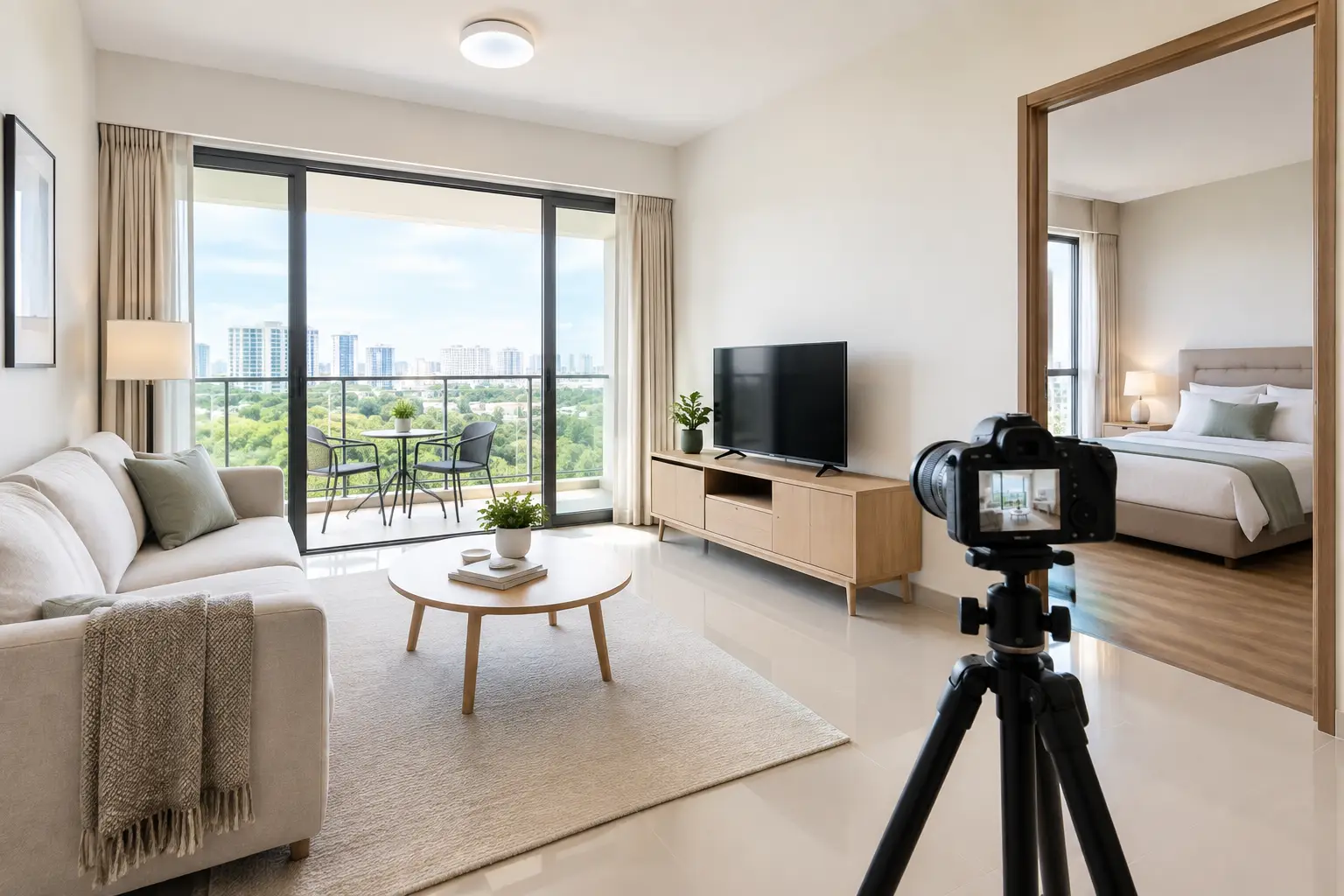
A buyer scrolling through property portals will make a quick decision about whether to enquire. If the first image shows a dark living room, crowded surfaces or an empty space with no sense of scale, the listing may be passed over before they read the details. Knowing how to prepare listing photographs is therefore not just about taking neat pictures. It is about helping buyers and tenants understand the home quickly and imagine how it could suit their lives.
For agents, homeowners and landlords in Singapore, good preparation also makes photography day less stressful. The work is done before the photographer arrives: rooms are edited, furniture is positioned with purpose, and the property feels calm rather than rushed. The result should look welcoming and realistic, not overly styled or unlike the home a viewer will see in person.
Start with the listing, not the camera
Before moving a cushion or opening a curtain, be clear about who the property is likely to appeal to. A compact city-fringe condominium may suit a professional couple who value a practical work area and easy entertaining. A larger landed home may need to show family living, storage and usable outdoor space. The photographs should make those strengths easy to spot.
Walk through the property as if you are seeing it for the first time. Identify the images a buyer needs to understand: the living and dining area, bedrooms, kitchen, bathrooms, balcony or garden, and any useful features such as a study nook, built-in storage or an open view. Not every corner needs a photograph. A long sequence of near-identical shots can make a listing feel less considered.
At this stage, address anything that will distract in a photograph. Replace failed light bulbs, straighten loose curtain tracks, remove delivery cartons and deal with obvious maintenance issues. Small details matter because a camera notices what the eye can often overlook.
Declutter so each room has a clear purpose
Clutter is one of the fastest ways to make a property look smaller. It can also make buyers wonder whether there is enough storage. The aim is not to remove every sign of life, but to reduce visual noise so the room, light and layout remain the focus.
Clear kitchen worktops of appliances, cleaning products, dish racks and packaging. In bathrooms, put away toiletries, laundry baskets and personal towels. Remove magnets and notes from the fridge, family photographs from prominent surfaces, and personal paperwork from desks. Shoes, pet items and charging cables should also be out of sight.
Be selective with furniture as well. A room filled with large pieces may feel cramped even when its floor area is generous. Conversely, a completely vacant room can be difficult to read online. Buyers may struggle to judge whether a bedroom fits a proper bed or whether the living area can hold both seating and dining.
A simple furniture arrangement provides scale and makes the intended use of the space clear. In an empty property, short-term furniture rental and staging can be a practical option, especially when the sale or letting period is uncertain. It gives the home enough structure for photographs and viewings without requiring the owner to purchase furnishings that may not be needed later.
Prepare listing photographs with practical staging
Staging for photographs is less about decoration than visual clarity. Each room should have one obvious purpose, a comfortable pathway and a focal point. In a living room, that may be a well-proportioned sofa facing a coffee table, with a rug that defines the seating zone. In a bedroom, it may be a made bed with simple bedside tables and enough clear floor around it to show the room’s dimensions.
Choose neutral, well-maintained furniture that suits the property rather than competing with it. A small flat benefits from pieces with lighter visual weight and sensible spacing. A large home may need furniture that prevents rooms from looking echoing or underused. There is no single formula: the right amount depends on the size, condition and likely market of the property.
Accessories should be restrained. A few cushions, a plant, a table lamp and neatly folded towels can soften a room. Too many ornaments, artificial flowers or themed decorations can date the photographs and draw attention away from the home itself. If an item does not improve proportion, warmth or function, it can usually be removed.
Pay particular attention to the dining table and balcony. A bare dining table can look unfinished, while a crowded one looks impractical. A simple setting or a small centrepiece is often enough. On a balcony, clean the floor, arrange seating so the view is visible and remove stored items. Outdoor space is valuable in Singapore listings, but it needs to look usable.
Make light work for the camera
Singapore’s daylight can be bright, but strong sun and deep shadows can be difficult to photograph. Schedule the shoot at a time when the property receives balanced natural light. This may mean morning for one unit and later afternoon for another, depending on its orientation, surrounding buildings and window treatments.
Open curtains and blinds fully where privacy allows. Clean glass doors and windows, as marks and haze show clearly in photographs. If the view is attractive, frame it as part of the room. If a nearby block is close, use furnishings and camera angle to keep the interior as the main point of interest without trying to hide the reality of the outlook.
Turn on the lights that add warmth and evenness, including lamps in darker corners. However, avoid mixing too many different bulb colours. A room with cool white ceiling lights and strongly yellow lamps can look uneven. Where possible, use matching bulbs and check that every fitting is working before photography begins.
Avoid relying on heavy editing to fix poor light. Over-brightened images can make walls, windows and views look unnatural, while excessively dark images lose detail. Buyers should arrive at a viewing feeling that the property is recognisable from the listing, not disappointed by a large difference.
Clean for close-up details
A property can be generally tidy and still look neglected in photographs. Camera lenses pick up water marks on taps, dust on dark shelves, fingerprints on glass and creased bed linen. A focused final clean is worthwhile, particularly in kitchens and bathrooms where buyers tend to look closely.
Wipe mirrors, shower screens, appliances and glossy cabinet fronts. Close toilet lids, hang fresh towels neatly and ensure bins are empty. In bedrooms, use plain, smooth bedding that fits correctly. In living areas, plump cushions, align chairs and straighten rugs so their edges sit neatly.
Do not forget the entrance. This is often the first image a viewer sees when arriving in person, and it sets the tone for the rest of the visit. Remove umbrellas, parcels and excess footwear from the doorway. If there is a shared corridor or lift lobby immediately outside, make sure the route into the home is clear and presentable where possible.
Plan the photography day carefully
Preparation works best when someone takes ownership of the final check. Ideally, the agent, homeowner or staging team walks through the property shortly before the photographer arrives. Switch off televisions and computer monitors, conceal remote controls, close cupboard doors and check that curtains are even. Air-conditioners should be set to a comfortable temperature for the team, but avoid directing visible airflow at lightweight curtains or table settings.
Pets should be elsewhere during the shoot, along with pet bowls, litter trays and beds. If the property is occupied, agree in advance which personal items will be packed away and where they will be stored. This prevents rushed decisions when the photographer is already on site.
Ask the photographer to capture a balanced set of wide room views and detail images. Wide shots explain layout, while selected close-ups can show quality finishes, a pleasant view or an appealing lifestyle feature. Perspective should remain honest. Very wide lenses can make rooms appear larger, but images that feel distorted may create the wrong expectation for viewings.
Keep photographs aligned with the viewing experience
Listing images do their best work when they lead to confident, well-matched enquiries. That means presenting the property at its best without concealing its character, limitations or condition. If a second bedroom is compact, show it furnished as a study or child’s room rather than implying it comfortably holds a large double bed. If renovation is needed, clean and simplify the space so buyers can assess its potential clearly.
The same standard should continue through viewings. Keep staged furniture and accessories in place, maintain the cleaning routine and return loose items to their planned storage areas. A prepared home feels easier to market because every photograph, description and viewing tells a consistent story.
For vacant, cluttered or time-sensitive properties, Expats Partner can coordinate furniture, styling, delivery and collection so agents and owners can focus on the listing itself. The right preparation does not need to be complicated. It simply gives each room enough order, light and purpose for the next buyer or tenant to picture themselves walking through the door.