

Refreshing a landed home before selling is defined as the process of cleaning, decluttering, carrying out minor repairs, and styling a property to maximise its appeal to prospective buyers. In Singapore’s competitive landed property market, a well-prepared home consistently attracts stronger offers and shorter selling timelines. This guide covers the key areas to prioritise, how to declutter and depersonalise effectively, what deep cleaning and repairs to carry out, and how selective property staging can make a measurable difference to your sale outcome.
What key areas should you prioritise when refreshing your landed home?
The five highest-ROI refresh areas before selling are fresh neutral paint, deep cleaning, floor care, curb appeal improvements, and decluttering. Each of these directly shapes a buyer’s first impression, which is formed within seconds of entering a space or viewing a listing photograph.
For landed homes in Singapore, the following zones deserve your closest attention:
- Entryway and front gate. This is the first physical space a buyer encounters. Clean the gate, repaint the front door if needed, and replace any tarnished door hardware.
- Living room. Buyers spend the most time here during viewings. Remove oversized furniture, clear shelving, and use neutral tones to make the space feel open and calm.
- Kitchen. Wipe down all surfaces, degrease the hob and extractor hood, and clear countertops entirely. A clean kitchen signals a well-maintained home.
- Master bedroom and en suite bathroom. These rooms carry significant emotional weight for buyers. Fresh bedding, clear surfaces, and a spotless bathroom make a strong impression.
- Garden and driveway. Curb appeal is the first visual signal buyers receive, whether in person or through listing photos. Mow the lawn, trim hedges, and pressure-wash the driveway.
Budget-conscious sellers should focus on high-impact zones such as the entrance, living room, and master suite, where small fixes consistently yield the greatest return.
Commonly overlooked areas include gutters, light bulbs, and door hinges. A burnt-out bulb or a squeaking hinge signals neglect to an attentive buyer. Walk through your home as a buyer would and note every small detail that draws attention for the wrong reason.
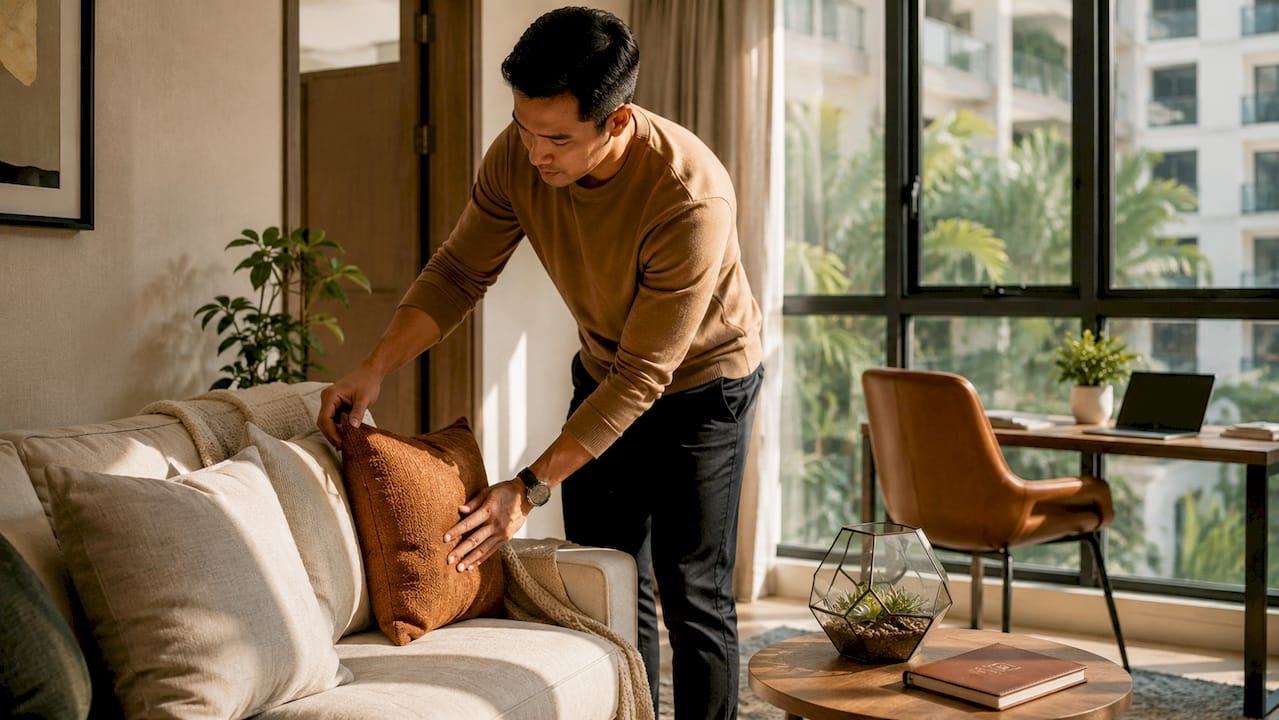
Pro Tip: Replace all light bulbs with warm-white LEDs before viewings. Warm lighting makes rooms feel larger and more welcoming in photographs and in person.
How to effectively declutter and depersonalise your home before selling
Effective decluttering requires removing 30–50% of personal belongings and oversized furniture to help buyers visualise living in the space. This figure surprises many homeowners, but it reflects a clear principle: buyers need to see the home, not the owner’s life inside it.
Follow this sequence to work through the process methodically:
- Start with personal items. Remove family photographs, children’s artwork, religious items, and memorabilia. These are not unwelcoming in daily life, but they create friction for buyers who are trying to picture themselves in the space.
- Edit furniture room by room. Identify any pieces that block natural pathways or make a room feel crowded. Move these to storage rather than another room in the house.
- Clear all horizontal surfaces. Kitchen countertops, bathroom vanities, coffee tables, and bookshelves should be largely empty. A few well-chosen objects are fine; clutter is not.
- Rent a storage unit for overflow. If you have too many belongings to store within the property, a short-term storage rental keeps items off-site and out of sight during the selling period.
- Maintain a show-ready mindset daily. Once the initial declutter is complete, commit to resetting the home each morning. This means making beds, clearing the kitchen sink, and returning items to their designated places.
Effective staging removes personal items and clarifies room functions to reduce buyer hesitation. Depersonalising is not about making a home feel cold. It is about making it feel like a possibility rather than someone else’s story.
Pro Tip: Pack personal items into clearly labelled boxes and stack them neatly in the garage or a storage unit. This also gives you a head start on your eventual move.
Step-by-step guide to deep cleaning and minor repairs
Deep cleaning and minor repairs are the foundation of any credible home refresh. Surface-level tidying is not sufficient. Buyers notice grouting, window tracks, and the condition of caulking around baths and showers.
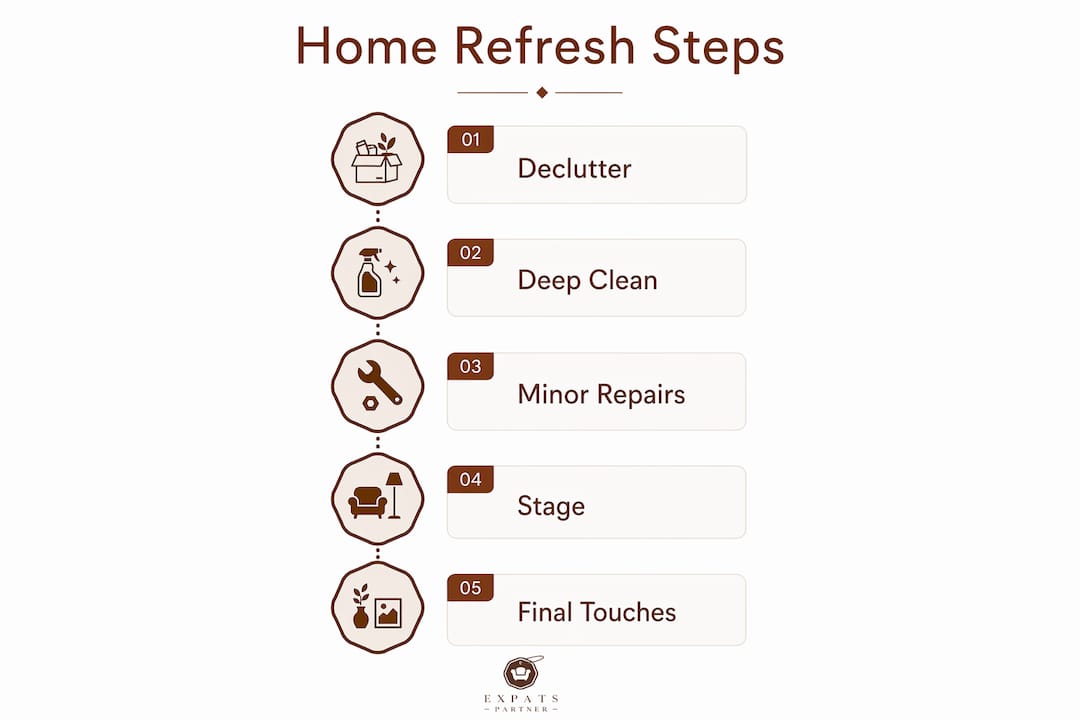
Deep cleaning checklist
Work through each area in this order:
- Carpets and rugs. Hire a professional carpet cleaner or use a hot-water extraction machine. Stained or flat carpets age a home significantly.
- Windows and glass doors. Clean both sides of every pane, including frames and tracks. Natural light is one of the most valued features in a landed home.
- Kitchen cabinets and appliances. Wipe down cabinet fronts, clean inside drawers, and degrease all cooking surfaces. Do not overlook the inside of the oven or the refrigerator if it is being left with the property.
- Bathrooms. Scrub grouting, clean behind the toilet, and descale taps and showerheads. Re-caulking tubs and replacing shower curtains are quick, affordable fixes that significantly improve perceived cleanliness.
- Odour treatment. Persistent smells from pets, cooking, or cigarette smoke require enzyme-based cleaning rather than air fresheners. Enzyme cleaners break down odour-causing compounds at the source. Air fresheners simply mask the problem and can make buyers suspicious.
Minor repairs: a practical checklist
| Repair task | Why it matters |
|---|---|
| Tighten loose door handles and cabinet knobs | Signals attentive maintenance to buyers |
| Re-caulk bathrooms and kitchen splashbacks | Removes visible mould and improves hygiene perception |
| Replace burnt-out or mismatched light bulbs | Ensures consistent, flattering lighting throughout |
| Fix squeaking doors and sticking drawers | Eliminates distractions during viewings |
| Touch up scuffed skirting boards and walls | Freshens the overall appearance without full repainting |
| Repair cracked tiles or loose grout | Prevents buyers from flagging structural concerns |
Minor repairs rarely cost much individually. Collectively, they signal that a home has been looked after, which gives buyers confidence and reduces the likelihood of low offers based on perceived risk.
How does staging and curb appeal boost your home’s marketability?
Staging reduces buyer hesitation by depersonalising a home and defining each room’s purpose clearly. A well-staged home is easier to photograph, easier to imagine living in, and easier to price confidently. For landed homes in Singapore, where buyers are often comparing multiple properties in the same week, a staged home stands apart.
Professional home staging for a property in the 1,800–2,200 sq ft range costs between $2,000 and $5,000, while a DIY approach typically runs $1,500–$3,500 and takes 5–7 days. The right choice depends on your timeline, budget, and the condition of your existing furniture.
Affordable staging options for landed homes
- Use a neutral colour palette throughout. Warm whites and soft greys read well in photographs and appeal to the widest range of buyers.
- Rent furniture for key rooms rather than buying. A rented sofa, dining set, and bed frame for the master bedroom can reframe an empty or poorly furnished home without a long-term commitment.
- Balance lighting with a mix of natural light, ceiling fixtures, and floor lamps. Avoid relying solely on overhead lighting, which can flatten a room.
- Add simple, considered accessories: a bowl of fresh fruit in the kitchen, white towels folded neatly in the bathroom, and a single plant in the living room.
Curb appeal: what actually makes a difference
| Improvement | Estimated effort | Buyer impact |
|---|---|---|
| Repaint front door in a fresh neutral tone | Low | High |
| Pressure-wash driveway and garden paths | Low | High |
| Trim hedges and mow lawn | Low | Medium |
| Replace letterbox or house number plate | Very low | Medium |
| Add potted plants at the entrance | Very low | Medium |
| Repair cracked boundary wall or gate | Medium | High |
AI virtual staging is now a credible option for listing photographs. It allows sellers to present a furnished version of an empty room digitally, at a fraction of the cost of physical staging. For online listings, this can meaningfully improve click-through rates. Physical staging, however, remains more effective for in-person viewings, where buyers respond to how a space actually feels.
You can read more about why staged homes attract more offers in Singapore’s current market if you are weighing up whether to stage physically or digitally.
Key takeaways
Refreshing a landed home before selling requires a clear sequence of decluttering, deep cleaning, minor repairs, and selective staging to present the property at its best and attract confident buyers.
| Point | Details |
|---|---|
| Prioritise high-impact zones | Focus on the entryway, living room, master bedroom, bathrooms, and garden for the strongest buyer impression. |
| Declutter 30–50% of belongings | Remove personal items and oversized furniture so buyers can visualise the space as their own. |
| Use enzyme cleaners for odours | Air fresheners mask smells; enzyme-based products remove them at the source. |
| Address minor repairs systematically | Fix loose handles, re-caulk bathrooms, and replace bulbs to signal good maintenance. |
| Stage selectively and affordably | Furniture rental for key rooms and a neutral colour palette deliver strong results without full renovation costs. |
Keeping a refreshed home show-ready: our honest view
From our experience working with homeowners and property agents across Singapore, the hardest part of preparing a landed home for sale is not the initial refresh. It is maintaining that standard throughout the selling period.
Daily habits like clearing countertops, making beds, and replacing towels are what keep a home genuinely viewing-ready, not just tidy on the day of a scheduled appointment. Buyers sometimes request same-day viewings. A home that resets quickly is a home that sells more reliably.
We also see sellers over-improve for personal taste rather than market demand. Consulting a licensed real estate agent before listing helps you focus on repairs and updates that actually align with what local buyers value. Not every upgrade adds value. A new kitchen may not recover its cost in a market where buyers intend to renovate anyway.
The most common mistake we observe is treating the refresh as a one-time event. A home that looked excellent on day one of listing can look tired by week three if daily upkeep is not maintained. Build simple habits into your routine: a 15-minute reset each morning, fresh flowers replaced weekly, and surfaces kept clear at all times. These habits cost very little but protect the impression your home makes at every viewing.
— Expats Partner
How Expats Partner can support your home refresh
If you are preparing a landed home for sale in Singapore and need practical staging support, Expats Partner offers home staging and furniture rental solutions designed specifically for residential sellers and landlords.
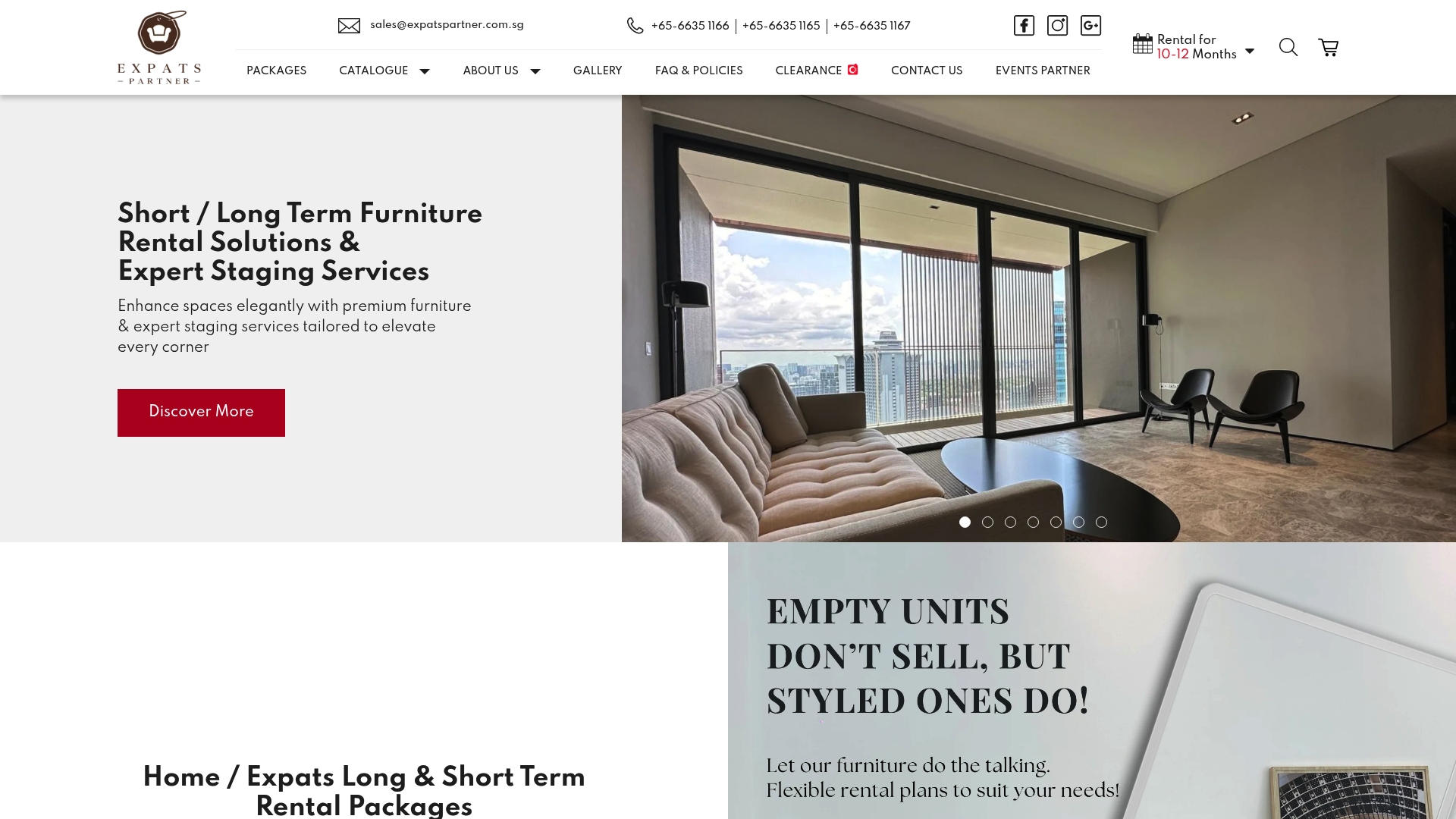
Whether you need furniture for a single room or a full-home package to present an empty property, Expats Partner provides real inventory, transparent pricing, and reliable delivery and collection. There is no need to buy, store, or dispose of furniture after the sale. Our furniture rental options for staged properties are flexible, clearly priced, and available on short-term terms that suit the selling timeline. Contact Expats Partner to discuss your property and get a quote tailored to your needs.
FAQ
What does refreshing a home before selling actually involve?
Refreshing a home before selling covers decluttering, deep cleaning, minor repairs, and selective staging. The goal is to present the property in its best condition to attract buyers and support a strong sale price.
How much does home staging cost for a landed property?
Professional staging for a home in the 1,800–2,200 sq ft range typically costs $2,000–$5,000. A DIY approach using rented furniture and neutral accessories usually runs $1,500–$3,500.
Why are enzyme cleaners recommended over air fresheners?
Enzyme cleaners break down odour-causing compounds at the source, removing persistent smells from pets, cooking, and smoke. Air fresheners only mask odours and can raise buyer suspicion during viewings.
Which rooms should I focus on first when preparing for sale?
Focus first on the entryway, living room, master bedroom, and primary bathroom. These are the rooms that most directly influence buyer perception and where small improvements deliver the greatest return.
Is furniture rental a practical option for staging a landed home?
Yes. Furniture rental allows you to stage key rooms with quality pieces on a short-term basis, without the cost or commitment of purchasing. It is particularly useful for empty properties or homes with dated existing furniture.