
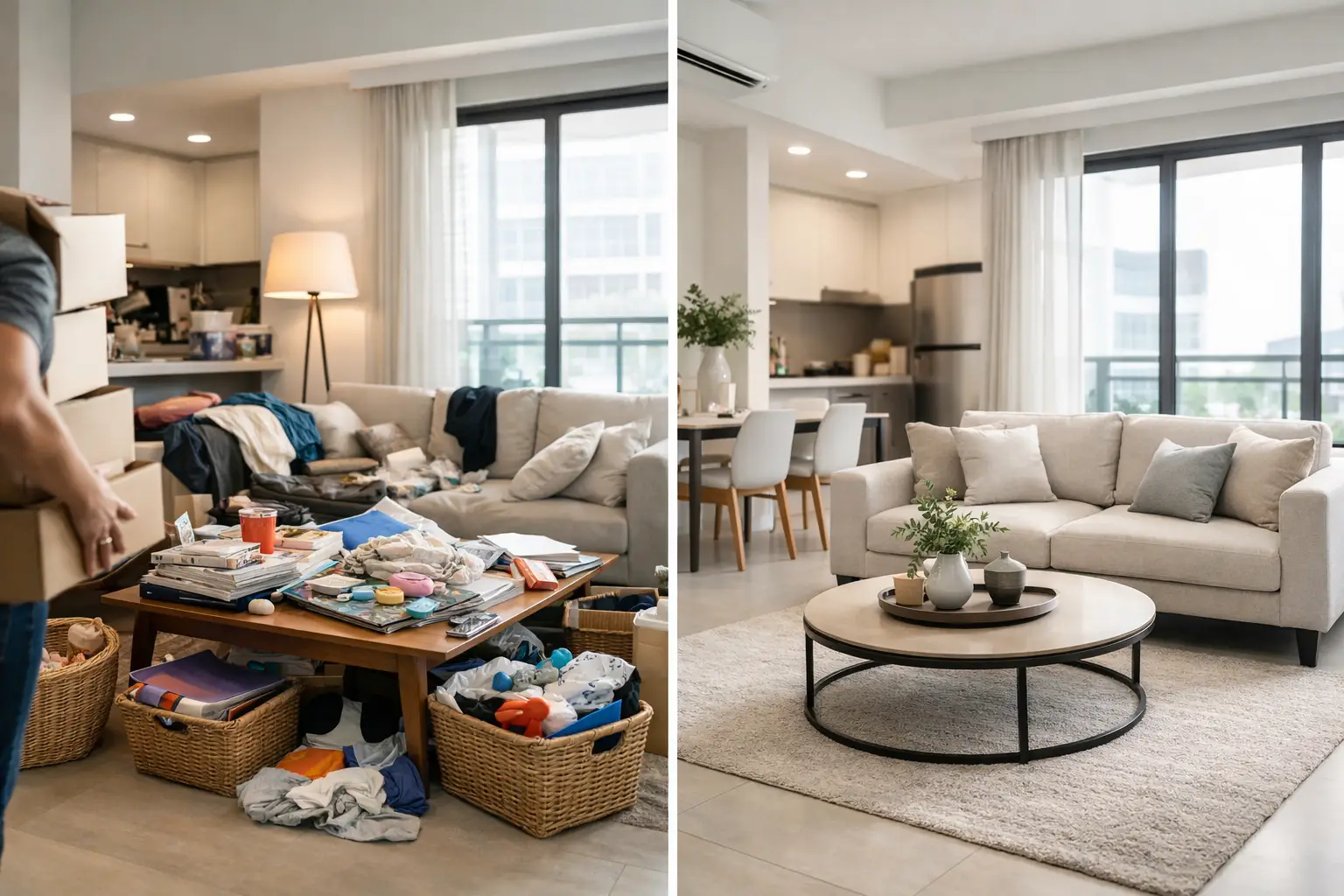
A cluttered home can make even a well-located property feel smaller, darker and harder to understand. Knowing how to stage cluttered homes is not about making a lived-in space look cold or unrealistic. It is about removing visual noise so buyers and tenants can notice the room sizes, natural light, storage potential and layout.
For property agents and homeowners in Singapore, this is often the difference between listing photos that invite enquiries and photos that make viewers scroll past. A home does not need to be empty to present well. It needs to feel orderly, purposeful and easy to imagine living in.
Start with the purpose of each room
Clutter is not always caused by having too much furniture. Often, it comes from rooms trying to do too many jobs at once. A dining table becomes a work desk, storage surface and laundry station. A spare room holds old boxes, exercise equipment and guest bedding. Buyers then have to work too hard to picture the intended use of the space.
Before moving anything, decide what each room needs to communicate. The living room should show comfortable seating and a clear route through the space. The dining area should feel like somewhere people can gather. Bedrooms should feel restful, with enough open floor around the bed to show their scale.
This approach helps you make decisions quickly. If an item does not support the room’s purpose, it should be packed away, relocated or removed for the staging period.
Edit before you add furniture
The most effective staging usually begins with subtraction. Adding cushions, lamps or decorative pieces to an already busy room only creates another layer of distraction. Clear the large surfaces first: coffee tables, dining tables, kitchen counters, television consoles and bedside tables.
Aim for a home that feels used but not overfilled. A bowl on a dining table, a small tray on a coffee table or a neatly placed book can add warmth. Several small objects scattered across every surface will make a room feel cramped in photographs.
Personal items need particular care. Family photographs, children’s artwork, collections, religious items and highly individual décor can make a home feel personal and loved, but they can also stop viewers from connecting with it as their potential home. Pack away most of these items while retaining a few neutral details that make the space feel welcoming.
Focus on the areas buyers notice first
Not every cupboard needs to be emptied, but the areas visible in listing photographs and during a viewing need consistent attention. Prioritise the entrance, living and dining spaces, kitchen counters, main bedroom, bathrooms and balcony. These are the areas that form a buyer’s first impression and often determine whether they can see the home’s potential.
Storage is also part of the presentation. Overstuffed open shelves, wardrobes or shoe cabinets suggest that the property lacks storage, even when that is not true. Where possible, reduce their contents and leave some breathing room. Buyers are assessing daily life as much as décor.
Create clear walking routes and sightlines
A room can contain good furniture and still feel difficult if people cannot move through it comfortably. In compact flats and condominiums, a blocked corridor or crowded doorway can make the whole property feel less practical.
Stand at the entrance to each room and look across it. Can you see a window, a balcony door or a useful feature such as built-in cabinetry? Or does your eye land immediately on a stack of boxes, a clothes airer or the back of a bulky chair? The view into a room should make people want to step further inside.
Move furniture away from doorways and avoid lining every wall with storage pieces. In some homes, removing one oversized armchair or extra side cabinet creates more impact than changing the entire room. The aim is not maximum empty floor space. It is a layout that lets viewers understand the room without weaving around belongings.
Use temporary storage strategically
For an occupied home, decluttering rarely means disposing of everything. Sellers still need their possessions, and many are preparing for a move at the same time. Temporary storage, careful packing and a simple labelling system can make the process much less stressful.
Pack items that are seasonal, duplicated or not needed for the next few weeks. This might include extra kitchen appliances, off-season clothing, hobby supplies, spare chairs, excess toys and paperwork. Keep daily essentials accessible, but contain them in closed storage rather than leaving them on display.
Avoid shifting clutter from one room to another. Filling the study with boxes may clear the living room, but it removes the chance to present a useful home office or guest room. If off-site storage is not practical, focus on reducing volume throughout the home rather than creating one hidden overflow room.
Stage the key rooms with proportion in mind
Once the property is edited, furniture can be used to explain scale and function. This matters particularly in vacant homes, inherited properties and homes where the existing pieces are too large, worn or mismatched.
A modest sofa, correctly sized rug and occasional chair can make a living room feel more considered than a large sectional that dominates the floor. In the dining area, a table set for the room’s proportions helps buyers see how many people it can comfortably accommodate. A bed, bedside tables and soft furnishings make a bedroom’s dimensions easier to read than an empty room ever can.
Neutral, well-maintained furniture tends to work best for property marketing because it appeals broadly and photographs cleanly. That does not mean every room should look identical. A restrained layer of texture through cushions, artwork, greenery and rugs can make the home feel warm without overwhelming its architecture.
When timing is tight, a furniture rental and styling service can provide suitable pieces, delivery, installation and collection after the sale or tenancy period. Expats Partner supports this process with practical staging plans that are designed around the property, its target market and the required viewing schedule.
Prepare for photographs, then check the home in person
Staging for photos and staging for viewings are closely related, but they are not exactly the same. A camera may highlight a busy countertop, harsh lighting or a narrow route that is less obvious in person. Take test photographs from the doorway and corners of each main room before professional photography. If an object draws attention away from the space, remove it.
Natural light is usually the most flattering option. Open curtains and blinds fully, clean windows and switch on selected lamps where a room needs more warmth. Avoid using every ceiling light if it creates glare or uneven colour. Replace failed bulbs and keep bulb tones consistent where possible.
Before each viewing, do a final practical check. Close toilet lids, remove bins, put away pet items, clear drying laundry and make sure shoes are not blocking the entrance. These details may seem small, but together they signal that the property has been cared for.
Know what not to hide
Good staging is not about concealing defects that should be addressed. Water marks, damaged cabinetry, mould, loose fittings and broken lights should be repaired where possible. Covering a problem with furniture may create an awkward viewing and undermine trust when buyers notice it later.
Similarly, do not remove every sign of real life. A property that is excessively bare can feel unwelcoming, particularly in family-oriented homes. The right balance depends on the likely audience. A compact city flat may benefit from a cleaner, simpler look, while a landed home may need a more complete family dining or outdoor setup to help viewers understand how the space can be used.
Give sellers a manageable plan
For agents, the most useful advice is specific and phased. Asking a seller to “declutter” can feel overwhelming. Instead, agree on a short plan: clear visible surfaces first, pack non-essential possessions next, remove oversized pieces, then arrange furniture for photographs and viewings.
A staged approach respects the fact that homeowners are often balancing work, family routines and an upcoming move. It also keeps the property preparation on schedule. If the listing is already receiving limited interest, better presentation can provide a clear reason to refresh photographs and invite buyers to look again.
The goal is not perfection. It is a home that feels calm enough for someone else to picture their own furniture, routines and future there. When rooms have a clear purpose, belongings are contained and furniture supports the layout, the property becomes easier to photograph, easier to view and easier to remember.