
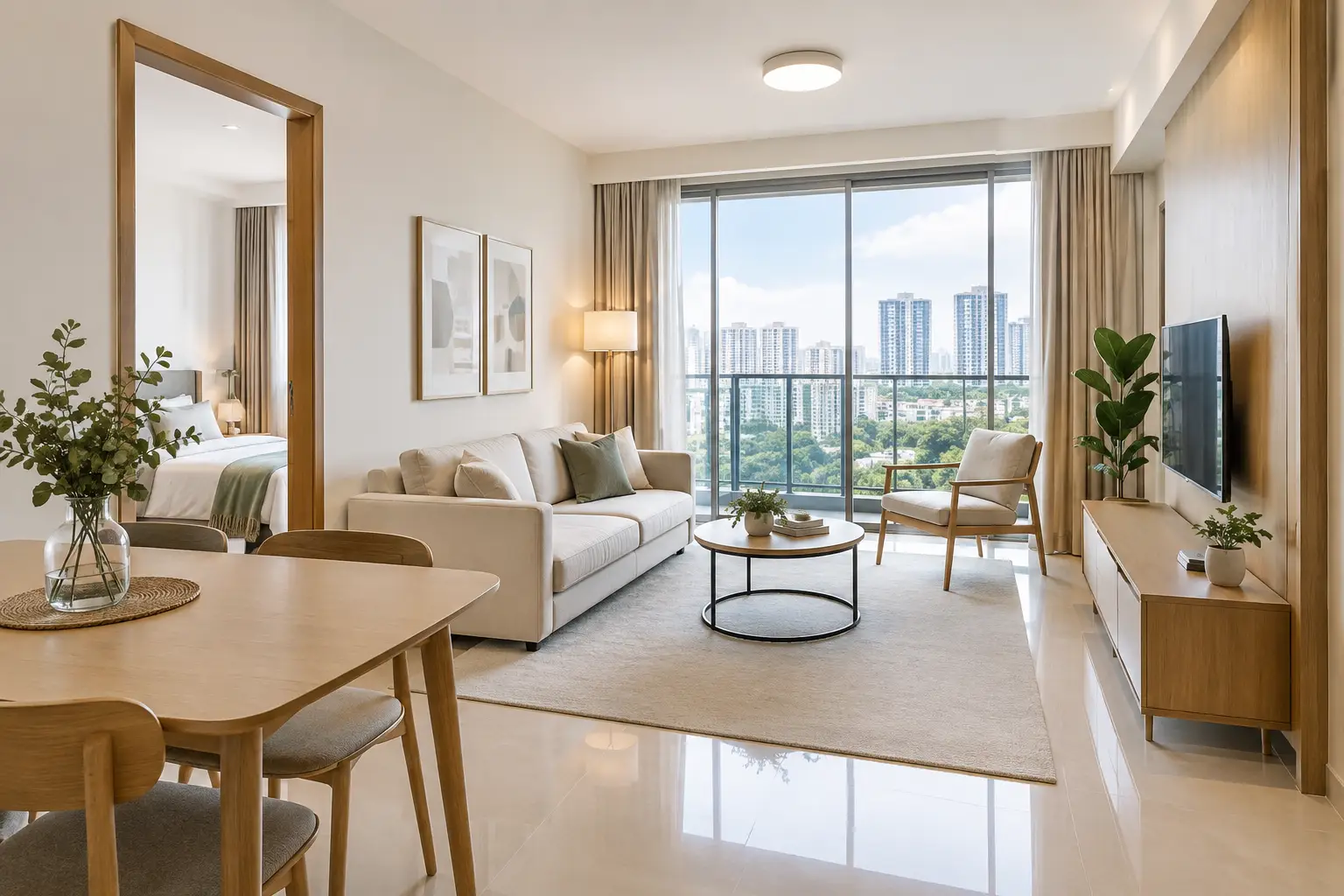
A buyer may decide whether a property feels right within moments of entering it. They notice the light, the sense of space and whether they can picture an ordinary morning, a family meal or a quiet evening at home. Knowing how to style a showflat means planning those moments carefully, rather than simply filling rooms with attractive furniture.
For property agents, sellers and landlords in Singapore, a well-presented showflat can make online listings clearer and viewings more productive. It gives each room a purpose, helps buyers read the layout quickly and makes photographs work harder. The aim is not to create a space that feels overly decorated. It is to present a believable, welcoming home that supports the property’s market position.
Start with the buyer and the property
Before selecting a sofa or choosing cushions, consider who is most likely to view the property. A compact city-fringe one-bedroom flat may appeal to a professional couple or investor. A larger condominium unit may need to speak to young families, while a landed home may suit buyers looking for generous entertaining and work-from-home space.
This does not mean styling every room around a narrow lifestyle stereotype. It means making sensible choices about scale, function and emphasis. A small dining area needs a table that shows how people can eat comfortably without blocking circulation. A spare bedroom might work best as a study with a sofa bed if flexible living is a genuine selling point.
The property itself should guide the scheme too. Take note of the flooring, built-in cabinetry, window direction and architectural features. A dark timber floor may suit warm neutrals and soft textures, while a bright, modern unit can carry cleaner lines and a lighter palette. Trying to fight the existing finishes usually creates a less convincing result and adds unnecessary cost.
How to style a showflat room by room
Start with the living room, as it often sets the emotional tone of the viewing. Choose a sofa that is proportionate to the room rather than the largest piece that fits. Buyers need to see clear walking routes and enough visible floor area to understand the size of the space. A coffee table, rug and occasional chair can define a comfortable seating zone, but leave breathing room around each piece.
A rug is particularly useful in an empty showflat because it anchors furniture and makes the room feel considered. It should sit beneath at least the front legs of the sofa where possible. A rug that is too small can make even a good-sized living room appear disjointed.
In the dining area, show everyday usability. Place settings are not always necessary, but a simple centrepiece and neatly positioned chairs help buyers judge capacity. Avoid pushing all furniture against the walls merely to expose more floor. A dining table placed naturally in the centre of its intended zone often makes the layout easier to understand.
Bedrooms should feel restful, uncluttered and useful. Use a bed size that reflects the room’s real capacity. Forcing a king-size bed into a modest bedroom may suggest that the room is cramped, whereas a well-dressed queen bed with slim bedside tables can feel balanced. Keep bedding neutral, then add modest colour through cushions or a throw. This photographs well without distracting from the room itself.
For secondary bedrooms, decide on a single clear role. A child’s room, guest room or study can all work, but ambiguity does not. If the property has a small third bedroom, a practical home office may demonstrate value more effectively than a squeezed-in bed. This is especially relevant for buyers who expect hybrid working to be part of daily life.
Kitchens and bathrooms should remain clean and restrained. Remove personal items, cleaning products and excessive decorative objects. A folded towel, a small tray or a simple plant may add warmth, but these rooms benefit most from looking bright, tidy and ready to use.
Use furniture to show scale, not hide it
The most common styling mistake is using furniture that is either too large or too slight for the room. Oversized pieces block sightlines and make circulation feel awkward. Furniture that is too small can leave a larger property feeling sparse and underused.
Measure every key wall, doorway, lift access point and passage before finalising the furniture plan. In Singapore condominiums, practical delivery considerations matter as much as the visual plan. A beautiful sectional sofa is not helpful if it cannot be brought up in the service lift or positioned without obstructing a balcony door.
Prioritise pieces with clean proportions and broad appeal: a comfortable sofa, dining set, well-scaled beds, bedside tables, storage where appropriate and a desk for rooms that suit it. Furniture rental can be useful when timelines are tight or the property only needs to be staged for a sales or leasing period. It avoids the commitment of buying items that may have little use once the campaign ends.
It also helps to avoid styling every available corner. Empty space is not wasted space. It allows the eye to rest and lets buyers appreciate the property’s layout, ceiling height and natural light.
Build a calm, camera-ready colour scheme
Neutral does not have to mean bland. A grounded palette of warm white, sand, taupe, soft grey or muted green can make a showflat feel current while allowing buyers to imagine their own belongings in the home. Introduce contrast through texture: woven cushions, timber side tables, linen-look curtains, ceramic accessories or a textured rug.
Use colour with purpose. One or two accent tones repeated lightly across a room will look more cohesive than several competing shades. For example, olive cushions, a subtle artwork and a leafy plant can add depth to a cream and timber living room. Keep stronger colours away from large upholstered furniture unless they suit the property’s character and target audience.
Artwork should support the room, not become the main event. Choose pieces that are appropriately scaled and hung at a sensible height. Small artwork on a large wall can look accidental, while one well-proportioned piece above a sofa or bed provides a useful focal point.
Pay attention to light, layers and finishing details
Natural light is one of a property’s strongest assets, so make it visible. Open curtains fully for photography and daytime viewings, clean the windows and avoid placing bulky furniture in front of them. If privacy is needed, use light-filtering curtains or blinds that soften the view without darkening the room.
Layer lighting for evening viewings or units with limited daylight. Ceiling lights alone can feel harsh and flat. A floor lamp beside the sofa, bedside lamps and a table lamp on a console add warmth and help rooms feel lived in. Check that bulb temperatures are consistent. Cool white and warm white bulbs mixed in the same space can make photographs look uneven.
Accessories should be edited rather than abundant. A few carefully placed objects are enough: a vase, books, tray, cushions, plants and simple bed linen. They give the showflat a human feel, but clutter quickly undermines the effect. If an item has no clear visual or functional role, remove it.
Scent and sound deserve the same restraint. A fresh, neutral-smelling home is preferable to a heavily fragranced one, which can be distracting or unsuitable for some viewers. Keep the property quiet, comfortable and cool, particularly before a scheduled viewing.
Prepare for photos and real viewings
Styling is only effective if the property remains presentation-ready after the photographer leaves. Create a final checklist for viewings: curtains open, lights on where needed, air-conditioning comfortable, surfaces clear, toilet lids closed and personal or maintenance items out of sight.
Take photographs from angles that show the full function of each room. A living room photo should reveal seating and circulation, not just a close-up of cushions. In smaller rooms, use the doorway or corner that gives the clearest sense of depth. Good styling and good photography work together, but neither can fully compensate for the other.
For owner-occupied homes, the practical challenge is maintaining the look while people are still living there. In this case, focus on strategic editing rather than a complete furniture replacement. Store excess belongings, remove highly personal items, standardise bedding and introduce a few rental pieces where the current furniture does not show the room well.
A showflat should feel polished, but it should never feel untouchable. When furniture, light and layout work together, buyers spend less time trying to decode the space and more time considering whether they could live there. That is the most useful impression a property presentation can create.