
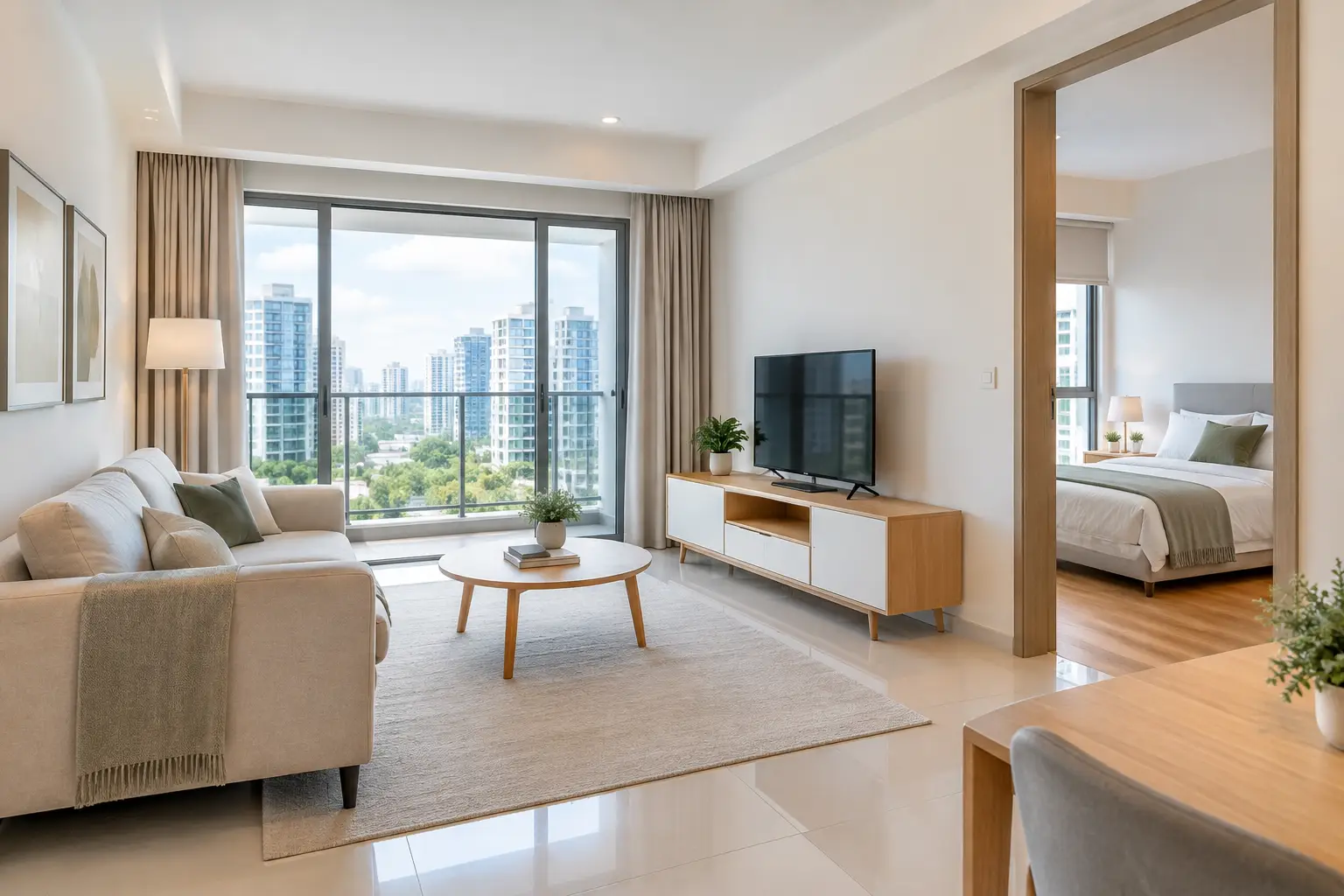
An empty living room can look larger than it really is in a listing photo, yet feel surprisingly hard to understand during a viewing. Without furniture, buyers may struggle to judge where a sofa belongs, whether a dining table will fit, or how everyday life could work in the space. Knowing how to style empty rooms is therefore less about decoration and more about giving each area a clear, believable purpose.
For property agents, sellers and landlords in Singapore, this clarity can make a meaningful difference. A well-presented vacant property photographs more confidently, supports the asking price and gives viewers fewer reasons to hesitate. The aim is not to fill every corner. It is to make the home feel considered, welcoming and easy to read.
Start with the property, not the furniture
Before selecting a sofa, bed or dining set, assess the room as a buyer or tenant would. Stand at the entrance, look towards the windows and note the natural focal point. It may be a balcony, an attractive view, built-in storage or a well-proportioned wall. Furniture should support that feature rather than block it.
Measure carefully, particularly in compact condominiums where an oversized piece can make a good room feel constrained. In larger landed homes, the opposite can be true. Sparse furniture may leave a room looking cold or oddly proportioned. The right scale helps viewers understand the room’s actual capacity and the way they could move through it.
It also helps to decide what each room needs to communicate. A spare bedroom might be staged as a guest room if the likely buyer is a family, or as a study if the location appeals to professionals working from home. There is no single answer. The most suitable use depends on the property, its neighbourhood and the people most likely to enquire.
How to style empty rooms with a clear purpose
The most effective staged rooms answer a practical question quickly. This is where you relax. This is where you eat. This is where you work. Buyers should not have to work it out for themselves.
In a living room, begin with a sofa arrangement that faces the natural focal point. Add a coffee table, rug and one or two occasional chairs only where the footprint allows. A rug is particularly useful because it defines the seating zone and prevents furniture from appearing to float in a large empty room. Leave visible walking routes to the balcony, corridor or adjoining dining area.
For a dining space, use a table size that reflects the room honestly. A modest four-seater often presents better than squeezing in a six-seater that obstructs circulation. Simple place settings, a centrepiece and dining chairs give the area a sense of occasion without making it look like a formal showroom.
Bedrooms benefit from a complete but restrained arrangement. A properly sized bed, bedside tables, lamps and fresh linen establish scale immediately. Where space permits, an armchair or compact desk can suggest an additional use. Avoid filling a small bedroom with heavy storage units simply to make it look furnished. Buyers need to see the available floor area and built-in wardrobes.
Choose a calm, broadly appealing style
Staging should help more people picture themselves in the home. That usually calls for a neutral base, layered with enough warmth and texture to avoid a flat or impersonal result. Soft greys, warm whites, timber finishes and muted earthy tones are reliable choices for many Singapore homes because they work well with natural light and different property styles.
This does not mean every home should look identical. A newer city-fringe condominium may suit clean-lined furniture and restrained accents, while a larger family home can carry richer textures, a more substantial dining table and softer furnishings. The guiding principle is balance: the styling should feel current and comfortable, but not so distinctive that it competes with the property itself.
Use accessories selectively. Cushions, throws, artwork, greenery and table lamps bring depth to photographs and make a viewing feel more lived-in. Too many ornaments, however, can distract from the floor plan and create visual clutter. One large artwork is often more effective than a wall crowded with small frames.
Let furniture show scale without reducing space
A common concern among sellers is that furniture will make a vacant home seem smaller. Poorly chosen furniture can do that. Thoughtful staging does the opposite by giving viewers reference points. A bed shows the true dimensions of a bedroom; a dining table demonstrates that the space is usable; a sofa arrangement reveals how a living area can accommodate daily life.
The key is proportion. Choose legs or raised bases where appropriate, as visible flooring can make a room feel lighter. Keep taller pieces against solid walls and avoid placing bulky furniture directly in front of windows. In narrow rooms, use slimmer profiles and maintain a clear route through the centre.
Mirrors can be useful in darker entrances or compact dining areas, but they should be positioned to reflect light or an attractive view. A mirror that reflects an air-conditioning ledge, cluttered service area or blank wall will not add value to the presentation.
Prepare rooms for photography as well as viewings
Property marketing begins online, where viewers make quick decisions about whether a listing is worth pursuing. A room that looks balanced in person may not always photograph well, so styling needs to work from both perspectives.
Arrange the principal furniture first, then check the room from the angle most likely to be photographed. Straighten chairs, centre the rug and make sure lamps, cushions and accessories look intentional rather than scattered. Open curtains and blinds where privacy allows, and switch on suitable lights to soften shadows. Natural daylight is generally preferable, but mixed lighting can create unwanted colour casts, especially in rooms with warm bulbs and strong sunlight.
Keep surfaces clear. Kitchen counters should show just enough to suggest use, perhaps a tray, bowl or small plant, while leaving the worktop visible. Bathrooms need to feel clean and calm, with fresh towels and minimal personal items. These details may seem small, but they contribute to a more polished first impression across the full set of listing images.
Do not overlook awkward spaces
Vacant properties often include areas that are easy to ignore: a long corridor, an oversized landing, a recessed corner or an enclosed balcony. Left empty, these spaces can look purposeless. Styled well, they can become part of the home’s appeal.
A compact desk can establish a study corner. A bench and artwork can give an entrance a more welcoming arrival point. An enclosed balcony may suit a reading chair and small side table, provided the arrangement does not overpromise its function or obstruct access. The goal is to suggest possibility while staying realistic about the room’s dimensions and practical limits.
Be cautious with rooms that could be interpreted in several ways. If a small space is marketed as a bedroom but only comfortably fits a single bed, stage it honestly. Buyers will notice when furnishings have been forced into a room, and that can undermine confidence in the rest of the presentation.
Plan staging around timing and budget
Buying furniture for a short sales campaign is not always the most practical option. It involves sourcing, delivery, assembly, storage and eventually removal, often while the seller is managing repairs, cleaning and viewings. Furniture rental and professional staging can be a more controlled approach when presentation is needed quickly and only for a defined period.
The scope should match the property and campaign. A full staging scheme may be worthwhile for a completely vacant home or a listing that needs stronger visual direction. In other cases, furnishing the living, dining and main bedroom areas may be enough to improve photographs and help viewers understand the layout. The right investment depends on the condition of the home, the target market and how long the property is expected to be available.
A hands-on staging partner such as Expats Partner can coordinate furniture selection, delivery, setup and collection, reducing the number of separate arrangements an agent or seller needs to manage. This is particularly helpful when deadlines are tight or the owner is overseas.
The best empty-room styling never asks buyers to admire the furniture for its own sake. It gives them a clearer, more comfortable way to imagine their own routines in the home. When every room has a purpose and the layout feels easy to understand, a viewing can move from uncertainty to genuine interest.