
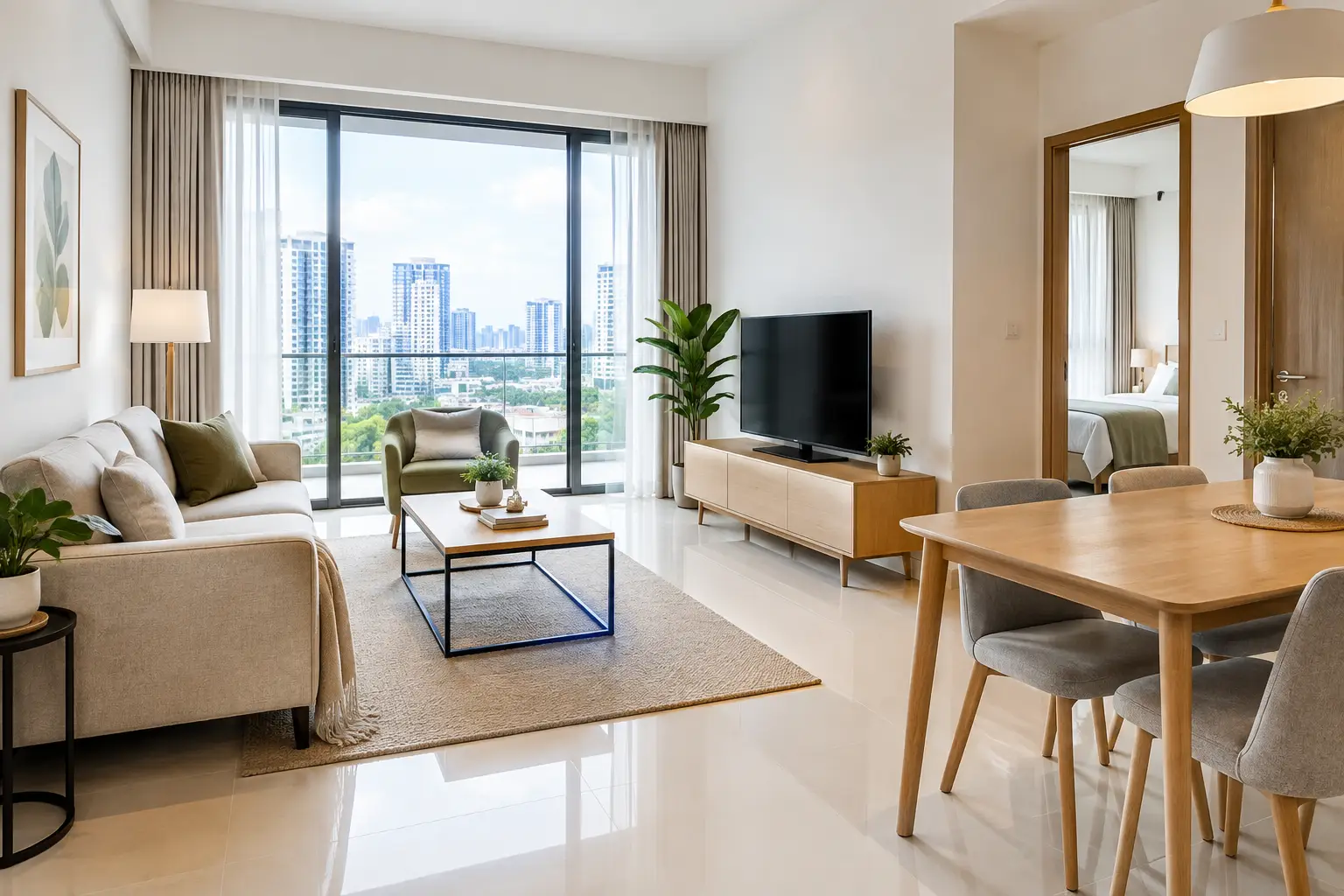
A vacant rental flat can look smaller than it is, while an overfilled one can make even a generous layout feel difficult to live in. Knowing how to style rental homes is therefore less about following a passing interior trend and more about helping prospective tenants immediately understand the space, its comfort and its day-to-day potential.
For landlords and property agents in Singapore, presentation also affects the practical side of letting. Clearer listing photographs can generate stronger enquiries, while a well-prepared viewing helps tenants picture where they would work, rest and entertain. The aim is not to create a showroom. It is to present a tidy, welcoming home that feels easy to move into.
Start with the tenant and the tenancy
Before selecting furniture, consider who is most likely to rent the property. A one-bedroom city-fringe condominium may appeal to a professional relocating for work. A larger family home may need flexible dining space, practical storage and bedrooms that show a clear purpose. The right styling should support the likely tenant without becoming so specific that it limits appeal.
Tenancy length matters too. For a short-term or corporate let, a complete and functional setup is often expected, including a comfortable sofa, dining area, bed, curtains and useful kitchen basics. For a longer lease, tenants may bring some of their own belongings. In that case, a clean, lightly furnished property can be more suitable.
This is where renting furniture can be a sensible option. It allows landlords to furnish for the current market without committing to permanent pieces that may not suit the next tenant, property or lease period.
Make every room easy to read
During a viewing, people make quick judgements about whether a home will work for them. Empty rooms leave too much to the imagination, particularly where room proportions are unusual. Each space should have a clear, believable function.
In the living room, position seating to create a natural conversation area rather than pushing every item against the walls. A modest sofa, occasional chair, coffee table and rug can give the room shape without obstructing circulation. If the unit has a good view or natural light, arrange the furniture so that feature remains visible.
A dining table is equally useful in photographs and in person. Choose a size that suits the footprint, leaving enough room to move around it. In compact homes, a round table often softens tight corners, while a slim rectangular table can work well beside a wall or window.
Bedrooms need more than a bed frame. Properly dressed bedding, bedside tables and lamps create a sense of comfort and scale. If a smaller bedroom is likely to be used as a study, show it as a study. A simple desk and chair can help a tenant see its value far more clearly than an empty spare room.
Choose furniture for proportion, not just appearance
One of the most common styling mistakes is choosing furniture that is attractive on its own but too large for the home. A deep sectional sofa may suit a showroom floor, yet overwhelm a compact condominium living area. Similarly, a king-size bed can make a bedroom appear cramped if it leaves little clearance at the sides.
Measure the key spaces before planning the layout. Consider door swings, balcony access, built-in wardrobes and walkways, not only the wall lengths. A room should feel furnished but still allow tenants to move through it naturally.
For most rental homes, clean-lined furniture in neutral shades provides a reliable foundation. Beige, warm grey, soft taupe and natural timber tend to photograph well and work with a range of flooring and kitchen finishes. This does not mean every room must be colourless. A muted cushion, artwork or armchair can add warmth, but strong personal colours are best used sparingly.
Durability deserves equal attention. Rental furniture needs to look good across viewings and tenancies while being straightforward to maintain. Upholstery with practical, mid-tone fabrics and surfaces that are easy to wipe down are often more useful than delicate finishes. The best choice is usually the one that balances appearance, comfort and replacement cost.
Use light to improve photographs and viewings
Good lighting makes a rental home feel cared for. Begin with the simplest steps: clean the windows, open blinds fully and remove heavy items that block daylight. Natural light is particularly valuable for listing photographs, where it helps rooms feel open and accurately represented.
Artificial lighting should fill the gaps rather than compete with daylight. Replace mismatched or harsh bulbs with warm white lighting, and ensure every room is adequately lit before photographs or viewings. Floor lamps and table lamps are helpful in living rooms and bedrooms because they create softer pools of light after sunset.
Avoid relying on one bright ceiling fitting where possible. It can cast shadows and make a room look flat. Layered light creates a more comfortable impression, although there is no need to over-style a rental unit with decorative fittings that are difficult to maintain.
Style for rental living, not for a catalogue
Accessories are useful when they make a space feel settled, but they should never distract from the property itself. A few cushions, a simple rug, neutral artwork and a healthy-looking plant can bring a room together. Too many ornaments, artificial flowers or small decorative objects can make surfaces appear cluttered in photographs.
Keep kitchen and bathroom styling especially restrained. Clear benchtops, neatly folded towels and a small tray can suggest order without implying that the home is occupied. Remove personal toiletries, magnets, cleaning supplies and drying racks before a viewing. Tenants want to see storage, worktops and finishes clearly.
The same principle applies to balconies and patios. If there is enough space, a small outdoor table and two chairs can show that the area is usable. If the balcony is narrow, keeping it clean and open may be more effective than forcing furniture into it.
Prepare the home before furniture arrives
Styling works best when the property itself is ready. Address obvious maintenance issues first, including flickering lights, peeling paint, loose handles, damaged blinds and stains. These details can undermine an otherwise polished presentation and raise questions for prospective tenants.
A thorough clean is essential, particularly in bathrooms, kitchens, window tracks and air-conditioning areas. Neutralising odours also matters. A home should smell clean and fresh, not heavily scented. Strong fragrances can be distracting and may cause some viewers to wonder what they are covering.
For occupied homes, reduce visual noise before staging. Pack away excess family photographs, hobby equipment, bulky storage boxes and furniture that no longer suits the room. This can be sensitive for owners, but the purpose is not to erase character. It is to give tenants enough visual space to imagine their own routines there.
How to style rental homes for faster decisions
A well-styled rental home supports faster decisions when the presentation is consistent from listing to viewing. Photograph the property after styling, when light is favourable and every room is tidy. Include the living area, dining space, bedrooms, kitchen, bathrooms and any genuine selling points such as a balcony, study nook or view.
Then maintain that standard for inspections. Straighten cushions, switch on lamps, close toilet lids, remove bins and make sure the temperature feels comfortable before viewers arrive. These small checks take little time but help the property feel ready rather than rushed.
If timing is tight, a managed furniture rental and styling service can reduce coordination between delivery teams, installers and agents. Expats Partner can help landlords and agents prepare a furnished rental setup around the property layout, target tenant and required lease period, with delivery, installation and collection handled as part of the process.
A rental home does not need expensive furniture or elaborate decoration to make a strong impression. It needs thoughtful proportions, practical comforts and a calm sense of order. When tenants can understand the space at a glance, they can spend the rest of the viewing imagining life there.