
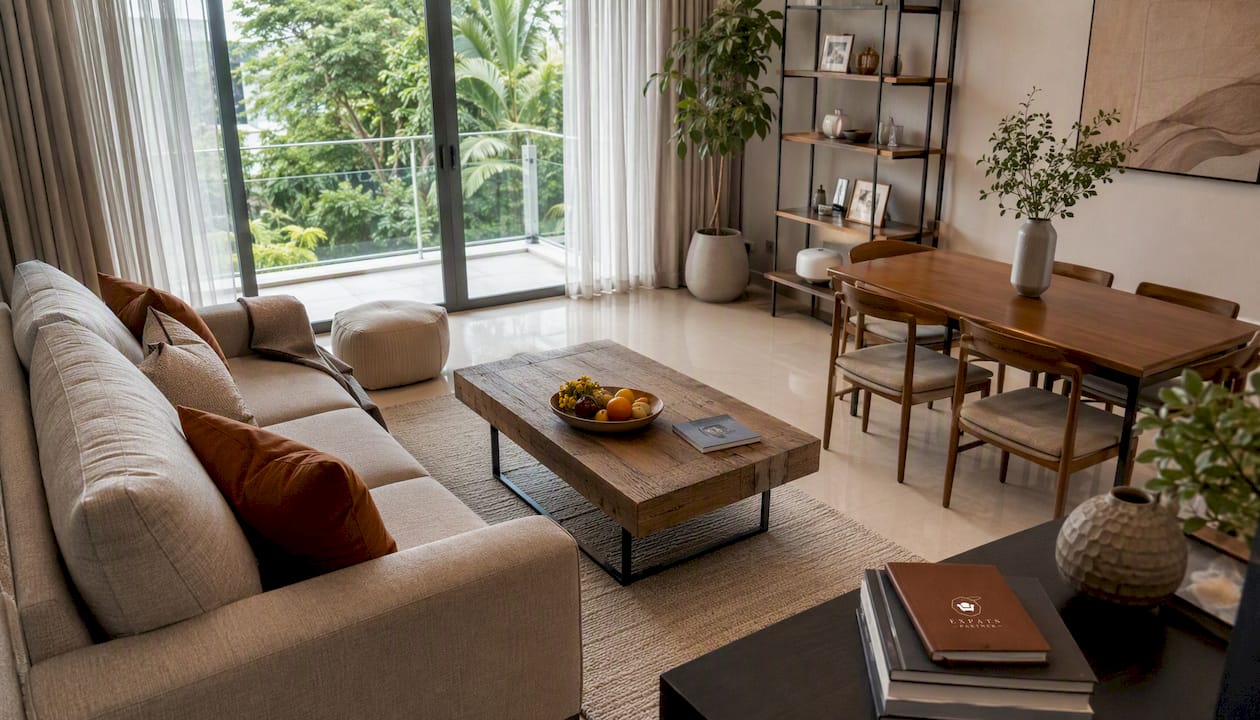
Yes, you can let a fully furnished property in Singapore, and done correctly, it typically commands a 10–20% rent premium over an equivalent unfurnished unit. The key is treating a furnished let as a deliberate product decision rather than simply leaving your furniture behind. Before you list, three things must happen: confirm eligibility under URA (for private properties) or HDB rules (for public housing), establish your asking rent using official rental evidence from the URA or HDB rental contract databases, and prepare a photographic inventory that will be signed and attached to the tenancy agreement.
Your immediate first steps:
- Confirm rental eligibility: HDB owners must check the Minimum Occupation Period (MOP) and obtain HDB approval; private condo owners should review MCST by-laws and their mortgage letter of offer.
- Pull recent rental comparables from the URA Rental Contracts portal (private) or HDB’s rental statistics (public housing) to establish a baseline rent.
- Decide on furnishing strategy: buy outright, or use a furniture rental partner such as Expats Partner to reduce upfront capital expenditure.
- Prepare a room-by-room photographic inventory before the tenant moves in.
- Stamp the tenancy agreement with IRAS via the e-Stamping Portal within 14 days of signing.
Pro Tip: Start with rental readiness, not the highest possible asking rent. Experienced landlords consistently find that a well-prepared, compliant unit with clear tenancy terms attracts better tenants and shorter vacancy periods than one priced aggressively but poorly documented.
Table of Contents
- Fully furnished, part-furnished or unfurnished: which should you offer?
- How do you set the right rent for a fully furnished unit?
- What does a fully furnished rental actually cost you?
- What legal and safety checks must you complete before letting?
- Inventory, condition reports and the tenancy clauses that matter
- How to market a furnished unit and vet tenants effectively
- Managing furniture, wear and tear and your replacement plan
- Step-by-step move-in and move-out handover process
- Common landlord mistakes and what experienced landlords do differently
- Pre-listing checklist for a fully furnished rental
- What are the tenant vetting rules landlords must follow in Singapore?
- Safety and compliance checks before letting a furnished property
- Key takeaways
- A landlord-to-landlord note from Expats Partner
- Useful Singapore sources and further reading
- Furnish your rental with Expats Partner, without the upfront commitment
- FAQ
Fully furnished, part-furnished or unfurnished: which should you offer?
The right furnishing level depends on your target tenant, not your personal preference. Each level carries a different risk and reward profile.
What each level typically includes:
- Fully furnished: Beds, sofas, dining table and chairs, wardrobes, white goods (fridge, washing machine, air-conditioning), kitchen appliances, curtains, and often linens and crockery. See a detailed breakdown of what is included in a furnished rental for a complete room-by-room reference.
- Part-furnished: Fixed fittings, air-conditioning, and major white goods only. Tenant brings their own furniture.
- Unfurnished: Shell condition with air-conditioning and sometimes a fridge. Tenant furnishes entirely.
| Tenant archetype | Best furnishing level | Reason |
|---|---|---|
| Corporate expat (short assignment) | Fully furnished | Needs move-in ready; employer often pays rent |
| Relocating professional (1–2 years) | Fully furnished | No time or desire to buy furniture |
| Local family (long term) | Part-furnished or unfurnished | Prefers own furniture; lower replacement risk for landlord |
| Student or young professional | Part-furnished | Budget-conscious; may have some items |
| Short-term professional or digital nomad | Fully furnished | Expects hotel-standard readiness |
The honest trade-off: fully furnished units attract expat tenants and can justify a premium, but you carry replacement risk on every item. A sofa that looks fine to you may be considered worn by a departing tenant’s standards. For local families on longer leases, part-furnished often performs better because it reduces your replacement exposure and lets the tenant personalise the space.
When furniture rental makes more sense than buying:
- You want to avoid a large upfront capital outlay.
- You are letting a condo between your own stints of living there.
- You want the flexibility to upgrade or swap pieces between tenancies.
- You are targeting the corporate expat market and want a consistently fresh, neutral look.
Furniture rental packages typically cost around 10–15% of monthly rent, making them a practical middle path for landlords who want a move-in ready furniture package without committing to ownership.

How do you set the right rent for a fully furnished unit?
Use official rental evidence first, then adjust for furnishing and unit specifics. Asking prices on portals are a cross-check, not a starting point.
Step-by-step pricing method:
- Pull URA or HDB comparables. For private properties, use the URA Rental Contracts portal to find recent transactions in the same development or street. For HDB flats, use HDB’s rental statistics. Filter by flat type, floor range, and the past three to six months.
- Convert to per square foot (psf). Divide the monthly rent by the unit’s floor area to get a psf figure. This lets you compare units of different sizes fairly.
- Apply unit-specific adjustments. Higher floors, unobstructed views, recent renovation, and proximity to MRT stations all justify a premium above the psf average.
- Add the furnishing premium. Fully furnished units typically command 10–20% above an equivalent unfurnished unit. Justify this with comparables, not assumption.
- Set negotiation headroom. Price 3–5% above your walk-away figure. Tenants, especially those represented by agents, will negotiate.
- Cross-check against portal asking rents. Use PropertyGuru or 99.co to sense-check your figure. If your rent is materially above current asking prices for similar furnished units, revisit your comparables.
Practical data sources:
- URA Rental Contracts portal (private residential)
- HDB rental statistics (public housing)
- Recent tenancy agreements from your own property (if re-letting)
- Portal asking rents as a directional cross-check only
Pro Tip: Furnished units can have shorter vacancy periods when marketed correctly to the expat and corporate relocation segment. A well-priced, genuinely move-in ready unit often leases faster than one priced at the top of the range but requiring the tenant to source their own items.
What does a fully furnished rental actually cost you?
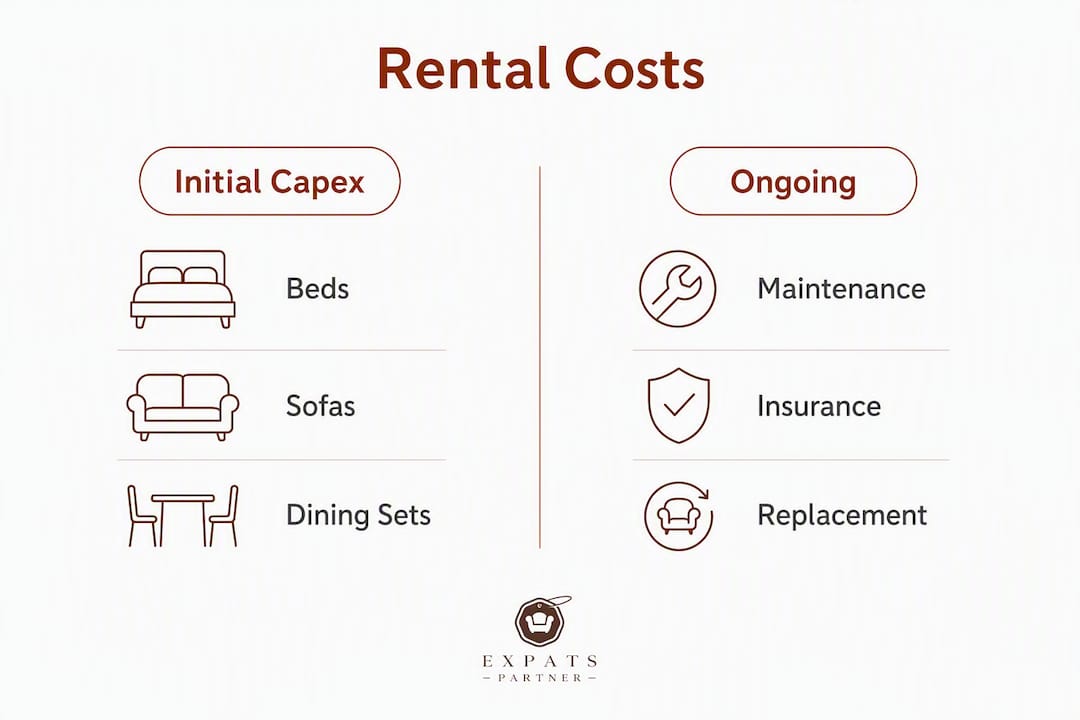
Fully furnished lets increase achievable rent but raise capex, ongoing maintenance, and insurance costs. Build all three into your expected net yield before committing.
| Cost category | Typical items | Notes |
|---|---|---|
| Initial capex | Beds, sofas, dining set, wardrobes, fridge, washing machine, air-con, curtains, soft furnishings | One-off outlay; varies widely by quality and unit size |
| Ongoing operating costs | Air-con servicing, appliance repairs, periodic replacement of soft furnishings and small appliances | Budget a replacement allowance each year |
| Vacancy and turnover | Cleaning, touch-up painting, inventory check, potential replacement between tenancies | Higher for furnished units due to more items to inspect |
| Insurance | Contents insurance on top of standard landlord policy | Essential when you own the furniture |
| Furniture rental (alternative) | Monthly rental fee, typically around 10–15% of monthly rent | Replaces capex with an operating cost; includes swap-out flexibility |
Tax considerations for Singapore landlords:
IRAS requires you to declare all rental income. Against that income, you may claim allowable expenses. The key distinction is between repairs (allowable) and improvements (capital, not allowable as a deduction). Replacing a broken washing machine with an equivalent model is a repair; upgrading to a premium model with new features is partly an improvement.
Allowable deductions typically include:
- Mortgage interest (if the property is mortgaged)
- Property tax
- Fire insurance premiums
- Maintenance and conservancy charges
- Cost of repairs and maintenance (not improvements)
- Agent commission for securing the tenancy
- Advertising costs
IRAS offers a deemed-expense option for some landlords, but actual expense claims are usually more favourable for furnished lets with real ongoing costs. Consult a tax professional or check the IRAS website directly for the current rules applicable to your situation.
What legal and safety checks must you complete before letting?
Confirm eligibility first, then complete mandated safety checks. Skipping either step creates legal and financial exposure.
Eligibility checklist:
- HDB flats: Confirm MOP is satisfied, obtain HDB’s written approval, and check the approved ethnic quota for your block.
- Private condos: Review MCST by-laws for any restrictions on short-term letting or subletting. Check your mortgage letter of offer for any lender consent requirement.
- Minimum tenancy length: HDB rules generally require a minimum tenancy of six months. For private properties, URA’s guidelines on short-term accommodation (under three months) apply; standard residential leases are typically one to two years.
- Stamp duty: Stamp the tenancy agreement via the IRAS e-Stamping Portal within 14 days of signing. For leases up to four years, stamp duty is 0.4% of total rent.
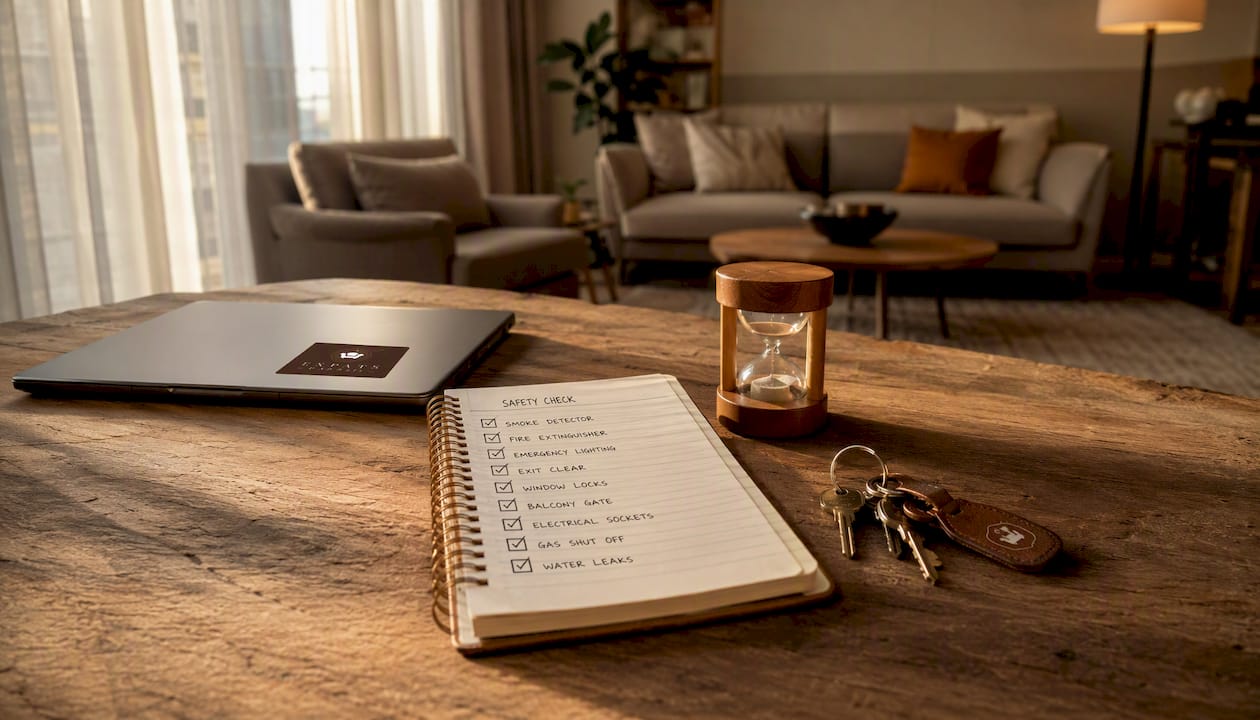
Safety and standards checklist:
- Confirm all air-conditioning units are serviced and in working order before handover.
- Check that all electrical appliances are safe, have valid safety marks, and are functioning correctly.
- Fit working smoke alarms in the unit; check battery condition.
- Verify that gas appliances (if any) are in safe working order and that connections are sound.
- Confirm that all locks, door handles, and window latches are secure.
- Check that water heaters are functioning and show no signs of corrosion or leakage.
Pro Tip: Keep a paper trail for every check. Photograph appliance serial numbers, service records, and safety certificates. If a dispute arises later, documented compliance protects you. Store copies digitally and keep physical copies with the tenancy file.
Inventory, condition reports and the tenancy clauses that matter
A signed, timestamped photographic inventory is not optional for furnished lets. Attach it as a formal schedule to the tenancy agreement and use it at both check-in and check-out. Landlords who skip this step regularly face contested deposit deductions.
Room-by-room inventory checklist:
| Room | Items to document |
|---|---|
| Living room | Sofa (condition, fabric), coffee table, TV console, curtains, light fittings |
| Dining area | Dining table, chairs (number and condition), pendant light |
| Master bedroom | Bed frame, mattress, wardrobe (shelves, rails), bedside tables, curtains |
| Secondary bedrooms | Same as master; note any differences in mattress size or wardrobe configuration |
| Kitchen | Fridge (serial number), washing machine (serial number), oven/microwave, extractor fan, crockery and cutlery if included |
| Bathrooms | Mirrors, towel rails, shower fittings condition |
| General | Meter readings (electricity, water, gas), keys and access cards (number issued), remote controls, car park label if applicable |
Key tenancy clauses for furnished lets:
- Minor Repairs Clause: Tenant is responsible for minor repairs up to S$150–S$250 per incident. This cap reduces small disputes and sets clear expectations. Anything above the cap is the landlord’s responsibility unless caused by tenant negligence.
- Replacement of domestic items clause: Specifies that worn or damaged items will be replaced like-for-like at the tenant’s cost if damage is beyond fair wear and tear, as evidenced by the signed inventory.
- Diplomatic or break clause: For expat tenants on company assignments, include a break clause allowing early termination (typically after 12 months on a 24-month lease) with one to two months’ notice. This makes the unit more attractive to corporate relocation clients.
- Deposit amount: Standard practice in Singapore is one to two months’ rent as security deposit, plus one month’s advance rent. For furnished units, some landlords request two months given the higher asset value at risk.
Pro Tip: For the Minor Repairs Clause, write the cap in Singapore dollars and list two or three examples of what counts as a minor repair (e.g. replacing a light bulb, tightening a loose door handle, replacing a shower head washer). Ambiguity is what turns small issues into disputes.
How to market a furnished unit and vet tenants effectively
Target your marketing at the tenant archetype who values move-in readiness most. For furnished units in Singapore, that is usually the corporate expat, the relocating professional, or the short-term assignee.
Marketing your furnished unit:
- Photography and staging: A professionally staged and photographed unit consistently outperforms a casually photographed one. Declutter, style with neutral accessories, and shoot in natural light. Expats Partner’s home staging Singapore service covers this for rental listings. For practical staging guidance, the article on how to stage a vacant property for rent is a useful reference.
- Listing copy: Lead with move-in readiness. State exactly what is included (beds, white goods, linens if applicable), the nearest MRT station, and the lease term. Expat tenants often search by proximity to their employer’s office or an international school.
- Portals and agents: PropertyGuru and 99.co reach the broadest audience. For corporate expats, work with relocation agents and HR teams directly. Many multinational companies maintain preferred agent lists; getting on those lists is worth the effort.
- Highlight the furnishing quality: Neutral, durable, well-maintained furniture photographs better and attracts tenants who will treat it with care.
Tenant vetting checklist:
- Verify identity: NRIC for Singapore citizens and PRs; passport and valid pass (Employment Pass, S Pass, Dependent’s Pass) for foreigners.
- Confirm employment and income: request the last two to three months’ payslips or a letter of employment. For self-employed tenants, ask for bank statements.
- Check pass validity: the tenant’s work or dependent pass must cover the intended tenancy period.
- Request a rental reference from the previous landlord where possible.
- For student tenants, request a guarantor (parent or sponsor) and include a guarantor clause in the tenancy agreement.
- Collect a booking deposit (typically one month’s rent) to secure the unit while due diligence is completed. This converts to the security deposit on signing.
Letter of Intent (LOI) basics:
- An LOI confirms the tenant’s intention to rent and the agreed key terms (rent, lease period, break clause, included items).
- It is not a tenancy agreement, but it is a useful commitment device before the formal agreement is drafted.
- Once the LOI is signed and the booking deposit paid, both parties are morally (and often contractually) committed to proceed.
Managing furniture, wear and tear and your replacement plan
Treat furniture as a short-to-medium term asset and plan for replacements rather than hoping items last indefinitely. A sofa in a rental unit typically sees harder use than one in an owner-occupied home.
Furniture selection principles:
- Choose neutral colours (warm greys, beiges, natural wood tones) that photograph well and appeal to a broad range of tenants.
- Prioritise durability: performance fabrics for sofas, solid wood or metal frames for beds and dining sets, and easy-clean surfaces for dining tables.
- Avoid highly personal or bespoke pieces. A statement artwork or an unusual colour palette may appeal to you but narrow your tenant pool.
- For high-use items (sofas, mattresses, dining chairs), buy commercial-grade or mid-to-upper residential quality. Budget pieces rarely survive two tenancy cycles in good condition.
Maintenance schedule:
- Air-conditioning: service every three months (quarterly) as standard; include this obligation in the tenancy agreement and specify who pays (landlord typically covers scheduled servicing; tenant covers servicing required due to misuse).
- Appliances: annual check of fridge seals, washing machine drum and filter, and water heater condition.
- Soft furnishings: inspect at each tenancy changeover; replace curtains and cushion covers if visibly worn or stained.
- Mattresses: plan for replacement every four to six years, or sooner if a tenant reports issues.
- Furniture review: at each tenancy changeover, photograph every item against the original inventory and decide on replacement or retention.
Pro Tip: Consider furniture rental packages for furnished units you plan to let repeatedly. Swapping out worn items between tenancies is straightforward with a rental arrangement, and you avoid the logistics of disposing of old furniture. Expats Partner offers flexible furniture rental for landlords with delivery, setup, and collection included.
Step-by-step move-in and move-out handover process
A documented, photographed check-in and check-out with signed inventory acknowledgement prevents most security deposit disputes. The Small Claims Tribunal sees a disproportionate number of deposit cases where no signed inventory exists.
Move-in checklist:
- Walk through the unit with the tenant before handing over keys.
- Go through the inventory schedule item by item, noting any pre-existing damage in writing.
- Take timestamped photographs of every room, every appliance, and any existing marks or damage.
- Record meter readings (electricity, water, gas) and note them on the inventory schedule.
- Have the tenant sign and date the inventory schedule, acknowledging the condition of the unit.
- Hand over keys and access cards; record the number of each issued.
- Provide the welcome pack (see below).
Move-out checklist:
- Repeat the walk-through with the same inventory schedule used at check-in.
- Photograph every room and item, timestamped.
- Note any damage beyond fair wear and tear in writing, with photographic evidence.
- Record final meter readings.
- Collect all keys and access cards; confirm the count against the check-in record.
- Agree on any deductions before releasing the deposit, or follow the dispute process if agreement cannot be reached.
Welcome pack items to provide at move-in:
- Signed copy of the inventory schedule
- Appliance manuals (or a folder with QR codes to digital versions)
- Air-con servicing schedule and contact details
- Emergency maintenance contact number
- Building management or MCST contact details
- Nearest clinic, supermarket, and MRT station information
Pro Tip: If a deposit dispute cannot be resolved directly, the Small Claims Tribunal (SCT) in Singapore handles residential tenancy disputes up to S$20,000. A signed, timestamped inventory is your strongest evidence. Without it, deductions are very difficult to enforce.
Common landlord mistakes and what experienced landlords do differently
Mistakes to avoid:
- Overfurnishing: Filling every corner with furniture makes rooms look smaller in photographs and gives tenants less flexibility. A clean, well-proportioned layout photographs better and feels more spacious on viewing.
- Skipping the inventory: The single most common cause of deposit disputes. No signed inventory means no enforceable deductions for damage.
- Setting rent above market without justification: Overpriced units sit vacant. Each month of vacancy costs more than the premium you were trying to achieve.
- Using low-quality furniture: Budget pieces that deteriorate within one tenancy cycle cost more in replacements than mid-range pieces that last three or four cycles.
- Unclear maintenance responsibilities: If the tenancy agreement does not specify who handles air-con servicing, both parties assume the other will. Write it in.
- Underinsuring: A standard fire insurance policy does not cover your contents. Add a contents insurance policy that reflects the replacement value of the furniture you own.
A practical note from experienced landlords: The difference between a smooth tenancy and a difficult one rarely comes down to the asking rent. It comes down to clear, fair tenancy terms, a professional handover process, and a landlord who responds promptly to maintenance requests. Tenants who feel respected and well-managed tend to stay longer and treat the property with more care.
Pro Tip: Set a Minor Repairs Clause at S$150–S$250 and list specific examples in the agreement. This one clause, clearly written, eliminates the majority of small maintenance disputes before they start.
Pre-listing checklist for a fully furnished rental
Use this checklist before you list the property. Tick each item off in order.
Eligibility and legal:
- [ ] HDB MOP confirmed (HDB flats) or MCST by-laws reviewed (private condo)
- [ ] Mortgage lender consent obtained if required
- [ ] Minimum tenancy length confirmed (six months for HDB; check URA guidelines for private)
- [ ] Tenancy agreement drafted with Minor Repairs Clause, replacement clause, and break clause (if targeting expats)
Safety and compliance:
- [ ] Air-conditioning serviced and functioning
- [ ] All appliances tested and safe
- [ ] Smoke alarms fitted and batteries checked
- [ ] Gas appliances (if any) inspected
- [ ] Locks, windows, and water heater in good condition
Inventory and documentation:
- Complete room-by-room inventory schedule.
- Photograph every item with timestamps.
- Record serial numbers for all white goods.
- Note meter readings.
- Prepare two signed copies of the inventory schedule (one for landlord, one for tenant).
Pricing and marketing:
- [ ] URA or HDB rental comparables pulled and analysed
- [ ] Asking rent set with furnishing premium justified by comparables
- [ ] Professional photographs taken (staged if possible)
- [ ] Listing copy prepared, highlighting move-in readiness and included items
- [ ] Agent briefed or listing uploaded to portals
Stamp duty:
- [ ] IRAS e-Stamping Portal bookmarked; stamp within 14 days of signing
Pro Tip: Store all inventory photos, tenancy documents, and compliance records in a dedicated digital folder (Google Drive or Dropbox) labelled by property address and tenancy period. If a dispute arises six months into a tenancy, you will want these files immediately accessible.
What are the tenant vetting rules landlords must follow in Singapore?
Singapore does not have a direct equivalent of the UK’s Tenant Fees Act, but landlords must comply with the Personal Data Protection Act (PDPA) when collecting and storing tenant information, and must not discriminate on grounds prohibited under Singapore’s fair tenancy framework.
In practice, responsible vetting in Singapore means:
- Collecting only the personal data you genuinely need (identity, pass details, employment evidence).
- Storing that data securely and not sharing it with third parties without consent.
- Treating all prospective tenants consistently and not refusing tenancy on discriminatory grounds.
- For foreign tenants, confirming that their pass type permits them to rent residential property (Employment Pass, S Pass, and Dependent’s Pass holders generally may; certain pass types have restrictions).
The Council for Estate Agencies (CEA) governs property agents in Singapore. If you use an agent, they are bound by CEA’s Code of Ethics and Professional Client Care, which includes fair dealing obligations. As a landlord dealing directly, you carry those obligations yourself.
Safety and compliance checks before letting a furnished property
Before any tenant moves in, complete the following checks. These are not optional courtesies; they are the baseline for a safe, lettable property.
Gas:
If the unit has a gas hob or gas water heater, confirm that connections are sound and that there are no signs of corrosion or leakage. Singapore Power (SP Group) manages the gas network; contact them if you have concerns about the supply connection.
Electrical:
Test all power points, light switches, and fixed appliances. Replace any fuse that has blown and any fitting that shows signs of overheating or damage. All appliances should carry the SAFETY Mark issued by the Singapore Safety Mark scheme, administered by the Singapore Accreditation Council.
Air-conditioning:
Service all units before the tenancy begins. Provide the tenant with the servicing schedule and the contractor’s contact details.
Smoke alarms:
Fit working smoke alarms in the living area and each bedroom. Test them before handover and note the test date on the inventory schedule.
Water heater:
Check for corrosion, leaks, and correct pressure relief valve function. Instant water heaters should be inspected if they are more than five years old.
Structural and general:
Check that all windows open and close securely, that grilles (if fitted) are firmly fixed, and that there are no visible signs of water ingress or ceiling damage.
Key takeaways
A fully furnished rental in Singapore is a sound strategy when the furnishing level matches the target tenant, the rent is set from URA or HDB evidence, and the tenancy is backed by a signed photographic inventory and clear contractual clauses.
| Point | Details |
|---|---|
| Confirm eligibility first | Check HDB MOP or MCST by-laws and mortgage covenants before listing or furnishing. |
| Price from official evidence | Use URA or HDB rental contracts, not portal asking prices, as your starting point. |
| Photographic inventory is non-negotiable | A signed, timestamped inventory attached to the tenancy agreement is your primary protection against deposit disputes. |
| Include a Minor Repairs Clause | Set the cap at S$150–S$250 and list examples; this single clause eliminates most small maintenance disputes. |
| Consider furniture rental over purchase | Expats Partner’s furniture rental packages reduce upfront capex and allow flexible swap-outs between tenancies. |
A landlord-to-landlord note from Expats Partner
The landlords who get the best results from furnished lets are not necessarily those with the most expensive furniture. They are the ones who treat the furnished unit as a product: they know their target tenant, they price from evidence, and they document everything. The inventory is not a formality; it is the document that makes the whole arrangement work fairly for both sides.
At Expats Partner, we work with landlords across Singapore’s condo and landed market to furnish rental units quickly and cost-effectively, without the upfront commitment of buying. Whether you are furnishing a unit for the first time or refreshing between tenancies, the goal is the same: a well-presented, move-in ready home that attracts the right tenant and holds its condition through the lease.
Useful Singapore sources and further reading
Before listing your furnished rental, verify the current rules directly with these authoritative sources. Regulations and guidelines do change, and the primary source is always more reliable than a summary.
Official sources to check:
- URA (Urban Redevelopment Authority): Rental contract data for private residential properties, and guidelines on minimum tenancy periods and short-term accommodation rules. Visit the URA website and use the Rental Contracts portal.
- HDB (Housing & Development Board): Eligibility rules for renting out HDB flats, ethnic quota checks, and rental statistics. The HDB portal allows you to apply for rental approval online.
- IRAS (Inland Revenue Authority of Singapore): Tax treatment of rental income, allowable deductions, and the e-Stamping Portal for stamping tenancy agreements within 14 days of signing. Stamp duty for leases up to four years is 0.4% of total rent.
- MCST documents: Your condominium’s Management Corporation Strata Title by-laws are specific to your development. Request a copy from the building management office and check for any restrictions on short-term letting or subletting.
- CEA (Council for Estate Agencies): If you use a property agent, verify their registration on the CEA Public Register.
Expats Partner service pages:
- Furniture rental for landlords Singapore: package options and pricing guidance.
- Why furnished rentals earn more: income premium evidence and landlord case studies.
- How to furnish a rental apartment to attract expats: targeted guidance for the corporate expat segment.
A note on keeping information current: Singapore’s property regulations, particularly HDB rental rules and URA short-term accommodation guidelines, are updated periodically. Always check the live version of official guidance before making decisions, and consider consulting a property lawyer or licensed agent for complex situations.
Furnish your rental with Expats Partner, without the upfront commitment
Landlords who want a fully furnished unit without the capital outlay of buying furniture have a practical alternative: rent the furniture instead.
Expats Partner provides flexible furniture rental packages for landlords across Singapore’s condo and landed market. A complete 1, 2, or 3-bedroom package covers everything from beds and sofas to dining sets and white goods, with delivery, installation, and collection included. Between tenancies, items can be swapped or upgraded without the hassle of disposal. For landlords targeting corporate expats or short-term professionals, Expats Partner also offers short-term furniture rental aligned to assignment lengths.
The result is a move-in ready unit that photographs well, attracts quality tenants, and keeps your capital free for other priorities. To discuss a package for your property, contact Expats Partner for a no-obligation quote.
FAQ
What is the minimum tenancy period for a furnished HDB flat in Singapore?
HDB generally requires a minimum tenancy of six months for approved rentals. Always confirm the current requirement directly with HDB before signing any agreement.
How much more rent can a fully furnished unit command in Singapore?
Fully furnished units typically achieve a 10–20% premium over equivalent unfurnished units, provided the furnishing quality and marketing are appropriate for the target tenant segment.
Do I need to stamp the tenancy agreement, and how long do I have?
Yes. Stamp the tenancy agreement via the IRAS e-Stamping Portal within 14 days of signing. For leases up to four years, stamp duty is 0.4% of total rent.
What is a Minor Repairs Clause and why does it matter for furnished lets?
A Minor Repairs Clause sets a monetary cap (commonly S$150–S$250 per incident) below which the tenant is responsible for repairs. It reduces small disputes and clarifies routine maintenance responsibilities from the outset.
Can I use a furniture rental service instead of buying furniture for my rental unit?
Yes. Furniture rental packages, such as those offered by Expats Partner, typically cost around 10–15% of monthly rent and cover delivery, setup, and collection. This avoids large upfront capex and allows flexible upgrades between tenancies.