

Property renderings are defined as digitally produced visual representations of a space, created from architectural drawings or photographs, before or after construction. Physical staging, by contrast, involves furnishing and dressing a real, completed space to help buyers or tenants picture living there. Understanding how property renderings compare to staging is the first step to choosing the right marketing approach for your Singapore property. Both methods serve distinct purposes, carry different costs, and suit different stages of the property lifecycle. The right choice depends on what you are selling, when you are selling it, and who you are selling it to.
How do property renderings and physical staging differ in purpose and process?
The core difference between renderings and staging lies in what each method requires to work. Physical staging requires a completed, accessible space. Renderings can be produced from blueprints alone, making them the only viable option for off-plan and pre-construction properties.
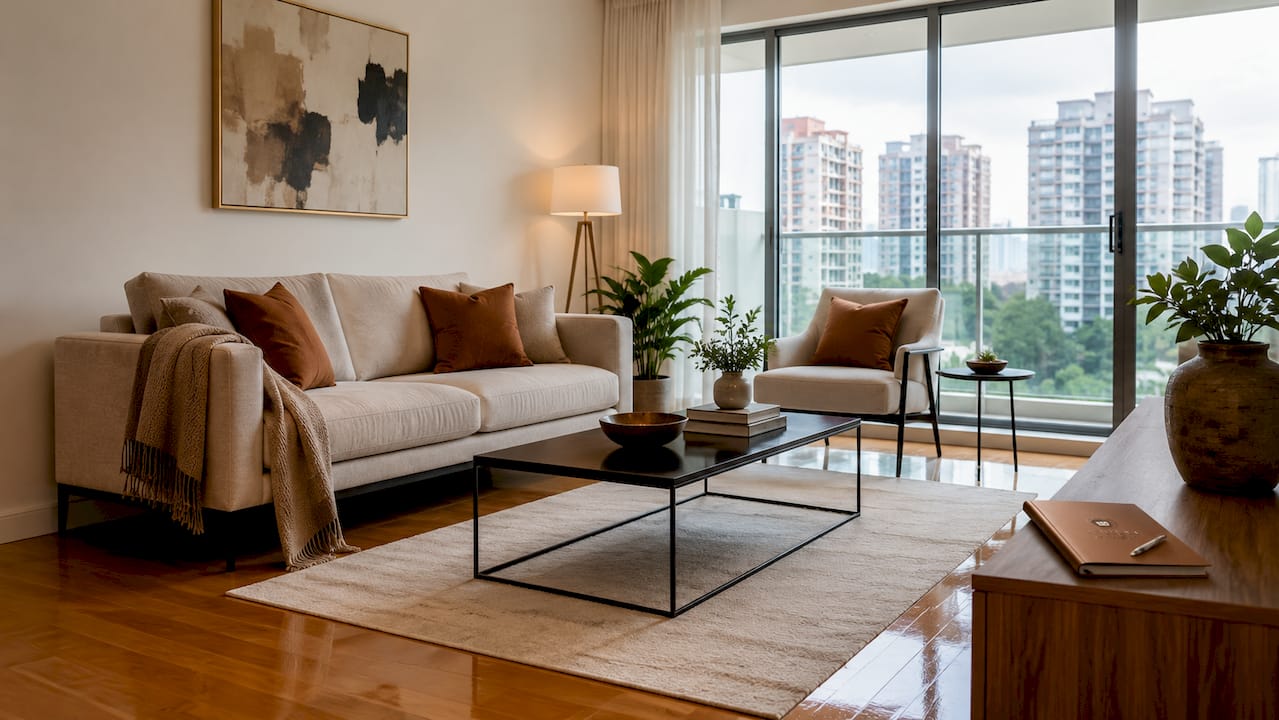
In Singapore’s residential market, this distinction shapes how agents and developers approach their marketing calendars. A developer launching a new condominium in Tengah or Jurong Lake District cannot stage units that do not yet exist. 3D rendering works from blueprints and is the standard tool for off-plan and new build sales. Staging, whether physical or virtual, suits completed and vacant inventory such as resale HDB flats, landed homes, and condo units ready for viewing.
The workflow for each method also differs considerably:
- 3D architectural rendering: A specialist models the space from CAD drawings or site measurements, applies materials and lighting, and renders the final image. Production typically takes 3–14 business days depending on complexity.
- Virtual staging: An editor digitally adds furniture and décor to existing photographs of an empty room. AI-driven tools can produce results in under 90 minutes; professional edits take longer.
- Physical staging: A staging team sources, delivers, and arranges real furniture in the property. Setup can take one to several days and requires access to the unit.
Pro Tip: If your property is vacant and already photographed, virtual staging is the fastest way to produce listing-ready images while physical staging is being arranged. Use both in sequence rather than treating them as alternatives.
The process for physical staging is more logistically involved. It requires coordinating delivery schedules, furniture selection, and access with the landlord or agent. Renderings and virtual staging, by contrast, are produced off-site and delivered digitally.
What are the cost, speed, and quality trade-offs?
Cost is where the staging vs renderings comparison becomes most practical. Virtual staging costs $1–$150 per image, with AI-driven tools producing results in minutes and professional edits taking a few hours. 3D renderings cost $299–$2,500 per image and require 3–14 business days of production. Physical staging carries higher upfront costs because it involves real furniture, logistics, and labour.
| Method | Typical cost per image | Production time | Best suited for |
|---|---|---|---|
| Virtual staging | $1–$150 | Minutes to hours | Vacant completed units |
| 3D architectural rendering | $299–$2,500 | 3–14 business days | Off-plan, new builds, luxury |
| Physical staging | Higher, project-based | 1–5 days setup | Completed units, viewings |
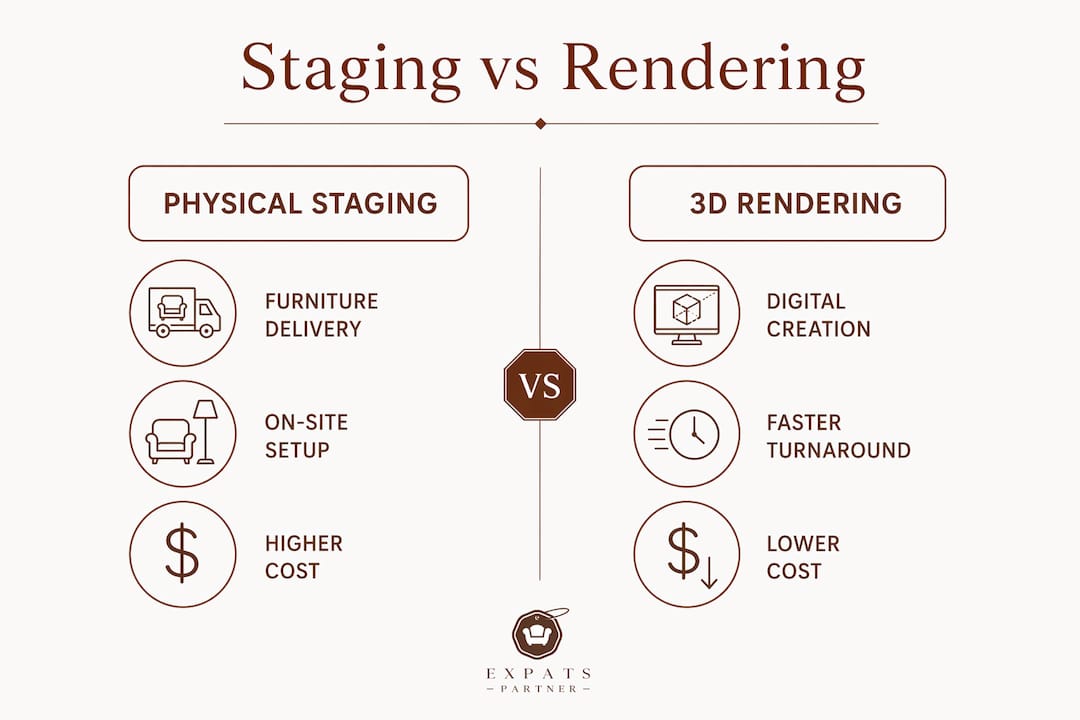
Quality and flexibility also differ across the three methods. 3D rendering offers total control over layout, finishes, lighting, and camera angles. You can test multiple colour schemes or furniture arrangements without touching the physical space. Virtual staging adds furniture to existing photographs but cannot change the room’s structure, natural light, or architectural features. Physical staging produces real photographs with genuine depth, texture, and atmosphere that digital methods can approximate but rarely replicate exactly.
Pro Tip: For luxury condos above S$1.5 million, invest in professional 3D renders rather than AI virtual staging. Luxury buyers detect subtle flaws in digitally edited images, and a poorly executed virtual stage can undermine the perceived value of a premium listing.
The speed advantage of virtual staging is significant for agents working to tight listing deadlines. A resale condo in Bishan or Clementi can have professionally staged listing images within a day, without waiting for furniture delivery or staging setup. For developers, 3D rendering remains the only method that produces marketing materials before a single brick is laid.
How do renderings and staging impact buyer engagement and sales?
The impact of renderings on selling is measurable. Virtual staging on vacant listings leads to 20–35% faster sales and 5–10% higher prices compared to vacant photographs alone. That improvement comes from a straightforward mechanism: buyers find it easier to imagine living in a furnished space than an empty one. Empty rooms feel smaller, colder, and harder to connect with emotionally.
Physical staging goes further than digital methods in one specific way. It creates an in-person sensory experience that photographs cannot replicate. A buyer who walks into a well-staged condo in Orchard or Novena feels the scale of the rooms, notices the quality of the furniture, and experiences the flow of the space. That tactile engagement is particularly effective for local buyers who prefer to view a property in person before committing.
“Physical staging creates stronger emotional connections via tactile experience, and that emotional connection helps conversion especially for local buyers who rely on in-person viewings to make decisions.”
For international and remote buyers, the calculation shifts. 3D rendering builds trust among international and remote buyers by offering exact and repeatable visual references. A buyer in London or Hong Kong evaluating a Singapore property off-plan cannot attend a physical viewing. A high-quality 3D render gives them a reliable, detailed reference that a photograph of an empty shell cannot provide.
The staged listing advantage is also relevant for the rental market. Landlords who stage vacant units consistently attract tenants faster than those who list empty properties. In Singapore’s competitive condo rental market, a furnished or staged listing stands out in a sea of bare-room photographs.
Different property segments benefit from different approaches:
- Off-plan and new build condos: 3D architectural rendering is the primary tool. It is the only method available before construction completes.
- Resale HDB flats and condos: Virtual staging or physical staging suits these properties. Physical staging is preferred for higher-value units.
- Luxury landed homes: Physical staging combined with professional photography produces the strongest results. High-quality 3D renders support pre-sale marketing.
- Rental units: Virtual staging or light physical staging keeps costs manageable while improving listing appeal significantly.
What should you weigh when choosing between staging and renderings?
Choosing between staging and renderings is a decision shaped by four factors: the property’s current state, your timeline, your budget, and your target buyer.
- Is the property built? If not, 3D architectural rendering is your only option. Staging requires a physical space to work with.
- What is your timeline? Virtual staging produces listing images within hours. Physical staging requires days of planning and logistics. 3D rendering takes up to two weeks for complex projects.
- Who is your buyer? Local buyers attending viewings respond strongly to physical staging. Remote and international buyers rely on digital visuals, making high-quality renders more effective.
- What is your budget? Virtual staging is the most cost-efficient entry point. Physical staging costs more but delivers stronger emotional impact for in-person viewings. 3D rendering sits in the middle for virtual staging but rises sharply for architectural-grade work.
A hybrid marketing strategy combines the strengths of both approaches. Modern developments market best by using 3D renderings pre-construction and physical staging post-construction. This approach covers the full property lifecycle and maximises buyer engagement at every stage.
Pro Tip: Do not retire your 3D renders once the building is complete. Use them alongside physical staging photographs in your digital listings. Renders show the design intent clearly; staged photographs show the lived-in warmth. Together, they tell a more complete story.
For Singapore agents managing a mixed portfolio of off-plan launches, resale condos, and rental units, the practical answer is rarely one method or the other. Virtual staging handles the bulk of resale and rental listings efficiently. 3D rendering supports new launches and luxury properties. Physical staging closes the gap for high-value units where an in-person viewing is the deciding moment.
Leasing faster with staged homes is a consistent outcome across Singapore’s condo and HDB rental market. Agents who stage vacant rental units report shorter void periods and stronger enquiry rates from the first week of listing.
Key takeaways
The most effective property marketing strategy matches the visualisation method to the property’s lifecycle stage, target buyer, and budget rather than defaulting to a single approach.
| Point | Details |
|---|---|
| Renderings suit unbuilt properties | 3D rendering is the only viable marketing tool before construction completes. |
| Virtual staging is fast and affordable | At $1–$150 per image, it improves vacant listing appeal within hours. |
| Physical staging drives in-person conversion | Tactile experience during viewings creates stronger emotional engagement for local buyers. |
| Luxury properties need higher render quality | Buyers in the premium segment notice digital flaws; professional 3D renders are necessary. |
| Hybrid strategies outperform single methods | Combining renderings pre-construction with staging post-construction maximises results across the full sales cycle. |
What we have learned from staging Singapore properties
Working across Singapore’s residential market, from HDB resale flats in Tampines to landed homes in Bukit Timah, one pattern becomes clear: agents and landlords who treat staging and renderings as competing choices consistently underperform those who use them together.
The instinct to pick one or the other usually comes down to cost. Virtual staging feels like the obvious budget choice, and for many listings it is the right one. But the mistake is applying it uniformly across a portfolio without considering what each property actually needs. A S$3 million landed home in Holland Village deserves physical staging and professional photography. A two-bedroom condo rental in Jurong East is well served by clean virtual staging images that go live within a day.
What I have also noticed is that Singapore buyers, particularly those purchasing for owner-occupation rather than investment, respond very differently to physical staging than to digital visuals. They want to feel the ceiling height. They want to stand in the kitchen and see how the light falls in the afternoon. No render, however polished, replaces that experience. For those buyers, physical staging is not a luxury. It is a practical tool that shortens the decision timeline.
The home staging Singapore market has matured considerably. Agents who once questioned the cost of staging now treat it as a standard line item in their marketing budget, because the evidence from faster sales and stronger offers is hard to argue with.
My honest recommendation: use 3D rendering for anything pre-construction or in the planning stage, use virtual staging for rental listings and lower-value resale units, and invest in physical staging for any property where an in-person viewing is likely to be the deciding moment.
— Expats Partner
Physical staging for Singapore properties: how Expats Partner can help
Expats Partner provides home staging services for property sales and rentals across Singapore, covering condos, landed homes, HDB resale flats, and rental units. The service includes furniture selection, delivery, setup, and collection, with flexible rental terms that suit short-term staging needs and longer listing periods alike.
For agents and landlords who want physical staging to complement their digital marketing materials, Expats Partner offers furniture rental packages that cover full-home furnishing without the need to purchase, store, or dispose of furniture. Whether you are preparing a vacant condo for viewings or furnishing a rental unit to attract tenants faster, the team handles the logistics so you can focus on the listing.
Contact Expats Partner to discuss your property’s staging requirements and get a clear, transparent quote.
FAQ
What is the difference between virtual staging and 3D rendering?
Virtual staging adds digital furniture to existing photographs of a completed space. 3D rendering creates an entirely new image from architectural drawings, making it suitable for properties that are not yet built.
How much does virtual staging cost compared to physical staging?
Virtual staging costs $1–$150 per image and can be completed within hours. Physical staging is priced as a project and costs more, but it creates a real furnished environment for in-person viewings.
When should a Singapore property agent use 3D rendering?
3D rendering is the right choice for off-plan launches, new build condominiums, and luxury properties where buyers expect high visual quality and detailed design references before construction completes.
Does staging actually help sell a property faster in Singapore?
Virtual staging on vacant listings leads to 20–35% faster sales and 5–10% higher prices compared to vacant photographs alone, based on buyer visualisation research. Physical staging strengthens in-person conversion, particularly for local buyers.
Can renderings and staging be used together for the same property?
A hybrid approach using 3D renderings pre-construction and physical staging post-construction consistently produces the best results across the full property sales lifecycle.