
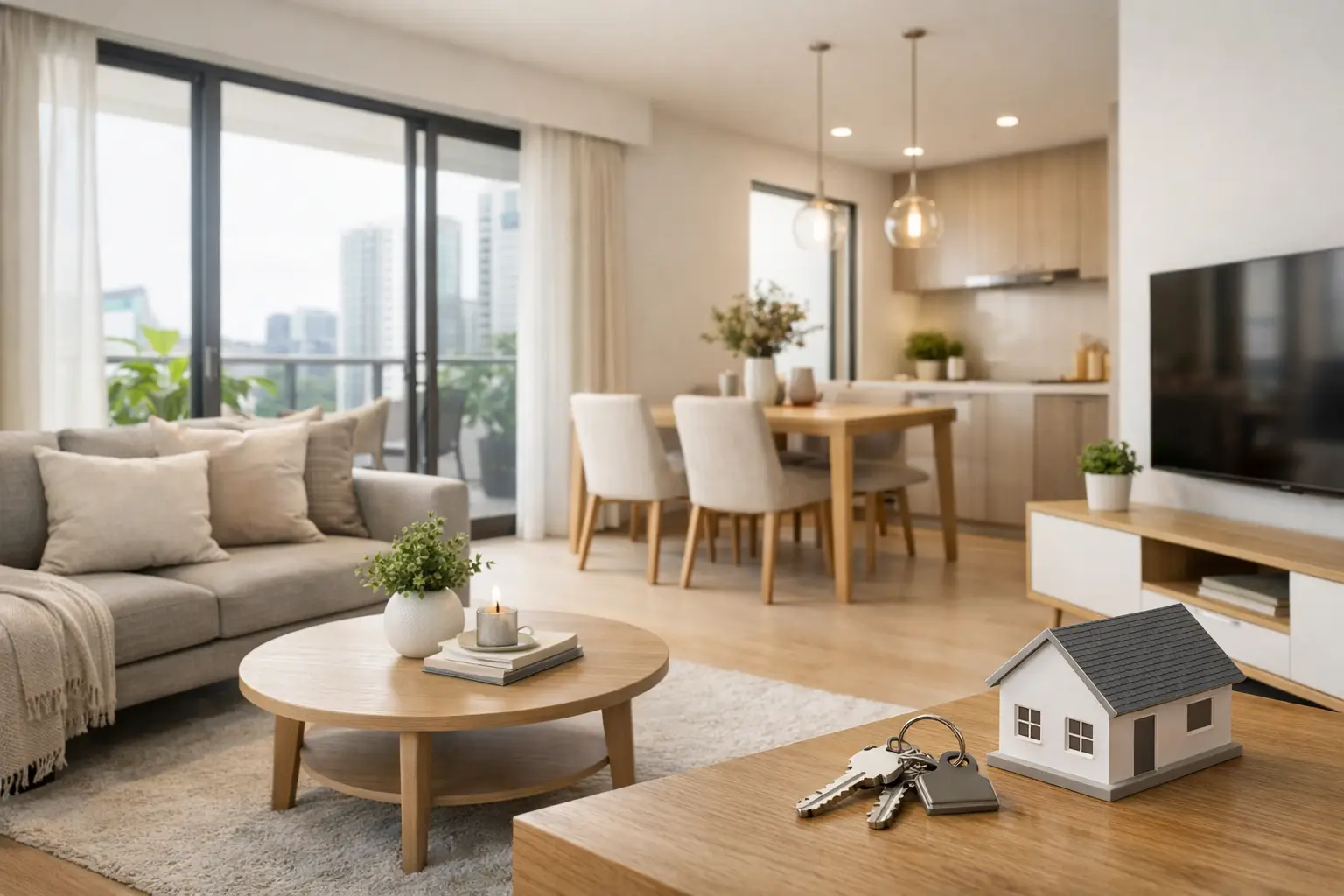
A vacant flat living room can look larger in person than it does in a listing photo. Yet without a sofa, rug or dining setting to give it scale, buyers may struggle to judge whether their furniture will fit. Property styling addresses that gap. It gives buyers and tenants a clear, welcoming picture of how a home could work for everyday life before they step through the door.
For property agents, sellers and landlords in Singapore, this is not about making a home look overly decorated. It is about presenting the right story for the property: a comfortable family dining area, a calm main bedroom, or a practical study corner in a compact flat. When the layout is easier to read online and in person, enquiries and viewings can begin from a stronger position.
What property styling is designed to do
Property styling is the careful selection and placement of furniture, lighting, artwork, soft furnishings and accessories to prepare a home for sale or rent. It is different from furnishing a home for its owner. An owner may choose pieces around personal routines, collections and long-term tastes. Styling is led by the property, its likely audience and the way it needs to be presented in marketing.
A well-styled home helps a prospective buyer understand proportion. A dining table shows that the dining zone is usable, while a properly sized sofa clarifies the depth of a living room. A bed, bedside tables and soft lighting can make an awkward bedroom feel settled rather than small. These visual cues matter especially in online listings, where photos often decide whether someone arranges a viewing.
The aim is not to conceal defects or create an unrealistic impression. Good styling works with the home’s genuine strengths and brings clarity to spaces that might otherwise feel empty, crowded or dated. If a room has limited natural light, a thoughtful palette and lighter furniture can help it feel brighter. If a layout is unusual, a clear furniture plan can show a sensible purpose for each area.
Why empty and occupied homes need different approaches
Vacant properties are often the most straightforward to style, but they still need a plan. Every room can be viewed as a blank canvas, which makes it easier to establish a consistent look. The challenge is that completely empty rooms can feel cold and can appear smaller or less functional in photographs. A targeted furniture rental package gives the space scale without committing the seller or landlord to purchasing items that will only be needed for a short period.
Occupied homes require more sensitivity. Personal belongings, oversized furniture and everyday clutter can distract from architectural features or limit the feeling of space. In some cases, a full staging setup is unnecessary. Decluttering, removing a few pieces and introducing selected furniture or accessories may be enough. In others, particularly where the existing furniture is heavily worn or mismatched, a more complete restyle may create a clearer presentation.
There is no single formula. A family home with generous rooms may benefit from warm, practical styling that feels lived-in but tidy. A city flat aimed at professionals may call for a more streamlined look, with a defined work-from-home area and restrained accessories. The likely buyer or tenant should guide the choices, not a passing interior trend.
Start with the spaces buyers notice first
Not every room needs the same level of attention. The entrance, living area, dining space, main bedroom and balcony often carry the most weight because they feature prominently in photos and shape the first viewing impression. These are the rooms where furniture placement should be especially deliberate.
The living room should demonstrate circulation as well as comfort. A sofa that is too large can make a good-sized room feel restricted, while a very small seating arrangement can make it feel underused. A rug, coffee table and occasional chair can anchor the arrangement and provide a sense of proportion. Keep pathways visible, particularly in narrow layouts.
In the dining area, a table with the appropriate number of chairs helps buyers see how the space functions. Styling a study does not require a full home office, but a simple desk and chair can turn an uncertain corner into a useful feature. Bedrooms need enough furniture to feel complete, without filling every wall. Clean bedding, bedside lighting and limited decorative pieces usually work better than elaborate displays.
Balconies deserve attention in Singapore, where outdoor space can be a deciding feature. A compact table and chairs or a modest lounge setup can show that the area is usable. The key is to match the furniture to the balcony’s true size. Buyers quickly notice when a staged setting is impractical.
Styling for better property photographs
Photographs are often the first viewing, so a property should be prepared for the camera rather than styled only for someone standing in the room. This means checking sightlines, reducing visual noise and ensuring furniture does not obscure windows, built-in storage or key features.
Neutral colours tend to photograph well because they allow the room’s finishes and natural light to remain visible. That does not mean every interior must be beige. A few muted cushions, artwork or greenery can add warmth and contrast without competing with the home. Strongly personal items, excessive ornaments and highly themed décor can make it harder for buyers to picture themselves there.
Lighting needs equal consideration. Open curtains and blinds where privacy allows, replace failed bulbs and use lamps to soften dark corners. A bright room is not necessarily a better room if highlights are blown out or the atmosphere feels harsh. The goal is an honest, comfortable image that makes people want to see more.
Before photography, check the small details: cords tucked away, kitchen worktops cleared, bathroom counters simplified and beds made neatly. These are simple steps, but they prevent a polished furniture setup from being undermined by distractions.
The practical case for renting furniture for styling
Buying furniture for a short marketing campaign can be difficult to justify. It involves selecting items, arranging delivery, building or placing them, storing them later and deciding what to do with them once the property is sold or let. For a vacant home or a time-sensitive listing, those tasks can take attention away from marketing and buyer follow-up.
Furniture rental keeps the commitment aligned with the purpose. The property can be styled for an agreed period, then the items can be collected when the campaign ends or the tenant moves in. It also makes it easier to choose furniture suited to the property rather than relying on whatever is already available.
A hands-on styling partner can coordinate the furniture selection, space planning, delivery, installation and collection. This is particularly useful for agents managing several listings, homeowners preparing a sale from overseas, or landlords needing a unit ready between tenancies. Expats Partner supports this process with curated rental furniture and presentation-led setups that suit the pace of Singapore’s property market.
Rental is not always the right answer. A landlord building a long-term furnished rental portfolio may prefer to buy durable core pieces, particularly where the same style can be used across several units. Even then, rented furniture can be useful for a temporary staging period, a show unit or a property that needs to be listed quickly.
A sensible styling brief saves time
The strongest outcomes usually begin with a clear brief. Share the property type, floor plan, room photographs, target sale or rental date, expected audience and any features that deserve attention. It also helps to be open about limitations, such as existing furniture that must remain, access restrictions, lift booking requirements or a firm budget.
A good brief makes it possible to focus spending where it will be seen. Rather than furnishing every corner, priority can go to the rooms used in listing images and viewings. It also allows delivery and installation to be scheduled around photography, open houses and handover dates.
Property styling works best when it feels believable. Buyers do not need a fantasy home. They need enough visual guidance to understand the space, notice its potential and feel comfortable taking the next step. A calm, well-prepared room can do much of that work before the conversation at a viewing even begins.