
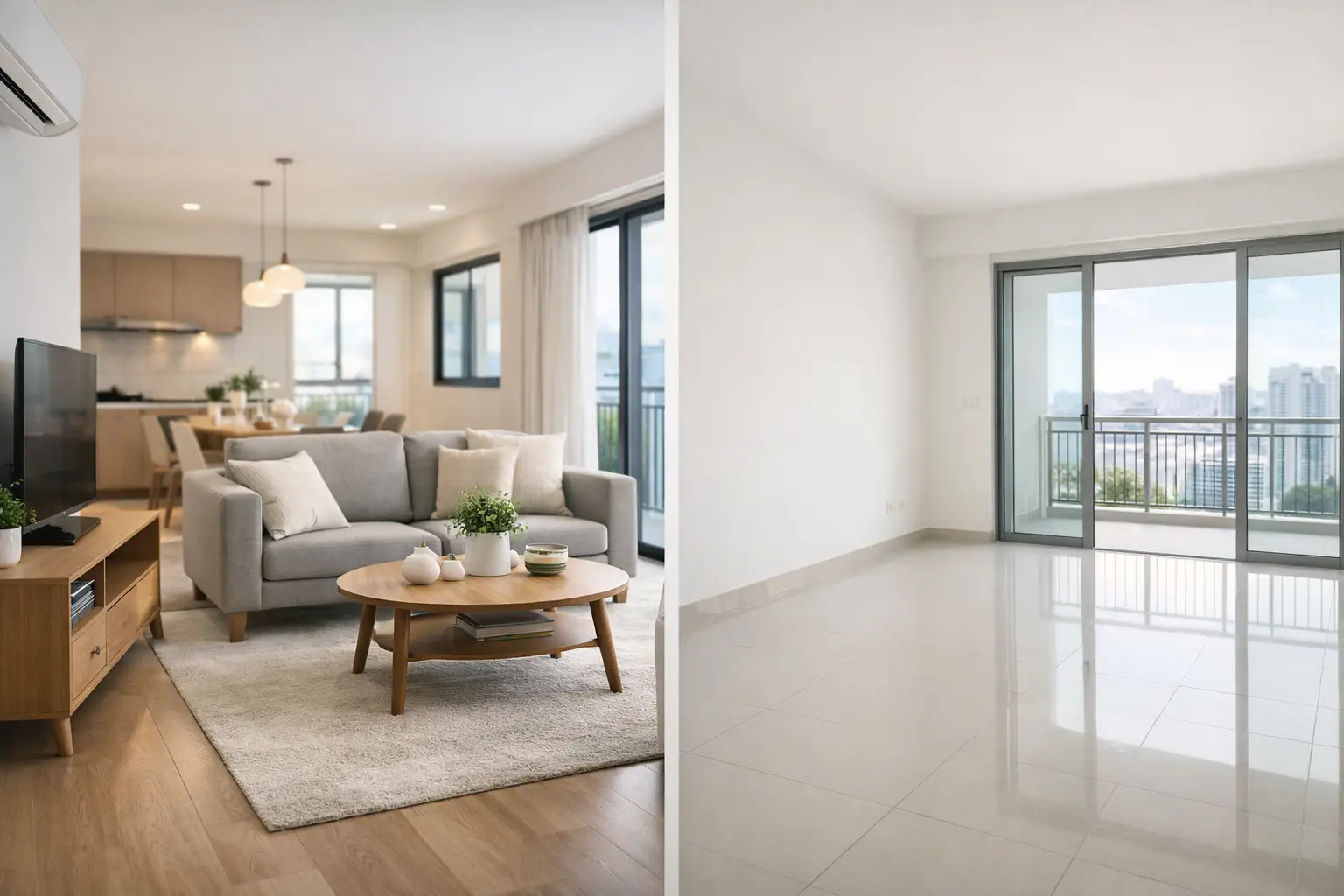
A vacant flat can look clean, bright, and full of possibility. It can also look smaller than it is, colder than it feels in person, and easier to scroll past. That is the real question behind staged listing vs empty listing – not whether furniture looks nice, but whether presentation helps buyers and tenants make a quicker, stronger decision.
For agents, landlords, and sellers, the difference often shows up before anyone books a viewing. Photos do the first job. They need to help people understand scale, layout, and lifestyle. An empty property leaves more to the imagination. Sometimes that works. Often, it asks too much of the person browsing dozens of listings in one sitting.
Staged listing vs empty listing in real terms
A staged listing is a property presented with furniture, styling, and layout choices that make the space feel usable and inviting. An empty listing is exactly that – clean, unoccupied, and without visual cues for how the rooms can function.
The practical difference is not only aesthetic. Staging helps define rooms clearly. A spare bedroom becomes a home office or a child’s room. An open-plan living area stops feeling vague and starts feeling proportionate. Even a compact dining space can read as intentional rather than cramped when furnished correctly.
With an empty listing, viewers tend to focus on the shell of the property. That can be helpful if the finishes are exceptional or the layout is unusually strong. But where a room has awkward dimensions, limited natural light, or an unfamiliar floor plan, empty space can amplify uncertainty.
Why empty rooms often underperform online
Most property decisions now start on a screen. By the time someone visits, they have already formed an opinion about whether the home feels worth their time.
Empty rooms usually photograph flatter than furnished ones. Without reference points, it becomes harder to judge size. A large bedroom can look plain. A narrow living area can feel narrower. Corners and blank walls dominate the image, while the function of the room is left unstated.
That matters because people are not only buying square footage. They are responding to ease. They want to picture how the property will support daily life. Where will the sofa go? Does the dining area actually work? Can the second bedroom serve a real purpose? Staging answers those questions quietly, without needing extra explanation in the listing copy.
For rental listings, this effect is often stronger. Tenants are making faster decisions and comparing multiple options at once. A furnished, well-styled presentation reduces friction. It helps them picture moving in, not just moving furniture around in their head.
Where staging changes buyer and tenant behaviour
Good staging does not distract from the property. It directs attention to what already works.
A well-proportioned sofa can show that the living room fits proper seating without feeling crowded. Bed placement can make circulation clearer. Rugs, lighting, and soft furnishings can soften echo and emptiness, which often shape the mood of a viewing more than people realise.
This changes behaviour in two ways. First, it improves click-through and enquiry quality because the listing looks more complete and considered. Second, it improves the viewing experience because visitors are responding to a space that feels ready. That sense of readiness can create momentum.
Momentum matters in both sales and lettings. When viewers can understand the property quickly, they spend less energy solving it and more energy evaluating whether it suits them. That shift can lead to stronger offers, fewer objections, and less hesitation.
When an empty listing can still make sense
There are cases where empty is the right choice. Luxury properties with standout architecture sometimes benefit from minimal distraction. Newly renovated homes may need to show off materials, sightlines, or built-in features. If the target audience is highly design-literate, they may prefer a blank canvas.
There is also a timing and budget question. If a property is expected to move immediately because of location, price point, or stock shortage, the owner may decide not to stage. In some landlord situations, an empty listing is simply the fastest route to market.
But even then, empty should not mean underprepared. Professional photography, thoughtful lighting, strong room sequencing, and a clear understanding of how each area is described in the listing become more important. An empty home needs discipline to avoid looking unfinished.
The cost question behind staged listing vs empty listing
The hesitation around staging is usually financial. Owners want to know whether the outlay is justified.
That is a fair question, and the answer depends on the asset, audience, and expected holding cost. A unit sitting vacant for longer than necessary can carry its own expense through mortgage payments, maintenance, utilities, service charges, and missed rental income. If staging shortens time on market or helps support a stronger price position, the maths can shift quickly.
This is why staging is better treated as a marketing decision than a decoration decision. The point is not to fill a room. The point is to improve listing performance.
For many agents and homeowners, furniture rental is what makes that practical. It allows a property to be presented well without the commitment of buying, storing, transporting, and removing full sets of furniture. That is particularly useful for vacant sale units, rental turnarounds, show units, and relocation housing where timing matters.
What works best in Singapore listings
In Singapore, where many homes have compact layouts and buyers or tenants compare units within the same development, presentation can influence how clearly one listing stands apart from another.
Staging tends to work especially well in condos, new launches, investment properties, and homes with efficient but modest room sizes. In these settings, layout clarity is everything. A furnished room gives immediate scale. It also helps avoid the common problem of online viewers assuming a room is too small simply because it is empty and photographed without context.
Neutral styling usually performs best. Overly personal interiors can narrow appeal, while sparse but intentional furnishing makes the property feel cared for and broadly liveable. The aim is not to impress with decoration. It is to remove doubt.
How to decide which approach suits your listing
The simplest test is this: what does your listing need help communicating?
If the home has unusual proportions, a hard-to-read layout, or rooms that may be interpreted as too small, staging is often the stronger option. If the property is targeting time-poor tenants, overseas viewers, or investors who are screening quickly online, staging can also do more of the selling work upfront.
If, on the other hand, the property’s strengths are architectural and obvious, and the likely buyer does not need help imagining use, an empty presentation may be acceptable. Even then, the listing needs to be handled carefully so it reads as intentionally vacant rather than lacking warmth.
A useful middle ground is partial furnishing or focused staging. Sometimes one or two key rooms carry most of the listing. The living area, main bedroom, and dining zone often shape the strongest first impression. You do not always need to stage every corner for the home to feel coherent.
Presentation is not cosmetic – it is commercial
The reason this debate matters is simple. Property presentation affects perception, and perception affects response.
An empty listing can work, but it asks the market to do more. It relies on imagination, confidence, and patience. A staged listing reduces that effort. It helps the property explain itself faster and with less ambiguity.
That does not mean every vacant home should be fully staged. It means every listing should be judged by how well it communicates value. In many cases, the better question is not whether furniture is necessary, but whether the current presentation is helping or quietly holding the listing back.
For agents and owners who need speed, clarity, and a polished viewing experience, that distinction is rarely minor. It can shape who enquires, how they respond on site, and whether the property feels ready the moment they walk in.
At Expats Partner, we see staging as a practical tool for better listing performance, not an added extra. When a space is presented with purpose, people understand it more quickly – and that can change the outcome.
Contact us now at: Kevin Chang – 80119753 sales@expatspartner.com.sg Sales Specialist