
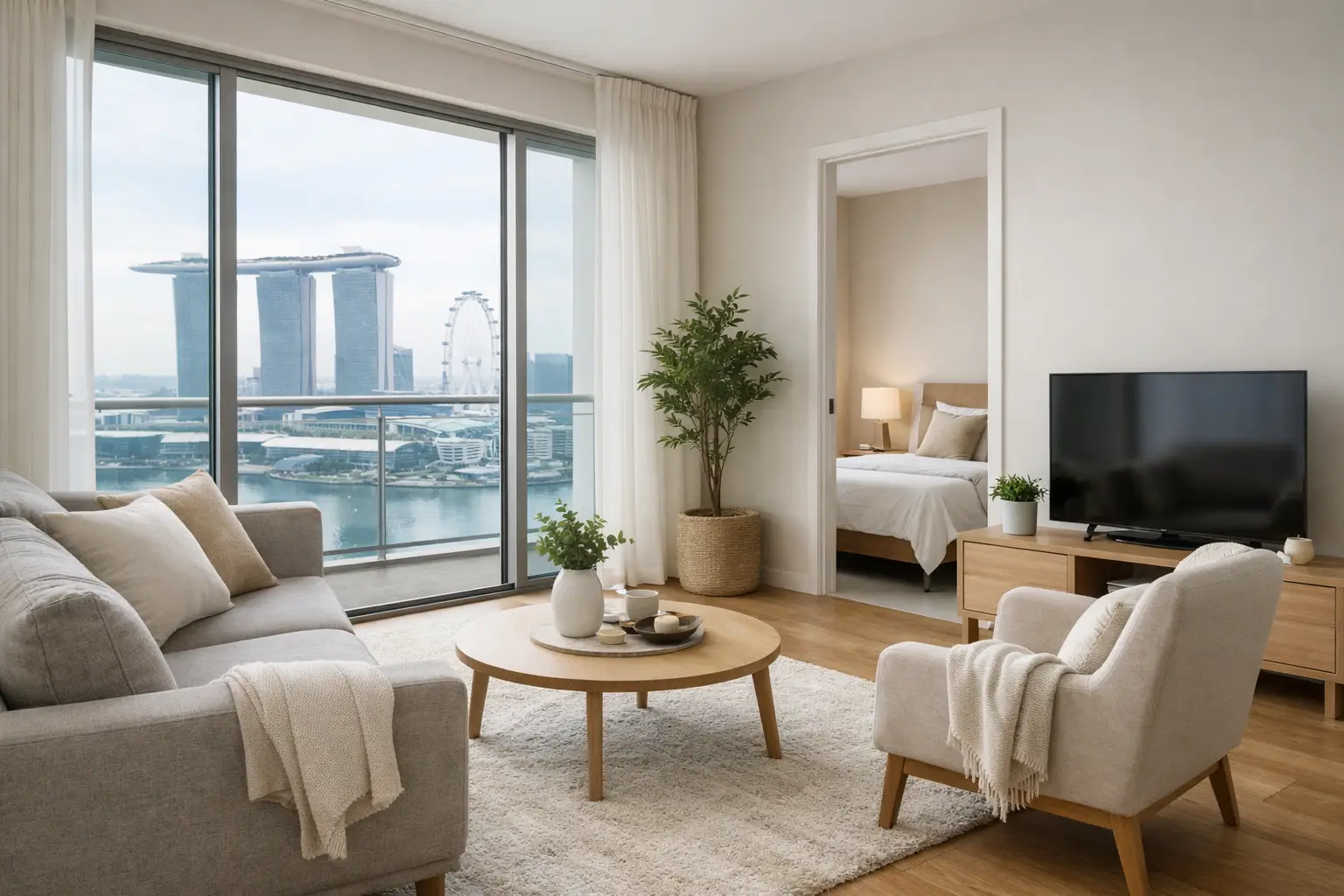
A vacant property rarely looks as promising in photos as it does on a floor plan. What reads as clean and spacious in theory can feel cold, echoing, and hard to judge in person. That is why vacant unit staging Singapore has become a practical tool for agents, landlords, and sellers who want stronger listing performance without unnecessary delay.
When a unit is empty, viewers have to do more work. They need to guess where the sofa might go, whether the dining area fits a proper table, and how the bedroom will feel once furnished. Some can do that easily. Many cannot. Good staging closes that gap. It gives shape to the space, makes room sizes easier to understand, and helps people picture themselves living there.
Why vacant units often underperform
Empty rooms can create the wrong impression, even when the property itself is in good condition. Corners appear sharper, proportions feel uncertain, and minor flaws draw more attention because there is nothing else for the eye to settle on. A small scuff on the wall, an awkward column, or a narrow passage can suddenly become the main thing a viewer remembers.
This matters most at the first point of contact. Online listings do not get much time to make an impression. Buyers and tenants scroll quickly. If the images feel bare or flat, the unit may be skipped before anyone reads the details. In a competitive market, that lost attention is expensive.
Staging changes the way the unit is read. It creates focal points, softens hard edges, and shows how each area functions. A living room becomes a place to gather, not just an empty rectangle. A study corner looks usable. A bedroom feels restful rather than undersized. None of this changes the floor area, but it often changes how the floor area is perceived.
What vacant unit staging in Singapore actually does
Vacant unit staging in Singapore is not about overdecorating a home or making it look unrealistic. The job is simpler and more commercial than that. It is about helping the right audience understand the property faster.
For a sale listing, that usually means presenting the space in a way that supports perceived value. Buyers tend to respond better when a unit feels well cared for and move-in ready. For a rental listing, staging can make the home feel immediately liveable, which is especially useful when prospective tenants are comparing several units in the same development or budget range.
The most effective staging uses furniture and styling with restraint. Neutral colours, clean lines, and sensible layouts tend to work better than anything too personal. The aim is not to impress with taste alone. The aim is to reduce hesitation.
That is why staging often works best when paired with furniture rental rather than furniture purchase. There is no need to commit capital to permanent furnishing, manage removal later, or overcomplicate logistics. For agents and owners, that flexibility matters just as much as the visual outcome.
Where staging has the biggest impact
Not every vacant unit needs the same level of treatment. A compact one-bedroom for lease may only need the key zones defined clearly. A larger family home for sale may benefit from a fuller setup that gives each room a clear role.
Living and dining areas usually matter most because they set the tone of the viewing. If these spaces feel balanced and usable, viewers tend to judge the whole unit more positively. Bedrooms come next, particularly the main bedroom, because they influence whether the home feels comfortable rather than merely functional.
There are also cases where staging is less extensive but still worthwhile. An investment property with a practical layout might only need a light staging setup for photography and key viewings. A newly completed unit in a development with multiple similar listings may need staging simply to avoid blending into the rest.
It depends on the audience, the asking price, and how much competition surrounds the listing. The right setup is not always the biggest one. It is the one that helps the unit read clearly and compare well.
The commercial value behind vacant unit staging Singapore
Property professionals are not using staging because it looks nice in isolation. They use it because presentation affects behaviour.
Better photographs can lead to more enquiries. Better viewings can lead to longer time spent in the unit. A clearer sense of scale can reduce objections. When viewers can understand the layout quickly, they are more likely to move from interest to decision.
That does not mean staging guarantees a higher selling price or immediate lease. Market conditions still matter. Pricing still matters. Location, facing, condition, and timing all matter. But staging can improve how a property enters the market and how confidently it is received.
For landlords, there is another practical angle. A vacant unit generates no rental income while it sits idle. If staging helps shorten the time between listing and commitment, the cost is often easier to justify. For sellers, the question is similar. A unit that lingers can invite lower offers or repeated price adjustments. Presentation will not solve every issue, but it can stop avoidable hesitation.
How the staging process should work
The best staging projects are straightforward. First, the unit needs to be assessed properly. Layout, room sizes, lighting, target audience, and listing objective all influence what should be installed. A home aimed at young professionals should not be staged the same way as one aimed at family buyers.
Next comes the furniture plan. This is where practical experience matters. Oversized furniture can make a room feel smaller. Sparse furniture can leave the space feeling unfinished. The layout has to strike a balance between showing function and preserving flow.
After that, delivery and setup need to happen quickly and cleanly. Agents and owners usually do not want multiple rounds of coordination, especially when photography, marketing, or viewings are already scheduled. Reliable installation makes a real difference here.
Finally, there should be a clear plan for rental duration and collection. Some properties move fast. Others need more time. Flexible terms are useful because the market does not always follow the hoped-for timeline.
What to look for in a staging partner
A staging provider should understand more than furniture. They should understand listings.
That means knowing how a home will appear on camera, what viewers notice first, and how to make a unit feel usable without making it feel crowded. It also means being operationally dependable. Delays, missing items, or poor setup can create stress at exactly the wrong moment.
For property agents, speed and consistency are often as important as styling. For landlords and homeowners, pricing clarity matters too. They want to know what is included, how long the rental runs, and what support comes with delivery, setup, and collection.
This is where a service-led approach tends to stand out. The goal is not simply to place furniture in a room. It is to help the property perform better with minimal friction for the client.
Expats Partner approaches staging in exactly that way – as a practical presentation tool backed by flexible furniture rental and dependable setup support.
When staging is worth doing, and when it may not be
Staging is usually worth considering when a unit is vacant, the photography feels flat, viewings are not converting, or the listing needs to stand apart from similar stock nearby. It is also useful when the property has an awkward layout that needs clearer visual guidance.
There are situations where a lighter touch may be enough. If a unit already has attractive built-ins, strong natural light, and a very obvious layout, partial staging can sometimes do the job. Likewise, if the property is being marketed mainly for redevelopment or heavy renovation, full staging may not be the best use of budget.
The point is not to stage every vacant property by default. It is to use staging where presentation is likely to influence response.
A well-staged vacant unit does something simple but valuable. It helps viewers stop measuring the space with uncertainty and start imagining how they would use it. That shift is often where stronger enquiries begin.
Contact us now at: Kevin Chang – 80119753 sales@expatspartner.com.sg Sales Specialist