
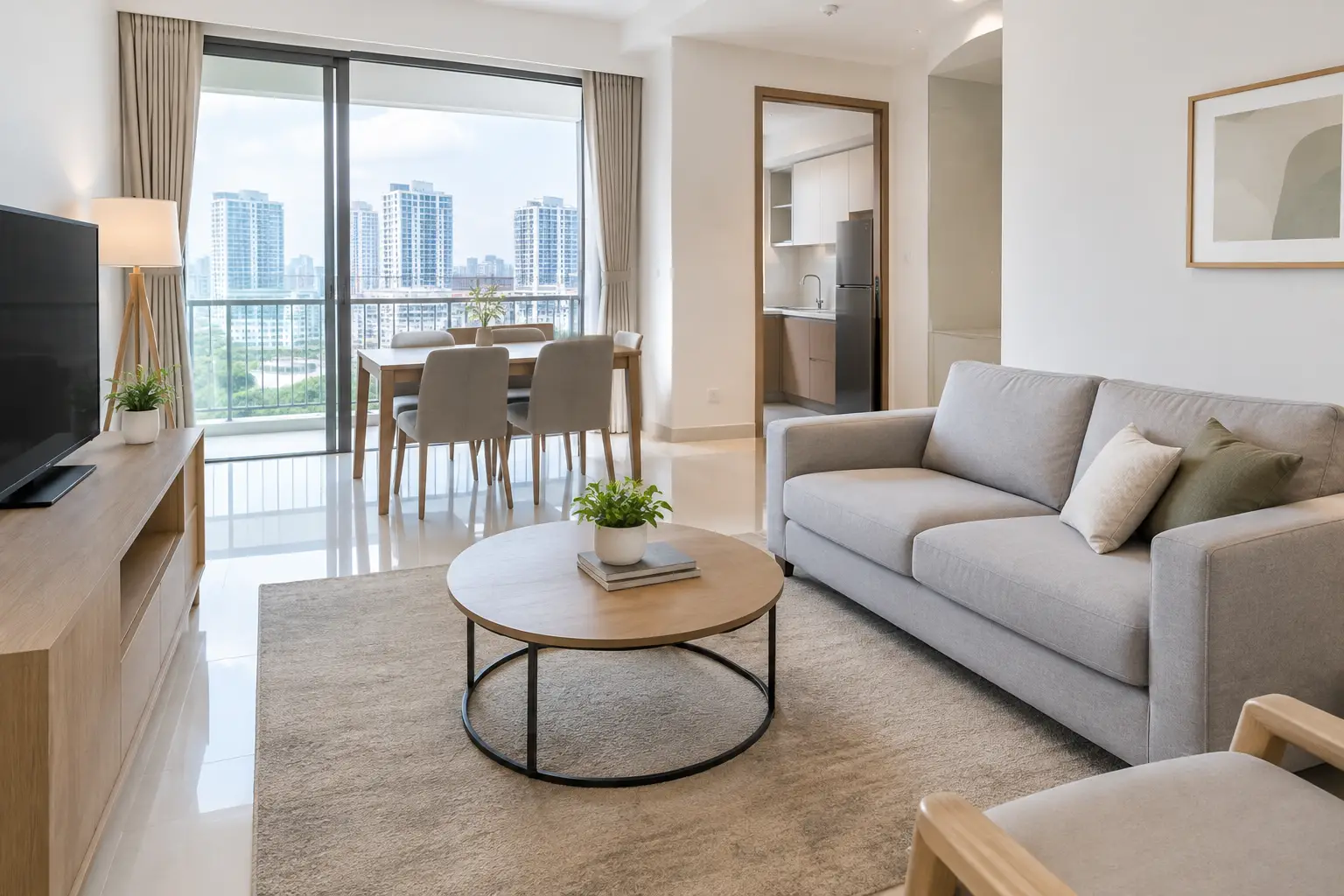
A vacant condominium can look smaller than it is in listing photos. A landlord with only a few days between tenancies may not have time to shop, assemble and arrange every room. These are the situations behind the question, what does furniture hire include? The short answer is furniture and logistics, but a well-managed hire service should also bring clarity to a busy property timeline.
For property agents, landlords, sellers and relocating residents in Singapore, the useful question is not simply what items arrive at the door. It is whether the package makes the space ready for photographs, viewings or move-in with minimal coordination on their side.
What does furniture hire include?
Furniture hire usually includes a selected range of furniture for an agreed rental period, along with delivery, placement or installation, and collection when the hire ends. The exact scope depends on whether the property is being prepared for sale, furnished for a tenant, set up for an incoming employee or equipped as a working office.
A basic furniture rental package may cover the practical essentials needed to live in a home. A home staging package is more presentation-led, using furniture and accessories to show how each room can function and feel. Neither approach is automatically better. The right one depends on who will use the property, how long it needs to be furnished and what outcome matters most.
Before confirming a quotation, ask for an itemised proposal. It should state the furniture included, rental duration, delivery and collection arrangements, any installation work, and charges that may apply for access constraints, extensions or damage. This prevents a simple furnishing decision from becoming a series of last-minute questions.
The furniture included in a typical hire package
Most residential furniture hire begins with the main pieces that give a room purpose and scale. In a living room, this may mean a sofa, coffee table, television console, rug and occasional chair. A dining area may receive a table and chairs, while bedrooms are commonly furnished with a bed frame, mattress, bedside tables and wardrobe or storage where needed.
The selection should suit the floor plan rather than follow a fixed checklist. A compact one-bedroom unit needs furniture that keeps walkways clear. A landed home may need enough pieces to make several living spaces feel intentional, without making the property appear crowded. For furnished rental homes, the package may also include practical items such as a desk, shelving, lamps and outdoor furniture if the space calls for it.
Some providers offer appliances, kitchen equipment, linen, televisions and small household items as part of a more complete relocation package. Others keep these separate. This is one of the main areas where packages differ, so it is worth confirming what is supplied rather than assuming a ‘fully furnished’ description means the same thing in every case.
For short-term needs, well-maintained pre-owned furniture can be a sensible choice. It reduces waste and can be more cost-conscious than purchasing new items for a temporary stay. Where a particular finish, specification or longer-term condition is required, new pieces may be sourced instead.
Furniture for staging is chosen differently
When a property is being marketed, furniture is selected for the way it reads in photographs and during a viewing. The aim is not to fill every available corner. It is to help buyers or tenants quickly understand the layout: where they might dine, work, rest or entertain.
A staged living room may include a proportionate sofa, a rug to define the seating zone, soft furnishings and simple décor. Bedrooms may be dressed to show scale and create a settled impression. In an awkward study or spare room, a desk and chair can make a useful purpose immediately visible.
This is why staging often includes accessories that would not always appear in a standard rental package. Cushions, artwork, table settings, mirrors, greenery and lamps add warmth and depth, particularly in listing photographs. They should support the architecture of the home, not distract from it.
Delivery, placement and installation
The service element is often what makes furniture hire practical. A provider normally arranges a delivery slot, brings the items to the property, carries them in and positions them according to an agreed layout. Larger items may be assembled on site, and packaging should be removed once the installation is complete.
For agents managing several appointments, this coordination matters. A delivery that arrives without a clear access plan can delay photography or a first viewing. Before the appointment, the provider may need details such as the property address, loading-bay rules, lift booking requirements, stair access, parking availability and contact person on site.
Singapore condominiums frequently have management rules around delivery hours, lift protection and contractor registration. Good preparation helps avoid avoidable waiting time or a failed delivery. If the property is vacant, it is also helpful to confirm access arrangements, utilities and whether the lifts are operational.
Placement should be more considered than simply putting furniture against the nearest wall. In a staged home, clear sightlines, comfortable circulation and balanced room proportions help the space photograph well and feel easy to explore. In a rental home, practical use comes first, but thoughtful placement still helps new occupants settle in faster.
Styling and space planning: when it is included
Not every furniture hire package includes professional styling. Some services provide a catalogue of items and fulfil a chosen order; others advise on room layouts, colour balance and accessory selection before delivery. For a seller or agent, that difference can be significant.
A property styling service considers the target market and the home’s existing features. A family-sized unit may benefit from an inviting dining setting and defined bedroom functions. A city-fringe flat marketed to professionals may need a calm work-from-home corner and a clean, contemporary living area. The intention is to make the home easier to understand, not to impose a personal taste on every buyer.
Styling may also involve working around furniture already in the property. If an owner-occupied home has good-quality pieces but feels visually busy, selective additions and edits can be enough. If the furniture is dated, mismatched or too large for the rooms, a fuller staging scheme may produce clearer results. This flexibility is often more practical than removing everything or buying replacement furniture outright.
Collection at the end of the hire period
Collection is generally part of furniture hire, although the timing and notice period should be agreed in advance. At the end of the rental term, the provider arranges a collection date, removes the furniture and leaves the property clear for handover, sale completion or the next furnishing plan.
It is sensible to ask how extensions work. A sale can take longer than expected, a tenant may change move-in dates, or a corporate assignment may be extended. A provider with flexible terms can help avoid the disruption of clearing a home only to refurnish it shortly afterwards.
The condition of the items will usually be checked at collection. Normal wear from appropriate use is different from accidental damage, stains, missing items or unauthorised alterations. Reading the hire agreement carefully helps everyone understand their responsibilities from the outset.
What may not be included
Furniture hire does not always include every cost or service associated with preparing a property. Access charges imposed by building management, special delivery requirements, disposal of existing furniture, deep cleaning, repair work and utility connection are often separate matters. Certain packages may also exclude mattresses, appliances, electronics or decorative accessories unless these have been specifically requested.
Photography is another common point of confusion. Staging can make photography stronger, but the photographer may be a separate appointment. For a property going to market, it helps to schedule staging first, then photography once the rooms are fully prepared and natural light can be used well.
The value of a clear proposal is that it shows these boundaries early. Rather than choosing the cheapest-looking package, consider the work it removes from your schedule and whether it supports the property’s next step.
Choosing the right level of furniture hire
For a landlord, the right package is usually one that makes the home appealing and functional for the intended tenant, while protecting budget and avoiding a large upfront purchase. For a relocating family, convenience and move-in readiness may be the priority. For an agent or seller, furniture hire is often a marketing decision: the home needs to look coherent online and give viewers confidence when they walk through the door.
Expats Partner approaches this as a practical, end-to-end service, from selecting suitable furniture to coordinating delivery, setup and collection. The focus is on creating a home that feels ready for its purpose, whether that is a tenancy, a relocation or a sale.
A well-furnished property does not need to look overly styled to make an impact. It simply needs to help the next person see how comfortably life could fit there.