
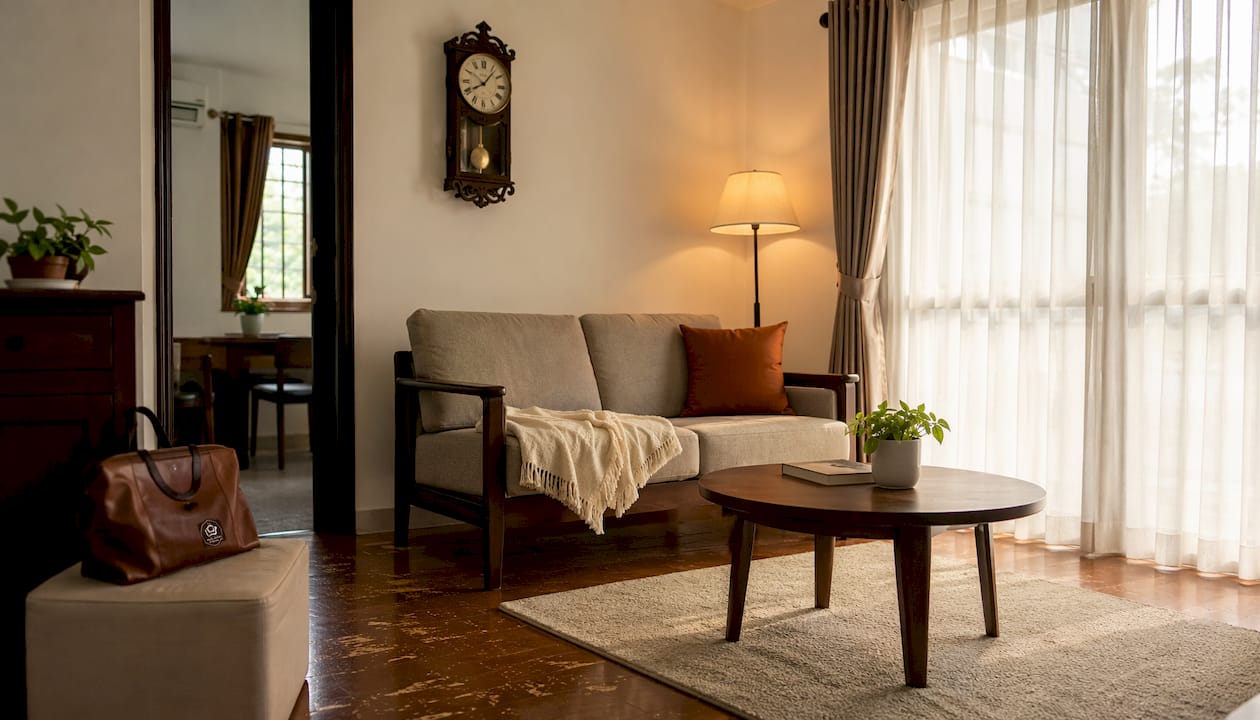
Staging briefs for HDB flats and private homes differ primarily because tenure rules, buyer profiles, and physical constraints pull in opposite directions. An HDB resale flat sits within a regulated framework — Minimum Occupation Period, ethnic integration quotas, and restrictions on structural alterations — that narrows what a stager can change and shapes who will buy. A private condo or landed home carries none of those constraints, so the staging brief can chase lifestyle aspiration rather than compliance. The parallel in the UK is familiar: staging a council flat or ex-local-authority property calls for a different approach than preparing a privately owned terrace or new-build apartment. The sections below unpack the structural drivers, practical choices, cost guidance, and legal limits for both property types.
Table of Contents
- Why HDB and private property staging briefs differ structurally
- How those differences translate into concrete staging choices
- Who you are staging for: buyer and renter profiles
- How much to spend and when to hire a professional
- Virtual staging versus physical staging: when each works
- What staging must not do: disclosure and legal safeguards
- A Singapore staging example with lessons for UK practitioners
- Common staging mistakes and a quick checklist
- A simple staging timeline before listing
- Key takeaways
- A practitioner’s note on where to start
- Recommended authorities and further reading
- Expats Partner: furniture rental and staging for Singapore properties
- FAQ
Why HDB and private property staging briefs differ structurally
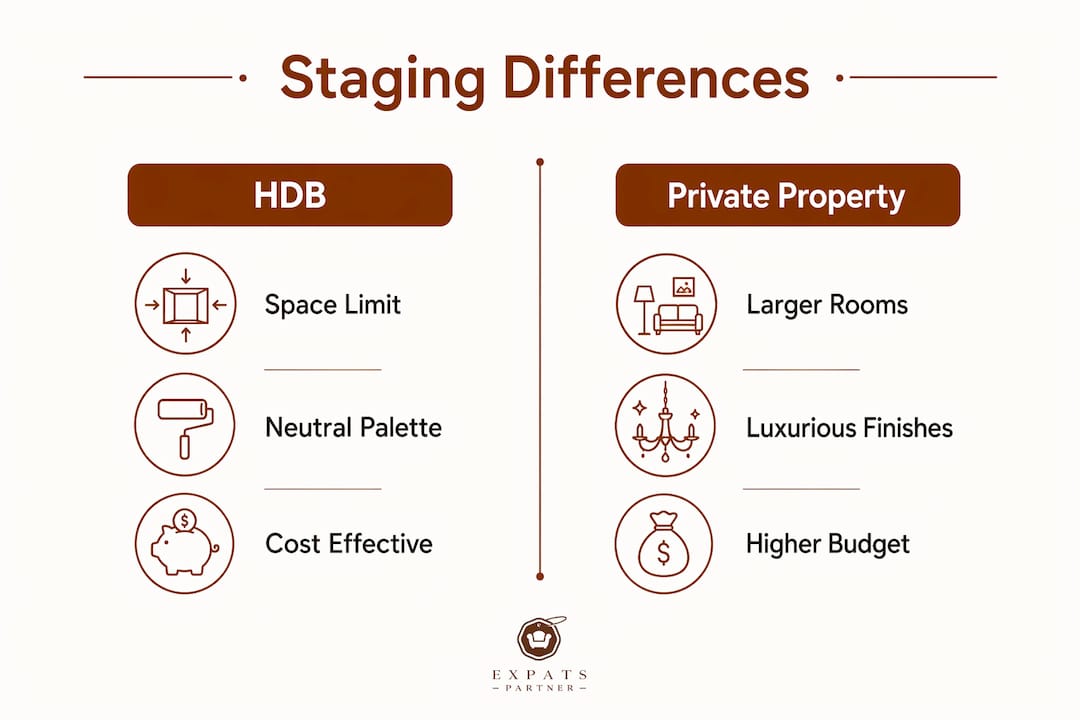
HDB resale flats come with built-in constraints that directly shape the staging brief. The Minimum Occupation Period means sellers are typically owner-occupiers, not investors, and their buyers are usually families or first-time purchasers who are price-sensitive and renovation-aware. HDB rules also prohibit new false walls in flats built after 2010, which limits how dramatically a stager can reconfigure a space. Ethnic Integration Policy quotas and SPR limits further narrow the eligible buyer pool, which affects pricing expectations and therefore how much staging spend is justified.
Private properties face none of these restrictions. Condo and landed buyers tend to be lifestyle-driven, often comparing multiple developments, and they respond to aspirational presentation. Developers stage show flats to a show-home standard precisely because the purchase decision is partly emotional.
-
HDB resale: constrained buyer pool, price-sensitive, renovation-aware, structural alteration limits
-
Private condo/landed: broader buyer pool, lifestyle-driven, higher tolerance for premium staging spend
-
Rental units (any tenure): tenants prioritise practical layouts and move-in readiness over aesthetics
Pro Tip: Before you book a stager, ask one question: is the buyer buying a home or an aspiration? If the answer is “a home within a budget,” cosmetic preparation usually delivers better ROI than full furniture rental.
How those differences translate into concrete staging choices
Furniture scale is the most immediate practical difference. A typical 3-room HDB flat has bedrooms of roughly 9–11 square metres. A king-size bed and a full wardrobe leave almost no circulation space, which photographs badly and feels cramped at viewings. Opt for a queen bed, a slim bedside table, and one low-profile storage piece. The room reads as calm and usable rather than squeezed.
Private condo living rooms, by contrast, often run to 30–40 square metres or more. Under-furnishing them makes the space feel cold and undefined. A full sofa grouping, a coffee table, and a defined dining area give buyers a clear sense of how they would actually live there.
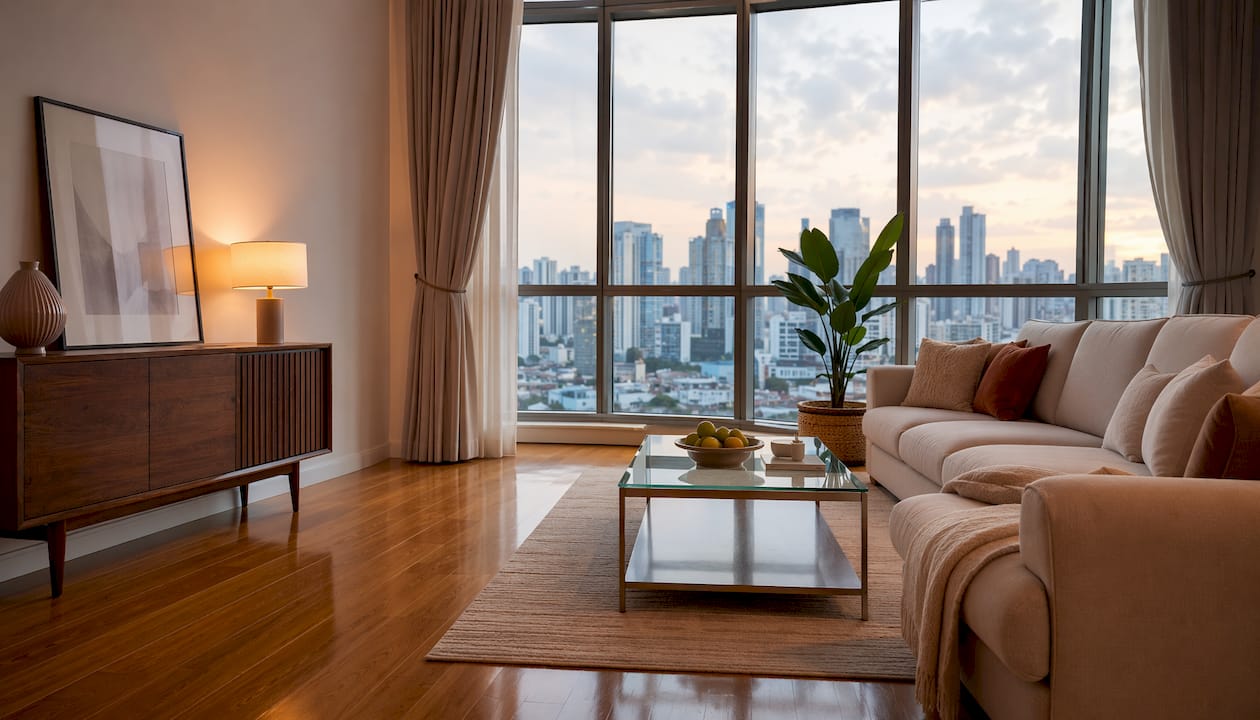
Colour choices follow a similar logic. Muted, neutral palettes — warm whites, soft greiges, light timber tones — work for both property types, but they matter more in HDB flats where the goal is to help buyers mentally “move in” without being distracted by bold choices. Private properties can carry slightly more character: a feature cushion, a curated shelf, a considered pendant light.
Pro Tip: In a small HDB bedroom, replace a ceiling light with a warm-toned floor lamp placed in one corner. The angled light draws the eye upward and makes the ceiling feel higher, with no structural work required.
Who you are staging for: buyer and renter profiles
Understanding your audience changes almost every decision in the staging brief.
- HDB resale buyers are typically families or couples buying their first or second home. They notice renovation age, fixture condition, and whether the layout works for daily life. They are less moved by aspirational styling and more reassured by cleanliness, good repair, and a neutral canvas they can personalise.
- Private property buyers respond to lifestyle cues. They are often comparing several properties and making a partly emotional decision. A well-staged condo that feels like a hotel suite or a curated home creates the emotional connection that drives offers.
- Investor buyers (common in the private market) look at condition and yield. They want to see a property that will attract tenants quickly, so practical, durable furnishing and a move-in-ready finish matter more than decorative styling.
- Tenants prioritise functional layouts, storage, and the sense that the property is well maintained. For landlords staging a vacant property for rent, the brief is closer to HDB resale than to a premium condo sale.
Online listing photos now drive the first filter for almost every buyer and tenant. A well-lit, uncluttered photograph gets the viewing; the physical staging closes it. For UK landlords, the same principle applies: posting a rental listing effectively starts with photography that shows the space honestly and attractively.
How much to spend and when to hire a professional
Professional staging can increase final sale offers by roughly 5–15% in the Singapore market, and staged properties typically sell faster. Those figures shift the cost calculation considerably.
The cost for staging varies by property type and package from basic preparation to premium staging, with higher-end properties typically justifying greater spend.
For HDB resale, deep cleaning, fresh neutral paint, and decluttering often deliver the best return. Full furniture rental is worth considering only when the flat is vacant or the existing furniture is dated and mismatched. Staging has limited impact if the core issues are location or a renovation that is 15+ years old.
Decision checklist:
- Is the property vacant? If yes, furniture rental is almost always worth it.
- Is the existing furniture in good condition and neutral in style? If yes, declutter and accessorise rather than replace.
- Is the asking price above the median for the area? If yes, invest in standard or premium staging.
- Are there visible defects (stained walls, broken fixtures)? Fix those first — staging cannot substitute for repairs.
- Is the target buyer lifestyle-driven (private condo)? If yes, full staging with considered accessories is justified.
Virtual staging versus physical staging: when each works
Physical staging creates a stronger emotional connection at in-person viewings and tends to produce higher offers—agents report that staged homes see 1%–10% higher offers and sell faster. Virtual staging generates online interest but can disappoint buyers who arrive expecting what the images showed.
- Virtual staging suits: fast-moving HDB resale segments where buyers decide quickly from photos; vacant units where physical staging is cost-prohibitive; initial listing images before a physical open house.
- Physical staging suits: higher-end private properties where the emotional connection at viewing drives the offer; any property where the buyer pool is likely to attend multiple viewings.
- Hybrid approach: use virtual images for the online listing to generate enquiries, then stage physically for open houses and second viewings.
For a detailed comparison of property renderings versus staging, the key question is whether the buyer’s decision will be made online or in person.
Pro Tip: When using virtual staging, add a clear caption to every image: “Virtually staged for illustration purposes.” This protects you legally and sets accurate buyer expectations before the viewing.
What staging must not do: disclosure and legal safeguards
Staging must never be used to conceal physical defects. Masking a structural crack, hiding water damage behind furniture, or using virtual imagery to remove visible damp crosses from presentation into misrepresentation, which can be legally actionable. This applies equally in Singapore and the UK.
- Disclose all material defects in writing before or at the point of listing.
- Keep before-and-after photographs of every staging decision.
- Label virtual staging images clearly in listing captions.
- Do not use paint or furnishings to cover defects that a buyer has a right to know about.
- For HDB properties, confirm that any staging changes comply with HDB’s guidelines on structural alterations.
Pro Tip: Keep a simple staging log: date, what was done, who did it, and a photograph. If a buyer later raises a misrepresentation claim, that log is your clearest defence.
This article is general information, not legal advice. Confirm current HDB rules and disclosure obligations with HDB directly or a qualified property professional for your specific situation.
A Singapore staging example with lessons for UK practitioners
A 4-room HDB resale flat in Tampines was listed after a basic staging brief: full deep clean, repainting in a warm off-white, removal of personal photographs and excess furniture, and replacement of a dated ceiling light with a brighter warm-white fitting. No furniture rental was required because the existing pieces were neutral and in good condition. The flat sold within two weeks at asking price, with two competing offers.
The brief worked because it matched the unit’s constraints and its buyer. The target purchaser was a young family buying their first resale flat. They needed to see a clean, well-maintained home they could move into without immediate renovation spend. Aspirational styling would have been wasted budget.
The lesson for UK practitioners is direct: in public or social housing, the staging brief should focus on condition signals — cleanliness, repair, neutral colour — rather than lifestyle aspiration. Buyers in this segment are making a practical decision, and staging that respects that tends to perform better than staging that tries to punch above the property’s market position.
For a detailed HDB resale staging example, Expats Partner’s case pages show the scope and outcomes of comparable briefs.
Common staging mistakes and a quick checklist
The most frequent errors cut across both property types.
- Over-styling: too many accessories, clashing colours, or furniture that reflects the owner’s taste rather than a broad buyer’s. Staging aims to appeal to the widest possible buyer, not to showcase personality.
- Wrong furniture scale: oversized pieces in small HDB rooms, or under-furnished private condo spaces that feel cold.
- Hiding defects: covering cracks or stains rather than repairing them. This is both a staging failure and a legal risk.
- Poor lighting: dark rooms photograph badly and feel unwelcoming at viewings. Swap dim bulbs for warm-white LEDs before any photographs are taken.
Staging versus styling: staging is strategic preparation aimed at buyers broadly; interior styling is personalised design for the occupant. The two serve different goals.
The 3-5-7 decorating rule is a useful quick reference: group decorative objects in odd numbers (3, 5, or 7), vary their heights, and keep the overall palette to three tones. It prevents over-accessorising without requiring a designer’s eye.
Pro Tip: The single highest-impact, lowest-cost staging action is replacing every bulb in the property with warm-white LEDs at 2,700–3,000K. Photographs immediately look warmer, and viewings feel more welcoming.
A simple staging timeline before listing
One day:
- Remove all personal photographs and excess clutter.
- Replace bulbs with warm-white LEDs.
- Deep clean kitchen, bathrooms, and floors.
One week:
4. Touch up scuffed walls with matching paint or repaint in a neutral tone.
5. Fix minor repairs: loose handles, dripping taps, sticking doors.
6. Arrange professional listing photographs.
One month:
7. Arrange furniture rental delivery and setup if the property is vacant or existing furniture needs replacing.
8. Commission full staging for higher-value private properties.
9. Schedule an open house after staging is complete and photographs are live.
Prioritise in this order if time or budget is limited: clean first, repair second, neutralise colour third, then consider furniture rental only if the space genuinely needs it.
Key takeaways
HDB staging briefs should focus on condition and cleanliness; private property staging justifies higher spend on furniture and lifestyle presentation.
| Point | Details |
|---|---|
| Tenure drives the brief | HDB rules, buyer profiles, and structural limits mean cosmetic prep usually outperforms full staging for resale flats. |
| Scale furniture to the room | Small HDB rooms need queen beds and slim pieces; private condo spaces need full groupings to avoid feeling empty. |
| ROI shifts by property type | Professional staging can add 5–15% to final sale offers in Singapore; the threshold for full staging spend is lower for private properties than HDB. |
| Disclose and document | Staging must never conceal defects; keep a staging log and label virtual images clearly. |
| Expats Partner | Expats Partner provides home staging in Singapore and furniture rental packages suited to HDB, condo, and landed properties. |
A practitioner’s note on where to start
When we prepare an HDB flat, the first thing we look at is the light and the clutter, not the furniture. A clean, bright, uncluttered room photographs well and feels welcoming at viewings, and that is usually enough to move the needle on a resale flat. For a private condo or landed home, we look at the furniture scale and the lifestyle story first, because that is what the buyer is actually buying. The habit worth copying: walk through the property as a buyer would, not as the owner. What do you notice in the first ten seconds? Fix that before anything else. For owners and agents who want hands-on support, Expats Partner’s staging case pages show exactly how these briefs translate into results.
Recommended authorities and further reading
| Source | What it covers | Why it is useful |
|---|---|---|
| HDB official website (hdb.gov.sg) | MOP rules, structural alteration guidelines, resale eligibility | Primary source for HDB compliance before any staging work |
| Urban Redevelopment Authority (ura.gov.sg) | Private property market data, planning rules | Market context for private property staging decisions |
| Council for Estate Agencies (cea.gov.sg) | Agent conduct, disclosure obligations | Legal framework for misrepresentation and disclosure |
| Expats Partner staging guides | HDB, condo, and landed staging briefs with local examples | Practical, Singapore-specific staging guidance |
Expats Partner: furniture rental and staging for Singapore properties
Staging a property well often comes down to having the right furniture in the right place at the right time, without the cost or commitment of buying it outright.
Expats Partner provides flexible furniture rental for staging across HDB flats, condos, and landed homes in Singapore, with packages that cover delivery, setup, and collection. Whether you need a single bedroom furnished for a viewing or a full-home package for a vacant condo, the rental model keeps costs proportionate to the property and the brief. Landlords, agents, and homeowners use Expats Partner’s staging packages to prepare properties for sale or rental without long-term commitments or upfront furniture purchases. To see available packages and get a quote, visit the home staging services page or contact the team directly.
FAQ
What are the biggest home staging mistakes?
Over-styling with personal accessories, using furniture that is too large for the room, and concealing defects rather than repairing them are the most common errors. Poor lighting is a close fourth: dim rooms photograph badly and feel unwelcoming at viewings.
What is the 3-5-7 rule in decorating?
Group decorative objects in odd numbers of 3, 5, or 7, vary their heights, and keep the overall colour palette to three tones. The rule prevents over-accessorising and creates a balanced, buyer-friendly look without professional design input.
What is the difference between staging and styling?
Staging is strategic preparation aimed at the broadest possible buyer; it depersonalises a space and highlights its practical appeal. Interior styling is personalised design for the occupant’s own taste and lifestyle.
How long does staging typically take before listing?
Basic preparation (clean, declutter, minor repairs) takes one to three days. Full furniture rental and staging for a vacant property typically requires one to two weeks from enquiry to viewing-ready, depending on the property size and package scope.
Does staging work for HDB resale flats?
Yes, but the brief differs from private property. Deep cleaning, neutral paint, and decluttering usually deliver the strongest ROI for HDB resale. Full furniture rental is most justified when the flat is vacant or the existing furniture is dated and mismatched.