
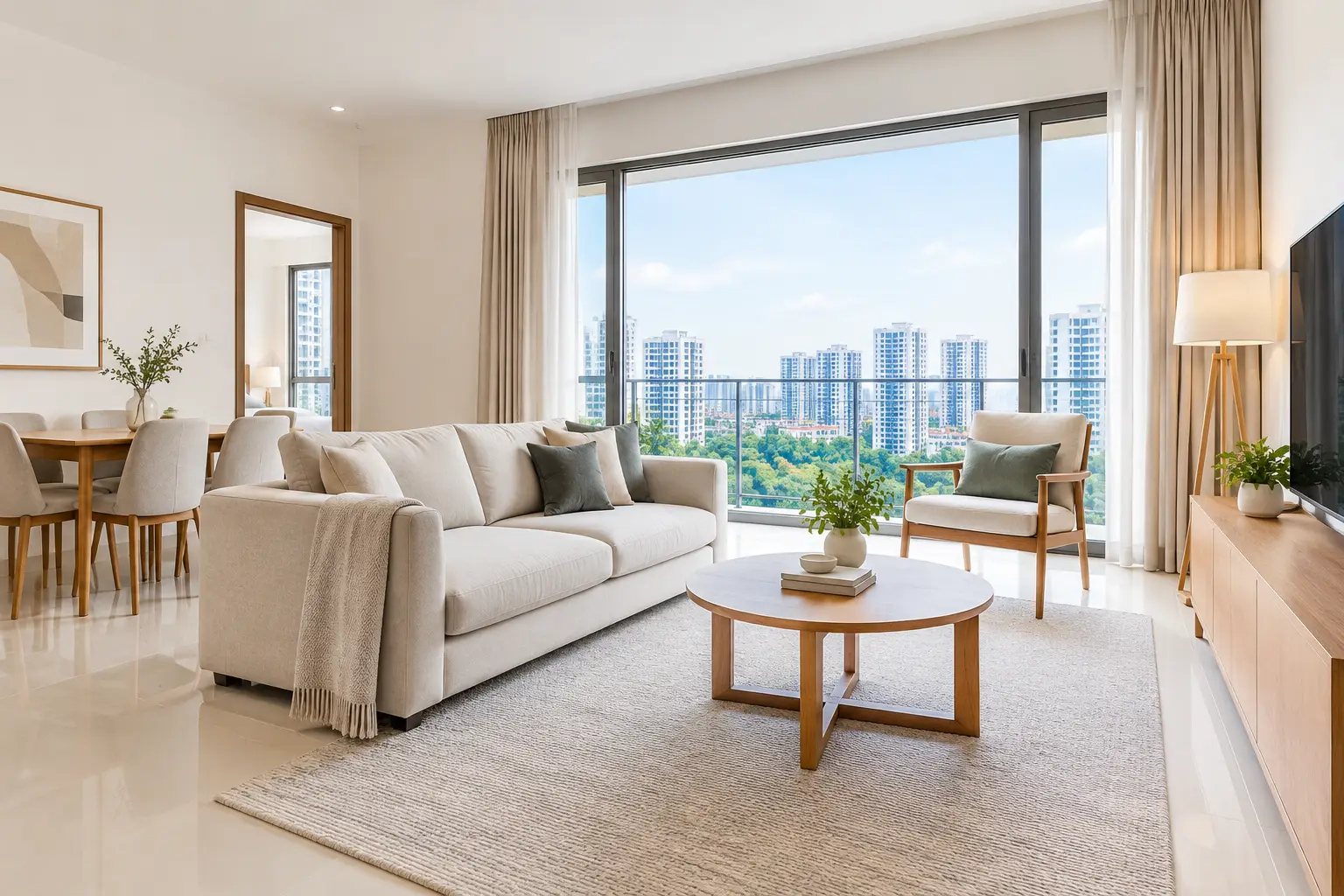
A vacant living room can look larger in person than it does in a listing photo, yet still leave buyers unsure where a sofa, dining table or television would go. The best staging furniture answers those questions quickly. It gives each room a clear purpose, helps buyers read the layout at a glance and makes the property feel ready to live in without distracting from the home itself.
For property agents, sellers and landlords in Singapore, furniture selection is not simply a matter of choosing attractive pieces. It is a presentation decision shaped by floor area, target buyer, building type, photography and the time available before viewings begin. The right approach is considered rather than lavish.
What makes the best staging furniture?
The best staging furniture is proportionate, neutral enough to appeal to a broad market and practical for the room it occupies. It should support the property’s strongest features, whether that is a wide living area, a useful balcony, a generous master bedroom or an efficient study nook.
A small-scale sofa may be the right choice for a compact condominium, while a larger sectional can help define the living zone in a landed home. Neither is automatically better. What matters is that buyers can move through the space comfortably and understand how daily life might work there.
Furniture for staging also needs to photograph well. Clean-lined pieces in warm neutrals tend to hold their own in bright Singapore daylight without making rooms appear flat or impersonal. Texture can come through rugs, cushions, timber finishes and soft furnishings, but the overall look should remain calm. Strong personal taste, oversized patterns and heavily themed décor can narrow a buyer’s attention when the aim is to let the property appeal to many people.
Start with the property, not a furniture package
A standard furniture set can save time, but staging is more effective when it responds to the home in front of you. Before selecting pieces, consider the likely audience and the property’s position in the market. A one-bedroom unit near an MRT station may suit a professional buyer or investor. A family-sized executive condominium may need to show dining capacity, storage potential and a usable children’s room.
Look closely at circulation too. In a narrow living room, placing a large coffee table in the centre may make the area feel congested. Two smaller occasional tables or a slim upholstered bench may be more suitable. In an open-plan layout, a rug and sofa arrangement can create a clear living zone, while a compact dining setting shows where meals can take place without blocking the route to the kitchen.
This is why measurements matter. Doorways, lift access, lift booking requirements and the route from the loading area all affect what can be delivered and installed efficiently. A beautiful piece that is too large for the lift or overwhelms the room is not a useful staging choice.
Prioritise the rooms buyers notice first
Not every room needs the same level of furnishing. When budget or time is limited, focus on spaces that carry the listing photos and shape the first few minutes of a viewing: the living room, dining area and master bedroom.
The living room should establish the property’s scale and atmosphere. A sofa, rug, coffee table, occasional chair and simple side table are usually enough to create a balanced setting. Avoid pushing every item against the walls just to expose more floor. A considered furniture arrangement often makes the room feel more usable than an empty centre does.
In the dining area, show a realistic number of seats for the home. A four-seat table can make sense in a compact flat, while a six- or eight-seat setting may be appropriate for a larger family property. Keep table styling restrained, especially for photography. A simple centrepiece is often more effective than a crowded display.
The master bedroom benefits from a properly dressed bed, bedside tables and lighting where appropriate. Buyers should be able to see the bed size the room can comfortably accommodate. In smaller bedrooms, a bed with a lower visual profile and limited accessories can prevent the space from feeling tight.
Secondary rooms should still have a purpose. An empty room is often read as a problem to solve. A modest desk, chair and shelving can establish a home office, while a single bed and small study table can suggest a child’s room. The goal is clarity, not filling every corner.
Choose neutral furniture with enough warmth
Neutral does not have to mean bland. The most reliable staging palettes combine soft beige, grey, cream, oak and muted charcoal with a small number of deeper accents. These colours suit a wide range of interiors and allow natural light, flooring and views to remain visible.
The balance changes with the property. A home with dark timber flooring may need lighter upholstery to prevent the room feeling heavy. A bright unit with white tiles can benefit from warmer rugs, timber tables and textured cushions. If a property has an older finish, contemporary but understated furniture can make the setting feel current without drawing attention to every dated detail.
Avoid furniture that competes with the home’s identity. Very ornate pieces can make a modern condominium feel confused, while ultra-minimal furniture may feel cold in a traditional landed house. The best choice usually sits comfortably between current design preferences and the architecture already present.
Use accessories to explain lifestyle, not create clutter
Accessories are useful when they add scale, softness or a sense of purpose. A floor lamp can make an unused corner feel intentional. A mirror can reflect light in a darker entrance. Cushions and a throw can make a sofa feel inviting in photographs.
There is a limit. Too many ornaments, artificial plants or decorative trays can make buyers look at the styling rather than the room. Keep surfaces relatively clear and leave enough visual space for buyers to notice storage, windows, finishes and views.
This principle matters especially in occupied homes. Existing furniture may be suitable, but personal photographs, collections, excess dining chairs and bulky storage should be reduced before styling begins. Staging does not require a home to look empty of character. It requires the property to feel open enough for a buyer to picture their own life there.
Why rental furniture often makes practical sense
Buying furniture for a short sales campaign can create unnecessary cost and administration. Once the property is sold or leased, someone still needs to store, sell or dispose of the pieces. For a landlord preparing a unit between tenancies, the same issue can arise if furniture needs change with the next tenant profile.
Furniture rental provides flexibility around these decisions. It allows agents and owners to use suitable pieces for the marketing period, with delivery, installation and collection arranged around the property schedule. This is particularly helpful for vacant units, inherited homes and sellers who have already moved out.
Rental is not always the answer. A landlord furnishing a property for a long-term tenancy may prefer to purchase selected durable items, particularly where the rental strategy calls for a permanent setup. Even then, leasing can be useful for filling gaps, handling a tight turnaround or testing the presentation before committing to purchases.
A staging partner should also be able to advise on quantity and scale rather than simply supplying items. Expats Partner approaches staging as a practical property presentation service, coordinating furniture, placement and timing so agents and owners can focus on marketing and viewings.
Prepare the home around the furniture plan
Good furniture cannot compensate for poor preparation. Before installation, arrange basic cleaning, repair obvious defects and check that lighting is working. Open curtains and blinds for photography where privacy allows, and remove items that interrupt the view from key windows.
During styling, leave walkways clear and make sure doors, wardrobes and balconies can still be opened easily. Buyers often test these details during viewings. If they need to squeeze around a chair to enter a bedroom, the furniture has stopped helping.
For listing photographs, take images from angles that show how spaces connect. A carefully staged dining area seen from the living room can communicate an open-plan layout more effectively than two isolated photos. The furniture should provide scale, but the home remains the subject.
The most effective staging furniture does not ask buyers to admire a collection of products. It gives them a clear, comfortable picture of what the property could be. When each room has purpose, proportion and enough warmth to feel welcoming, a viewing becomes less about imagining possibilities and more about recognising a home that fits.