
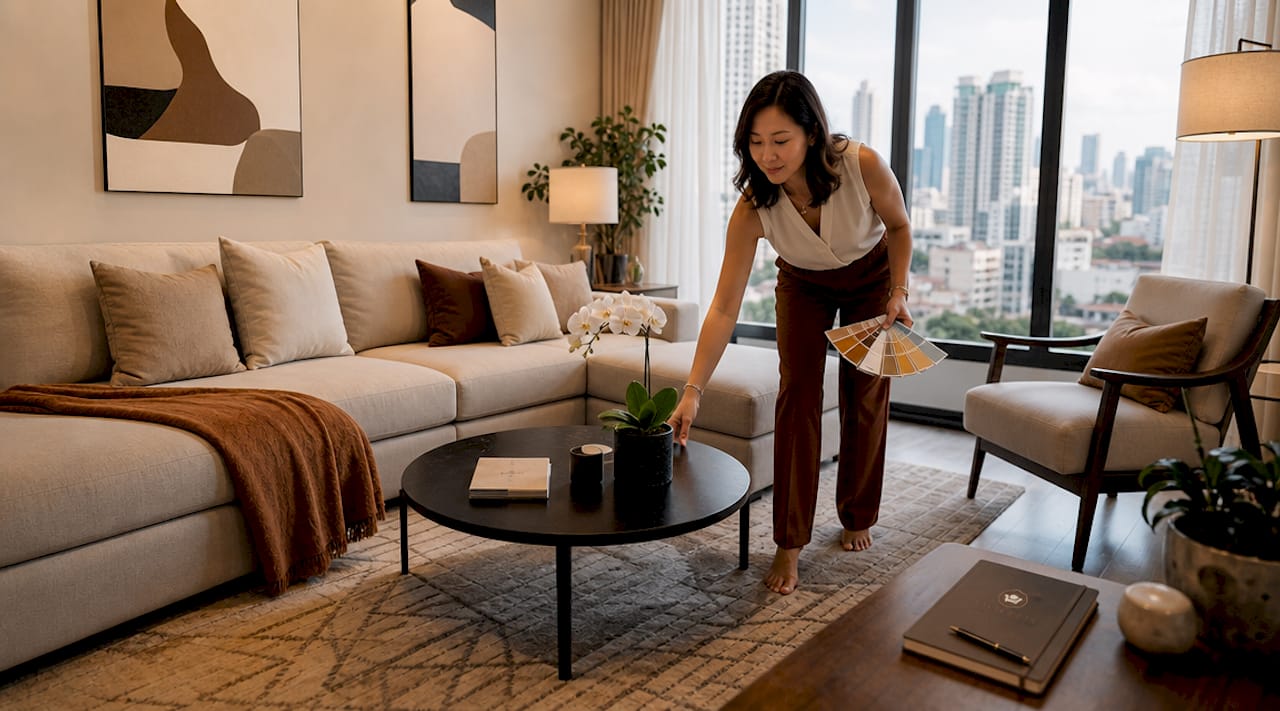
Effective home staging for small condos is defined as the deliberate arrangement of furniture, lighting, and décor to make compact spaces appear larger, more functional, and more appealing to prospective buyers or tenants. In Singapore’s condo market, where one-bedroom units commonly range from 500 to 700 square feet, the gap between a well-staged and an unstaged listing is visible in both viewing interest and final offers. The principles behind good staging, including furniture scale, layered lighting, decluttering, and spatial zoning, apply whether you are selling, renting out, or simply refreshing your home. This guide covers the most practical and proven techniques, with a clear focus on what works in Singapore’s compact condo environment.
1. Choose and arrange furniture that maximises space
The single most effective home staging idea for small condos is right-sizing your furniture. Downsizing furniture by about 20% from standard dimensions helps rooms breathe and photograph significantly larger. In practice, this means choosing a 72 to 80-inch sofa rather than an 84-inch one, and pairing it with slim-profile side tables instead of bulky console units.
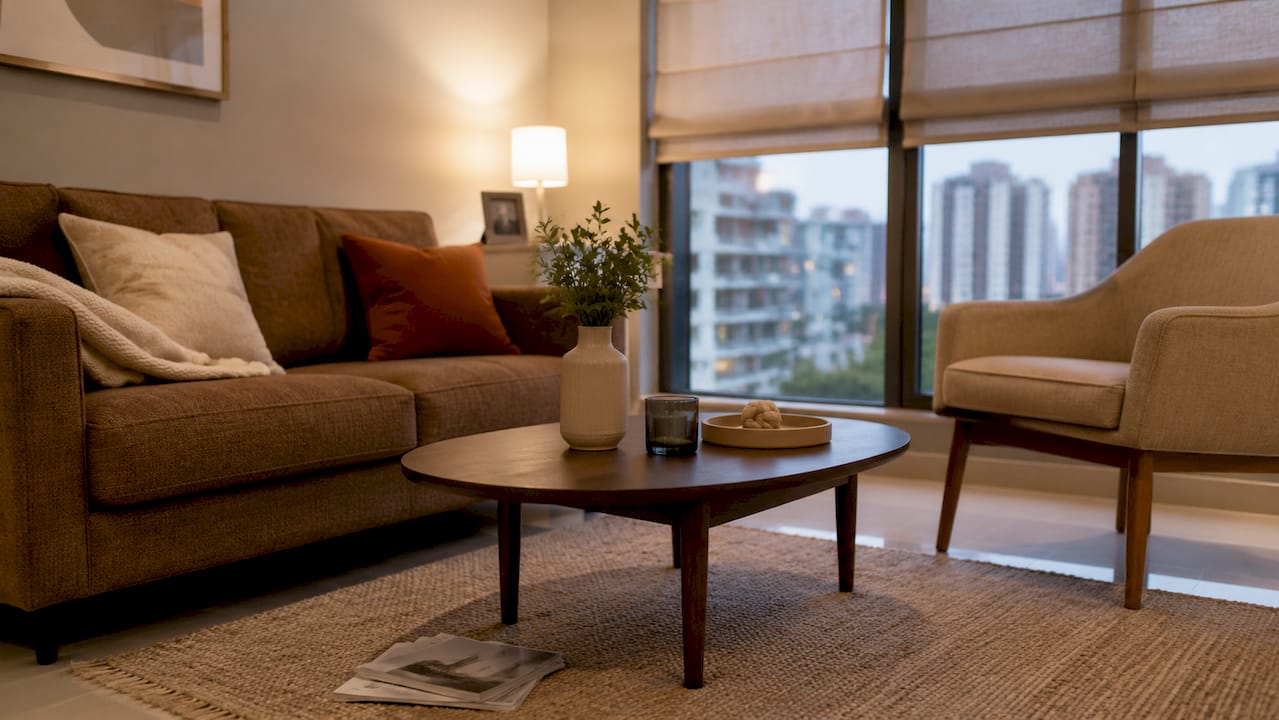
Furniture with visible legs, such as sofas raised off the floor or open-base dining chairs, allows sightlines to travel further across the room. This creates a visual sense of depth that closed-base furniture blocks entirely. Pieces like nesting tables, ottomans with internal storage, and fold-down dining tables serve multiple functions without claiming permanent floor space.
Traffic pathways of 2 to 3 feet between furniture pieces are the minimum for a room to feel functional rather than cramped. Seating arranged within an 8 to 10-foot conversational radius keeps the living area cohesive without pushing furniture against every wall, which is a common mistake that actually makes rooms feel smaller.
- Select sofas between 72 and 80 inches for one-bedroom condos
- Use nesting tables, storage ottomans, and fold-down dining tables
- Keep at least 2 to 3 feet of clear walkway between pieces
- Choose furniture with slim legs and open bases
- Float furniture slightly away from walls to suggest deliberate design
Pro Tip: Prioritise fewer but better pieces. One well-proportioned sofa and a single accent chair read as intentional. Three mismatched seats and a coffee table read as cluttered, regardless of the room’s actual size.
2. Use lighting and colour to make rooms feel larger
Layered lighting with warm bulbs rated between 2700 and 3000 Kelvin creates warmth and inviting ambience in small spaces. A single overhead light flattens a room and removes the sense of depth. Replacing it with a combination of ambient, task, and accent sources gives the eye multiple points of interest and makes the space feel considered rather than functional.
Light wall colours are the most reliable background for small condo staging. Warm whites, soft beiges, and light greys reflect natural light without making a room feel sterile. These tones work particularly well in Singapore’s bright, sun-facing units, where strong natural light can be directed and amplified rather than absorbed by dark walls.
Curtains deserve more attention than most owners give them. Hanging curtain rods at ceiling height rather than just above the window frame draws the eye upward and makes ceilings feel taller. Extending the rod 15 to 20 centimetres beyond each side of the window allows the fabric to frame the glass fully when open, maximising the visible light source.
- Layer ambient, task, and accent lights in every room
- Use warm bulbs rated 2700 to 3000K for evening viewings
- Paint walls in warm whites, soft beiges, or light greys
- Add warm accents through cushions, throws, and wood-toned accessories
- Hang curtains at ceiling height and wider than the window frame
Pro Tip: Add dimmable plug-in floor lamps or table lamps for flexible lighting without any installation work. This is particularly useful for renters who cannot modify fixed fittings.
3. Declutter and introduce smart storage solutions
Packing away 30 to 40% of personal items and leaving at least 60% of horizontal surfaces clear is the highest-return staging step available to any condo owner. Buyers and tenants need to imagine their own belongings in the space. Personal photographs, collections, and excess decorative items make that mental exercise harder.
Vertical storage is the most underused resource in small condos. Tall shelving units, floating wall cabinets, and floor-to-ceiling wardrobes draw the eye upward and use wall space that would otherwise sit empty. In Singapore condos where built-in storage is often limited, adding a slim floor-to-ceiling bookshelf in a living room corner adds both storage and visual height.
Kitchen counters and bathroom surfaces deserve specific attention. Clear kitchen counters, with only one or two items visible such as a kettle and a small plant, signal a functional and well-maintained home. Bathrooms should show only a hand soap dispenser and a single folded towel. Everything else goes into concealed storage before any viewing.
- Pack away 30 to 40% of personal items before staging
- Keep 60% or more of all horizontal surfaces clear
- Use tall shelving, floating cabinets, and floor-to-ceiling wardrobes
- Clear kitchen counters to one or two items maximum
- Store bathroom products out of sight, leaving only minimal display items
Pro Tip: Renters who cannot install permanent shelving can use removable peel-and-stick wall shelves or freestanding ladder shelves. Both options add storage and visual interest without requiring any drilling or landlord approval.
4. Zone open-concept spaces without adding walls
Zoning open-concept condos with rugs and furniture arrangement helps buyers and tenants visualise multiple functional areas without physical partitions. A rug placed under the sofa and coffee table defines the living zone clearly. A separate rug under the dining table anchors the dining area. The two zones read as distinct rooms even within a single open floor plan.
Furniture placement does most of the work. Positioning the sofa with its back to the dining area creates a natural boundary between the two spaces. The media console or feature wall then faces the seating, completing the living zone frame. This arrangement also keeps sightlines open toward windows, which reinforces the sense of space.
One large mirror placed opposite a window reflects natural light and adds genuine depth to a small room. Avoid grouping several small mirrors, which creates visual noise rather than the impression of space. A single statement mirror, 80 centimetres or wider, positioned to catch daylight, works far more effectively than a collection of smaller pieces.
The dining table position matters more than most owners realise. Placing it near the window or balcony door keeps it connected to natural light, which makes the dining area feel pleasant and purposeful rather than squeezed into a leftover corner.
Pro Tip: Select one large mirror and position it to reflect the brightest part of the room. In Singapore condos with east or west-facing windows, this can effectively double the perceived brightness of the space during morning or afternoon viewings.
Here is a quick comparison of zoning methods for open-concept small condos:
| Method | Best use | Effect |
|---|---|---|
| Area rug | Living and dining separation | Defines zones without blocking sightlines |
| Furniture back-to-back | Living to dining boundary | Creates natural room division |
| Large mirror | Any wall opposite a window | Adds depth and reflects natural light |
| Pendant light above dining table | Dining zone definition | Anchors the space visually from above |
| Bookshelf or open shelving | Study or work zone | Frames a functional area without enclosing it |
5. Physical versus virtual staging for small condos
Physical staging involves sourcing, delivering, and arranging real furniture and accessories in the property before viewings. Virtual staging can cost $50 to $200 per room, whereas physical staging can exceed $1,500 per room. For owners and agents working within a defined budget, virtual staging offers a practical alternative for online listings where photographs are the first point of contact.
Virtual staging tools now automate furniture scaling, which is particularly useful for small condos where proportion errors are immediately visible. An AI-generated room with an oversized sofa or a dining table that crowds the space will undermine the listing rather than support it. The better virtual staging platforms apply scale rules automatically, producing results that reflect realistic living conditions.
Physical staging remains the stronger choice for in-person viewings. Buyers and tenants who walk through a well-staged condo respond to atmosphere, texture, and the actual sense of space in a way that photographs cannot fully replicate. For Singapore condos being marketed for sale, staging that suggests permanence through built-in-style shelving and collected art creates an ownership impression that resonates with buyers.
The rooms to prioritise, whether physical or virtual, are the living room, primary bedroom, and dining or kitchen area. These three spaces account for the majority of viewing time and the strongest first impressions. Secondary bedrooms and bathrooms benefit from staging but deliver lower returns per dollar spent.
- Physical staging: best for in-person viewings and sale listings
- Virtual staging: cost-effective for online listings and rental properties
- Prioritise living room, primary bedroom, and dining area first
- Disclose virtual staging clearly in all listing materials
- Consider short-term vs long-term staging based on your listing timeline
6. Stage the bedroom with restraint
Compact bedrooms stage best with a bed, one nightstand, and a small piece of art. Removing bulky dressers and replacing them with a slim wardrobe or concealed storage keeps the room feeling open. The dresser is the single piece of furniture most likely to make a small bedroom feel cramped, and most buyers do not miss it during a viewing.
Bedding choice carries more visual weight than most owners expect. Crisp white or light grey bedding with a single textured throw reads as clean, calm, and hotel-like. Busy patterns or multiple decorative pillows draw attention to the bed rather than the room, which works against the goal of making the space feel larger.
Keep the floor as clear as possible. Visible floor space, particularly in front of the wardrobe and on both sides of the bed, signals that the room is a comfortable size. Experienced stagers describe this as making rooms look intentional on camera through scale, fewer pieces, and visible floor for breathing space.
7. Prepare the kitchen and bathroom for viewings
Kitchen staging in small condos focuses almost entirely on cleanliness and restraint. Clear counters, a single potted herb or small plant, and one coordinated set of canisters or jars is the maximum display. Everything else, including appliances, drying racks, and personal items, should be stored away before any viewing or photography session.
Bathroom staging follows the same logic. Fresh white towels folded neatly, a single hand soap dispenser, and one small plant or candle are sufficient. Grout lines, taps, and mirrors should be spotless. In Singapore’s humid climate, mould or water stains on bathroom surfaces are among the fastest ways to reduce buyer or tenant confidence.
A vacant apartment staging checklist is a practical tool for working through each room systematically before a viewing. It removes the guesswork and ensures no surface or detail is overlooked in the preparation process.
Key takeaways
Effective small condo staging requires right-sized furniture, layered lighting, disciplined decluttering, and clear spatial zoning to make compact spaces feel larger and more liveable.
| Point | Details |
|---|---|
| Right-size your furniture | Choose sofas between 72 and 80 inches and use slim-profile pieces to keep sightlines open. |
| Layer your lighting | Combine ambient, task, and accent sources with warm 2700 to 3000K bulbs for depth and warmth. |
| Declutter with targets | Pack away 30 to 40% of personal items and keep 60% of surfaces clear before any viewing. |
| Zone without walls | Use rugs, furniture placement, and a single large mirror to define functional areas in open-plan layouts. |
| Choose staging format wisely | Physical staging suits in-person viewings; virtual staging at $50 to $200 per room suits online listings. |
What we have learned from staging small condos in Singapore
Working with small condos across Singapore has reinforced one consistent observation: most owners focus on decoration before they address layout and clutter. The sequence matters enormously. A beautifully styled room with too much furniture and too many personal items will still feel cramped in photographs and in person. Decluttering first, then adjusting the layout, then adding lighting and finishing touches, produces results that decoration alone cannot achieve.
The Singapore condo market has its own character. Buyers here are experienced viewers who have often seen dozens of units before making a decision. They notice when a room feels tight, when lighting is flat, or when a layout does not suggest a comfortable way to live. Staging that addresses these points directly, rather than simply adding cushions and candles, is what separates listings that generate serious interest from those that sit on the market.
We have also found that moderate investment in staging consistently outperforms either doing nothing or overspending on elaborate setups. For most one-bedroom condos, the combination of right-sized rental furniture, warm lighting, and thorough decluttering produces a viewing-ready home without requiring significant expenditure. Renters and owners who approach staging methodically, room by room, with clear targets for each space, tend to achieve the best results in the shortest time.
The detail that most owners overlook is atmosphere. A condo that smells fresh, feels calm, and has warm light at the right level communicates something that no photograph can fully capture. That atmosphere is what converts a viewing into an offer.
— Expats Partner
Stage your Singapore condo with Expats Partner
Expats Partner provides furniture rental and home staging services in Singapore specifically suited to small condos, one-bedroom units, and compact apartments. Whether you need a complete furniture package for a staged listing or a short-term rental set while your property is on the market, we offer real inventory, transparent pricing, and reliable delivery and setup across Singapore.
Our home staging services in Singapore cover furniture selection, layout planning, and styling matched to your building’s aesthetic and your listing goals. For expats and landlords who need flexibility, our short-term furniture rental options make it straightforward to furnish a condo for viewings without a long-term commitment. Contact us to discuss your property and we will recommend a practical, cost-effective staging plan.
FAQ
What is the most effective home staging idea for a small condo?
Right-sizing furniture is the single most impactful step. Choosing a sofa between 72 and 80 inches instead of a standard 84-inch model, combined with thorough decluttering, produces the most visible improvement in how a small condo photographs and feels during viewings.
How much does it cost to stage a small condo in Singapore?
Physical staging typically exceeds $1,500 per room, while virtual staging costs $50 to $200 per room. For most Singapore condo owners, a combination of rented furniture for key rooms and professional styling delivers strong results at a manageable cost.
Should I use virtual or physical staging for my condo listing?
Physical staging is more effective for in-person viewings, particularly for sale listings where buyers walk through the property. Virtual staging suits online rental listings where photographs are the primary marketing tool and budget is a key consideration.
How do I make a small condo living room look bigger?
Use a sofa scaled to the room, maintain clear traffic pathways of at least 2 to 3 feet, add layered lighting with warm bulbs, and place one large mirror opposite the main window. Keep horizontal surfaces at least 60% clear to avoid visual clutter.
What rooms should I prioritise when staging a small condo?
Stage the living room, primary bedroom, and dining or kitchen area first. These three spaces account for the majority of viewing time and the strongest first impressions, delivering the highest return on staging investment.