
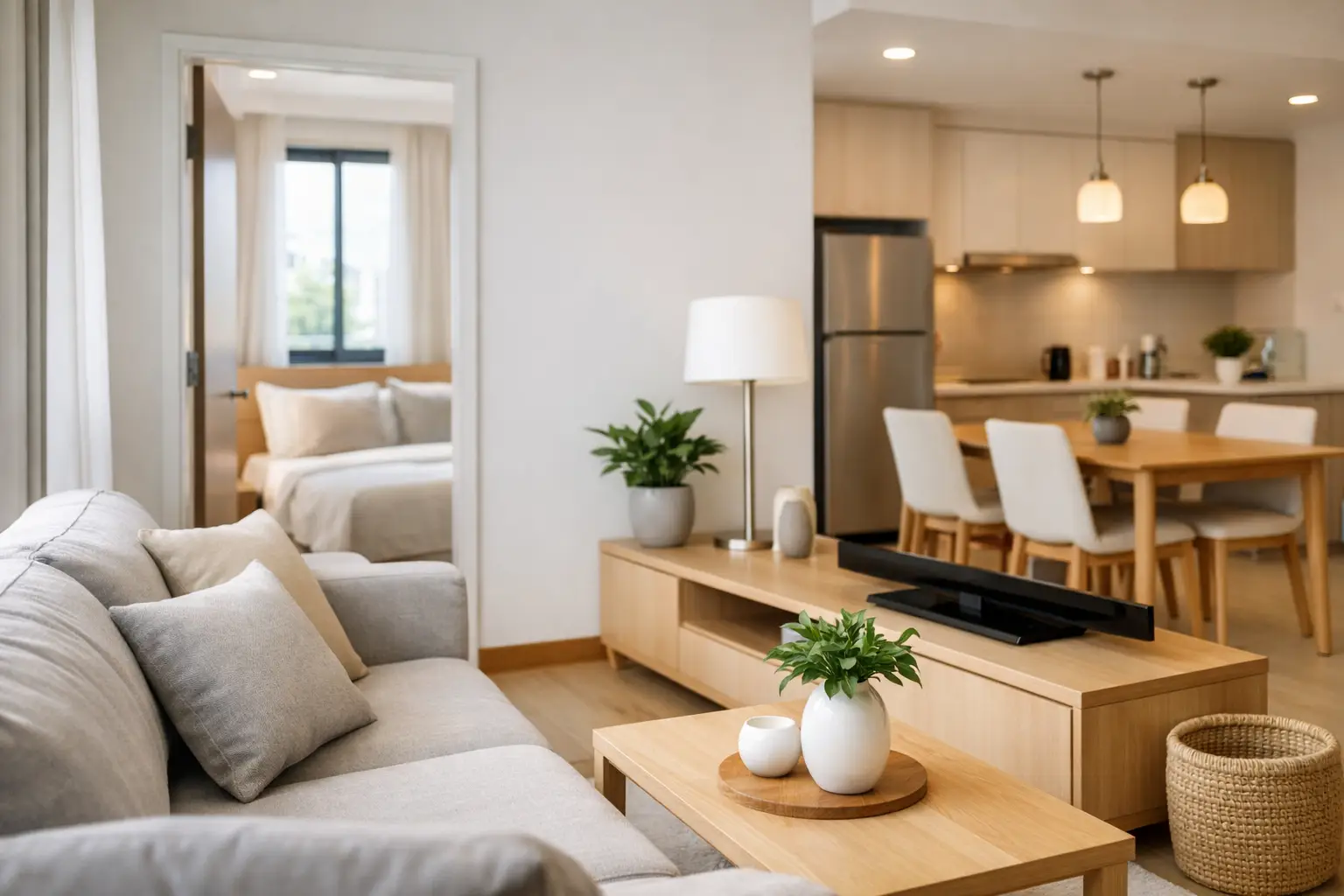
A vacant unit can look larger in person but feel cold and difficult to understand in listing photos. To furnish rental properties well, landlords and agents need more than a few spare pieces: they need a clear plan for the tenant, the rent level and the expected tenancy period. The aim is to make the home feel ready to live in without overspending on furniture that may not suit the next occupant.
Start with the rental strategy
The right furnishing level depends on the type of tenancy you want to attract. A compact one-bedroom flat aimed at a single professional needs a different setup from a family-sized landed home or a corporate rental for relocating employees.
For a typical long-term tenancy in Singapore, tenants usually expect the essentials to be in place: a sofa, dining table and chairs, beds, wardrobes or suitable storage, and practical appliances where agreed. A home intended for expatriates may also benefit from a work desk, better lighting and a more complete living-room arrangement. These details help a tenant picture daily life from the first viewing.
Before selecting furniture, decide whether the property will be fully furnished, partially furnished or unfurnished. Fully furnished homes can appeal to tenants who want to move in quickly, but they require closer attention to condition and replacement costs. Partial furnishing offers flexibility for tenants with their own belongings, while an unfurnished property may suit longer-term residents who prefer to make the space their own.
There is no single best option. The most sensible choice is the one that matches comparable listings in the area and supports the rent you plan to ask.
Furnish rental properties room by room
A practical furnishing plan begins with the rooms that shape a viewer’s first impression. The living area, bedrooms and dining space do most of the work in photographs and during viewings. They should look purposeful, comfortable and easy to move around.
Make the living room easy to read
The living room should show how people can gather, relax and use the available floor area. Choose a sofa that suits the scale of the room rather than the largest piece that will fit through the door. In smaller units, a compact two- or three-seater sofa, coffee table and simple rug can define the space without making it feel crowded.
A television console, side table and floor lamp may be useful, but avoid filling every corner. Tenants need to imagine where their own belongings will go. Neutral colours and straightforward shapes tend to work well because they photograph cleanly and appeal to a wider range of tastes.
Give every bedroom a clear purpose
A bed frame and mattress are usually the starting point, followed by bedside tables, lighting and wardrobe storage. Where a bedroom is small, a bed with a simpler frame and narrow bedside tables will feel more considered than oversized furniture pressed against the walls.
If there is a second or third bedroom, think carefully about its intended use. A family rental may need proper beds in every room. For an expatriate couple or a professional tenant, one room could work better as a study with a desk, task chair and restrained storage. This is especially helpful when the property is marketed to tenants who work from home.
Treat the dining area as a daily-use space
A dining table signals that the home is ready for ordinary routines, not just a quick viewing. Select a table size that allows chairs to be pulled out comfortably. Round tables often suit compact dining areas, while a rectangular table can make better use of a longer space.
A four-seater table is often sufficient for smaller flats, even if the unit can technically accommodate more. Overcrowded dining furniture can make photographs feel tighter and obscure the layout.
Prioritise durability over passing trends
Rental furniture needs to cope with frequent use, cleaning, occasional spills and changes between tenancies. This does not mean choosing furniture that looks basic or impersonal. It means favouring materials and finishes that are attractive, practical and realistic to maintain.
Upholstered pieces in mid-tone fabrics are generally more forgiving than very pale or very dark finishes. Tables with durable tops, stable bed frames and easy-to-clean dining chairs reduce maintenance between tenants. Removable covers, washable soft furnishings and easily replaceable accessories can also make turnover less stressful.
Very distinctive furniture can create a strong visual statement, but it may narrow the audience for the property. A calmer base of neutral furniture allows you to add warmth through cushions, artwork, rugs and greenery. These smaller pieces are easier to refresh when a listing needs a new look.
Buy, rent or combine both?
Buying furniture may make sense when you expect the property to remain furnished for many years and have the time to source, receive, assemble and maintain each item. It can also work for landlords with a consistent tenant profile and enough storage for replacement pieces.
Furniture rental is often more suitable when speed, flexibility and cash flow matter. It avoids a large upfront purchase and can reduce the operational work of arranging delivery, installation and collection. For a newly completed unit, a short-term corporate let, or a property being tested as a furnished rental, this can be a more measured way to prepare the home.
A combination can be sensible too. A landlord may keep durable appliances or fitted storage while renting key furniture and styling pieces. This provides a finished look without committing to every item permanently.
For agents preparing a vacant property before marketing, furniture rental can also bridge the gap between presentation and practicality. The home can be set up for photographs and viewings, then cleared once a buyer or tenant is secured.
Plan for photos before the furniture arrives
Good furnishing choices should support property marketing, not simply fill a room. Before delivery, consider the main angles likely to be photographed. Keep walkways open, position furniture to show the room’s width and avoid blocking windows or balcony doors.
Natural light should remain the focus where possible. Heavy curtains, tall furniture or clutter near windows can make a bright unit appear darker online. Add enough lighting to make evening viewings comfortable, but avoid relying on decorative lighting alone.
Small finishing touches can make a property feel cared for: neatly made beds, a simple table setting, cushions in complementary colours and a plant placed where it does not obstruct the view. The point is not to create a showroom. It is to help prospective tenants understand the scale, flow and everyday potential of the home.
Set a realistic budget for turnover
The cost to furnish a rental property is not only the cost of the furniture. Landlords should allow for delivery, installation, cleaning, repairs, storage, collection and eventual replacement. A lower-priced item can become expensive if it needs frequent attention or creates delays between tenancies.
Set the budget according to expected rent and tenancy length. A premium property may justify more complete furnishing and better-quality finishes, particularly if it is aimed at corporate tenants. For an entry-level rental, focus on clean, comfortable essentials that are proportional to the rent rather than trying to imitate a high-end show flat.
Keep an inventory with photographs and condition notes before every handover. This protects both landlord and tenant, makes deposit discussions clearer and helps you schedule repairs quickly after a move-out.
Avoid the common furnishing mistakes
The most common mistake is treating every property the same. A generic package may be convenient, but it should still be adjusted for the unit’s layout, target tenant and condition. A large sectional sofa in a narrow living room or a king-sized bed in a compact bedroom can undermine an otherwise good property.
Another issue is furnishing only for photographs. If the chairs are uncomfortable, storage is inadequate or the layout prevents normal movement, the viewing experience will not match the listing. Prospective tenants notice these practical details quickly.
Finally, do not overlook the condition of the existing property. Clean walls, working lights, repaired fittings and a tidy kitchen are as important as the furniture. Well-chosen pieces cannot compensate for maintenance issues that make tenants question how the home has been managed.
A furnished rental should feel considered rather than overdone. When the layout is clear, the furniture is reliable and the setup fits the people you want to attract, the property becomes easier to photograph, easier to view and easier for the right tenant to choose. For landlords and agents facing a tight timeline, a hands-on furnishing partner such as Expats Partner can take care of the practical coordination while keeping the home ready for the market.