
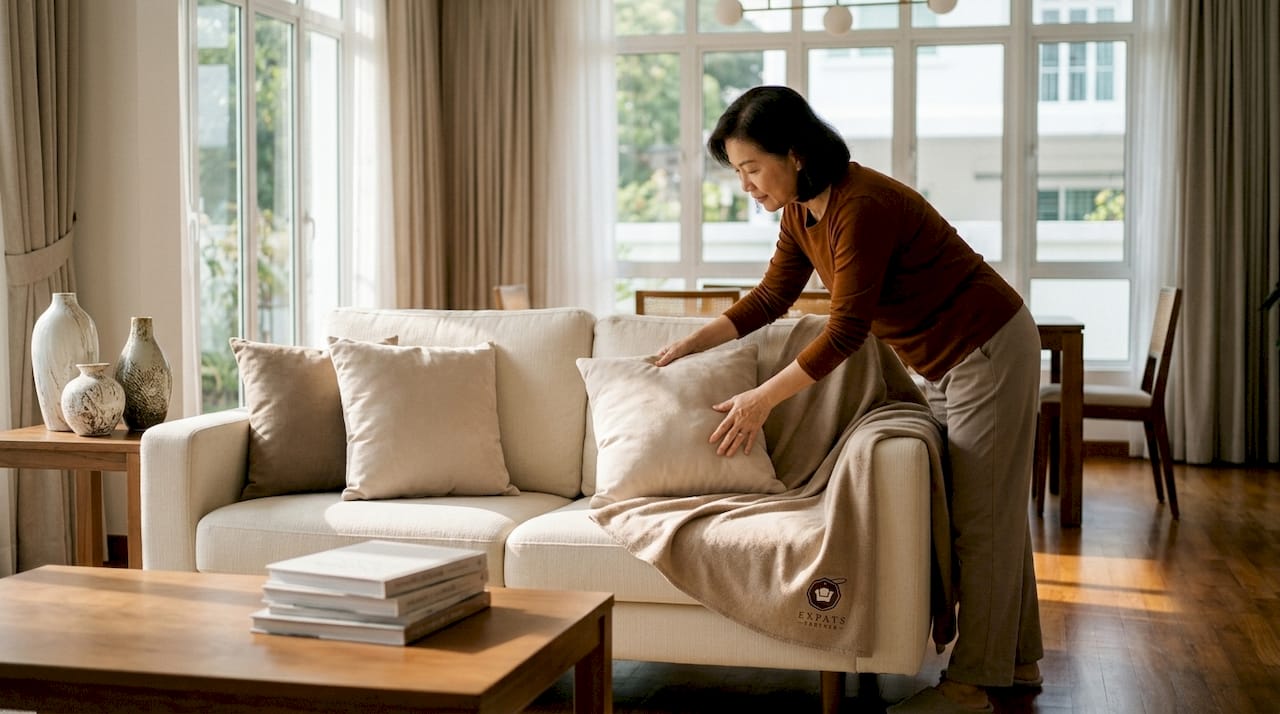
Staging a landed home without renovation is defined as the practice of using decluttering, deep cleaning, neutral styling, and strategic furniture arrangement to present a property at its best, without any structural or cosmetic construction work. The National Association of REALTORS® reports that 83% of buyers’ agents agreed staging helps buyers picture themselves living in a home, and 91% of sellers’ agents recommend decluttering as a first step. This means that for homeowners and landlords in Singapore, the most powerful staging tools are already within reach. You do not need a remodel to make a landed property feel fresh, spacious, and appealing. What you need is a clear, methodical approach.
The industry term for this practice is property presentation or home staging, and it is well established across Singapore’s residential market. Whether you are preparing a terrace house, semi-detached, or bungalow for sale or rental, the principles are consistent: subtract before you add, create a neutral backdrop, and let the space speak for itself.
What are the essential preparations before you start staging?
Preparation is the foundation of effective staging. Redfin recommends starting with subtraction — removing clutter, deep cleaning every surface, and working thoughtfully with what you already have before spending a single dollar on new items. This approach is both practical and cost-effective, and it is where most of the staging impact is actually generated.
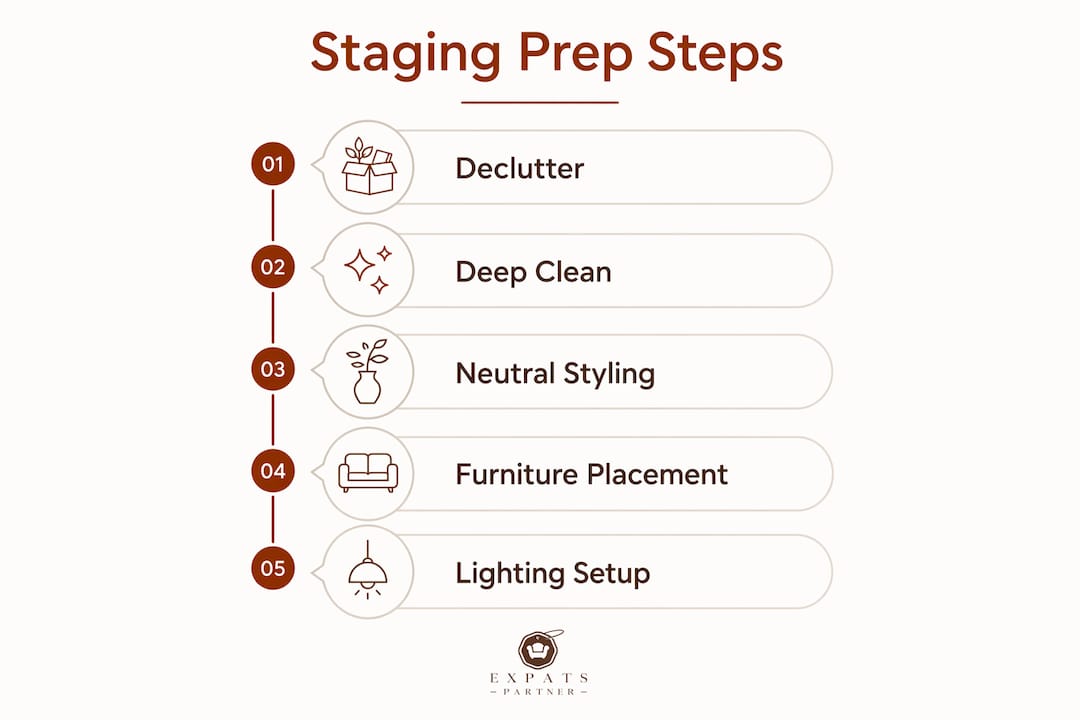
Before you arrange a single cushion or light a single lamp, work through these preparation steps:
- Declutter every room. Remove items that are not serving a clear purpose in the space. Pack away collections, excess books, children’s toys, and anything stored on countertops or floors. A room with fewer objects reads as larger and calmer.
- Deep clean to a high standard. Clean windows inside and out, scrub grout lines, wipe skirting boards, and polish taps and handles. Buyers and renters notice cleanliness immediately, and it signals that the property has been well maintained.
- Depersonalise the space. Remove family photographs, personal awards, religious items, and anything that anchors the home to one specific household. The goal is for a viewer to walk in and imagine their own life there.
- Address curb appeal. Trim hedges, sweep the driveway, clean the gate, and remove any dead plants from the garden or porch. For landed homes in Singapore, the exterior is the first impression and it carries significant weight.
- Store excess furniture. If a room feels crowded, remove one or two pieces entirely. A sofa, a coffee table, and a single accent chair will almost always present better than a full suite of mismatched seating.
Pro Tip: Pack personal items into labelled boxes and store them in a single room or off-site. This keeps the rest of the home consistently viewing-ready without requiring you to re-sort before every showing.
How can you use furniture and decor effectively without renovating?
Furniture and decor are your primary tools when staging without a remodel. Stage2Sell recommends light-coloured sofas, neutral rugs, and soft lighting as direct alternatives to costly cosmetic changes. The logic is straightforward: neutral, light-toned furnishings draw the eye away from dated finishes and towards the proportions and potential of the space itself.
The following principles guide effective furniture and decor staging:
- Choose neutral fabrics. Sofas, cushions, and throws in beige, warm white, or soft grey create a cohesive look that appeals to the widest range of buyers and renters. Bold patterns or bright colours narrow your audience and distract from the room’s features.
- Prioritise spatial flow. Furniture should be arranged to guide movement through a room naturally. Avoid pushing every piece against the wall. Floating a sofa slightly away from the wall and angling chairs towards a focal point creates a more considered, liveable feel.
- Layer texture rather than colour. A linen cushion on a cotton sofa, a jute rug on a timber floor, and a ceramic vase on a side table add visual interest without introducing competing colours. This technique is particularly effective in neutral styling for viewings where cohesion matters most.
- Use soft furnishings to soften hard finishes. If the kitchen has older cabinetry or the bathrooms have dated tiles, a well-placed neutral rug, fresh white towels, and a small potted plant can shift the viewer’s focus without touching a single tile.
For landlords and homeowners who need furniture but do not want to purchase pieces outright, renting is a practical and cost-effective option. A furniture rental package allows you to stage a landed home with quality, well-matched pieces for the duration of the listing period, then return them once the property is let or sold.
| Approach | Cost | Effort | Best for |
|---|---|---|---|
| Use existing furniture | Minimal | Low | Homes with neutral, well-maintained pieces |
| Add soft furnishings only | Low | Low | Homes needing warmth without full staging |
| Rent a full furniture package | Moderate | Low | Vacant or sparsely furnished landed homes |
| Buy new staging pieces | High | High | Long-term landlords with multiple listings |
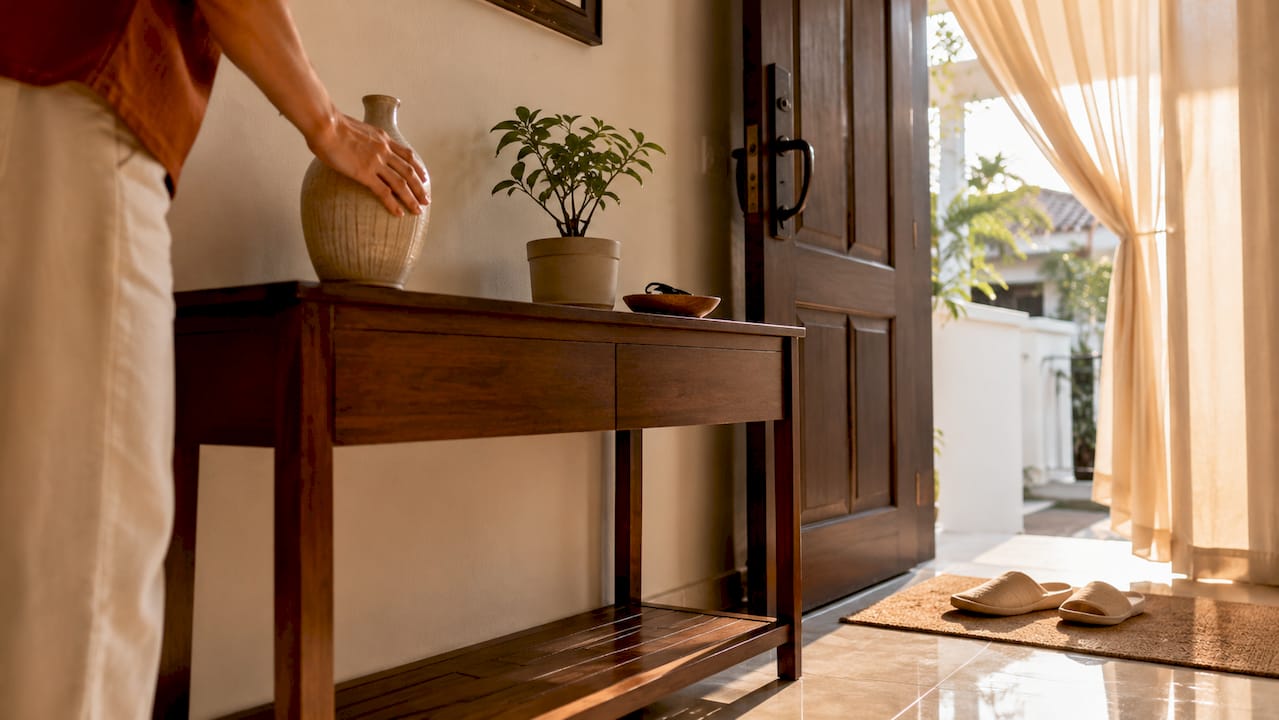
Pro Tip: Vacant properties are harder to sell or rent than furnished ones. If your landed home is empty, even a minimal furniture arrangement in the living room, master bedroom, and dining area will significantly improve how viewers respond to the space.
What lighting and spatial strategies improve staging without renovation?
Lighting is one of the most underestimated staging tools available to homeowners and landlords. Designers highlight layered lighting and floating furniture as two of the most reliable ways to improve perceived value without altering the property itself. The principle is simple: light makes spaces feel larger, warmer, and more welcoming.
Apply these lighting and spatial strategies room by room:
- Open all curtains and blinds before every viewing. Natural light is the most flattering light source available, and it costs nothing. In Singapore’s climate, bright natural light is expected and its absence is immediately noticed.
- Add floor lamps and table lamps with warm LED bulbs. Overhead lighting alone creates a flat, clinical atmosphere. A floor lamp in the corner of a living room and a table lamp on a bedside table add warmth and depth at minimal cost.
- Float furniture away from walls. This is a counterintuitive but well-established staging technique. When furniture is pulled slightly away from walls, rooms feel more spacious and intentionally designed rather than storage-focused.
- Highlight key rooms. The living room, master bedroom, and kitchen carry the most weight in a buyer’s or renter’s decision. Prioritise these three spaces for your best furniture, cleanest surfaces, and most considered lighting.
- Prepare specifically for photography. Staging for a listing photograph is distinct from everyday tidiness. Open blinds, remove clutter, and check that every light source is working before the photographer arrives. Poor listing photographs reduce enquiries regardless of how well the property is staged in person.
| Room | Lighting priority | Spatial tip |
|---|---|---|
| Living room | Floor lamp plus natural light | Float sofa, define seating area |
| Master bedroom | Bedside table lamps | Remove excess furniture |
| Kitchen | Under-cabinet or pendant light | Clear all countertops |
| Dining area | Pendant or chandelier | Centre table under light fitting |
What common mistakes should be avoided when staging without renovating?
The most common staging errors are not about what you add to a space. They are about what you fail to remove. Too much furniture and visible personal effects are the two most frequent causes of a staged home feeling dated and cramped, even when the property itself is in good condition.
Avoid these pitfalls:
- Overcrowding rooms. More furniture does not make a home feel more liveable to a viewer. It makes it feel smaller. If a room has more than three or four key pieces, consider removing one.
- Leaving personal photographs and collections visible. A wall of family portraits or a display cabinet of trophies prevents buyers from imagining their own life in the space. Remove them entirely rather than reducing them.
- Using bold colours or strong patterns. A bright feature wall or a heavily patterned sofa may reflect your personal taste, but it narrows the appeal of the property. Repaint with a neutral tone or cover with a throw if repainting is not an option.
- Neglecting small maintenance issues. A loose door handle, a burnt-out bulb, or a dripping tap signals neglect to a viewer. These are not renovation items. They are maintenance tasks that take minutes and cost very little.
- Ignoring the entrance and garden. For landed homes in Singapore, the driveway, gate, and front garden are part of the property presentation. A well-swept entrance with a potted plant or two creates a positive first impression before the viewer steps inside.
Pro Tip: Walk through your property as if you are a buyer seeing it for the first time. Start at the gate and move through every room. Note anything that draws your eye for the wrong reason. Those are your priorities.
How to maintain a staged landed home for showings and photography
Staging is not a one-time event. A property that looks excellent on the day of photography can deteriorate quickly if there is no consistent upkeep routine. The following steps keep a staged landed home viewing-ready throughout the listing period.
- Keep closets and cabinets at 70% capacity. Limiting storage to 70% full makes built-in storage appear generous and organised rather than overflowing. Buyers and renters open cupboards, and what they find inside affects their perception of the property.
- Clear countertops and surfaces after every use. Kitchen benches, bathroom vanities, and study desks should be kept clear between showings. A single appliance or a small plant is acceptable. Everything else should be stored away.
- Check and replace bulbs regularly. A dead bulb in a lamp or ceiling fitting is a small detail that creates a disproportionately negative impression. Check all light sources before each viewing.
- Use fresh, neutral towels and linens. White or light grey towels folded neatly in bathrooms, and a well-made bed with neutral bedding, signal cleanliness and care. Replace these between showings if needed.
- Tidy proactively before each showing. Do a 15-minute reset before every viewing: clear surfaces, fluff cushions, open blinds, and remove any items left out since the last visit. Consistency is what keeps a staged home performing well over time.
Key takeaways
Staging a landed home without renovation works because decluttering, neutral styling, and strategic lighting create the perception of space and quality that buyers and renters respond to most.
| Point | Details |
|---|---|
| Subtraction before addition | Remove clutter and personal items before adding any new decor or furniture. |
| Neutral styling is most effective | Light-toned furniture and textiles appeal to the broadest range of buyers and renters. |
| Lighting changes perception | Layered lighting and open blinds make rooms feel larger and more welcoming at no structural cost. |
| Maintenance sustains staging | A consistent upkeep routine keeps the property viewing-ready throughout the listing period. |
| Photography needs specific preparation | Staging for listing photographs requires deliberate preparation beyond everyday tidiness. |
Our view on staging landed homes without renovation
Having worked with landlords, homeowners, and property agents across Singapore’s landed home market, we have seen one pattern repeat itself consistently: the properties that generate the most enquiries are rarely the most renovated. They are the most considered. A terrace house with clean lines, neutral furnishings, and good natural light will outperform a heavily renovated property that feels cluttered or over-styled.
What surprises many landlords is how much impact the removal of items has compared to the addition of new ones. We have seen living rooms double in perceived size simply by removing one sofa and a side table. We have seen master bedrooms go from feeling cramped to feeling calm by replacing a dark bedspread with a white duvet and clearing the bedside tables.
The other observation worth sharing is that landlords and homeowners often underestimate the value of photography preparation. A property can be beautifully staged in person and still perform poorly on listing portals if the photographs were taken without proper lighting or with cluttered surfaces. Photography-readiness is a discipline in itself, and it deserves as much attention as the physical staging.
For vacant landed homes, the gap between an empty property and a furnished one is significant. Buyers and renters struggle to assess scale and flow in an empty space. Even a minimal furniture arrangement in the key rooms makes a measurable difference to how a property is perceived and how quickly it moves.
— Expats Partner
How Expats Partner supports landed home staging in Singapore
Expats Partner provides furniture rental and home staging solutions tailored for Singapore’s landed home market. Whether your property is vacant, partially furnished, or in need of a styling refresh before listing, we offer flexible rental packages that cover full-home furnishing, individual room setups, and short-term staging arrangements.
Our inventory includes sofas, beds, dining tables, and soft furnishings selected specifically for property presentation. We handle delivery, setup, and collection, so the logistics are managed from start to finish. For landlords managing multiple listings or homeowners preparing a single property for sale, our packages offer a practical and cost-effective alternative to purchasing furniture outright. Explore our furniture rental options to find the right fit for your property and timeline.
FAQ
Does staging a landed home really help it sell faster?
Yes. The National Association of REALTORS® reports that 29% of agents saw 1% to 10% higher offers on staged homes, and nearly half reported reduced time on the market. Staging works because it helps buyers and renters picture themselves in the space.
What is the most cost-effective staging method without renovation?
Decluttering and deep cleaning are the most cost-effective methods. Redfin identifies subtraction as the highest-impact starting point, as removing clutter and personal items immediately improves how a space reads to viewers without any financial outlay.
Should I rent furniture to stage my landed home?
Renting furniture is a practical option for vacant or sparsely furnished properties. It avoids the cost of purchasing pieces outright and allows you to return them once the property is let or sold, making it well-suited to short listing periods.
How full should closets and cabinets be during viewings?
Closets and cabinets should be kept at approximately 70% capacity during viewings. This makes storage appear generous and organised, which is a detail buyers and renters actively check during property inspections.
What rooms should I prioritise when staging a landed home?
Prioritise the living room, master bedroom, and kitchen. These three spaces carry the most weight in a buyer’s or renter’s decision, and presenting them well has a disproportionate effect on the overall impression of the property.