
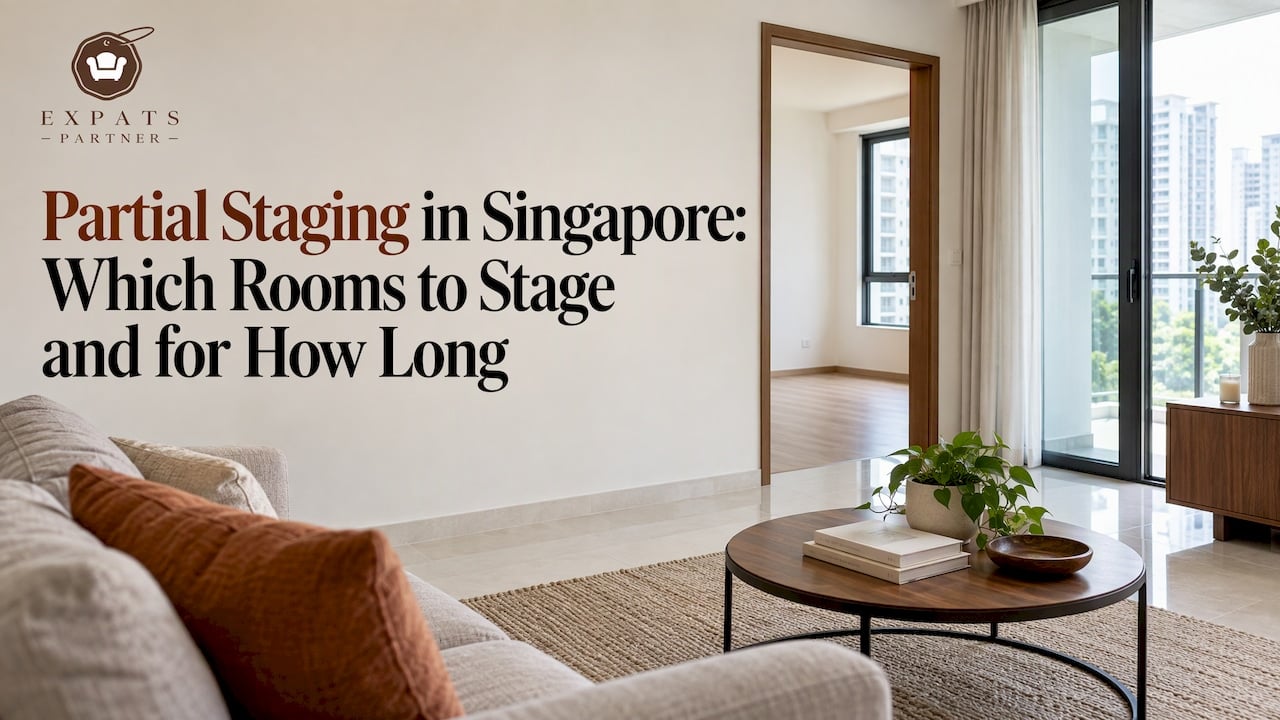
Partial staging means furnishing and styling only the rooms that decide a viewing, usually the living and dining area, the master bedroom and sometimes a work corner or the entrance, and leaving the rest of the unit clean and neutral. For most Singapore homes it is the sensible starting point, because buyers and tenants form their impression in the first minutes of a viewing and in the listing photographs. You rent the furniture for the weeks the property is on the market, then have it collected. At Expats Partner we rent real furniture for staging, with flexible rental periods and coordinated delivery and collection, so the scope and the duration can both follow your listing rather than a fixed package.
This guide is for owners, landlords, agents, developers and corporate housing teams who need to decide what to stage, how long to keep the furniture in place and what to confirm before delivery day.
TL;DR
- Partial staging dresses the rooms that carry the first impression (living and dining, master bedroom, sometimes the entrance) and keeps other rooms clean and clear.
- It suits vacant or half-empty units, small HDB flats and condos where one or two rooms do most of the selling or letting.
- Rent for the period the unit is actively marketed, plus a margin for delayed viewings, and choose a provider whose rental periods are flexible.
- Before delivery, confirm the access rules, the lift booking, the delivery window, the room layout and the collection date in writing.
- Go to full staging when the layout is hard to read, the unit is large or landed, or the target buyer expects a complete home.
Table of Contents
- What partial staging actually is
- Which rooms to stage first
- Partial or full staging: how to decide
- What partial staging costs, and what moves the price
- How long should staging furniture stay?
- What to confirm before delivery and collection
- Presenting a partially staged home well
- Who benefits most from a partial approach
- Our staging and rental offer
- A simple plan you can follow
- FAQ
What partial staging actually is
Staging is the practice of placing furniture, lighting, soft furnishings and accessories in a property so that people can read the rooms and picture living there. A full stage does this in every room. Partial staging concentrates the same effort in a chosen set of rooms.
The rooms left alone are not abandoned. They are cleaned, decluttered, well lit and clearly empty or lightly furnished, so a viewer understands the space without feeling that something is missing. The goal is a coherent walk-through: the viewer enters, sees a furnished living area, passes a styled bedroom and reads the remaining rooms as bright, tidy options.
Three situations call for it most often:
- Vacant units. An empty room photographs small and is hard to judge. A sofa, a dining table and a bed give scale.
- Owner-occupied units with tired furniture. Some pieces are removed, and a few rented items replace them in the key rooms.
- Rental listings. A landlord wants tenants to see how a living and sleeping zone work without paying to furnish every room.
If you want the wider picture of what staging means for a Singapore property, our guide on what home staging means for your property covers the basics.
Which rooms to stage first
The order follows the viewing path. A person walking in sees the entrance, the living area and the dining space first, then the kitchen, then the bedrooms. Put the budget where attention is highest.
1. Living and dining area
This is the first priority in almost every Singapore unit. A sofa, a coffee table, a rug and a dining set show how the main space can be used. In a compact HDB flat or a small condo, correctly scaled furniture matters more than a large amount of it. Oversized pieces make a room look smaller, which defeats the purpose.
2. Master bedroom
A made bed with matching bedside tables and lamps tells a viewer that the room fits a proper bed and still has walking space. For a rental, this is often the second room that tenants judge. A bed, two bedside tables and a lamp are enough to make the point.
3. Entrance and corridor
The first view through the door shapes the rest of the visit. A clear entrance, good lighting and perhaps a console or a plant do a lot for little effort. Keep shoes and loose items out of sight.
4. Kitchen and bathrooms
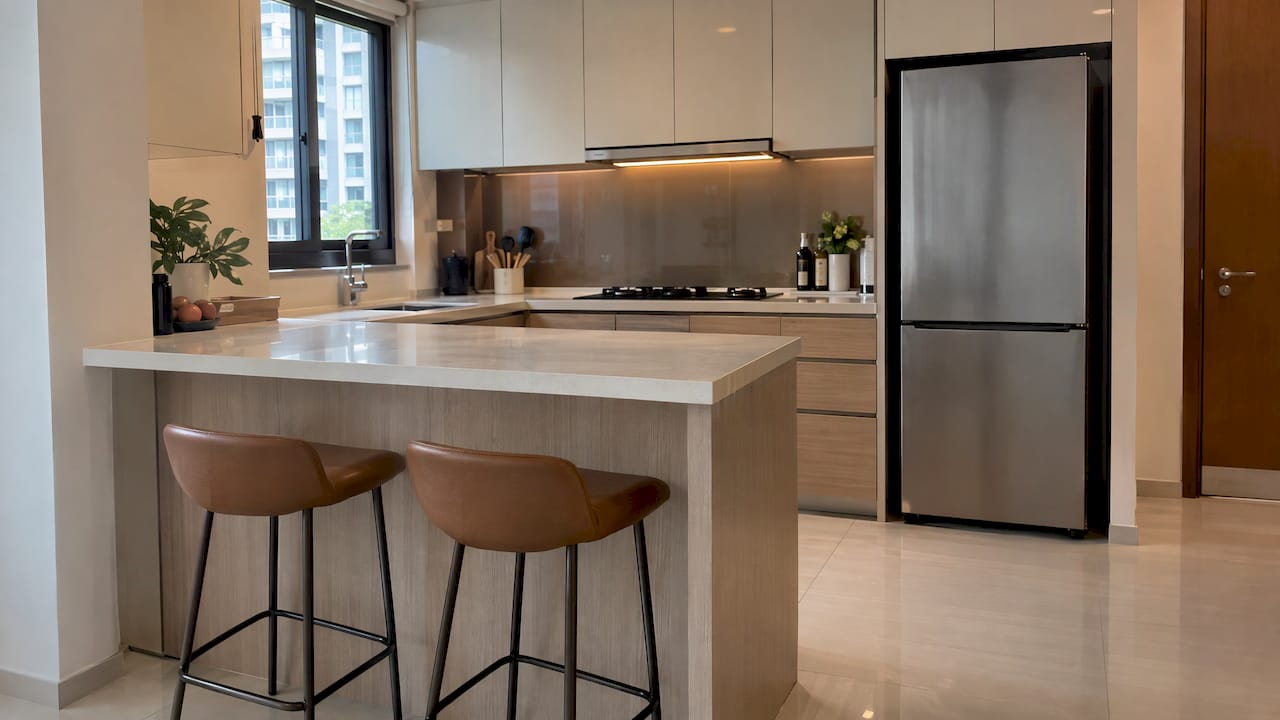
These seldom need rented furniture. They need to be spotless, with clear counters, working fittings and bright lighting. Bar stools can help where a kitchen has a counter or breakfast bar, because they show that the counter is a place to sit as well as to prepare food.
5. Secondary bedrooms and balcony
Leave these for a second phase unless the unit is aimed at families. A single bed and a desk in one room can show that it works as a child’s room or study. A balcony with a small set of chairs and a plant can lift a listing photograph, but only if the rest of the unit already works.
The common rule: stage the rooms a viewer cannot easily imagine on their own, and leave the ones that explain themselves.
Partial or full staging: how to decide
Use the table as a starting point. Your agent will know which features of your unit buyers or tenants care about most.
| Situation | Partial staging fits | Full staging fits |
|---|---|---|
| Small HDB flat, vacant | Living and dining, master bedroom | When all rooms are small and a family buyer is the target |
| Condo with two or three bedrooms | Living and dining, master bedroom, entrance | When the unit is positioned as premium or move-in ready |
| Landed or semi-detached home | Main living level and master suite | Usually, because many separate rooms are visible in a viewing |
| Rental unit for a single tenant or couple | Living area and bedroom | Corporate housing where the tenant arrives with only suitcases |
| Developer show unit | Key rooms to show the layout | When the show unit is the main marketing asset |
| Unit with an odd layout | Only if the unclear zones are staged | When several rooms have unclear purposes |
Two questions settle most cases. First, can a viewer tell what each room is for without help? If not, stage that room. Second, does the target occupant expect a ready-to-live-in home? Corporate tenants and relocating families often do, so a fuller setup helps. A buyer who plans to renovate cares more about the layout and the light.
Our article on why HDB and private property staging differ goes deeper into how the property type changes the approach.
What partial staging costs, and what moves the price
The cost of staging depends on three things: how many rooms you furnish, how large and how premium the pieces are, and how long they stay in the unit. A smaller scope with a shorter period costs less than a full-home setup held over many months.
For reference, the published monthly prices for our staging packages are S$888 per month for Housing Development Board (HDB) flats, and S$1,888 per month for semi-detached and landed homes and for condominiums, penthouses and apartments. These are the monthly rates published on our packages page. Because the rental is charged by month, the length of time the furniture stays in the unit changes the total directly, which is why choosing the right scope and period matters. For a quote tailored to a specific unit and a specific set of rooms, use the contact route on our site.
Another point on budgeting: staging is a presentation cost, not a renovation cost. Decluttering, cleaning, minor repairs and good lighting come first, and they cost little compared with the visible effect they have. Furniture then adds the layer that a clean empty room cannot supply.
How long should staging furniture stay?
There is no single correct duration. The right rental period is the time between the day the property is photographed and the day the property is sold or let, plus a margin. Several factors move it.
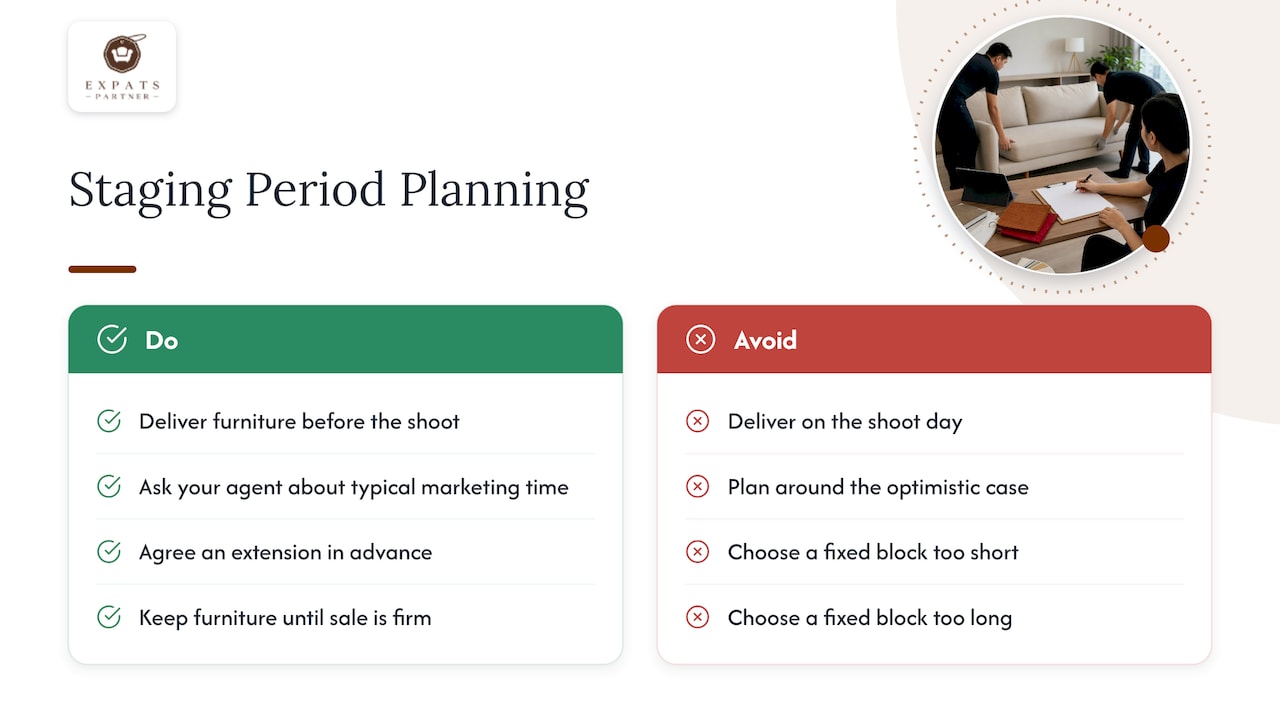
Photography and launch. The furniture must be in place before the listing photographs and any video are taken. Delivery should therefore happen a few days ahead of the shoot, not on the same day, so that styling can be adjusted.
Viewing schedule. An owner who will accept viewings from the first weekend needs the unit ready earlier than an owner who plans a private launch.
Property type and price band. Units in a very active segment may move quickly, while a distinct or higher-priced property can take longer to find the right buyer. Ask your agent about the typical marketing period for similar units in your area and plan around that, not around the optimistic case.
Sale process. After an offer, the unit may still need to look right during a second viewing, a valuation or a final inspection. Keep the furniture until the sale is firm, then arrange collection.
Tenancy start. For a rental, the furniture often stays until the first tenant moves in. If a tenant takes the unit unfurnished, collection must be arranged before the handover.
A practical way to plan: set an initial period that covers the expected marketing time, then agree an extension in advance if the listing runs longer. This is where flexible rental periods are worth more than a low headline price. A fixed block that is too short means a scramble to extend, while one that is too long means paying for furniture that no longer helps. We offer flexible rental periods for both short and long terms, so the period can follow the property rather than the other way round.
What to confirm before delivery and collection
Most partial staging problems are logistical, not visual. Settle these points early, with your agent or property manager, and put them in writing.
- Access and permissions. Condominiums commonly set rules for moving in goods, such as time slots, lift booking and sometimes a deposit. Ask the management office for the rules, then book the lift for delivery and for collection.
- Delivery window. Agree a time slot that suits the building and the person who will let the team in. Keys or access cards should be arranged before the day.
- Room plan. Agree which rooms are staged and where the main pieces go. A simple sketch or marked floor plan avoids confusion.
- Item list. List every item that will be placed, including lamps, rugs, plants and accessories, so that the collection check is simple.
- Condition of the unit. Clean and clear the unit before delivery. Furniture looks best in a unit that has been cleaned, and it makes the install faster.
- Collection date and notice. Decide how the end date is set and how much notice is needed if the sale or tenancy date changes.
- Items that stay. If a buyer asks to keep a piece, settle in writing whether it is part of the sale. Staged furniture is not automatically included in a sale, so the agreement should be clear.
- Insurance and damage. Ask how the rented items are treated during the period, and note any existing marks in the unit before delivery.
We coordinate delivery and collection for the furniture we rent, which takes the scheduling of those two days off your list. Even so, the building rules and access arrangements remain yours to confirm with the management office, so start with them.
Presenting a partially staged home well
Staging works best when the whole visit feels consistent. A few habits help.
- Keep colours calm. Neutral tones with one or two accents photograph well and suit most buyers and tenants.
- Scale to the room. A smaller sofa in a compact living room leaves a clear walkway and makes the room feel larger.
- Light every room. Open curtains for viewings, replace weak bulbs and add lamps in the staged rooms.
- Leave other rooms tidy and empty on purpose. A bare room that is clean, bright and well proportioned is a clear statement, not a gap.
- Match the staging to the listing photos. Photograph the unit once the pieces are in place and keep them there during viewings, so that the visit matches the pictures.
Agents may find our guide on walking through a staged home with buyers useful for the viewing itself, and our piece on why real furniture helps buyers feel the space explains why physical pieces communicate scale better than a flat image.
Who benefits most from a partial approach
Landlords and rental property owners. A furnished living area and bedroom give prospective tenants a reference for how the unit works, at a lower monthly cost than a fully furnished unit. A rental that suits an expatriate arriving from overseas is easier to let if the tenant can picture the first night there.
Property agents and agencies. Staging only the key rooms keeps the unit photogenic without asking the owner for a large commitment. It also makes the conversation about staging easier to start with a seller who is cautious about cost.
Developers and showflat managers. Where a show unit is used to explain a layout, staging the main rooms with correctly scaled furniture lets visitors judge how their own belongings would fit.
Corporate housing and relocation teams. For short assignments, a tenant needs a working home on arrival. A fuller setup is often the better choice there, and our relocation furniture packages for Singapore moves are built around that need.
Owners of vacant units. A vacant unit with no furniture gives viewers nothing to measure against. Even a minimal set in the living room and master bedroom changes how the space is read.
Our staging and rental offer
We are a Singapore furniture rental and staging specialist. We rent real furniture from our own inventory for short and long terms, with full-home and room-specific packages and coordinated delivery and collection. For staging, we publish monthly rates of S$888 per month for HDB flats and S$1,888 per month for semi-detached and landed homes and for condominiums, penthouses and apartments. Furniture categories include beds, sofas and love seats, chairs, dining and meeting tables, bar stools, lamps and lighting, and florals and plants, which are the pieces that partial staging relies on.
If you already know which rooms you want to dress, see our furniture and staging packages or contact us through our home page with the unit type, the rooms and the expected marketing period.
For a broader view of how we approach presentation, our page on home staging in Singapore that helps homes sell sets out the service, and the home staging results example shows what a finished project can look like.
A simple plan you can follow
- Walk the unit as a viewer. Start at the door and note where you first look and where the layout is unclear.
- Rank the rooms. Choose the two or three rooms that most affect first impressions.
- Clean and clear everything. Remove clutter, repair small faults and replace dim bulbs.
- Choose scaled furniture. Match each piece to the room dimensions and the target occupant.
- Set the rental period. Base it on the expected marketing time, and agree how to extend.
- Confirm building rules. Book lifts and access and confirm timings in writing.
- Photograph, then list. Take photographs once the styling is complete and keep the layout consistent through viewings.
- Plan collection. Agree the end date, and note which items, if any, a buyer asks to keep.
For wider reading on the effect of staging on selling time, see whether staged homes sell faster in Singapore and the seller’s guide on why to stage before selling. For the practical details, our home staging tips add more day-to-day advice.
FAQ
What is the difference between partial and full staging?
Partial staging furnishes only the rooms that matter most to a first impression, such as the living and dining area and the master bedroom. Full staging furnishes every room. The remaining rooms in a partial stage are kept clean, bright and tidy rather than furnished.
Which rooms should I stage first in an HDB flat?
Start with the living and dining area, because viewers see it first and it shows how the main space can be used. Add the master bedroom next. Kitchens and bathrooms mainly need to be spotless and well lit.
How long should I rent staging furniture?
Rent for the period the unit is actively marketed, plus a margin for viewings and the time between an offer and completion. A flexible rental period lets you extend if the listing runs longer, or collect promptly once the sale or tenancy is confirmed.
Can I stage a rental unit instead of a sale unit?
Yes. Landlords often stage the living area and bedroom so that tenants can see how the space works. The same planning applies: choose the key rooms, set the rental period and arrange delivery before photography.
What should I confirm before furniture is delivered?
Confirm the building’s rules for moving goods, the lift booking, the delivery window, the rooms and the placement, and the collection date. Put these in writing with your agent or property manager so that both delivery and collection run smoothly.